X Close

LCCOS staff news

Home

News for colleagues within the LCCOS department.

Menu

Archive for June, 2016

Reminder – 30 Day Research Support Challenge

By Angela Young, on 20 June 2016

Would you like to be better able to support our researchers? It’s not too late to start the UCL Library Services 30 Day Research Support Challenge. Running from 6 June to 15 July, this online challenge looks at all the areas in which we can support out researchers. Each ‘day’ consists of a short video and then a few quiz questions in Moodle for you to complete. You can work towards earning a virtual medal, or even getting your name engraved on the Challenge trophy!

As the 30 Day Research Support Challenge is part of the Biomedical and Health Information Summer School, during the first couple of weeks the Challenge focused on study design and critical appraisal, which are specifically biomedical in their focus. It’s not too late to catch up with these ‘days’, but if your field is not biomedical you might like to know that the Challenge moves on to a new topic today, Citing and Reference Management, and if you’d rather skip the biomedical days then let me know and I can give you access from today onwards. Future topics include open access, research data management, bibliometrics and more!

To find out more or start the challenge simply go to the Biomedical and Health Information Summer School Moodle course and start the challenge! If you don’t currently have access to this course you can self-enrol with the enrolment key l1brary.

So why not challenge yourself! Good luck!

Angela

Audio and Audio-Visual Academic Book of the Future

By Alison Fox, on 17 June 2016

On 23 May I was invited to speak at the ‘Audio and Audio-Visual Academic Book of the Future’ event, a symposium hosted by the British Library. The event was convened by Steven Dryden, a sound librarian at the BL, and aimed to bring together publishers, librarians and researchers to discuss the use of audio-visual content in scholarly books. I presented alongside two other speakers: Richard Mason, a novelist who showcased his new co-venture, Orson & Co, a platform that publishes audio-visual books, and Rebecca Lyons, who provided an overview of the Academic Book of the Future project, which she co-investigates.

Following the three presentations, the group engaged in an open discussion where all delegates reflected on their experiences of working with AV content in their careers or in their research. One question, which was pertinent to those attending from the BL, was on the issue of archiving: how do we determine which version of a book is the original when it is published simultaneously in different formats? Are ISBNs enough to identify each version, and how realistic is a future in which copyright clearance will be required for multiple e-formats even though print rights are challenging enough for authors to secure?

The floor was offered to a number of the ECRs in attendance who discussed their practice-based research and collectively emphasised a need for broader publishing options. They also raised the issue of attribution and lamented the difficulty of describing their contributions to online platforms and non-traditional forms of publishing. It was agreed that continued collaboration will be required between authors, publishers, librarians, archivists and coders to build a future in which AV content can be welcomed as a critical component of online publishing rather than viewed as an awkward luxury.

Posted on behalf of Chris Penfold, Commissioning Editor, UCL Press

The Director’s View: UCL Press

By Paul Ayris, on 16 June 2016

1st Birthday Party for UCL Press

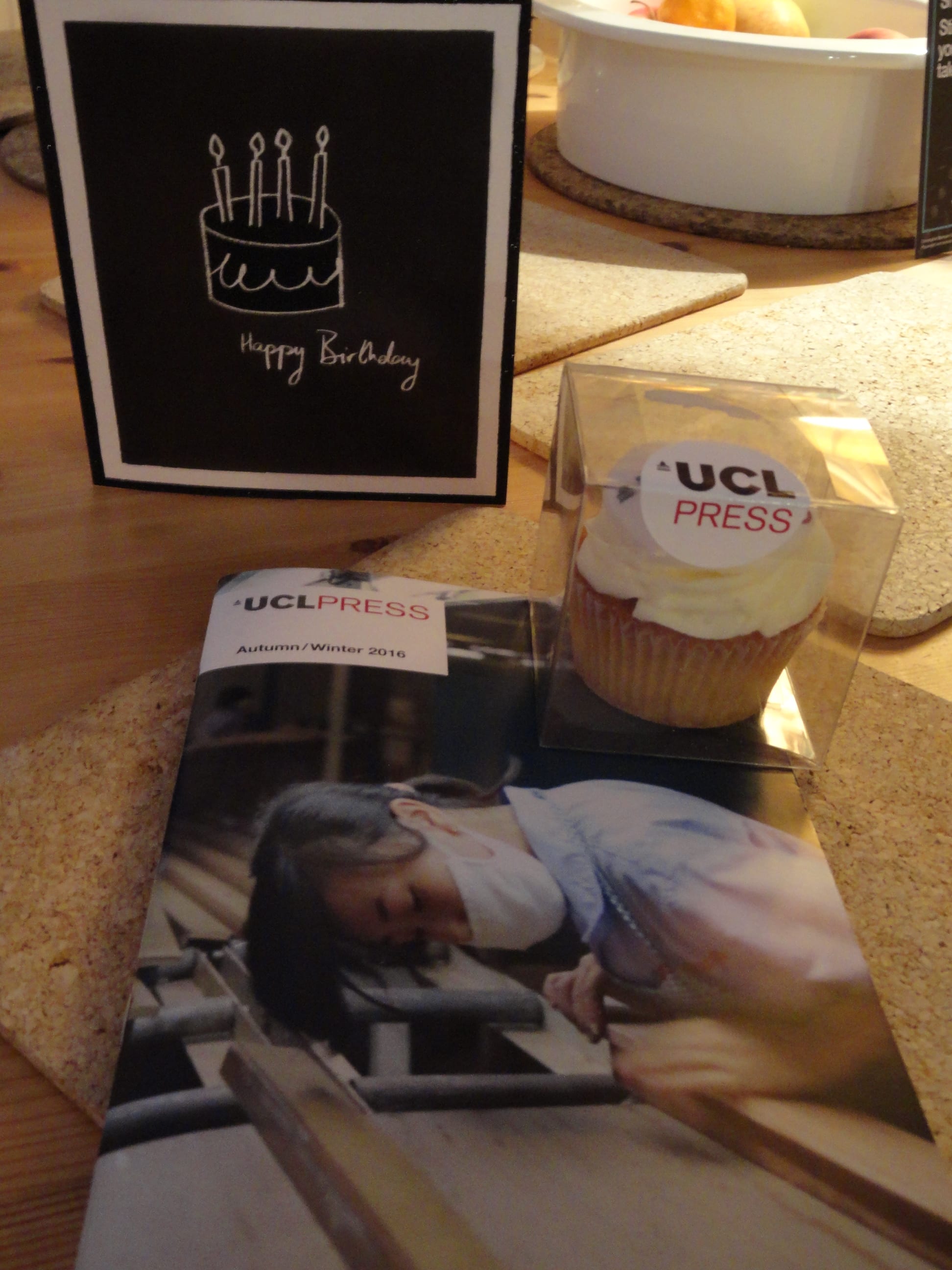
UCL Press birthday party16 June 2016 was an auspicious day for UCL Press. This was the day when we held  a Birthday Party to celebrate 1 year of publishing activity.

100 people accepted the Press’s invitation to join them at the Party, which was held in Waterstone’s Bookshop. The Guest of Honour was Professor David Price, who spoke of his pride that UCL has established such an innovative publishing programme. UCL Press is the first fully Open Access University Press in the UK.

Following David Price’s speech, I gave a brief summary of the achievements of the Press in its 1st year of operation – over 30,000 downloads in over 160 countries. This is an amazing record for a young Press in its 1st year. I admitted that establishing the Press was my idea, but that it had needed the insight, expertise and support of very many people to make it happen. That the Press has achieved so much so quickly is really a testament to all their hard work.

The audience was then entertained by 6 UCL Press authors, who told us what they felt about working with the Press and why they had chosen UCL Press as their publisher. I was struck by two things. First, a number of authors who have published with us said they wanted to publish with us again. That is real praise. Second, some speakers spoke about the textbooks which they are publishing with UCL Press. I had a long talk with Deepak Kalaskar from the Royal Free about his forthcoming (July 2016) Textbook of Plastic and Reconstructive Surgery. Commercial publishers have been slow to offer textbooks as digital textbooks, let alone Open Access textbooks. In its work on developing an Open Access digital textbook model, UCL Press is being truly innovative.

The audience toasted the 1st year of the Press, and wished it well in the next 12 months, with glasses of Prosecco. Cup cakes with the UCL Press logo iced on the top crowned a generous finger buffet, which was well received by those attending. The evening bodes well for the growing success of UCL Press.

Paul Ayris

Director of UCL Library Services

CEO UCL Press

Creating Connections: Libraries

By Benjamin Meunier, on 16 June 2016

Last week’s Creating Connections event was sponsored by The Knowledge Quarter. Dr Celia Caulcott, UCL’s Vice-Provost (Enterprise), greeted attendees with a welcome to UCL and an update on progress with developing a strategy for London to ensure that we realise the UCL 2034 Principal Theme 5 “in London, of London and for London”. The VP emphasised how UCL’s challenges and areas of strength mirror those of London as a city with special mention of architecture, culture and biomedicine (connected with London’s world-leading hospitals) as areas of excellence and London’s ubiquitous challenge of lack of space. One could easily have added libraries as an area where UCL’s strengths reflect London’s huge network of libraries and innovation in the sector: UCL’s Bloomsbury Campus is surrounded by the greatest concentration of libraries, museums and archives in Europe…

creating_connections-400x132

Perhaps in friendly retaliation for having booked John Braime, the organiser of the Creating Connections event from the Volunteering Services Unit in UCLU, to speak at our Library Staff Conference in July, I had been invited to facilitate the discussion on “Libraries”. As we were about to begin, I noticed that on our table were jars of Cubed Earwax and vials of Salt Made from Tears of Boredom and a tin of Escalating Panic. With more than a soupçon of trepidation as I wondered whether I would momentarily be disapparating off to Honeydukes or finding that Willy Wonka had registered late for our table, I started off a round of introductions. The group comprised colleagues from LB Newham, the British Library, Wellcome Collections, the UCL Department of Applied Health Research, government policy researchers and local community / voluntary organisations BuddyHub and the Ministry of Stories (a writing and mentoring centre for children, who had brought in the aforementioned “monster supplies”).


Discussion was lively. It was noted that there appeared to be a two-tier approach developing in the sector, with well-funded academic and research libraries on the one hand growing services around user demand and needs and establishing high-quality spaces. On the other hand, public libraries, with decreasing funding and pressure on space, seemed not to be taking into account user needs to the same extent. There should be more sharing of good practice between public and other libraries, to help with developments on a national (and indeed, international) level. Some public libraries are converting, and host activities ranging from reading groups to Zumba classes, but it was noted that many new libraries do not have fit-for-purpose space for events or do not allow posters to be placed on walls or noticeboards, hindering the ability of local communities and groups to interact. The group felt quite strongly that there needs to be space in the library, physical and digital, for people to share information, meet and make connections, and that libraries should facilitate events (for instance to support literacy or creative writing initiatives).

Space for users to post feedback or notices, such as the board used in the UCL Cruciform Hub, should be encouraged to enable users to have a say in their library services


In the spirit of “creating connections”, there was some discussion on value of having some digital space where library users could share interests, so that people with shared areas of interest could find out about each other and potentially collaborate. This prompted Nigel Spencer from the British Library to share information with me about an initiative he is leading called The Idea Spotlight: User Community, described in his words below.


“The Community is part of a project which aims to make our site at St Pancras in London one of the UK’s most open, creative and innovative public spaces for the 21st century and our initial focus will be services that we offer at our St Pancras site.

It is an ‘idea management platform’ which will enable people to submit ideas in response to specific questions and challenges to comment on other people’s ideas.  Ideas will be reviewed by us periodically and a decision taken on whether to take the ideas forward.  The process will be transparent and, we will give a clear explanation in the case of any ideas that we do not take forward.

This link will take you to the community website from which you can follow a simple registration process:   https://blideaspotlight.wazoku.com/ccc/community

The platform will be officially launched in late-June 2016 but we are inviting people to join now and contribute prior to the main launch.  The first 2 challenges we are posting are:

  • ‘Making the most of your first visit to the British Library’.  This will invite suggestions on how someone’s first experience of the BL could be enhanced.
  • ‘Meeting people at the British Library’.  This seeks to explore the assumption that people want to meet people that are researching similar topics by asking them what we can do to enable people to meeting, interact and collaborate.

This is the first time that the British Library has used this collaborative approach and we are hoping that we will get some great and unexpected ideas and know that we will learn much more about how we can develop services that users will find valuable.“


The DOK in Delft (you can follow a virtual tour here led by its charismatic founder and director Erik Boekesteijn), The Hive in Worcester and Chattanooga Library in the US were mentioned as examples of great innovative practice in the public library sector.


The Human Library where readers were encouraged to “borrow” people rather than books, was described as a project at the Wellcome which was very popular and enriching. The goal of the Human Library is to challenge prejudice through conversation, and it struck me as a great way for libraries to fulfil their place furthering equality and diversity in modern democratic society.


Following the event, I came across this write up on a recent symposium at Trinity College, Dublin on “Library Futures”. You can watch and see slides from all the talks, including Jeffrey Schnapp’s thought-provoking presentation on how libraries will survive and even thrive after 2019 when, according to a timeline created jointly by What’s Next and Future Exploration Network, libraries are due to follow in the way of the dinosaur, the dodo and affordable housing and become “extinct”. Happily, the discussion at Creating Connections concluded with a strong sense that libraries are dynamic places which are re-defining themselves and I was especially pleased to get feedback from some colleagues (who confessed that they had not placed “Libraries” as their first choice for discussion) who found that they learned some new things and were excited about the new developments which are happening in libraries.


If you want to get involved, the next Creating Connections event will be in the autumn in Stratford. If you are keen interested in The Knowledge Quarter, here is some additional information:


About The Knowledge Quarter

Creating Connections 11 was organised in partnership with The Knowledge Quarter, a consortium of 66 partner organisations of many different kinds but with one thing in common – they are all actively engaged in advancing and disseminating knowledge. KQ focuses its support on innovation, collaboration and knowledge exchange by establishing crucial connections to achieve productive partnerships, fruitful networks and creative interaction. To find out more, visit www.knowledgequarter.london/


Knowledge Quarter Partner Networking event with Central Saint Martins

The next KQ partner networking event on Friday 24th of June is in partnership with the MA Innovation Management postgraduate course at Central Saint Martins, University of the Arts London. Click here to register.


Camden STEAM Commission

The Knowledge Quarter in partnership with Camden Council and Wellcome Trust will launch a commission to raise aspirations and improve access to opportunities for Science, Technology, Engineering, Arts and Maths (STEAM) careers within the borough. Click here for more information.


SSEES Library Green Group meets Global Citizenship Programme

By Agnese Riva, on 14 June 2016

On Thursday 2 June, the SSEES Library Green Group (aka Green Comrades) organised a screening of “Swamp Dialogues”, a documentary focusing on the people who live in the protected area of Romania’s Danube Delta, Europe’s second largest river delta (view trailer here). It is part of our Green Impact excellence project and was arranged in the context of UCL’s annual Green Impact competition, in collaboration with the UCL Global Citizenship programme, which offers a strand dedicated to the Danube. pic2

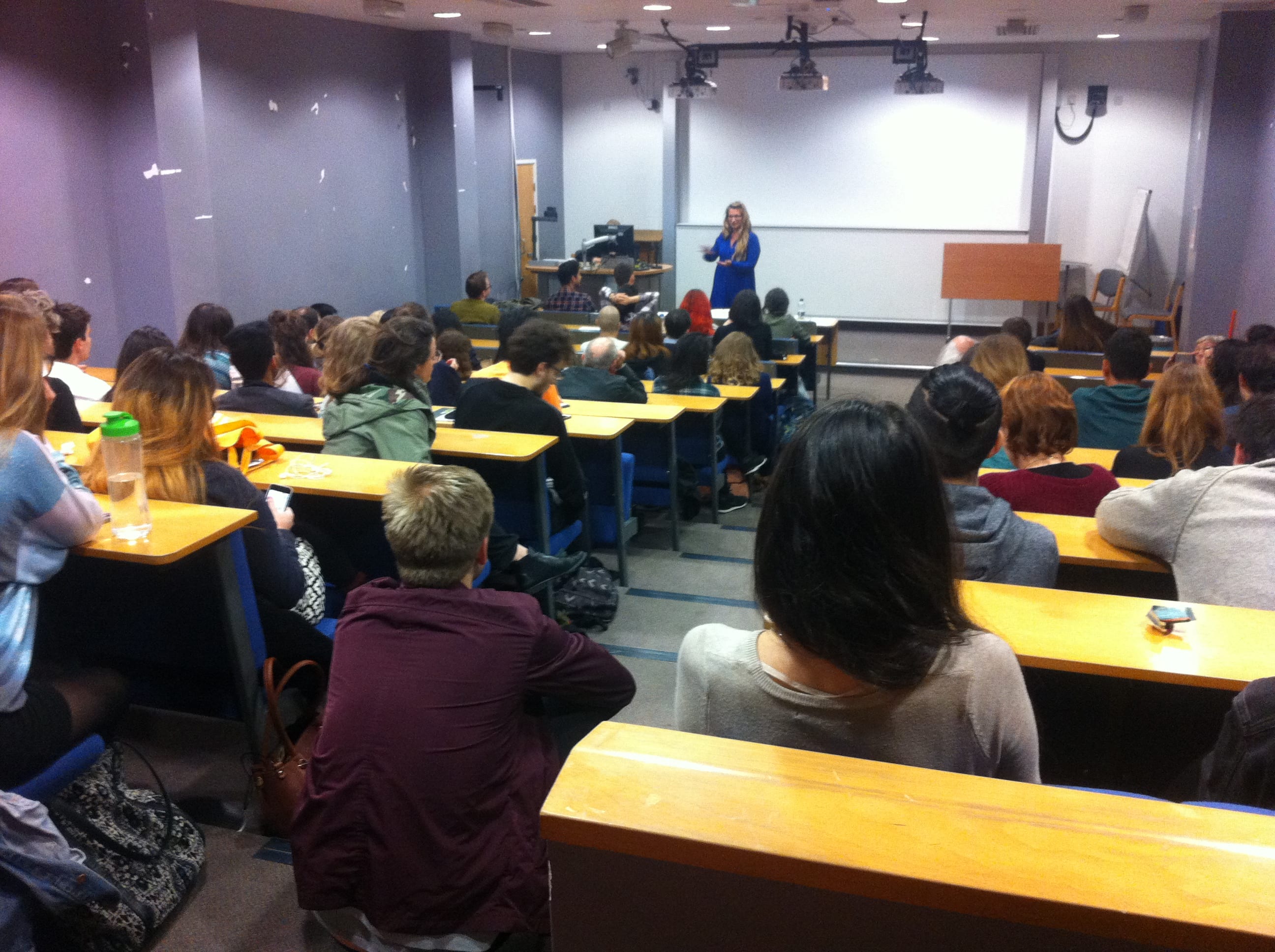
The screening was introduced by Eszter Tarsoly, Senior Teaching Fellow in Hungarian Language at SSEES and Course Leader on the UCL Global Citizenship Programme. It was followed by a discussion about the relationship between people living in protected areas and their environment, led by Sahil Nijhawan and Rafael Chiaravalloti, both PhD students at the UCL Department of Anthropology. The event was attended by about 60-70 people, and was rounded off by a Danubian food and drinks reception. It was well received as the positive feedback from students indicates.

“Genuine, funny and eye-opening, this film raised many questions about the Danube and those who have lived and worked there for generations.” (Rebecca Huseyin – for more feedback click here)

This academic year SSEES Library’s Green Group decided to participate in the Green Impact 2015-2016 competition with an Excellence Project for the first time. The team felt that a project is not only more engaging and inspiring to work on but also allows us to highlight the valuable resources the Library has to offer to our users and demonstrate the skills and knowledge of our Library staff.

There has been a growing interest in studying environmental concerns in the post-Soviet era. With SSEES Library’s geographical area focus in mind, we decided to hold a series of film screenings on environmental issues in Eastern Europe to support this new field of study and foster interest in the topic among different academic communities within UCL and the broader public. We identified a number of documentaries that address topics including human-environment interaction, energy sustainability and pollution in an Eastern European context.

Area expertise on the region has been a key factor in developing all the different aspects of our project. We conducted extensive research in relation to films as due to copyright issues we could screen only films which had not been commercially released. This made the task more challenging but also allowed us to present material never shown before in the UK. Our team’s diverse language and research skills helped us to browse websites to find initiatives dedicated to our topic and discover independent films. We relied mainly on green film festivals organised in East European countries, but we also browsed other sites in several languages and directly contacted directors and associations. Aiming to reach as many people as possible, we gained consent from the copyright holders to show the films to the public.

Liaising with other departments also contributed in an essential way to the success of the event. Our close relationship with the SSEES academic department allowed us to be included in the Global Citizenship Programme, and the initiative was praised by the team leader Eszter Tarsoly who thanked us for bringing such a special contribution to the module. Eszter’s introduction was insightful and concise and provided invaluable background information to better understand the film. Due to the nature of this documentary, we also decided to contact the Anthropology department where people welcomed our initiative and allowed us to find two students working on similar topics to lead a discussion after the film. Their talk was extremely thought-provoking and inspiring. pic1 The cooperation among these different realities proved to be enormously beneficial to all of us: our green group found amazing support for our event in terms of guests and visibility, the PhD students welcomed the opportunity to share their knowledge and develop their communication skills, and the Global Citizenship Programme was able to broaden its offer for its participants.

To complement the screening, we set up a temporary themed book display in SSEES Library, presenting library materials related to the Danube region and environmental issues in Central Eastern Europe generally.

During the summer vacation we will also prepare a Libguide dedicated to various resources on environmental issues in Easter Europe which will be available on our website.

In conclusion, we would like to highlight diversity as a key characteristic of our work environment that made the conception and realization of this project possible. We are a varied team comprising of people of different nationalities and with different interests, and each of us carries a bag of knowledge from different past experiences. This allowed us to contribute in different ways to the project and build up a complete, well rounded event.

Further screenings are planned for the new academic year 2016-2017, so look out for posters and announcements if you are interested in environmental issues in a cross-cultural context.

SSEES Library Green Group (Antje Brauer-Maxaeia, Agniya Dremach, Zuzana Pincikova, Agnese Riva, Suzana Tamamovic, Andrea Zsubori)

UCL Press – One Year, and 35,000 Readers On

By Alison Fox, on 13 June 2016

UCL Press infographic3As we celebrate our first year of publishing, it is apposite to pause for a moment and look back at all that has happened, before we launch into busy and exciting plans for the future. Most pleasing is the wide readership our books are reaching – in one year, our books and journals have reached a combined total of over 35,000 readers in over 160 countries round the world. That’s an average of nearly 3,000 downloads per book. In an age when many scholarly monograph publishers report sales figures of around 400 copies in print, it’s a really encouraging response.

Our open access model is proving to be very popular with authors too and we have had well over 150 book and journal proposals. Since we launched in June 2015 as the UK’s first fully open access university press, it has also been interesting to see the publishing landscape changing and more new university presses spring up, many of them also open access, including Westminster University Press, White Rose University Press and Cardiff University Press. Goldsmiths also launched its new press recently with a mission of publishing innovative and less constrained academic works.

We have published 14 books and 3 journals so far in a wide range of subjects including archaeology, anthropology, Jewish studies, urban studies and history, and the forward programme is building up quickly. In 2017 we are on course to publish 35 books and several more journals. Later this year and next year we look forward to publishing our first textbooks, on plastic surgery and public archaeology. We are publishing our first popular science book called Why Icebergs Float (Andrew Morris), a book that examines urban food production as a potential solution to the global food crisis (Sustainable Food Systems by Robert Biel), and our first BOOC (Books as Open Online Content), an innovative digital format that will launch with the outputs of the Academic Book of the Future project, an AHRC/British Library project led by academics at UCL and Kings College London investigating how scholarly publishing will look in years to come.

Here are a few key facts about our publishing since we started publishing in June 2015:

  • Our books have been downloaded over *35,000 times (that’s an average of 2,916 times each)
  • Our most downloaded book is How the World Changed Social Media by Danny Miller et al, which was downloaded over 10,000 times between 1 March and 1 June 201UCL Press infographic16
  • Our books have been reviewed in THE, The Economist, The Atlantic’s CityLab, BBC World Service, BBC Today programme, LSE Review of Books and Wired, amongst others
  • This month sees the launch of our new interactive digital platform that offers scholars new ways of publishing their research in non-traditional formats

There is a lot to celebrate, but most important of all is our authors and journal editors. We feel incredibly honoured that so many talented academics from UCL and beyond have chosen to publish with us, a new press with an alternative business model, and we look forward to working with them on more exciting projects in the coming years. And indeed, it is our business model that is driving our authors to choose UCL Press. As demonstrated in the figures above, open access means that books and journals are read and distributed globally in significant numbers. And what could be more important for scholarship?

In the words of Daniel Coit Gilman, founder of Johns Hopkins University Press:

It is one of the noblest duties of a university to advance knowledge and to diffuse it not merely among those who can attend the daily lectures but far and wide.

Posted on behalf of Lara Speicher, Publishing Manager, UCL Press

*At 1 June 2016

Focus on Customer Service Excellence

By Peter Dennison, on 9 June 2016

In my new role as Head of Customer Service I am responsible for the strategic development and delivery of excellent customer service across UCL Library Services. I lead the Customer Service Teams for the Main and Science Libraries and Evening & Weekend Services and I also work closely with the Head of Site Library Services, the Head of Liaison and Support Services plus the Librarians at IOE and SSEES. My remit also includes Welcome Services, Enquiry Services, ILDS and Store Delivery and Service Operations.

The User Experience KPA of the Library Strategy has a section entitled ‘Partnership with students and other users’. Its goal is to: Deliver public services with consistent excellence and, increasingly, at the point and time of need; raise the satisfaction of BME users with the Library, so that it equals or exceeds overall user satisfaction.

Obtaining the Customer Service Excellence Standard is an objective of the current Library Strategy.

Customer Service Excellence (CSE) is designed to operate on three distinct levels: Picture1
1. As a driver of continuous improvement.
2. As a skills development tool.
3. As an independent validation of achievement.
CSE Standard: Cabinet Office, 2010

We have been fortunate to have a Graduate Trainee (Fiona Whelan) work with us from January to May this year. Fiona’s work culminated in a comprehensive report covering Customer Service Excellence and User Experience in UCL Library Services.

The report details the Customer Service Audit which Fiona carried out at all of our 18 Libraries and during her travels Fiona was able to inform staff about the CSE Standard and ensured that they were involved with this project from the start. She was also able to audit the Library Service against the CSE criteria in order to identify any gaps or problem areas.

A further piece of work which Fiona took forward was the development of a draft Service Charter. This has been shared with Library colleagues across all Library Services sites and feedback has been welcomed and incorporated into subsequent drafts. Focus Groups were run with students to establish perceptions of customer service within UCL Library Services and to obtain feedback on the draft Service Charter. You can find the draft Charter on LibNet and we are still happy to receive feedback on the Service Charter until 1 July after which it will be taken to the next meeting of Library Committee for ratification.

Finally, a small but innovative User Experience (UX) Project has been run utilising ‘speaking boards’ as an alternative method to obtain user feedback. Boards were placed in the Main and Science Libraries and Cruciform Hub asking users what they thought of 24/7 opening in the library. A3 posters were also used at LaSS, IOE, Bartlett and Royal Free for the same purpose. This project had an immediate impact and elicited much feedback – not all related to 24/7 opening! Lessons have been learned from this Project such as the importance of linking the physical boards with social media (eg Twitter polls) and of responding to user feedback via ‘You said….We say’ notice boards.

Fiona’s work has been invaluable in kick-starting our focus on CSE. We are now initiating the project and will seek accreditation in 18 months’ time. In order to maintain momentum the Service Development Group, chaired by Ben Meunier as Assistant Director (Public Services), will become the CSE Steering Group from August with a revamped membership. It is currently proposed that five Task and Finish Groups will be established covering:

• Standards and Policies
• Service Improvement
• Staff
• Performance
• Communication

I would like to thank Fiona Whelan for her inspiring report and also Breege Whiten for supporting Fiona and for her ongoing commitment to Customer Service Excellence.

This is an exciting initiative for the whole of UCL Library Services to be involved in, and it will require input from all parts of the service. I look forward to working with you and to channel the enthusiasm which we have seen from all parts of Library Services around Customer Service Excellence. I will be in touch in the near future with regular updates on our progress.

Are you up for a challenge?

By Angela Young, on 6 June 2016

You may have come across 30 day challenges in relation to fitness exercises. Today sees the launch of the UCL Library Services’ 30 Day Research Support Challenge. It’s not about exercise, it’s about making library staff fit to support our researchers. The Challenge, which takes place completely online, is being run as part of the Biomedical and Health Information Summer School, but is open to all library staff and covers all areas of research support. Over 30 days we’ll be looking at the many areas in which Library Services provides support to researchers. We’ll give you an understanding of these areas making you better able to support our users or point them in the right direction to get support.

30daychallengepictureHow does it work?

Over 30 working days, from 6 June to 15 July, daily activities will be made available on Moodle. The activities consist of a short video to watch and then some quiz questions to answer, and should take around 10 minutes per day in total. Why not challenge yourself to work towards a virtual reward? Completing 15 days gets you a virtual bronze medal, 20 days gets a virtual silver medal and 25 days a virtual gold medal. Anyone who completes the 30 day challenge within the 30 days will be rewarded with the champion’s award, and their name will be engraved on the 30 Day Research Support Challenge virtual trophy!

In the spirit of flexible working you do not need to complete each activity on the day it is released, feel free to catch up when you can, but for a chance to win the virtual trophy you need to complete the 30 daily activities within the 30 days, so you might prefer not to get too far behind! If you don’t manage to complete it within the 30 days don’t worry, the Challenge will remain available on Moodle once the 30 days are up.

How do I register?

There’s no need to sign up, simply start the challenge on the Biomedical and Health Information Summer School Moodle course. You may need to self-enrol on the course using the enrolment key l1brary.

Are you brave enough to take the Challenge?

‘Liblishers and Pubrarians’: UCL Press joins The Library Publishing Coalition

By Alison Fox, on 3 June 2016

UCL Press is delighted to announce that it has joined the US-based Library Publishing Coalition, and is the first UK publisher to join. UCL Press is the publisher for University College London and is the first fully open access university press in the UK. It is based within UCL Library Services.

The LPC was founded in 2014 and is an independent, community-led membership association. The purpose of the LPC is to support an evolving, distributed range of library publishing practices and to further the interests of libraries involved in publishing activities on their campuses. Based on core library values, and building on the traditional skills of librarians, library publishing is generally distinguished from other publishing fields by a preference for Open Access dissemination as well as a willingness to embrace informal and experimental forms of scholarly communication and to challenge the status quo. Library publishing has a greater presence in the US than in the UK, but that is changing with the newly established UCL Press, Westminster University Press, Cardiff University Press and White Rose University Press (a consortium of Leeds, Sheffield and York universities), all of which were initiated by, or are based within, their university libraries.

Library publishing services play a critical role in scholarly communications. The LPC believes that, to flourish, library publishing as a community of practice needs organized leadership to address articulated needs, such as targeted training and education, better and increased communication and collaboration, new research, and shared documentation. The LPC recognizes that library and other non-profit publishers have common interests and concerns and that a coalition that facilitates sustained dialogue among university and college libraries, university presses, scholarly societies, and other mission-related publishers enables the community to respond to changes in the scholarly communication ecosystem more quickly and efficiently and in innovative ways.

The LPC has around 70 members, mostly based in the US. As part of its provision of central resources for library publishers, it offers regular webinars, meet-ups, professional development guides, a jobs board and an annual conference.

With an active and ever-increasing number of UK institutional libraries offering publishing services, it will be interesting to see more UK members joining and benefiting from the great community already established by the LPC!

Posted on behalf of Lara Speicher, Publishing Manager, UCL Press.