X Close

LCCOS staff news

Home

News for colleagues within the LCCOS department.

Menu

Archive for June, 2016

Announcing brand new open access formats from UCL Press

By Alison Fox, on 29 June 2016

UCL Press is delighted to present its open access books online in three new distinct and innovative formats: enhanced digital editions, monographs with scholarly functionalities, and BOOCs (books as open online content).

Developed by Armadillo Systems (producers of the award-winning Turning the Pages system and Digital Bodleian), UCL’s platform offers new ways of publishing digital scholarship and responds to the needs of scholars working in non-traditional formats.

Its three strands are as follows:

Enhanced ed

Enhanced digital editions These beautiful digital books are presented in a format that offers both thematic and chronological navigation. Highly illustrated, they feature slide shows of images, deep zoom features, audio, video and 3D, and the format is perfectly suited to highly illustrated research outputs dealing with artefacts and manuscripts. Titles available as enhanced editions include the popular Petrie Museum of Egyptology: Characters and Collectionsand Treasures from UCL.

Monograph

Scholarly monographs

UCL Press’s scholarly monographs are presented in an online reading format with a suite of scholarly functionalities: here you can highlight, take notes, search, cite, export and save or share a personalised copy or extract. Content will include the output of UCL’s groundbreaking social media study Why We Post, including the popular titles How the World Changed Social Media andSocial Media in an English Village by renowned anthropologist Daniel Miller. Additional best-selling titles will include Temptation in the Archives by the late Lisa Jardine and Suburban Urbanities, edited by Laura Vaughan.


BOOC (Books as Open Online Content)These innovative ‘living books’ featBOOCure articles of various types, in a non-linear thematic presentation that offers readers the option to select and sort subjects they wish to read. With long and short articles, blogs, videos, audio and Storifys, content is added to these ‘books’ over a period of time. The first BOOC, which captures the outputs of Academic Book of the Future, an AHRC/British Library project, will launch in late Summer 2016. Find out more here.

From Rex Knight, Vice-Provost (Operations)

By Paul Ayris, on 29 June 2016

From the Vice-Provost (Operations): EU Referendum

Dear colleagues

I am writing because I want to reinforce some of the key messages that UCL has been communicating to staff and students in recent days.

EC-10847210_917071835004382_3074128324967377870_oFirst of all, we are all very conscious that we are entering on a period of uncertainty and the potential for major change. We will do our best to keep you informed as and when we know more about what the implications for UCL will be. We will be using The Week and our website for communication so please do look at them. If you haven’t seen the Provost’s video, which you can access from the home page, I would encourage you to do so.

Change is clearly on the way, but it is not coming quickly. Once a new Prime Minister is appointed and has appointed their Government, time will be  needed to decide a negotiating position, and the exit process from that date will take two years to negotiate and then several years (ten years has been suggested) to implement. So, nothing will change for the next two and a half years at least, and changes will not be immediate thereafter.

There are some obvious implications for UCL in terms of staff recruitment, student recruitment and access to research funding. As I have already said, we will have time to plan for change. I don’t believe that any Government will want to harm the UK’s world-class universities, so I am sure that in the negotiations steps will be taken to protect the interests of universities, and through UUK and the Russell Group we have effective mechanisms for lobbying. Given the strength of UCL, our reputation and world-leading performance, I am confident that we will be able to anticipate, plan for, and deal with the challenges ahead, so I am confident that we will be able to deal with any challenges we face without a major impact on us.

As with the rest of the UCL community, the fact that Professional Services at UCL attracts staff from around the world is a source of our strength, and something that we celebrate. It has been saddening to see recent reports from around the UK of an increase in reporting of racist incidents and comments. I have no reason to expect that this will be an issue at UCL, but I would like to send a clear message to all staff that any such behaviour is unacceptable and will not be tolerated. If any colleague is subject to such unacceptable behaviour I would encourage them to report it, and it will be taken seriously. Whatever happens with our relationship with the EU, we are all committed to tolerance, respect, and fairness for all.

Best wishes

Rex Knight

Vice-Provost (Operations)

The Director’s View: European Open Science Cloud

By Paul Ayris, on 29 June 2016

EOSC – European Open Science Cloud

On 20 June 2016 the European Commission’s High Level Expert Group on the European Open Science Cloud, of which I am a member, published its draft Report. This is the product of months of deliberation and discussion amongst the Group’s international membership.

The UNIMAIL, University of Geneva

The UNIMAIL, University of Geneva

The aim of the Report is to look at the emerging concept of Open Research (known rather confusingly in English as Open Science) and to see how European countries can work on this collaboratively. Open Science covers many different topics – the two most prominent ones are Open Access to publications and Research Data Management, with a preference for Open Data. UCL is seen as a European leader in Open Access. With our EU-funded LEARN project, we are aiming to do the same for Research Data.

As Professor Barend Mons, our Chair, has written in the Preface to the Report:

‘The title of this first report may have a slightly threatening ring to it and indeed, if we do not act, there might be a looming crisis on the Horizon. The vast majority of all data in the world (in fact up to 90%) has been generated in the last two years. Computers have long surpassed individuals in their ability to perform pattern recognition over large data sets. Scientific data is in dire need of openness, better handling, careful management, machine actionability and sheer re-use. One of the sobering conclusions of our consultations was that research infrastructure and communication appear to be stuck in the 20th century paradigm of data scarcity. We should see this step-change in science as an enormous opportunity and not as a threat. The EOSC is a positive ‘Cloud on the Horizon’ to be realised by 2020. Ultimately, actionable knowledge and translation of its benefits to society will be handled by humans in the ‘machine era’ for decades to come, machines are just made to serve us.

But let’s not ignore the facts: the science system is in landslide transition from data-sparse to data-saturated. Meanwhile, scholarly communication, data management methodologies, reward systems and training curricula do not adapt quickly enough if at all to this revolution. Researchers, funders and publishers (I always thought that meant making things public) keep each other hostage in a deadly embrace by continuing to conduct, publish, fund and judge science in the same way as in the past century.

So far, no-one seems to be able to break this deadlock. Open Access articles are indispensable but solve only a fraction of the problem. Neither ‘open research data’ alone will do. We still try to press petabytes of results in length-restricted narrative, effectively burying them behind firewalls or in supplementary data behind decaying hyperlinks and then trying to mine them back again. Computers hate ambiguous human language and love structured, machine actionable data, while machine readable data are a turnoff for the human mind. As computers have become indispensable research assistants, we better make what we publish understandable to them. We need both in concert to form social machines; in order to do pattern recognition in complex, interlinked data as well as confirmational studies on methodology and rhetorics in plain understandable human language.

We hope that this report will be part of a game-changing effort of all European Member States and our international partners towards true Open Science.’

Paul Ayris
Director of UCL Library Services

The Director’s View: EU Referendum and a Statement from BIS

By Paul Ayris, on 28 June 2016

Statement from Jo Johnson, Minister of State for Universities and Science

Following on from my posting of earlier today, I would like to share with you a Statement from Jo Johnson, Minister of State for Universities and Science, which addresses the issues which are of importance to UK universities going forward:

‘EU and international students make an important contribution to our world-class universities, and our European neighbours are among some of our closest research partners.

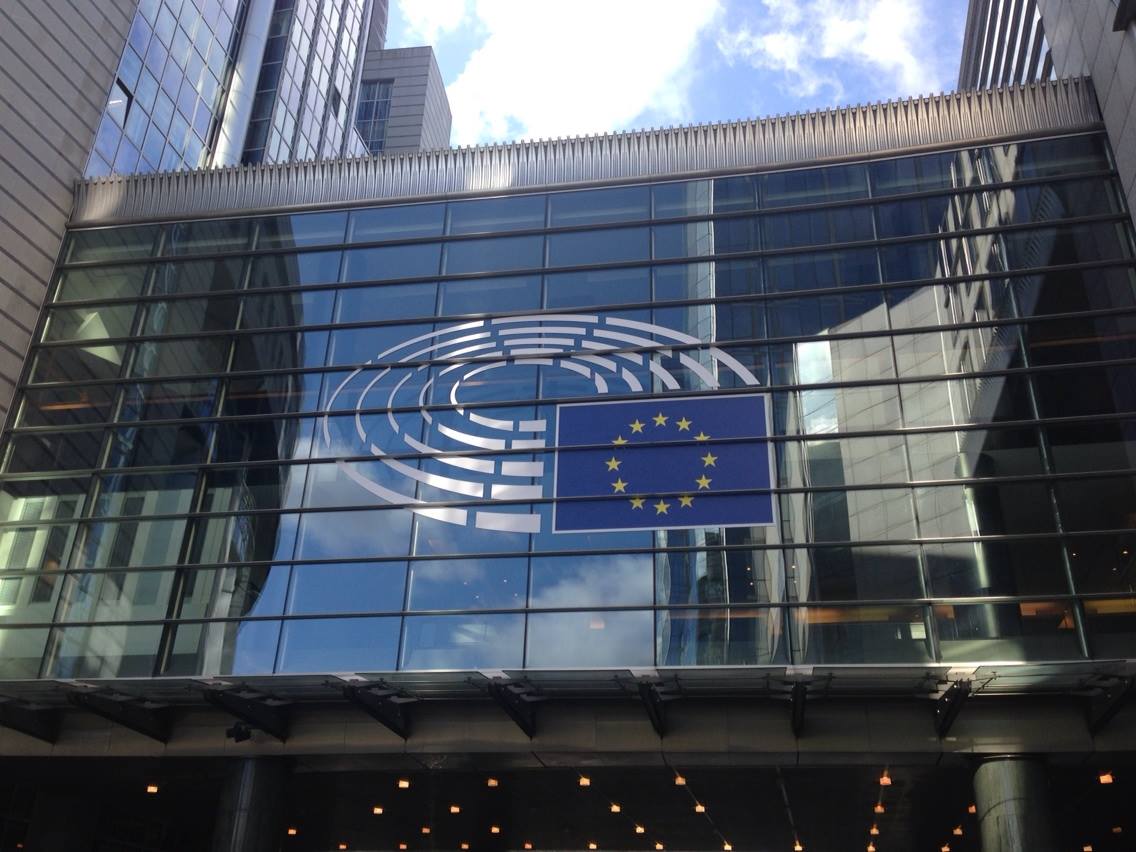
European ParliamentThere are obviously big discussions to be had with our European partners, and I look forward to working with the sector to ensure its voice is fully represented and that it continues to go from strength to strength.

EU students who are eligible under current rules to receive loans and grants from the Student Loans Company will continue to do so for courses they are currently enrolled on or about to start this coming year. The Master’s Loans launched today are also still available to eligible EU students. EU students will continue to receive funding for the duration of their courses. Information on the eligibility criteria, including residency rules, is available. The SLC have provided more information at ‘EU Nationals and Student Finance in England’

Further future funding arrangements with the EU will be determined as part of the UK’s discussions on its membership and we will provide what updates and clarity we can.

As the Prime Minister has stated, there will be no immediate changes following the EU Referendum, including in the circumstances of British citizens living in the EU, and European citizens living here. This includes those studying or working at UK universities.

For students, visitors, businesses and entrepreneurs who are already in the UK or who wish to come here, there will be no immediate change to our visa policies.

Erasmus+
The referendum result does not affect students studying in the EU, beneficiaries of Erasmus+ or those considering applying in 2017. The UK’s future access to the Erasmus+ programme will be determined as a part of wider discussions with the EU.

More broadly, existing UK students studying in the EU, and those looking to start in the next academic year, will continue to be subject to current arrangements.

Horizon 2020 research funding
The referendum result has no immediate effect on those applying to or participating in Horizon 2020. UK participants can continue to apply to the programme in the usual way. The future of UK access to European science funding will be a matter for future discussions. Government is determined to ensure that the UK continues to play a leading role in European and international research’

I hope this is helpful, and I will continue to share news with you as things develop.


Paul Ayris

Director of UCL Library Services

The Director’s View: EU Referendum and Provost’s video

By Paul Ayris, on 28 June 2016

Provost’s Video

I am writing in the light of my recent post on the UK’s EU Referendum to invite all colleagues in UCL Library Services to view the new video from the EC-10847210_917071835004382_3074128324967377870_oProvost which addresses some of the immediate questions which staff and students have been posing.

Universities UK and the Russell Group of research-intensive universities are working to safeguard future access to EU funding streams, including for research via Horizon 2020, ERC (European Research Council) and Marie Curie, and for Erasmus exchanges. We will also be working to ensure that staff from other member states of the EU maintain a right to remain and work. We will be fighting to ensure that we maintain the right to free movement of staff and students from Europe and the rest of the world.

I will continue to write on this issue as things develop. Finally, and importantly, the most worrying aspect of the way that this debate has been promoted by the Leave campaign is that it has played on xenophobia and racism. Please know that if you are subject to any form of abuse, or if you witness any, that this is unacceptable behaviour and you will have my full support and that of UCL in addressing it.


Paul Ayris

Director of UCL Library Services

THELMAs: UCL Library Services “highly commended”

By Benjamin Meunier, on 24 June 2016

I would like to echo Paul’s message on the Outstanding Library Team award from the THELMAs yesterday, with highlights from the specific areas which formed our submission.

The Leadership Team ahead of the competition for being seated at the THELMAs dinner

The Leadership Team ahead of the competition for being seated at the THELMAs dinner…


The category we were entered in recognises outstanding work in library and information-services departments. The University of Huddersfield were crowned the winners for Heritage Quay – a fantastic new knowledge hub bringing archives to life by using cutting-edge technology. Heritage Quay also happens to be one of two competitors with the Cruciform Hub for the SCONUL Library Design Awards, to be announced later in the year…

As close runners-up, UCL Library Services were acknowledged for achievements in a number of areas identified in the Library Strategy, which supports the vision set in UCL 2034:

  • focusing on delivering excellent customer service, with particular mention for the Customer Service teams in the UCL Main and Science Libraries
  • developing research-based learning hubs, such as the Cruciform Hub, with a clear commitment to environmental sustainability
  • aligning policies and procedures of the UCL IOE Library with those of UCL Library Services following the merger
  • fundraising over £2m to undertake externally-funded projects in 14/15, including the launch of the Stavros Niarchos Foundation Digital Library
  • launching UCL Press as the UK’s first fully open access university press

We are building on these strengths, and I believe that we will continue to lead the way amongst academic libraries, because of the new services we offer and are developing but first and foremost, because of the quality of our people: UCL Library Services benefits immensely from our very diverse and professional staff across all of our sites. Each of the achievements listed above reflects our ability to work together across different teams, to be creative in the way we do things, and to deliver successful outcomes within limited budgets. In these times of change, when it really matters, we will continue to rely on all of these abilities as we support UCL’s ambitions to be London’s Global University: “a diverse intellectual community, engaged with the wider world and committed to changing it for the better”.

The Director’s View: Leadership and Management Awards

By Paul Ayris, on 24 June 2016

THELMA Awards: UCL Library Services’ Leadership Team

23 June was a significant day in more ways than one. It was, amongst other things, the date of the THELMA Awards for DSC00514Leadership and Management in UK Higher Education. Held at the Grosvenor House Hotel in Park Lane, the evening was a glittering occasion which was attended by 10 members of the UCL Library Services’ Leadership Team. The evening was compered by the comedian Jimmy Carr.

UCL came second in our category Outstanding Library Team – a fantastic performance. I was told afterwards that it was a wafer thin difference between UCL Library Services and the Award winner, University of Huddsersfield. UCL received the accolade of Highly Commended, which is very unusual. THELMA Awards usually only name the winner in each of the 17 categories of awards. However, UCL Library Services was one of only 3 institutions to receive the accolade of Highly Commended.

DSC00497It is a fantastic achievement for the Leadership Team, and indeed for the whole Library. It underlines that the Strategy we are pursuing, aligned with UCL’s 2034 Strategy, is the right one. Well done to everyone concerned.

Emboldened by this success, we intend to enter the THELMAs again next year – and then to go one step further.


Paul Ayris

Director of UCL Library Services

The Director’s View: Referendum result

By Paul Ayris, on 24 June 2016

Referendum result

I am writing following the Provost’s e-mail to all-staff today, in light of the result of yesterday’s EU Referendum. I want particularly to echo the Provost’s words when he writes: ‘Today, more than ever, I want to reaffirm to you all that UCL will remain a global university through our outlook, people and enduring international partnerships. I also want in particular to address UCL’s staff and students from all countries of the European Union. We value you enormously – your contribution to UCL life is intrinsic to what the university stands for.’

University bodies such as Universities UK and the Russell Group of research-intensive universities are already working to support the position of the UK’s outstanding HEC-10847210_917071835004382_3074128324967377870_oE infrastructure following the result of the Referendum. The Russell Group has already said: ‘The UK has not yet left the EU so it is important that our staff and students from other member countries understand that there will be no immediate impact on their status at our universities.’

Clearly, there are significant challenges for the UK and for UK universities to tackle in the coming weeks and months. If any member of UCL Library Services staff has a particular concern about the impact of the Referendum result, they should raise the matter with their immediate line manager. We can then discuss any pertinent issues with UCL to identify what the solution could be.

Change is an opportunity, as well as a challenge. We greatly value all our staff members and their contribution to the success of the Library’s services. I can assure you that this will not change.

Paul Ayris

Director of UCL Library Services


El Pub: The 20th International Conference on Electronic Publishing

By Alison Fox, on 24 June 2016

In early June I attended ‘El Pub: The 20th International Conference on Electronic Publishing’, hosted by the University of Göttingen. The conference brought together publishers, librarians, archivists and researchers to discuss the current – largely European – landscape of electronic scholarly publishing.

Although the papers varied greatly, open access was the dominant theme across the panels. The ECRs, in particular, spoke of a policy-driven need to make government-funded research available to the public without exception. They also spoke of the well-known predicament ECRs face in deciding where and how to publish. Many have the desire to share their data and reach a wide audience via an open access platform, yet their fear of the data being misappropriated – not necessarily for commercial means but by other researchers who might use it to write ‘better’ papers – is a growing concern.

Furthermore, they expressed frustration that their career progression is dependent upon publishing in subscription journals with high impact factors, which they feel is a system designed to undermine the feasibility of open access. This system can only be broken when open access journals have built up enough traction to compete with the high impact journals, or when a universal method of quality assessment emerges to replace the metric-intensive scale currently employed.

Posted on behalf of Chris Penfold, Commissioning Editor, UCL Press

Countdown to Conference – 4 weeks to go!

By ucylain, on 23 June 2016

Dear Colleagues,

With the UCL Library Services Staff Conference only a month away, it is with pleasure that the Staff Conference Organising Committee announce this year’s Keynote Speaker as Roger Mosey. Roger is currently master of Selwyn College, Cambridge and was one of the BBC’s most senior executives. He directed the BBC’s coverage of the London 2012 Olympic Games and was the BBC’s Director of Sport, Controller of BBC Radio 5 Live as well as Editor of Today. With Roger’s extensive experience in broadcasting, his presentation will focus on the ‘Communication’ aspect of the Communication, Outreach and Open Access theme of the conference. The presentation will be followed by a question and answer session.

Roger Mosey

Roger Mosey

SESSION AND LUNCH BOOKING FORMS
DEADLINE: THURSDAY 7 JULY AT 10PM
LINK TO MOODLE: https://moodle.ucl.ac.uk/login/index.php
Please book your preferences for two morning sessions and one afternoon session as well as booking your preferences for lunch. We will endeavour to accommodate your preferred session requests where possible and we will inform you of your chosen sessions during the week of the conference. You can have a look at the sessions by visiting the Staff Conference web page.

NOMINATIONS FOR PROFESSIONAL SERVICES VALUES AND THE ‘ABOVE AND BEYOND’ AWARDS
DEADLINE: THURSDAY 30 JUNE – one week to go!
LINK TO NOMINATIONS SURVEY: https://www.surveymonkey.co.uk/r/JMG2H8J

We ask that you nominate a colleague or team/group for their outstanding demonstration of the Professional Services Values:
1. Collaboration… putting UCL’s goals first by working in partnership
2. Empowered… confident and enabling
3. Excellent service… putting UCL’s goals and customer needs at the heart of our endeavour
4. Innovation… to be creative and ambitious in all our endeavours
5. Mutual respect… to maintain an inclusive environment in which all colleagues can flourish

We have also introduced a category titled ‘Above and Beyond’ which encompasses a significant achievement/impact from one individual to another within Library Services. You can nominate this person for anything that you feel deserves a special mention.

Please complete the nomination form via Survey Monkey no later than Thursday 30 June: https://www.surveymonkey.co.uk/r/JMG2H8J. The form will only take 5 minutes to complete. You can nominate more one colleague/team for up to 2 categories, yet there is no limit to the number of nominations you wish to include. Nominations can be for anyone at any grade within the Library. There will be winners and runners-up in each category which will be chosen by an independent panel made up of Professional Services staff.

TEAM POSTERS
DEADLINE: FRIDAY 8 JULY
LINK TO MORE INFORMATION: https://www.ucl.ac.uk/libnet/training/ls/conf2016
As there have been many changes to Library Services over the past few months, it would be beneficial for us to provide each other with some background to our new roles and teams. We ask that ALL teams produce a poster with the title: “Who We Are and What We Do.” The objective for each team/group is to outline briefly who they are, their overall remit, what short or long term goals are planned and/or to list any achievements to date. This can be done as creatively as you wish.

In terms of which team you may belong to, this is left for you to decide as the definition of team/group definition is open to allow for staff to decide among themselves. Staff may feel they will be part of a wider group that may stretch beyond one site, or some sites feel that they are integrated as one team. You may also be involved in more than one poster if you are part of different teams and roles within Library Services. It is difficult to be more prescriptive because of the numerous permutations and there is no right or wrong grouping.

PHOTOGRAPHS
Please note that photographs will be taken during the sessions and during the LSG summer party. If you do not wish your photo to be used in any UCL publications, please inform Margareth Ainley via email at m.ainley@ucl.ac.uk at your earliest convenience.

LSG SUMMER SOCIAL
As this is the 10th anniversary of Library Services staff conference, the Library Services SMT has provided an additional amount of funding to make it an even bigger and better party this year, as a gesture of appreciation for Library staff. We look forward to you joining the LSG in this year’s celebrations.

If you have any queries, please contact any of the Staff Conference Organising Committee members:

• Margareth Ainley: m.ainley@ucl.ac.uk (Chair of Committee)
• Katie Abranson: katie.abranson@ucl.ac.uk
• Michele Berry: michele.berry@ucl.ac.uk
• Barbara Bonney: b.bonney@ucl.ac.uk
• Danni McLaren: d.mclaren@ucl.ac.uk
• Simi Shah: simi.shah@ucl.ac.uk
• Jonathan Siah: j.siah@ucl.ac.uk
• Tony Stavrou: t.stavrou@ucl.ac.uk
• Breege Whiten: b.whiten@ucl.ac.uk
• Francine Wood: f.wood@ucl.ac.uk

Thank you to the staff members who have already volunteered to assist on the day. However, more volunteers would be appreciated. Please email Barbara Bonney, b.bonney@ucl.ac.uk, if you wish to be a volunteer during the staff conference.

We look forward to seeing you at the conference!

Best wishes,
The Staff Conference Committee

untitled