X Close

Researchers in Museums

Home

Engaging the public with research & collections

Menu

Archive for December, 2018

Incest in Nature

By Alexandra Bridarolli, on 20 December 2018

This is the third segment in a series on incest; you can go back and read the previous segments on incest in ancient Egypt and incest in the Hapsburg family.

Firstly, did you know that despite the earliest forms of life emerging around 3.8 billion years ago, sex has only existed for 1.2 billion years? Before that, asexual reproduction was the only form of reproduction to evolve. When you think about it, this is the most extreme type of incest, reproducing yourself with …yourself, cloning yourself. Nowadays, most mammals tend to not engage in inbreeding. If they do, we have seen that incest can lead to depression inbreeding with offspring experiencing health problems. For this reason, scientists used to think that Nature might have weeded out incestuous behaviour through natural selection.

However, recent studies have actually shown that incestuous behaviour has not completely disappeared and that it is more common than generally thought. Some species are asexual or still breed with themselves in situations where there is no advantage to sex; others commit incest where there is no penalty to inbreeding. And guess where those incestuous species are mostly found? Islands and mountaintops. In these isolated places, it is difficult to find someone who does not fit somewhere in your family tree.

Incestuous species

  • Mongoose

Mongoose live in close-knit groups with a median size of 18 adults. Each group has both male and female dominant members, who do most of the breeding and reproducing—those on the periphery only reproduce occasionally. Most group members remain with their group for their entire lives. This close-knit living arrangement has led to a high incidence of incest. A study has found that 64% of newborn pups were the result of mating between members of the same natal group (Nichols, 2014). Father/daughter incest was documented eight times over the course of the study run over 16 years; no mating attempts between mother/son were reported. The researchers point out that females tend to have short lives and generally die before their sons are old enough to mate with them.
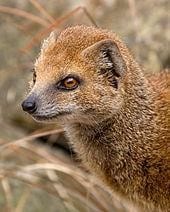
Yellow mongoose, Cynictis penicillata


  • Whiptail lizards

This one is with no doubt my favourite.

Some women might have dreamed of a world with no men. Whiptail lizards have done it. Females whiptail lizards are able to clone themselves. And this is not the only species with this capability. There are actually quite a few, 80 groups to be precise, which include amphibians, reptiles, and even fish. But the specificity of these female lizards is that though they don’t need to have sex to survive, they still display mating behaviours, meaning that females sometimes mount other females. Scientists think this behaviour is hormonally driven; high progesterone levels may cause females to mount others. But they probably don’t just bump cloacal regions for fun. Studies have shown that females who are mounted by another female are more fertile than those who go it alone, likely because the mounting behaviour promotes ovulation (Wade, 2013).

Mating behaviour among whiptail lizards: female lizard mounting another female.


  • Spotted salamanders

Among spotted salamanders, DNA analysis shows inbreeding at the level of first cousins, on average. Despite having hundreds of possible mates to choose from, females tended to fertilize their eggs with sperm from related males.

Spotted salamander

Interestingly, in some cases, the natural selection mentioned earlier seems to contradict other studies showing that for some animal or insects, inbreeding within first cousins or brother/sister gives better chance of survival to the offspring. Inbred ambrosia beetles, for example, fared no worse than outbred insects, and the eggs produced by brother-sister pairs are likelier to hatch than the eggs of unrelated pairs (Andersen 2012). Similarly, another study has found that for at least one fish species, fathers from brother-sister couples spent more time, on average, defending their caves and that both parents tended to pay more attention to their kids than unrelated couples.” How to explain this? The ecologist who supervised the study reports, “Couples which are full siblings are more cooperative in brood care. … [T]he males and females stay with the offspring for several weeks and guard them—they defend them—and there’s less aggression between full siblings.”

Stay tuned for next and final segment in a series on incest. We will talking about the practice of incest in modern societies: Modernization or cultural maintenance?

 References

Andersen, H., Jordal, B., Kambestad, M., & Kirkendall, L. (2012). Improbable but true: The invasive inbreeding ambrosia beetle Xylosandrus morigerus has generalist genotypes. Ecology and Evolution, 2(1), 247-257.

Nichols, H., Cant, M., Hoffman, J., & Sanderson, J. (2014). Evidence for frequent incest in a cooperatively breeding mammal. Biology Letters, 10(12), 20140898.

Wade, J., Huang, J., & Crewst, D. (1993). Hormonal Control of Sex Differences in the Brain, Behavior and Accessory Sex Structures of Whiptail Lizards ( Cnemidophorus Species. Journal of Neuroendocrinology, 5(1), 81-93.
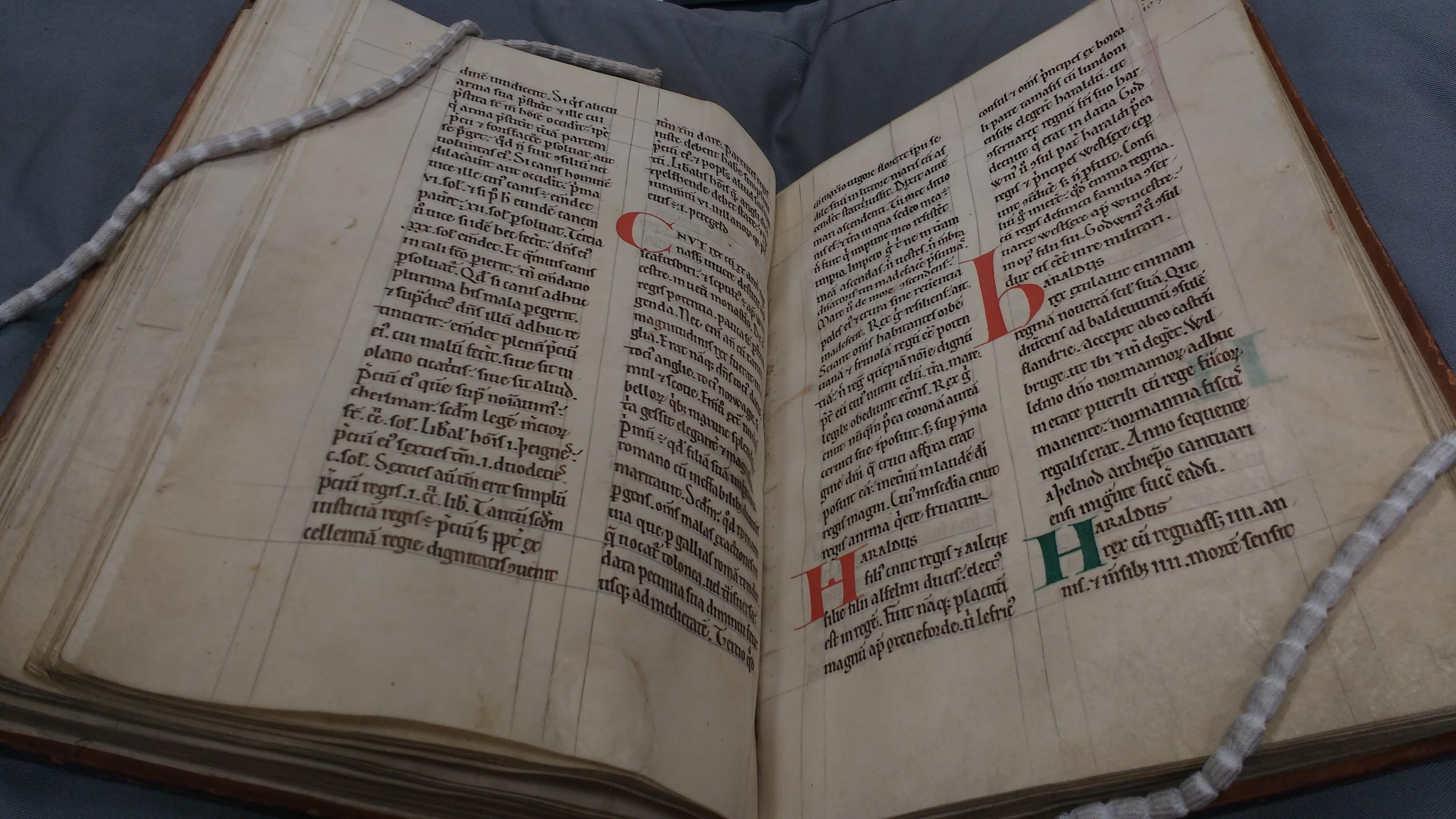
The Legal Manuscripts of Lambeth Palace Library

By Arendse I Lund, on 19 December 2018

For the past couple months, I’ve been working with the legal manuscripts at Lambeth Palace Library. As the historic library and record office of the Archbishops of Canterbury, they have an incredible collection of documents and manuscripts collected, copied and published from the 9th century till today — and I’m taking full advantage of it!

Lambeth Palace Library MS 118 (Author’s own photo)

During my London Arts & Humanities Partnership placement at Lambeth Palace Library, I’m writing about the sorts of things I discover as I examine their incredible collection of manuscripts. My first piece is on their two vellum copies of Henry of Huntingdon’s massive Historia Anglorum, his account of the history of England from its beginnings until the mid-twelfth century. Huntingdon’s account is important as a historical source. However, it’s also fascinating because we can see his narrative techniques at play; he inserts apocryphal stories as a way to highlight a historical figure’s character.

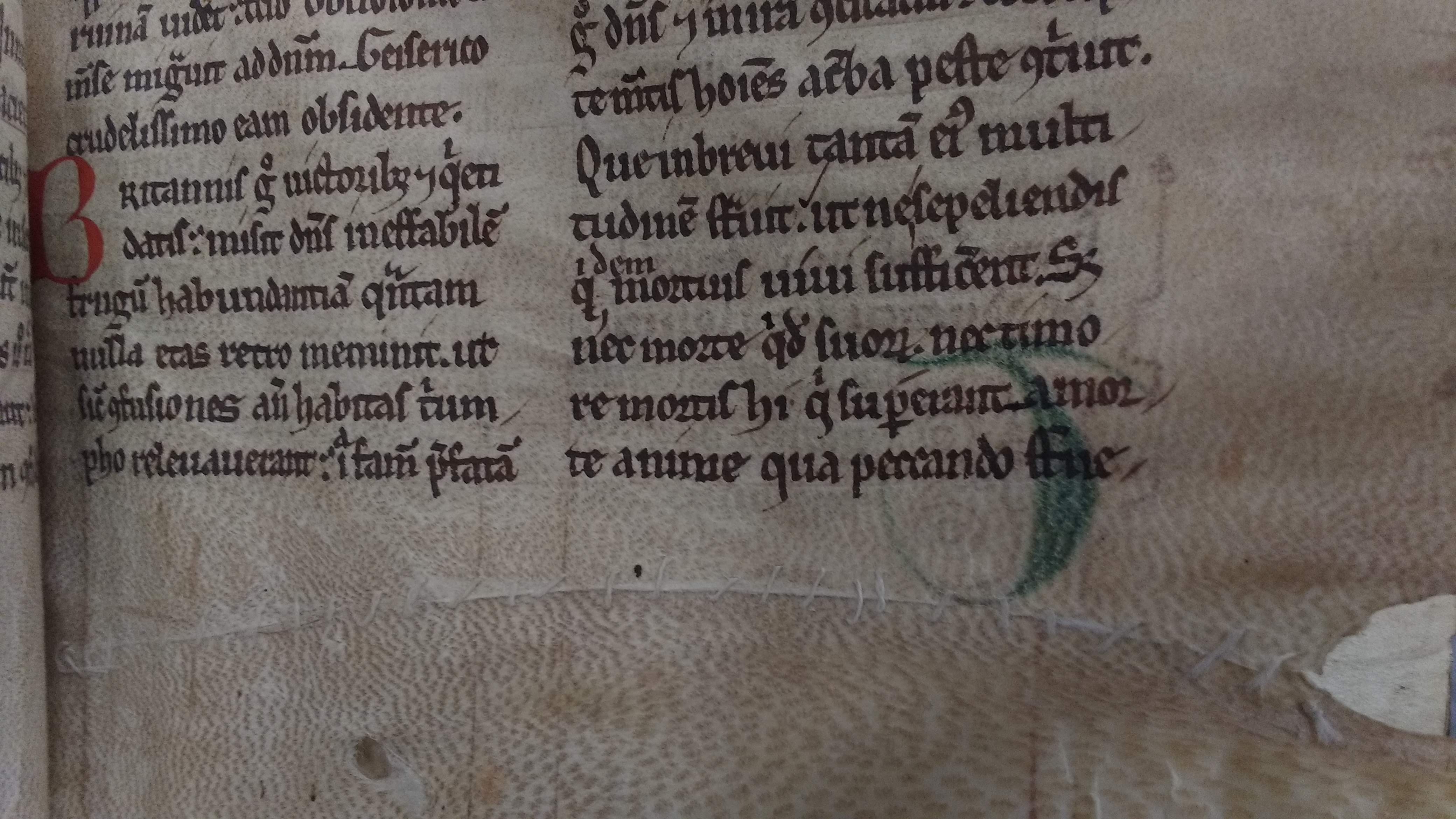
By comparing the two manuscripts their stark differences are thrown into light, both in terms of their content and also their current physical state. MS 118 is in a much better state with clean pages and wide margins. MS 327 has all the marks of having been a working copy and frequently used; there’s a spattering of verdigris discoloring the pages and stitches repairing tears in the vellum.

Stitches across Lambeth Palace LIbrary MS 327

As I work my way through all of Lambeth’s medieval legal holdings, I am putting together an exhibit of the most important manuscripts. This will go on display in the spring. Stay tuned!

Young’s Inequality: The erasure of women’s names in history

By Cerys R Jones, on 13 December 2018

Young’s Inequality is a powerful result in mathematics, named after William Henry Young, a British mathematician who was president of the London Mathematical Society and a Fellow of the Royal Society. However, I recently learned that much of the work published under William’s name was actually in collaboration with his wife, Grace Chisholm Young.

Grace Chisholm Young studied mathematics at Girton College, Cambridge after being awarded the Sir Francis Goldsmid scholarship. She achieved the equivalent of a first-class degree in her exams, and even decided to take the final year exams for Oxford; she received higher marks than all of the Oxford students and became the first person to achieve a first in any subject from both the University of Oxford and the University of Cambridge. Grace moved to Germany to study for her PhD under the supervision of Felix Klein (famous for the Klein bottle). She subsequently became one of the first women to officially be awarded a doctorate in Germany (read more on Dorothea Schlözer, who received her degree from Gottingen in 1787, and Sofia Kovalevaskaya, who received hers in absentia in 1874).

Klein bottle, first defined by mathematician Felix Klein

After completing her PhD, Grace moved back to the UK and married William, who had been her tutor whilst at the University of Cambridge. William was appointed a professor at several universities whilst Grace cared for their children, studied for a medical degree and simultaneously wrote papers for herself and for William. Grace converted William’s research notes into academic papers, correcting his mistakes and completing his proofs. Their daughter stated that “much of their collaboration was behind the scenes of the very large number of papers published by W. H. Young”. William was aware of the inequality of women at the time and occasionally mentioned Grace’s contributions in footnotes such as one which stated “Various circumstances have prevented me from composing the present paper myself. The substance of it only was given to my wife, who has kindly put it into form. The careful elaboration of the argument is due to her.” Private letters from William to Grace also discussed the nature of their joint work. In 1902, he wrote “The fact is our papers ought to be published under our joint names, but if this were done neither of us get the benefit of it” adding “everything under my name now, and later when the loaves and the fishes are no more procurable in that way, everything or much under your name.”

In time, Grace began to be acknowledged for her work. In 1906, they published a textbook on set theory together and William wrote “any reference to the constant assistance which I have received during my work from my wife is superfluous, since, with the permission of the Syndics of the Press, her name has been associated with mine in the title page.” Grace also began publishing papers in her own name from 1914 and was awarded the Gamble Prize at Gerton College. William, however, received greater recognition for their collaborations and was awarded the de Morgan medal from the London Mathematics Society and the Sylvester prize from the Royal Society. Women were not eligible to become fellows of the Royal Society until 1945, just a year after Grace’s death.

Grace has since received recognition for her many important papers on differentiation and derivatives, as well as for the Denjoy-Saks-Young theorem, which is named after her. Furthermore, in a letter addressed to her sister, Grace wrote “I liked being incog. to the outside world, and felt I had the perfect right to do so, husband and wife being one… I don’t want to be mistaken for the modern ambitious female, ambitious for herself and her own glorification.” Grace never yearned for recognition for herself and may have even disagreed with the message of this blogpost.

Although  there are numerous other stories of women’s successes being hidden under the guise of a man in history, steps are continuously being made towards equality. In 2018, there are 124 women fellows in the Royal Society, although this is only 8.5% of the total number of fellows. According to the Higher Education Staff Statistics for the UK in 2016/17, there are 5050 female professors in the UK (24.6% of the total number of professors in the UK). Whilst these numbers appear to be steadily increasing, there is still a long way to go to see women represented equally in academic positions.


The information in this blogpost came from the following papers:

[1] Claire Jones (2000) “Grace Chisholm Young: Gender and mathematics around 1900”, Women’s History Review, 9:4, 675-693

[2] Patricia Rothman (1996) “Grace Chisholm Young and the Division of Laurels”, Notes and Records of the Royal Society of London, 50:1, 89-100


Famous Butts of the Animal World: The Okapi

By Sarah M Gibbs, on 10 December 2018

Jungle-politan’s Senior Relationships and Lifestyle Correspondent, Sarah Serengeti, examines pressing posterior issues.

Hey there, all you sassy Jungle ladies! Sarah Serengeti here. Now, as you may have learned from a few little posts on my Instagram, Tumblr, Facebook, Twitter (retweeted thirty-seven times!), and Snapchat accounts, I was recently voted Best Lifestyle Columnist (Four-Legged and Flightless Bird Division) at the annual Savannah Magazine Awards. But I don’t want my readers to worry that my fame will make me rest on my laurels (or, you know, just eat a celebratory antelope and then sleep for three days). No, this award has spurred me on to pursue solutions to challenging reader dilemmas. Hence, my recent memorable columns: “So You’re Dating Your Natural Predator: Tips to Enjoy Times with the Bad Boys” and “Dying Your Pelt: How to Find the Best Spots and Stripes Stylists.” This month, I take on an even more pressing issue: butts.

Ever since Pippa Tiger-ton slunk her way into the jungle, the watering hole chatter has been all about generous backsides. How to get them? How to maintain them? Will they throw off your balance so much that you nosedive trying to swing through the canopy? To find answers, I’ve started a new series, “Famous Butts of the Animal World.” These interviews will get the facts direct from the horse’s (or baboon’s or thylacine’s) mouth. First up, we’ll be talking to a fierce four-legger: the Okapi.

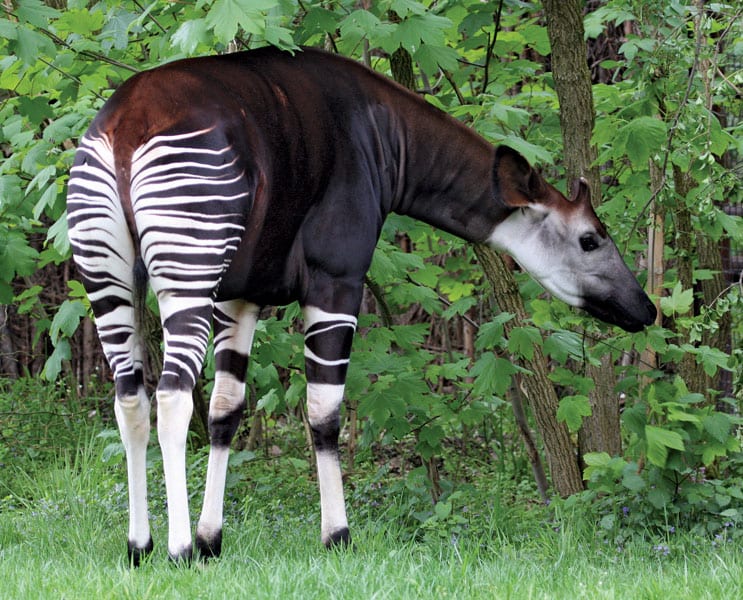
The Okapi (Encyclopedia Britannica)

Sarah: Welcome, Miss Okapi.

Okapi: Uh, thanks. You can call me “Oki.”

Sarah: Okie-dokie, Oki! Can you tell me a bit about yourself?

Okapi: Um, I guess, but I’m a bit of a shy animal.

Sarah: Well, we all feel a little invisible sometimes.

Okapi: Actually, I’m way invisible. I live deep in the Ituri rainforest in the Democratic Republic of Congo, and have keen hearing that lets me detect any stumbling two-footers (humans) long before they see me. I wasn’t even known to science until 1900.

Sarah: Wow! You’re like a hoofed ninja!

Okapi: True dat. And I’m really not a people person. Okapis are solitary animals.

Sarah: Well, I don’t want to get too personal, but I hear you have a famous relative: the giraffe.

Okapi: Yeah, he’s pretty popular. The ladies love a tall guy.

Sarah: Was it difficult to grow up with such a well-known family member?

Okapi: Living in his shadow wasn’t easy. I mean, it’s huge. The dude is two stories tall. It doesn’t help that we have similar heads and ears, and the same long, prehensile tongues. I’ve been asked a lot of times whether I’m a giraffe standing in a hole.

Okapi Calf at the San Diego Zoo.

Sarah: Oki, let’s talk brass tacks. What about that butt?

Okapi: Well, you know, I was really self-conscious about it growing up. I felt that people were staring at it. Which they were, because it’s covered with stripes. The rest of my fur is dark purple or reddish brown, and feels like velvet. And it’s oily to allow water to roll off. Then suddenly, BAM! Butt stripes! One day my mom finally said to me, “It’s unique. It’s you. It’s time you owned that booty!” And she was right. That day, I strutted through the Ituri.

Sarah: Work it, girl!

Okapi: My butt is actually the reason I survive. The markings are great camouflage in the diffuse light of the rainforest, and they help okapis find each other as well. That, and the scent glands. Each of our feet secrets a tar-like substance that marks where we’ve walked. It means if you’re lost in the rainforest department store, you can always find your mom.

Sarah: Any parting words for our readers, Oki?

Okapi: Make sure you love that junk in your trunk!

Sarah: Oh, what a lovely—she gone! She really is a hoofed ninja! Well, until next time, readers, keep it furry and fabulous!

Come see the Okapi at UCL’s Grant Museum of Zoology!

Myths in the Museum: Horseshoe Crabs, Blue Blood, and Modern Medicine

By Jen Datiles, on 7 December 2018

This is the third segment in the Myths in the Museum series; you can go back and read about the dugong and mermaid, and the narwhal and unicorn.


With Halloween now behind us and the golden days of autumn getting shorter and shorter, a new time of year is fast coming upon us…one filled with tissues, stuffy noses, and general misery. Flu season.

Yes, it’s that time again, when the cold frost that heralds winter comes nipping at our toes at night to suck the warmth from our bodies like the vampire that it is. Feverishly we brew our teas, cling to those hankies and wrap ourselves in our best woollies and Jon Snow faux furs in an attempt to fend off illness. Yet we ourselves are guilty of our own vampiric methods in this War of the Wheezing. Our flu shots, and basically most drugs and medical injections today, are possible because we harvest another species’ blood: Horseshoe crab blood.


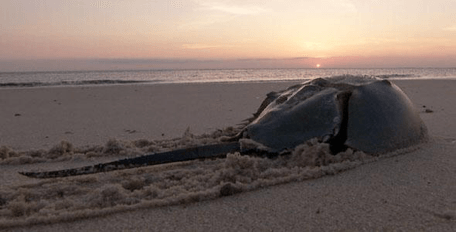
Still from the PBS Documentary Crash (Source: The Atlantic, 2014)


The horseshoe crab, Limulus Polyphemus, is actually more closely related to scorpions, spiders, and mites than to crabs. Its common name is obvious; its exoskeleton is a large shell shaped like—you guessed it—a horseshoe. These strange-looking creatures have 10 eyes distributed around the shell to help them navigate their way. Don’t be fooled by the tail that looks like a stinger; it serves as a rudder while swimming, and can help the crab reorient itself when it gets flipped over. The horseshoe crab is the only species within its family, Merostomata, which means “legs attached to mouth”. Take a look at the 6 pairs of appendages on its underside, and you’ll see why.


Horseshoe crabs, our ‘living fossils’ (Source: PBS)


The blood of horseshoe crabs produces limulus amebocyte lysate (LAL), a protein that can detect the presence of endotoxins, bacteria, and other sources of contamination, which we use to render our medicines safe. This protein is found nowhere else on earth. It’s no wonder that this marvellous miracle protein would be found in the blood of horseshoe crabs; they’ve have remained virtually unchanged in the 450 million years they’ve existed. They’re literally living fossils, and yet another example of the strange mysteries of ocean life.

In the 1960s humans discovered the amazing LAL and soon after put it to use in pharmaceutical laboratories around the world. Horseshoe crabs were gathered from their native Atlantic habitats, taken to facilities, drained of up to 40% of their blood, and returned to the ocean. The problem, however, is that this method does little to track what happens to the crabs after they’ve returned to the wild, starved and injured. It is estimated that 50,000 die in the process each year; this, sadly, may be a gross underestimation.


Crabs collected from Delaware Bay, 1928 (Source: Delaware Public Archives)


Since the 1850s, Atlantic fishermen have harvested about 1.1-2 million horseshoe crabs annually to use as eel and fish bait. Once the medical industry got involved, however, horseshoe crab populations have drastically reduced, and by 2016 the species was added to the IUCN Red List.

A recent publication in June 2018 claims to have found a synthetic alternative to LAL; if true, this could mean a total turnaround for the species. And, possibly, humans may not have to rely on draining these ocean species’ blood and threaten their existence to protect ours.


5 Things Museums Want to Do in the Future

By tcrnkl0, on 6 December 2018

As part of my PhD research this past summer, I got together a group of archive and museum professionals to talk about contemporary collecting and imagining the future of their work.

This wasn’t so much about having museums on Mars or fancy futuristic machines (although technology did come into it) but more about the principles by which archive and museum staff would like to be working and connecting with their audiences.

Participants at the workshop. Image by author.

Based on the workshop, here are 5 things museums want to be doing in the future:

  1. Facilitate inclusive personal and imaginative journeys: There was a strong desire to improve people’s access to collections, in order to make archive and museum collections a truly shared resource. Staff also want to encourage playfulness, and use collections to activate people’s imaginations about creative futures for society. This could include using digital and virtual reality to create emotional connections, centring archives and museums around people’s experiences.
  2. Give life to objects that have lost functionThis meant reinvigorating meaningful objects that we want to be part of collective memory, and valuing the work we put into taking care of them. On the other side, there was also a desire to recognise that materials disintegrate and ‘die’—we don’t have to preserve things that have come to the end of their natural lives.
  3. Protect public access to free digital culture and resources: In a time when much of our digital data, including personal and cultural material, is held and used by private companies, collections should aspire to help people keep things free and public. Practitioners spoke about the importance of learning to navigate digital rights and ownership in their collections. The right to free access to digital culture also needs to be balanced with the right of artists and communities to maintain ownership of their material.
  4. Be instruments of change and activism: Archives and museums can be used to investigate the society we live in, and model ways to engaging in research and learning. They can encourage and support explorations of collections, past collectors, and what it means to be collectors ourselves. Building a strong basis of research and inquiry can be used to inspire changes in attitude and informed democracy. It’s important for archive and collections staff not to be complacent or ‘bubble bound’.
  5. Work across boundaries: Participants wanted to be free to make greater connections between science, art and culture, both within collections and across departments and organisations. Working across boundaries also meant thinking about collections as ecosystems—creating networks of institutional (and community) holdings.

Participant contribution: ‘A future where collections are relevant and facilitate optimistic outrage’. Image by author.

You can read  more about the findings of my workshop, including the full report, at the Heritage Futures project website.

Colours of Ancient Egypt – Red

By Anna Pokorska, on 4 December 2018

This is the third post in the Colours of Ancient Egypt series; here you can read the introduction, and here all about the colour blue.

Red was an easy colour to obtain in ancient Egypt as naturally red minerals, or clays, were abundant. In fact, they were already used as pigments for painting in pre-historic times. Of the earth pigments, as they are often called, ochre was used for red colouring. Like others, it is an iron oxide but gets its red shade from a mineral hematite, which can be naturally present in varying quantities. Another way of obtaining the pigment is by heating the more common yellow clay to produce what is called ‘burnt ochre’.

Painted wooden stela showing man Ihefy adoring hawk-headed Horus (Petrie Museum, UC14695).

In ancient Egyptian painting we find the red colour often used to distinguish gender, as men’s skin was often painted red[1]. We can see an example of that in this painted wooden stela from the Petrie Museum.

Less obviously, red ochre was also popular in cosmetics such as rouge and lip colour. In fact, those pigments are still found in beauty products today due to their ready availability, stability and non-toxicity. However, perhaps the most surprising application of these materials is actually medicinal. The Ebers Papyrus, one of the oldest and most important medical texts from ancient Egypt (dated 1550 BC), prescribes ochre clays as a cure for any intestinal or eye problems.

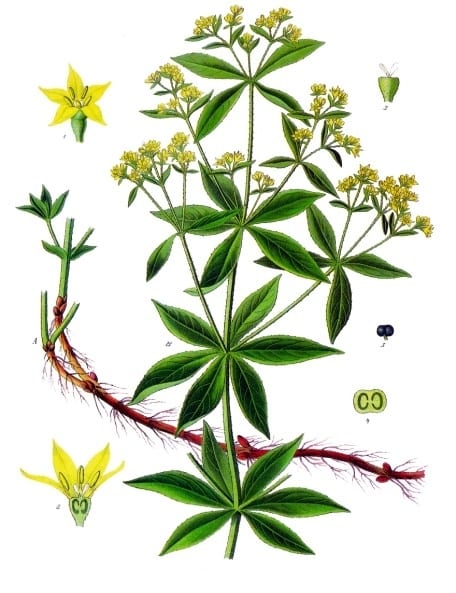
However, minerals were not the only source of red colourants. Ancient Egyptians were also able to tint their textiles using madder or kermes carmine dyes. The former was derived from the root of a madder plant, rubia tinctorum (see below).

Madder plant (Image: Franz Eugen Köhler).

It was one of the most widely used natural red dyes until the development of synthetic equivalents in the 19th and 20th century. In fact, some madder-dyed cloth was even found in Tutankhamun’s tomb. On the other hand, kermes carmine was made from wingless insects found on certain species of European oak trees. Like madder it was used both as a textile dye and a lake, which is a pale pigment obtained by precipitating a dye onto an inert colourless substrate such as chalk. Kermes’ deep crimson shade made it a very popular colourant for centuries.

So far, I’ve mainly talked about pigments and dyes used for decoration, but I would be remiss if I didn’t mention at this point one of my favourite objects in the Petrie collection:

Fragment of a composite statue from Amarna: right ankle and heel, in red jasper (Petrie Museum, UC150; Photo: Anna Pokorska).

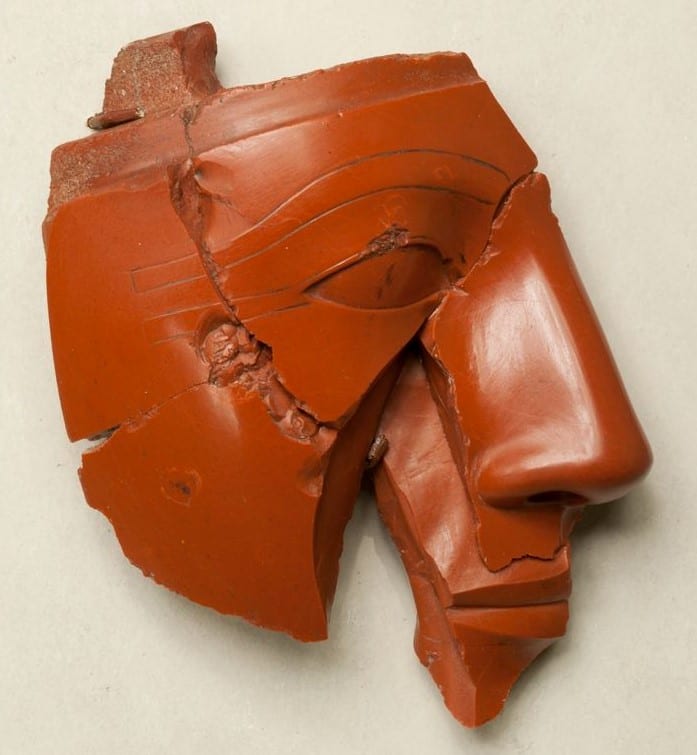
This is a right ankle and heel in red jasper, part of a full-size composite statue from Amarna, dated to the 18th Dynasty. I’ve often stopped in front of it imagining what the statue would have looked like whole. I have to admit that I previously assumed the sculpture to have been entirely made of red jasper, which, in my mind, looked incredible. However, that was not the case; only the exposed flesh would have been carved from red jasper (thus depicting a male figure), while the rest of the statue was likely made from Egyptian alabaster, limestone or wood. The Metropolitan Museum of Art in New York has fragments of a king’s head made of the same material and dated to the same period. In fact, some of the fragments come from the Petrie collection which makes me wonder if they were perhaps part of the same statue.

Fragmentary head of a king in red jasper, from the 18th Dynasty (Metropolitan Museum of Art, NY).

We may never know. But one thing is certain: even though we’ve since been able to create many synthetic red colourants of various shades, natural red pigments used by the ancients remain as popular as ever.


[1] Lorelei Corcoran, Color Symbolism, in ‘The Encyclopedia of Ancient History’, Edited by Roger S. Bagnall, Kai Brodersen, Craige B. Champion, Andrew Erskine, and Sabine R. Huebner, Blackwell Publishing Ltd. (2013), pp. 1673–1674