X Close

Researchers in Museums

Home

Engaging the public with research & collections

Menu

Archive for the 'Current Engagers' Category

Event: What do you need to create a justice system?

By Arendse I Lund, on 14 March 2018

What do you need to create a justice system, an evening of short talks by UCL’s student engagers, will be taking place on Tuesday, 20 March 2018, UCL Art Museum 6:30-8pm


Our upcoming event “What do you need to create a justice system?” is next Tuesday — come join us for an evening of short talks focussed on the justice systems, or lack thereof, in early farming communities, amongst the Anglo-Saxons, and in the Dark Net. Think there’s no connection at all between these disparate time periods? You might be surprised!


The speakers are:

Josie Mills – a third-year PhD in Archaeology at UCL specialising in applying scientific techniques, like mass spectrometry, to understand more about stone tools made by Neanderthals. She’s particularly interested in how we, as modern humans, perceive prehistoric behaviour and the division we draw between us and other species.

Arendse Lund – a PhD student in the UCL English department. She traces the development of an Old English legal language and how rulers use this legal terminology to shape perceptions of their authority. She is funded by the London Arts and Humanities Partnership.

Cerys Bradley – a PhD student in the crime and security science department at UCL. They study the people who buy drugs on the internet and how they react to different law enforcement interventions.

The event is being hosted in the UCL Art Museum, an intimate space in what used to be the old print room. The three talks are 15 minutes each and are followed by questions. Then attendees are welcome to join the presenters for a wine reception. No booking is necessary but space is limited.

We look forward to seeing you there!

Did Neanderthals Eat Brains?

By Josie Mills, on 11 March 2018

In short, we think so…

In the archaeological record, ‘cannibalism’, also known as ‘anthropophagy’, is usually identified through studying human bones and analysing any cut marks left on them that were made by stone tools. These cut marks would have occurred during the process of de-fleshing, or excarnating, the individual.

Cutmarks are used as evidence of cannibalism and have been reported at several different Neanderthal sites, like El Sidron and Goyet Cave; however, incontrovertible proof of intentional cannibalism is relatively rare. When analysing marks on bones, archaeologists observe the taphonomy of the find; this means trying to untangle what has happened to it since it was deposited from its systemic (or life-time) context. In some cases, reports of cutmarks made by Neanderthals have been re-analysed and interpreted as damage from carnivore activity or environmental processes.

Cutmarks are found in predictable patterns. For example, upper limbs are usually disarticulated (removed from the body) whereas lower limbs, which have a higher nutritional value, are de-fleshed. At Goyet Cave in Belgium, cutmarks found on Neanderthal rib bones have been used to suggest evisceration and removal of the chest muscles (Rougier et al. 2016). There is also evidence of percussion marks on thigh bones where they have been struck to extract the bone-marrow, which is highly calorific.

The main evidence for brain-eating derives from cut marks and percussion marks found on Neanderthal crania, suggesting skulls were exploited to get to the brain, which is also a very nutritious organ.

Figure 1: A summary of all the cutmarks and percussion marks/pits recorded on the Neanderthal remains from the Troisième Caverne of Goyet (Belgium). Note the prevalence of cutmarks on the calorific areas of the femur and tibia. (Image reference: Rougier, H., Crevecoeur, I., Beauval, C., Posth, C., Flas, D., Wißing, C., Furtwängler, A., Germonpré, M., Gómez-Olivencia, A., Semal, P. and van der Plicht, J., 2016. Neandertal cannibalism and Neandertal bones used as tools in Northern Europe. Scientific reports6, p.29005)

Human bones often occur alongside animal remains and one of the most important criterion for identifying cannibalism is whether both types of bones have been treated in the same way. If this is the case and human bones are butchered just like animal bones, then it’s likely that nutritional cannibalism took place.

It’s hard to say whether all Neanderthals practised nutritional cannibalism as we know that their behaviour varied across different regions and timescales. It may have been a behaviour that occurred out of necessity during periods of nutritional-deficit, when sufficient animal and plant resources were scarce.

What are the repercussions of anthropophagy?

Anthropophagy is taboo and it’s a bad idea to eat people; in a modern context it’s socially unacceptable but there are also potential health issues particularly related to eating certain parts of the body.

Eating brains can expose you to prions, a type of protein generally found in the central nervous system. Everybody has them, however some types of prion can act as infectious agents inducing abnormal folding of otherwise healthy prions. These abnormal prions can occur through genetic inheritance, sporadic mutation, or infection.

The brain is the most vulnerable organ if exposed to infectious prions. Abnormal folding causes the degeneration of white matter, making the important parts of the brain spongy. This explains why prion diseases are neurodegenerative, causing symptoms like loss of co-ordination (cerebellar ataxia) and muscle control. They are fatal and there is no current cure.

You might have heard of the prion diseases Creutzfeld-Jakob disease (CJD) or Bovine Spongiform Encephalopathy (BSE – ‘mad cow’ disease). One of the reasons that the BSE scare occurred in the ‘90s was that farmers were feeding cattle a form of slurry that was made by combining the carcasses of other livestock, greatly increasing the living animal’s likelihood of ingesting infected brains or parts of the nervous system. This became illegal and when the practice stopped so did the elevated cases of BSE.

Probably the most famous outbreak of prion disease is the Kuru, which originated amongst the Fore tribe in Papua New Guinea. In Fore, Kuru literally means ‘the shakes’ referring to loss of muscle control. It’s believed that Kuru originated from one individual in the tribe who experienced a sporadic prion mutation but that it spread so effectively because the Fore practiced ritual anthropophagy until around 1950. Anthropophagy was a key part of their mortuary practice as it involved both honouring and passing on the strength of the deceased. Kuru was most prevalent in women and children as they consumed most of the nervous system and were responsible for the practical excarnation of the dead. At its height, the Kuru epidemic killed around 2% of the Fore women annually.

If you’ve played the video game Far Cry Primal, the tribe based on Neanderthals, ‘The Udam’, suffer from the fictional terminal disease ‘skull-fire’ that is probably inspired by Kuru. This disease is instrumental in their ensuing demise and the supremacy of modern humans (in the video game!).

Neanderthals likely lived in small family groups and were highly mobile. Therefore it seems unlikely that a prion disease could become ubiquitous and have had long-term impacts on their overall survival as a species. Although there are fringe theories that do suggest this, there are many Neanderthal remains found without signs of cannibalism. As more information about genetics and population dispersal becomes available, it seems very unlikely that the assimilation/extinction of Neanderthals was down to prion disease.

The reason that Kuru was so established within the Fore tribe is a combination of both the presence of infectious prions and a very established routine of ritual cannibalism. Basically, eating more brains does not cumulatively give you prion disease but if you do consume brains the probability that you will ingest a brain that has infected prions is much higher – making you much more likely to catch a prion disease.

Anatomically modern humans and ritual cannibalism.

Ritual cannibalism is harder to recognise in the archaeological record than nutritional cannibalism and, so far, hasn’t concretely been reported in Neanderthal populations. However, osteoarchaeological finds from a site in Southern England called Goughs Cave strongly imply that anatomically modern humans practiced ritual cannibalism. The evidence is quite gory with bones even showing signs of being chewed by other humans! Ritual cannibalism is suggested because three of the skulls were shaped to create cups or bowls and one bone has been engraved.

So yes, Neanderthals probably did eat brains, but so did our more modern ancestors, perhaps something to think about if you’ve been looking into trying out the palaeodiet…

Reference:

Rougier, H., Crevecoeur, I., Beauval, C., Posth, C., Flas, D., Wißing, C., Furtwängler, A., Germonpré, M., Gómez-Olivencia, A., Semal, P. and van der Plicht, J., 2016. Neandertal cannibalism and Neandertal bones used as tools in Northern Europe. Scientific reports6, p.29005.

Jewels of an Ancient Civilization

By Julia R Deathridge, on 1 March 2018

Whenever I’m in the Petrie Museum I’m always drawn to the jewellery. This is because a) much like a magpie my attention is easily attracted to shiny pretty objects, and b) I would actually wear a lot of the pieces on display, probably to some future fancy event that I’ll one day attend post PhD life. So I decided to do a little research on the history of jewellery in ancient Egypt and pick out my favourite pieces from the collection.

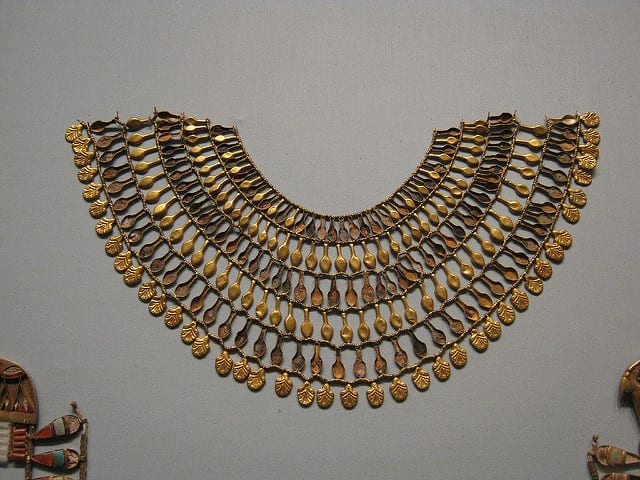
Gold wide collar necklace, dynasty 18. From the tomb of the three minor wives of Thutmose III. CC BY-NC 2.0 © Peter Roan

The rise of extravagant jewellery

As far back as the Stone Age, our ancestors have been decorating themselves in jewellery. Originally these were just simple pieces crafted from easily available resources such as seashells, bone and animal skins. However, the ancient Egyptians had other ideas, and they would go on to create trends and styles of jewellery that would live on to this day.

The discovery of gold in ancient Egypt, along with the use of precious gems, resulted in the creation of highly lavish jewellery pieces that epitomised the luxury culture of nobles and royals. As technology advanced and materials became more readily available, the popularity and extravagance of jewellery also increased, making it one of the most desirable trade items of the ancient world.

Jewellery and religion

Jewellery was extremely popular in ancient Egypt. Everyone wore it, whether they were male, female, rich or poor. But jewellery was not just about adorning oneself with pretty gems; it also acted as symbol of status and was steeped in religious beliefs.

Small charms, known as amulets, were of particular religious importance to ancient Egyptians. They believed that these charms had magical powers of protection and healing, and would bestow good fortune to the wearer. Much like charm bracelets today, these charms were commonly worn as part of a necklace or bracelet, and the shape or symbol of the amulet would specify a particular meaning or power.

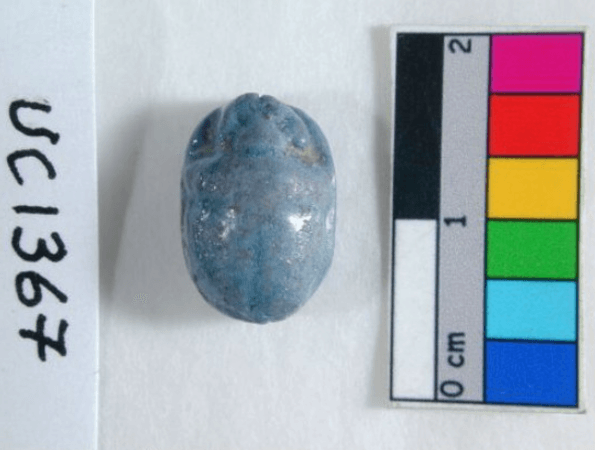
Violet faience scarab bead (Petrie Museum: UC1367)

Jewellery offered magical powers to the dead as well as the living, and ancient Egyptians were often buried wearing their prized jewels. One of the most common amulets to be buried with was the scarab, as it symbolised rebirth and would ensure reincarnation to the next level.

 Materials and metals

The materials that a jewellery piece was made out of acted as an indicator for social class. Nobles would wear jewellery made up of gold and precious gems, and others would wear jewellery made from copper, colourful stones and rocks.

Gold was the most commonly used precious metal, due to its availability in Egypt at the time and its softness, which made it the perfect material for establishing elaborate intricate designs. Moreover, the non-tarnishing properties of gold added to the magical prowess of the metal, leading ancient Egyptians to believe that it was the ‘flesh of the gods’.

Another regularly used material was the semi-precious stone Lapis Lazuli. The deep blue colour of Lapis Lazuli symbolised honour, royalty, wisdom and truth. Other prized stones included obsidian, garnet, rock crystal and carnelian, pearls and emeralds. However, artificial more affordable versions of these precious gems were also crafted, and commonly worn by the lower classes. Much like the fake diamonds and pearls of today, these artificial gemstones were practically indistinguishable from the real thing.

I want that jewellery!

So now we’ve had a little history. Lets get on to the important stuff – which pieces of jewellery I would most like to wear!

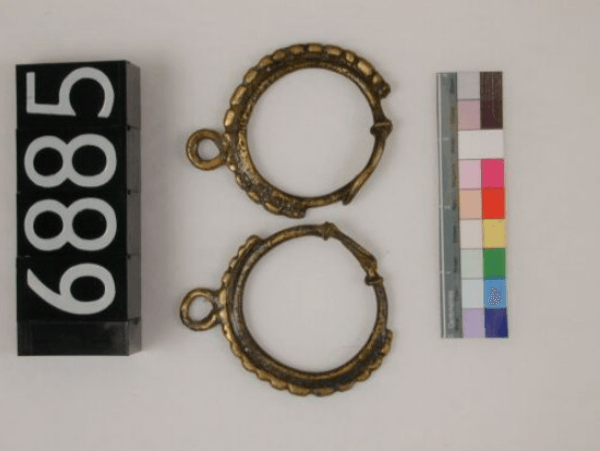
First, lets start with the earrings. It wasn’t actually until King Tutankhamen that earrings became a popular jewellery item among ancient Egyptians. The style and use of earrings is likely to have been brought over from western Africa. My favourite earrings are these beautiful hoops, which would not look out of place on stall in a Brick Lane market!


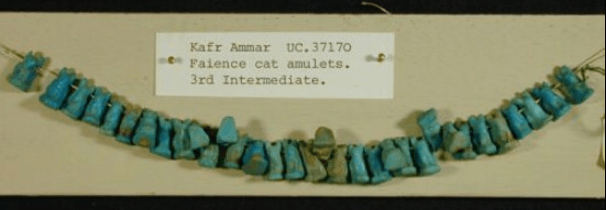
Another piece that would nicely fit into my jewellery collection is a string of faience cat amulets. Firstly, it will go brilliantly with all my other cat jewellery. Secondly, cats were highly regarded in ancient Egypt and these cat amulets would likely to have been of great importance to the owner.


Faience, turquoise glaze, sting of cat amulets (Petrie Museum: UC37170)


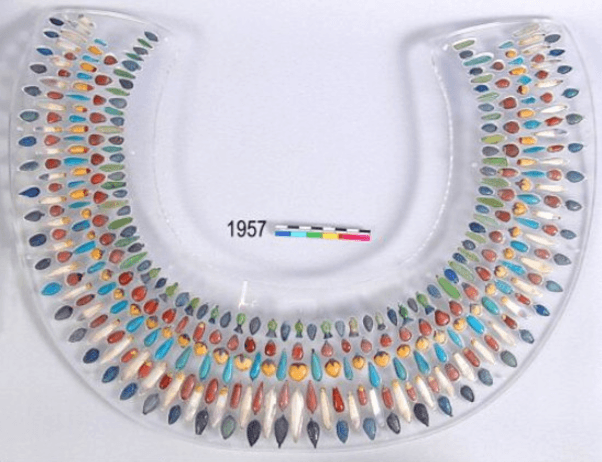
Finally, the ultimate extravagant piece from the collection that I would love to own, is this wide collar necklace, which was likely to have been worn by Akhenaten, Tutankhamen’s father. Each bead was excavated separately and the design of the necklace was reconstructed for the Petrie collection. Additionally, conservation revealed a turquoise bead (11th from the right) to have a cartouche of Tutankhamun. When you’re next in the Petrie, see if you can spot it!


Reconstructed bead necklace. Armana period (Petrie Museum: UC1957)


Neuroscience in Ancient Egypt

By ucbtch1, on 21 February 2018

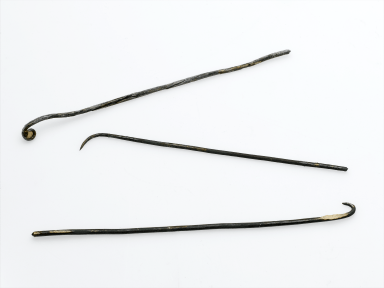
You might think that ancient Egypt has nothing to do with neuroscience but you would be wrong. When ancient Egyptians practiced mummification, the brain was usually liquefied and pulled out from the cranium through the nose using a hook-like tool—a method known as excerebration. You do this by making a hole in the back of the neck and withdraw it through the foramen, which is the opening at the bottom of the skull where the spinal cord exits the cranium. [1]

Interestingly, the Greek writer Herodotus described this process of removing the brain in the 5th century BC. He writes, “ Since the brain was not perceived as important as the heart, it was deemed useless for the afterlife, and so it was disposed of. But in some cases, the brain was not removed and it was simply left in the skull. [2]


Copies of hooks or cranial crochets used to remove the brain from the skull. (Image: Science Museum, London, A634908 Pt1).


Even though the brain was not considered of high importance, it was the Egyptians who first described the cerebral cortex. The first ever written description of the human brain was found in the Edwin Smith Surgical Papyrus written around 1700 BC, which is a copy of a much older text dating around the 30th century BC.[4]

This papyrus describes various cases of patients and their illnesses. In one of the cases, a patient had a hole in the head and the brain was left exposed. The author writes how he saw “corrugations” like the ones in molten copper. These “corrugations” are the first known written description of the cerebral cortex, which has grooves and gives the brain its characteristically wrinkly appearance. Notably, the author also writes about the cerebrospinal fluid, aphasia—an injury related to impairment of language—and he even describes seizures as “he shudders exceedingly”. [4]


“Corrugations” of the cerebral cortex. (Image: Author’s own photo)


Although the author may not have been fully aware of the importance of the brain, this papyrus is meaningful because of its rational descriptions at a time when most medical writings were filled with mysticism and magic. At the same time, it represents the beginnings of the amazing journey to discover the workings of the human brain, which has now flourished into modern-day neuroscience.


References:

  1. Fanous, A.A. and W.T. Couldwell, Transnasal excerebration surgery in ancient Egypt: Historical vignette. Journal of neurosurgery, 2012. 116(4): p. 743-748.
  2. Lamb, D.S., Mummification, Especially of the Brain. American Anthropologist, 1901. 3(2): p. 294-307.
  3. Godley, A.D., Herodotus, the histories. 1920, Cambridge: Harvard University Press.
  4. Gross, C.G., From imhotep to hubel and wiesel, in Extrastriate Cortex in Primates. 1997, Springer. p. 1-58.

Question of the Week: Why Do Wombats Poop Cubes?

By Arendse I Lund, on 14 February 2018


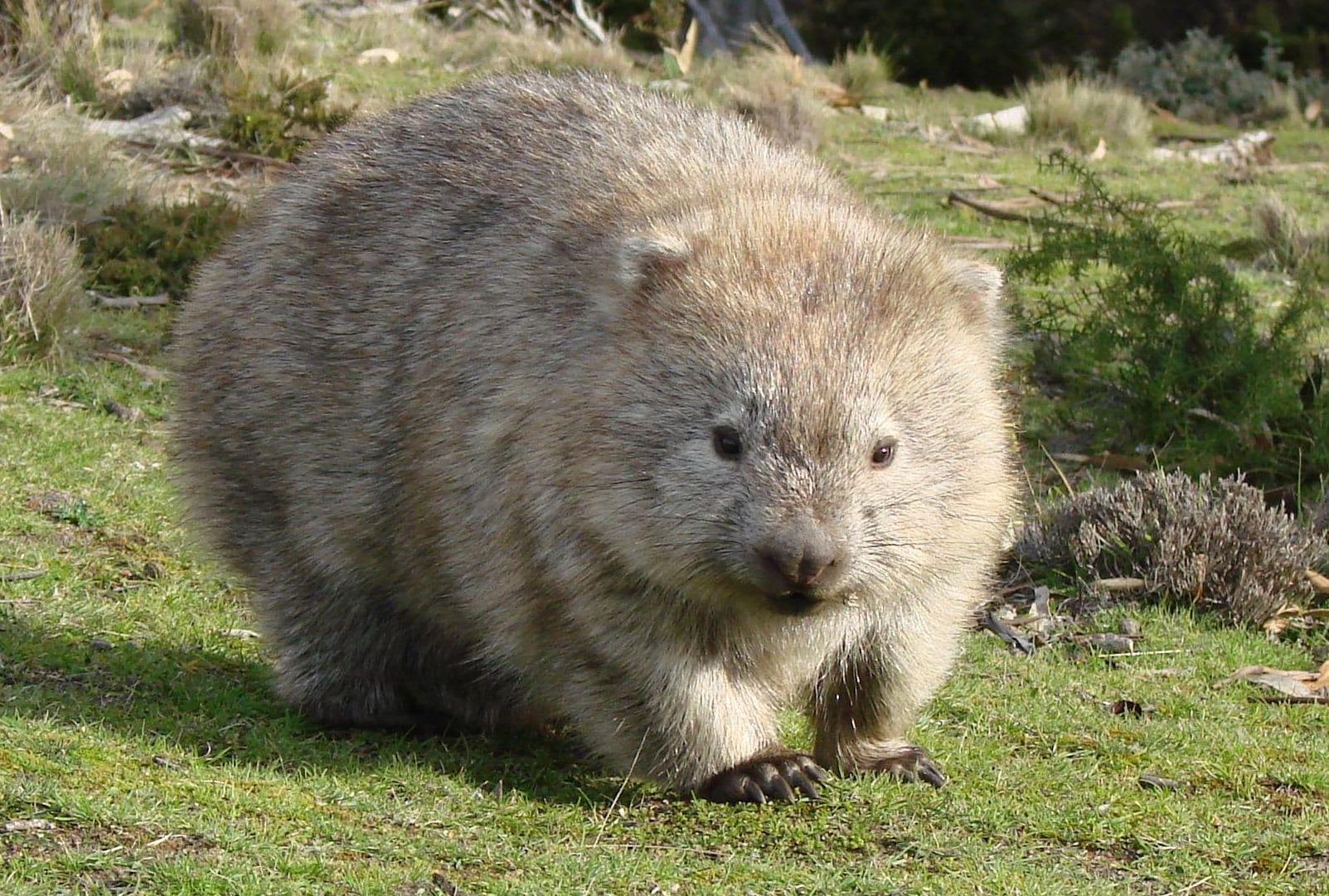
A wombat waddling along (Image: © Jack Ashby)

With pudgy little legs and a determined waddle, wombats are amongst Australia’s cutest marsupials. I mean, have you ever seen a wombatlet (not the technical term, unfortunately) sneeze? There’s lots to love about wombats—including their cube-shaped poop.

Wombat faeces—not a snack treat (Image: Bjørn Christian Tørrissen)

This odd wombat feature has sparked a lot of gleeful speculation. The prevailing thought is that these six-sided excrements are caused by a combination of the digestion time, the shape of the large intestine, and the dryness of the resulting fecal matter.

Wombats have a slow digestive system—it takes up to 2.5 weeks for food eaten to make its way down the alimentary canal, through the stomach, small intestine, and finally out the anus as fecal matter. (On the scale of animal defecation time, wombats aren’t even in the running. One snake was recorded as “holding it” for 420 days.)

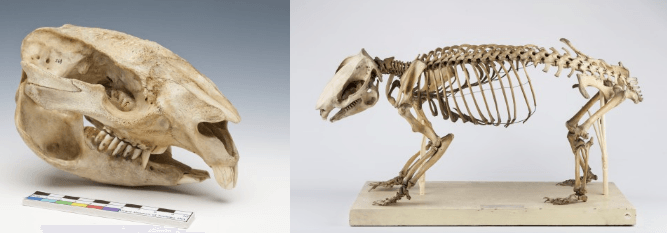
A common wombat, or Vombatus ursinus, skull with large teeth for masticating grasses and roots, and a skeleton with large front claws for digging (Images: Grant Museum of Zoology, Z68 and Z67)

After being processed by the stomach, the digested matter transverses the large intestine, which is a long tube-like organ with ridged sides. These ridges may help to break the matter into compact sections. Since the final part of the intestine is much smoother, these cubed sections retain their shape all the way to the anus.

A wombat’s long digestive time means that this matter becomes condensed and, ultimately, dry as the nutrients are extracted. Wombats have some of the driest faeces amongst mammals and, it turns out, it’s a handy evolutionary trait. Wombats use their droppings to mark territory; with a propensity to defecate on logs and other elevated objects, cubes won’t roll off, unlike cylindrical droppings. As wombats drop between 80 and 100 scats a day, it would be a pain if they, well, scattered.


According to Jack Ashby, Manager of the Grant Museum of Zoology, “Another thing to note about wombat poo is that since wombats have backwards-facing pouches, larger wombatlets end up spending a lot of time with their faces in poo. It has been suggested that this is an important way that they gain helpful gut bacteria that they need to digest the wombat diet of tough Australian grasses.”

If you want to see fake wombat faeces in action, Robyn Lawrence created a video demonstrating a wombat’s digestive system. She uses Jell-O to illustrate the forming and squeezing of the food into cube shapes, which then passes unchanged through the colon and out the fake anus.

So no, the wombat rectum isn’t square.

———

Further Reading:

Menkhorst, P. A Field Guide to the Mammals of Australia. South Melbourne: Oxford University Press, 2001.

Triggs, Barbara. The Wombat: Common Wombats in Australia. University of New South Wales Press, 2002.

Time and Astronomy in the Petrie Museum

By Hannah L Wills, on 9 February 2018

During a recent shift at the Petrie Museum of Egyptian Archaeology, I was asked by one visitor, ‘what’s your favourite object in the museum?’. As anyone who has visited the Petrie Museum will know, there is no shortage of fascinating objects on display, from the museum’s 12th dynasty pottery rat-trap, to the amazing Hawara mummy portraits (naming but two of my go-to favourites when showing visitors around the collection). However, the object I find most interesting within the museum’s collection is a small artefact found in one of the cabinets in the museum’s pottery room, in and amongst a group of objects dating from the Ottoman period (1517 – 1914 CE). The object is identified on its label as ‘UC4108 Wooden astrolabe with brass dial. Probably made for teaching purposes rather than use’. From the moment I first spotted the object I was intrigued. What exactly is an astrolabe, and how would it have been used?

Wooden Astrolabe (UC4108), displayed with its handwritten museum label (Image credit: Hannah Wills)

The Petrie Museum’s astrolabe (UC4108), displayed with a group of objects from the Ottoman Period (Image credit: Hannah Wills)


What is an astrolabe?

An astrolabe is a kind of scientific instrument, used to calculate the time and to make observations, such as the height of the Sun and stars with respect to the horizon or meridian.[i] In the Islamic world, astrolabes served an important function in determining prayer times, and the direction of Mecca.[ii] Such instruments date back to ancient times and were used to reveal how the sky looks from a specific place at a specific time. The face of the astrolabe features a map of the sky, with the celestial sphere mapped onto a flat surface. The instrument features moveable parts that allow the user to set date and time. When this is done, the face of the instrument represents the sky, allowing the user to solve astronomical problems visually.[iii]

Teaching astronomy 

Though many astrolabes used in the medieval period were made from either brass or iron, the Petrie Museum’s astrolabe is made from wood, with a brass dial, known as the ‘rete’ (in Arabic al-‘ankabūt), affixed to the top.[iv] The museum’s catalogue suggests that the object is ‘too crudely made for any practical purpose other than teaching’.[v] Historian Johannes Thomann notes that in the Islamic world from around the mid-eighth century onwards, the main function of the astrolabe was as a tool for teaching introductory astronomy, supported by texts written in an instructional style that explained the use of key astronomical instruments.[vi] The ‘crude’ finish of the Petrie Museum astrolabe, along with its size, would have made it imprecise, and ultimately unfit for carrying out practical calculations. The instrument might instead have been used for basic exercises to familiarise pupils with astronomy, and the process of making observations.


To find out more about how astrolabes work, you can watch this short TED talk, “Tom Wujec Demos the 13th-Century Astrolabe.” New York: TED, 2009.


Do you have a favourite object in any of the UCL museums? Tweet us @ResearchEngager or find us in the museums and tell us about it!


References:

[i] ‘Astrolabe’,  in Encyclopaedia Britannica, https://www.britannica.com/science/astrolabe-instrument [Accessed 8 Feb 2018].

[ii] Unit 4: Science and the Art of the Islamic World, in Maryam D. Ekhtiar and Claire Moore, Art of the Islamic World: A Resource for Educators, https://www.metmuseum.org/learn/educators/curriculum-resources/art-of-the-islamic-world [Accessed 8 Feb 2018], p. 94.

[iii] ‘The Astrolabe: An Instrument with a Past and Future’, http://www.astrolabes.org/ [Accessed 8 Feb 2018].

[iv] Sonja Brentjes and Robert G. Morrison ‘The Sciences in Islamic societies (750-1800)’, in Robert Irwin, ed. The New Cambridge History of Islam. Vol. 4. The New Cambridge History of Islam. Cambridge: Cambridge University Press, 2010, p. 596.

[v] UC4108 Wooden Astrolabe, Petrie Museum Online Catalogue, http://petriecat.museums.ucl.ac.uk/detail.aspx [Accessed 8 Feb 2018].

[vi] ‘Interviews with the Experts’, Charles Burnett interview with Johannes Thomann, Astrolabes in Medieval Jewish Culture, 5 March 2014, http://blogs.mhs.ox.ac.uk/hebrew-astrolabes/2014/03/05/interviews-experts/ [Accessed 8 Feb 2018].

LGBTQ History Month 2018

By uctzcbr, on 2 February 2018

This month it’s LGBTQ History Month, a month to celebrate and remember LGBTQ icons and heroes. The month is a vital event that reminds us LGBTQ people exist, have always existed, and should be celebrated. So, for this week’s blog post (which is, fortuitously, my responsibility) I would like to talk about an important figure from the history of both UCL and the LGBTQ community.

Amelia Edwards was a novelist, a philanthropist, an adventurer and an all-round remarkable woman. She wrote her first story at just 12 and went to write ghost stories and best-selling tales of bigamy. She also wrote about her exciting travels across the world in publicly acclaimed and hand-illustrated books. It was on one of these travels that she became committed to protecting the history and ancient artefacts of Egypt.

This bust of Amelia Edwards can be found in the Petrie Museum

Inspired by her trip down the Nile and appalled by the ransacking and destruction of Egyptian monuments and historical sites, Edwards founded the Egyptian Exploratory Fund in 1882. Through this organisation she funded many of Flinders Petrie’s digs and amassed a great collection of antiquities which she donated to UCL upon her death. It is thanks to her that UCL boasts such a large collection of important museum objects.

But, it is not just Edwards’ work that makes her so remarkable. She was also a lesbian at a time when it was thought that those kinds of women just did not exist. Of all the things that make Amelia Edwards so inspirational, I think the fact that she openly travelled and, then lived, with her partner Ellen Drew Braysher during the 19th century is certainly high on the list.

Edwards died in April of 1892, just a few months after her partner and they are buried side by side in St Mary’s Church, Henbury (in Bristol). Their graves are now listed sites, recognising them as important figures in this country’s LGBT history. This, perhaps, goes part way to rectify the designation of Braysher as Edwards’ “beloved friend” as stated on her gravestone.

In her lifetime, it was likely that the nature of Edwards and Braysher’s relationship was not acknowledged or accepted by many. Indeed, even now, when reading about Edwards’ life, Braysher is more frequently referred to as a companion, or friend, and not as a partner, a lover, or a girlfriend. I was excited to discover that Amelia Edwards shared her life with a woman, as I always am to find other lesbians, and so feel particularly enthused to discuss her legacy and her life with visitors of the Petrie Museum as I want her relationship to be recognised and remembered for what it actually was. You can read more about Amelia Edwards’ life here in a blog post written by Dr Alice Stevenson for International Women’s Day.

What do Kids ask Scientists?

By ucbtch1, on 26 January 2018

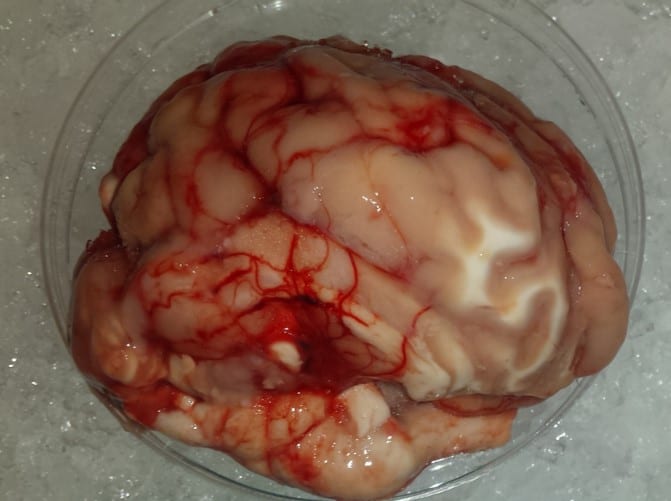
Science is exciting, science is fascinating, and with science you never get bored — this is what I want to communicate to children when I give talks about my research. As I work with brains, lasers and 3D printing, that’s easy enough. When I talk about neuroscience and what I do in the lab as a PhD student, kids are always interested even if the younger ones don’t even know what a brain does. When I show them pictures of my research (see below), which involves working with brain cells and dissecting brains, there’s always an eww sound — because the brain is “slimy”.


A pig’s brain, which — according to kids — is gross because it’s slimy. (Image: Author’s own photo)


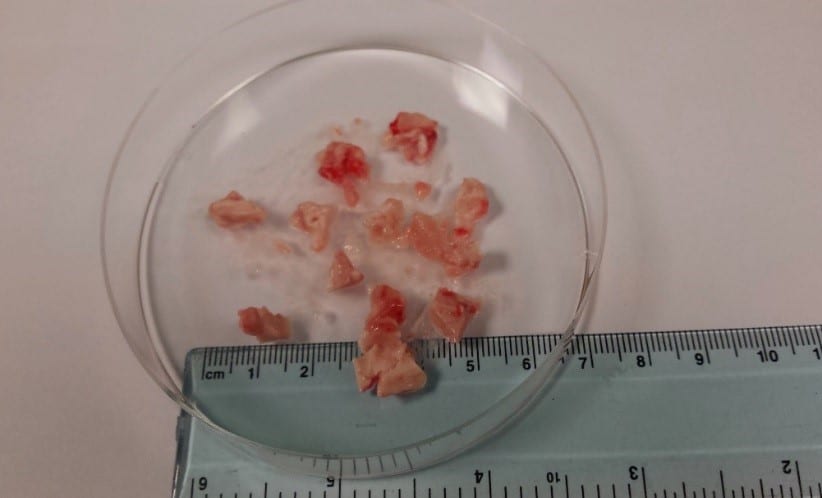
The same brain cut into pieces. (Image: Author’s own photo)


After my talk, with just a couple of minutes left and a lot of hands raised, I get a lightning round of questions. They range from all aspects of life, not just science as they assume that scientists know everything about everything in the universe. This would be cool, but it’s definitely not the case. Anyhow, I always have a blast answering their unique questions, so I’ve decided to share a couple of my favourites and some of the trickier ones here. Here is a taster of them, followed by my inner dialogue (ID) and what I actually answered (A). As you will see, my inner dialogue can be quite different from the answer, which just shows how difficult it can be to answer unexpected questions. Remember, as I always tell the kids, there are no stupid questions.


Q: Can you make little animals?

ID: Other than little humans in my uterus, no.

A: Scientist are trying to make organs in the lab by growing cells in a specific way, but we can’t grow a full animal yet.


Q: Why do you die?

ID: Because our bodies can’t cope with so much wisdom.

A: It’s a big scientific question, trying to answer why we age and ultimately die. Our bodies grow older and our cells don’t regenerate as much as they used to, but ultimately we don’t know exactly why this happens.


Q: How much do you make?

ID: Not enough.

A: Enough.


Q: Is it true that when you die your heart explodes?

ID: Yes, if you die in an explosion.

A: No, when you die your heart just stops beating.


Q: Can we even get to fully understand the brain if it’s always evolving?

Now, this one really impressed me because: 1) she knows about evolution and understands that not only we as a species evolved but we are still evolving and so are our brains; 2) she knows that we don’t know everything about the brain; and 3) it’s just a really interesting question coming from a 10-year-old!

ID: Wow, yeah that’s true, can we?

A: That’s a very good question. Yes, we don’t know fully how the brain works but there are breakthroughs in science every day and new tools and techniques will allow us to one day fully understand the brain, even if it’s still evolving.


Q: My friend told me that he saw a ghost and… (After a long story about his friend seeing a ghost, the teacher was a little fed up with his not very scientific question and the rest of the class was giggling).

ID: I’m also giggling.

A: Just because your friend said so that doesn’t mean it’s real. You have to question him and ask him to show you evidence of what he claims is true. Remember to always question everything and look for evidence.


Q: What’s the most interesting thing you’ve discovered?

ID: How resilient I can be when facing relentless adversity, demonstrated by how my numerous failed experiments and negative results have broken my spirit yet have not killed my wandering scientific mind. Oh, wait, you mean like in science?

A: How cool neurons look down a microscope.


Q: Why do you like gross stuff?

ID: What are you talking about? Brains are not gross, they’re amazing!

A: What are you talking about? Brains are not gross, they’re amazing!


Q: How old is the universe?

ID: Oh god, try to remember, you know this.

A: Around 14 billion years.

Q: How much is that?

A: A lot!


So there you have it: kids and their questions. I wish to thank the schools that invited us PhD students, as well as the children for listening to me and asking such stimulating questions. Keep your curiosity alive!


We’re Hiring Student Engagers!

By Arendse I Lund, on 24 January 2018

Are you a UCL student and excited to share your PhD research with the world? Can you find connections between your research and museum collections? Come join our Student Engager team!

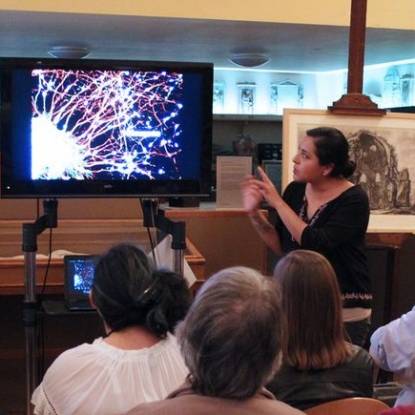
Citlali Helenes Gonzalez presents during the Materials & Objects event in the UCL Art Museum last spring.


Who We Are

We’re a interdisciplinary team of PhD students from across UCL who are interested in public engagement and sharing our doctoral research with the world. We come from different backgrounds and departments and study everything from medieval law to neuroscience to the Dark Web. You might spot us in the UCL Art Museum, Grant Museum of Zoology, or Petrie Museum of Egyptian Archaeology any day of the week talking about our research and how it relates to the museum collections.

We love talking to people, sharing expertise, and making new connections that benefit both the public and our own research. Sometimes we also host events such as Foreign Bodies, LandSCAPE, Stress: Approaches to the First World War, and Materials & Objects.


Are You the One?

We’re hiring! If you’re a first or second-year PhD student interested in working in the three UCL museums, sharing your knowledge, engaging the public in dialogue, and enhancing visitors’ experiences of UCL, then we want to hear from you. We think this is the best gig ever and we want equally enthusiastic people to come join us. We’ve also written extensively on this blog about what the Student Engager experience is like and highly recommend you take a look around if you’re interested in joining us.

For the practical side, here’s a full job description (PDF); you should email your CV and cover letter to Celine West (celine.west@ucl.ac.uk) by 16 February.

If you have any questions, tweet us or find us in one of the UCL museums.

Is Burial a Modern Human Behaviour?

By Josie Mills, on 16 January 2018

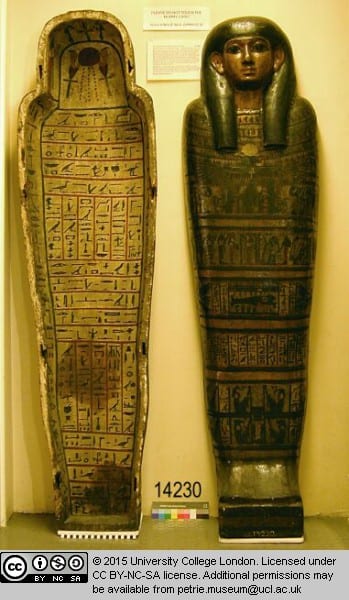
Both the Grant and the Petrie Museums contain regular reminders of death, burial, and what comes after. The animals and skeletons preserved in the Grant continue to contribute to studies of comparative anatomy, education, and public outreach in the museum. In the Petrie, there are many examples of how Ancient Egyptians treated death and the afterlife, including the wooden coffin of Nairetisetnefer on display at the back of the main room (figure 1).

Figure 1: The wooden coffin of Egyptian woman Nairetisetnefer, which is covered in gesso and painted with religious scenes and inscriptions. It was found in the Besenmut family burial(s) at Thebes. Petrie accession number: UC14230

Burial and mourning have long been associated with human-ness. Historically, we’ve thought of the process of understanding death, and what may come after, as something that can only be conceptualised by Homo sapiens. However recent observations of mammals (like the elephant) suggest that mourning, or observation and reaction to death, are not unique to humans as a species.

From an archaeological perspective, burial is generally classed within the suite of ‘advanced’ behaviours (alongside personal adornment, symbolic behaviour etc.) that appear in the archaeological record around 40,000 years ago, coinciding with the widespread dispersal of anatomically modern humans (aka H. sapiens). The timing and proliferation of these burials means that they are generally associated with a period called the Upper Palaeolithic.

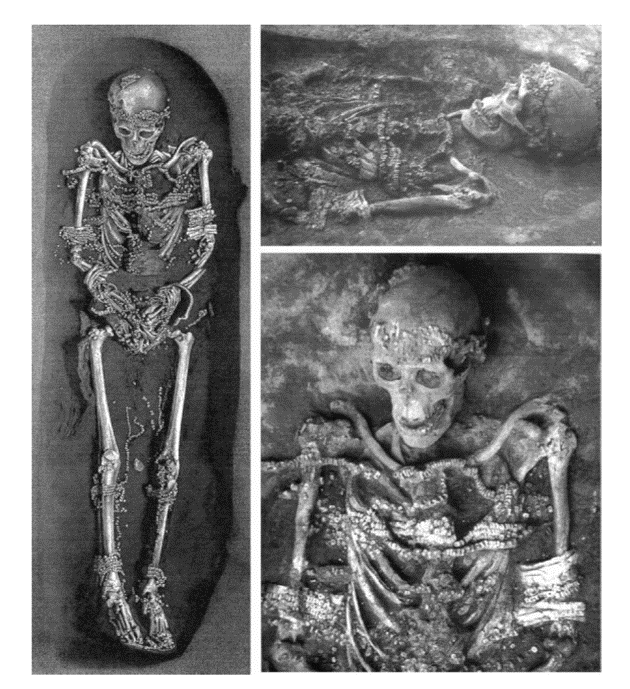
Some Upper Palaeolithic burials are easy to recognise in the archaeological record as the individual(s) is interred in a well-cut grave alongside grave goods, like the burials found at Sungir in Russia (figure 2). These well-known burials are probably not representative of widespread mortuary practice instead representing high-status individuals. Types of burial varied substantially across the Upper Palaeolithic world, for an overview of the diversity of burials in Eurasia check out Riel-Salvatore and Gravel-Miguel (2013).

Figure 2: These images show the burial of a male individual known as Sungir 1. The skeleton is incredibly well preserved and although the outfit the individual was buried in has not survived you can see the mammoth ivory beads that would have adorned it. Image credit: Trinkhaus, E., Buzhilova, A. P. 2012. “The Death and Burial of Sunghir 1.” International Journal of Osteoarchaeology. 22: 665-666

Did other hominins further back into the past practice burial? One of the most important things to consider is what the word ‘burial’ means. In a way, it can be a loaded term indicating direct intention to preserve or honour an individual, hinting at aspects of the deceased’s relationship with the living and perhaps thoughts for their journey into something like an afterlife. This process demonstrates a whole lot of complex thoughts and ideas. However, from a practical perspective the idea of burial also encompasses things like the removal of deceased from occupation sites, thereby minimising the risk of disease and attraction of dangerous carnivores, a behaviour Pettit (2013) calls ‘funerary caching’. This would make some burials in the past a slightly more practical option.


Figure 3: This reconstructed skull belongs to a Neanderthal child known as Dederiyeh 1, who was around two years old. I think one of the most striking features of this skull is the presence of so many teeth! Image credit: http://humanorigins.si.edu/evidence/human-fossils/fossils/dederiyeh-1

In an archaeological (particularly a Palaeolithic context) how do you tell when somebody has been deliberately buried?

  • Bones in the skeleton remaining in the correct anatomical location and still being attached to one another indicating a high degree of skeletal articulation, which suggests that the deceased was interred relatively rapidly after death and was not disturbed post-mortem. The preservation state of the bones can also hint at deliberate burial as they are less likely to be broken by disturbance if the individual has been protected by a grave-like structure or set aside in a specific place. This is seen in the articulated burial of a two-year-old child Neanderthal child (Dedriyeh 1) in Syria (Pettit 2013; figure 3).
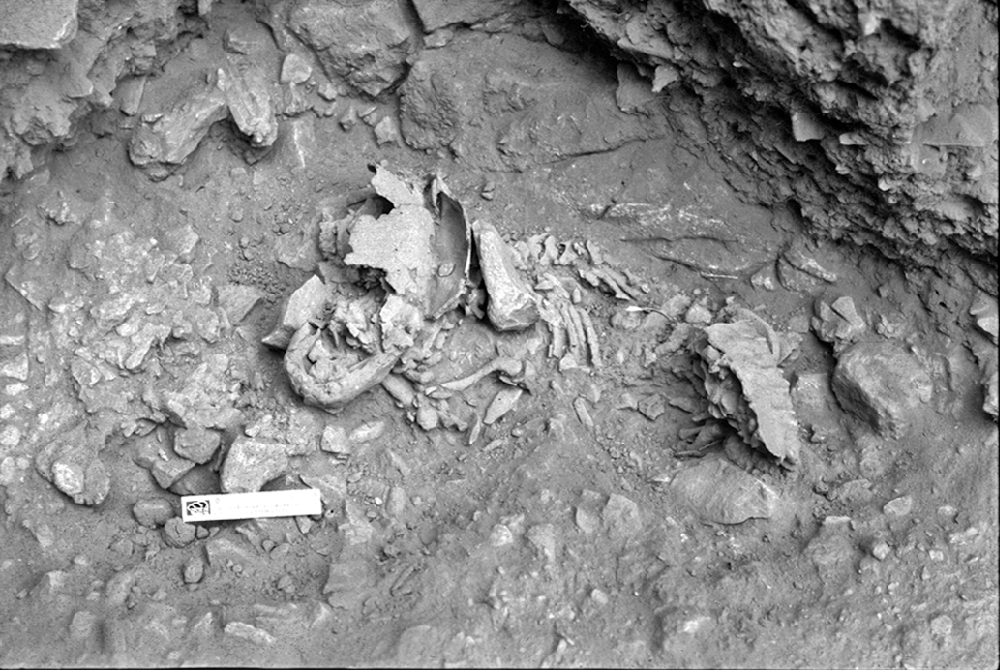
  • Association of grave goods with burials, such as flint arrowheads or inclusion of animal remains, like the red deer maxilla associated with Amud 7 Neanderthal burial (Pettit 2012). These items are particularly important if they are unusual or uncommon in the surrounding excavated area, making it more likely that they were placed with the deceased on purpose.
  • Looking for some sort of grave-like depression, a hollow dug into the ground or an area to the side of a cave where a body is placed under a rock or in a natural shelf.


Figure 4: This image shows the burial of a Neanderthal child known as Amud 7, excavated from Amud Cave in Israel. Although it is relatively difficult to see from the photo the skeleton was found alongside several items that have been interpreted as grave goods, for example flint tools and a red deer bone. Image credit: Hovers, E., Ullman, M., & Rak, Y. (2017). Palaeolithic Occupations in Nahal Amud. In Y. Enzel & O. Bar-Yosef (Eds.), Quaternary of the Levant: Environments, Climate Change, and Humans (pp. 255-266). Cambridge: Cambridge University Press. doi:10.1017/9781316106754.029

I study Neanderthals and have written in the past about how they are often given a tough time in popular media for being brutish, unintelligent and lacking in the advanced behaviours of modern humans. The burials mentioned above were made by Neanderthals, however all post-date 70,000 years ago meaning they occurred relatively late in the Middle Palaeolithic (the time when Neanderthals were around); they are also not found consistently across the Neanderthal world (Pettit 2013). From the available evidence, it seems that burial was not a ubiquitous behaviour; however, a preservation bias probably exists because the further you get into the past the more likely archaeological remains are disturbed. Equally Neanderthals were highly mobile hunter gatherers so the chance of finding and excavating their occupation and burial sites is rare and finds are generally seen in cave systems. This is both due to the shelter from environmental processes provided by caves and their recognised potential as archaeological sites, meaning they are excavated more often than open-air sites.

Neanderthal burial is a controversial topic and some of burials are contested, particularly if the term is defined by modern human standards, e.g. the deceased is found interred in a dug grave alongside grave goods. It’s likely that the origin of burial, as suggest by Pettit (2013) who has written in detail about the subject, is in the Palaeolithic but it is improbable that somebody somewhere in the past woke up and invented the concept of burial as we understand it today. It is more plausible that mortuary practice evolved in various places at separate times and has some roots in the practicalities of death for living populations.

For a final thought, although excavated burials generally post-date around 70,000 years ago (late in Neanderthal evolution), new discoveries like the structures in Bruniquel Cave (Jaubert et al. 2016), which have been reliably dated to 170,000 years ago, reveal a deepening complexity in observed Neanderthal behaviour; alongside finds like this, it doesn’t seem out of this world to think that some form of mortuary behaviour was seen earlier in the human record.

Incidentally there’s also rather a lot of evidence for excarnation by Neanderthals and Anatomically Modern Humans, but that’s for another blogpost!

References:

Jaubert, J., Verheyden, D., Genty, D., Michel, Soulier., Cheng, H., Blamart, D., Burlet, C., Camus, H., Delaby, S., Deldicque, D., Edwards, R. E., Ferrier, C., Lacrampe-Cuyaubère, F., Lévêque, F., Maksud, F., Mora, P., Muth, X., Régnier., E., Rouzaud, J., Santos, F. 2016. Early Neanderthal constructions deep in Bruniquel Cave in southwestern France. Nature 534:111–114

Pettitt, P. (2013). The Palaeolithic origins of human burial. Routledge.