X Close

Open@UCL Blog

Home

Menu

Research Support Advent Calendar 2025

By Naomi, on 1 December 2025

It’s time. For the third year in a row, we have a wonderful Advent Calendar of Research Support for you to enjoy!

We will be sharing a link each day on our Bluesky account, as well as our Linkedin account, but don’t worry if you’re not on Bluesky or Linkedin – the interactive calendar is embedded below for you to access at your own pace, or you can access it directly on your browser. We will also update this blog post throughout the month with an accessible version of the content.

We hope you find something here that will interest, inform and inspire you during this month of advent.

The front cover of the book published by UCL Press. It is dark blue, and in yellow text is written 'The collected works of Jeremy Bentham' at the top of the cover, then 'Essays on logic, ethics and universal grammar' in the middle, and in small yellow text at the bottom 'edited by Philip Schofield', below which is the UCL Press logo, also in yellow.

Cover image from UCL Press website.

1 December: Unwrap timeless ideas this festive season with Bentham’s open access Essays on Logic, Ethics and Universal Grammar, which publishes today. These thought-provoking essays explore reasoning, morality, and language- perfect for cosy winter reflections and sparking deep conversations by the fire!


A green bauble hanging from the branches of a Christmas tree which fills the entire image. Printed on the bauble is an image of the UCL portico as well as the UCL logo.

Image by Mary Hinkley on UCL imagestore.


2 December: Nothing says Season’s Greetings like writing and sharing your data management plan!


A cartoon of Father Christmas holding a scroll with the copyright symbol on it.

Image AI-generated using prompts from Christine Daoutis.

3 December: Father Christmas has been collecting data again this year…But is his list protected by copyright? Take our online copyright Christmas quiz.

A grey background covered with half a clock which has the large hand pointing just past 3 o'clock and the short hand just past 4 o'clock. In front of this is the title 'The Chronopolitics of Life' with the subheading 'Rethinking temporalities in health and biomedicine beyond the life course' below which is a list of the editors - Nolwenn Buhler, Nils Graber, Victoria Boydell and Cinzia Greco.

Cover image from UCL Press.


4 December: End the year with a powerful read.

Publishing today, The Chronopolitics of Life is the final book of the year from UCL Press. This open access work explores how time shapes life, politics and power, offering fresh insights for reflective winter reading and inspiring conversations as the year comes to a close.


A central view of the portico looking up at it from the ground. The pillars are lit up in different colours, from blue on the right, going through purple, pink, orange, gold, green and ending with turquoise on the left. In front of this colourful façade is a beautiful Christmas tree lit up in warm white lights. Everything in the foreground of the image is in darkness which gives a more impressive effect to the lights.

Image by Alejandro Salinas Lopez on UCL imagestore.


5 December: Read about the gift of rights retention, which is now included in UCL’s updated Publications Policy, and the actions for UCL authors.


Two people sit in front of computers in a room decorated with lots of plants. One of the people, a man wearing a navy t-shirt, is pointing at their screen, showing the other person, a woman wearing a light green jumper, something on the screen.

Image by Mary Hinkley on UCL imagestore


6 December: Retraction Watch is a searchable database of retracted, corrected, or concern articles with 40k+ entries. Search by author, title, or affiliation to ensure your research is based on trustworthy sources.


Four people are standing in front of a large interactive digital screen, which displays some hand-drawn notes in the form of a flow chart. One person is standing close to the screen with a pen in his hand but is looking towards the rest of the group who appear to be giving him some ideas or opinions and it looks as if he will continue to write some more notes on the screen.

Image by Alejandro Salinas Lopez on UCL imagestore


7 December: Looking to start or grow your Citizen Science project? UCL’s Resources Hub offers training, tools & support to help you succeed. Explore what’s available today!


Cartoon of an anthropomorphic red copyright symbol with a white beard, legs and arms, smiling and wearing a Santa hat.

Image AI-generated using prompts from Christine Daoutis


8 December: Join UCL’s Copyright Literacy community channel for a virtual mince pie and the latest copyright news!


Two people are behind a desk which has an open notebook and what appears to be elements of an experiment, as well as a computer screen. One person, a woman wearing a green cardigan and earrings which appear to be in the shape of a raspberry, is sat looking at the screen whilst the other person, a woman wearing jeans and a brown jacket as well as blue latex gloves, is standing next to her with a hand on the mouse also looking at the screen.

Image by Mary Hinkley on UCL imagestore

9 December: Refresh your Research Integrity training with the recently updated course which now includes guidance on Research Security and updates from the revised Concordat to Support Research Integrity.


A wintry, evening view of the entrance to the main UCL campus. The portico with it's ten pillars is in the background, lit up in rainbow colours, there is a Christmas tree with warm white lights in front of this and then two large trees adorned with colourful lights on the left and right sides of the portico. In the foreground, the two small security buildings on either side of the entrance are lit up from within and groups of people under umbrellas are walking along the pavement. At the far edges of the image are illuminated street lamps and the whole effect of the image is a wet, wintry, festive feeling.

Image by James Tye on UCL imagestore


10 December: Jingle all the way…to gaining ethical approval! The Research Ethics Team can help – book a drop-in session with one of the team.


A blue-grey mug sits on a plate, along with a mince pie dusted with icing sugar, and a sprig of holly with red berries.

Image by Lidia from Pixabay

11 December: Christmas is a time for relaxation, celebration…and careful study of official documents. There are 4,000 government documents in Overton from 80 different countries on the topic of Christmas.


A Christmas tree, decorated with warm white lights and colourful baubles is in the centre of the image, in front of the Andrew Huxley building in the centre of the main UCL campus. A dark blue sky is slightly visible above the buildings, many of the lights inside the buildings are on and there are a few people along the walkway on the left hand side of the image.

Image by Mary Hinkley on UCL imagestore


12 December: Keep your rights, and wave goodbye to embargoes – next year, UCL’s updated Publications Policy will help staff use and share their own articles as soon as they’re published.


A view along the centre of a large desk with students working on laptops on either side, some wearing earphones. There are water bottles, phones and a handbag in the centre of the desk. At the far end of the room is a door, and there are windows on the right-hand side.

Image by Alejandro Salinas Lopez on UCL imagestore

13 December: Grey literature, published by non-academic institutions, provides insights from real-world practitioners. It often addresses current, pressing issues & offers data or case studies not found in academic journals. Take a look at the UCL library guide all about grey literature.

A snowy scene of the quad and Wilkins building at UCL. The sky is completely white/grey, and the ground is completely white with snow, with a few people gathered or walking across it. A few leafless trees and two small round buildings are coated in snow, and it looks like the snow is still falling.

Image by Mary Hinkley on UCL imagestore


14 December: Dashing through the snow… to the new UCL data management plan template!


Three students stand smiling and facing the camera with hot drinks in their hands and coats on. A larger group of students are standing and socialising behind them, not looking at the camera. In the background are two illuminated street lamps, as well as some purple and pink lights adorning two trees, and some windows within a building lit up with warm light.

Image by Mary Hinkley on UCL imagestore


15 December: Join the UCL Citizen Science Community! Connect, share ideas, and grow your network with your peers at UCL. Staff & students welcome – let’s make research inclusive together!


A side view of Jeremy Bentham's auto-icon located in a glass box in UCL's student centre. Bentham is in the centre of the image, seated, holding his walking stick and wearing brown trousers, black jacket and a light brown hat. Some Christmas themed graphic elements have been added to the image, in the bottom left-hand corner is an image of a pile of presents, there are images of a star, Christmas tree, presents and bauble appearing on the wall behind Bentham, and a garland of holly, berries and a red bow above his head.

Image by Mary Hinkley on UCL imagestore, edited using Canva

16 December: When philosopher Jeremy Bentham died, he bequeathed over 100,000 manuscript pages to UCL. But what do these pages contain, and how does UCL’s Bentham Project make sense of them? In the final release from UCL Press Play this year, Professor Philip Schofield explains more.


A view from above of a selection of beautifully wrapped gifts in pale blue, orange, silver and grey, tied up with ribbon. Around the pile of presents are silver baubles, pinecones with the edges painted white, rose gold ribbons and a string of silver beads.

Image by Yevhen Buzuk from Pixabay


17 December: The gift that keeps on giving – but sometimes it doesn’t give quite what we want it to. Have a look at our libguide on using generative AI for searching.


A cartoon character with a Christmas hat and a long scarf with Creative Commons symbols on it, holding a present.

Image AI-generated using prompts from Christine Daoutis

18 December: Creative Commons licences reflect the giving spirit of the season. But are you as generous as a Creative Commons licence? Complete our fun personality quiz to find out!


A dark blue bauble hanging on the branch of a Christmas tree is in focus on this image, whilst a purple bauble, other branches of the Christmas tree and coloured lights are blurred in the background. The pillars of the portico lit up in green are reflected in the blue bauble which is also coated in raindrops.

Image by Mary Hinkley on UCL imagestore

19 December: Are you a parent or carer toilet training a child? We need your help! Join the Big Toilet Project – the world’s largest toilet training study. Participate in this UCL citizen science project & help reduce plastic pollution from nappy waste.


A person wearing a red santa hat is standing facing away from the camera, looking towards the pillars of the portico at UCL's main campus, which is dark but has an image of a large snowflake projected onto it in light. On the left-hand side of the image is the edge of a low building which is decorated with icicle lights and has a window which is lit up from the inside.

Image by Mary Hinkley on UCL imagestore

20 December: Take some time to reflect on Research Transparency with UCL’s online training course on transparency and reproducibility in research.


A logo with a deep pink background and a large white triangle in the centre, with two of its corners at the top and bottom of the logo, and the other pointing to the right, in order to appear as a 'play' button. 'UCL Press Play', the title of the podcast, is written across the white triangle.

Image from UCL Press website


21 December: Make this season brighter with UCL Press Play! Explore podcasts and documentaries where brilliant minds reveal bold ideas on queer histories, neurodiversity, climate justice and more. Listen now and celebrate knowledge!


A view facing the Cruciform building from outside the Wilkins building. The sky above is grey, and the night is drawing in, so lights are on inside the Cruciform building, creating a golden glow from all the windows, complimenting the vibrant red of the bricks making it seem cosy and festive. In the foreground, there are several bare trees which are decorated with purple and pink lights. This colour contrasts with the colour of the cruciform building, giving the whole image a magical, enchanting quality. The area is empty of people, apart from two small figures standing between two small buildings at either side of the entrance.

Image by Mary Hinkley on UCL imagestore

22 December: Great news for UCL staff publishing articles in subscription journals next year. Even if there’s no transformative agreement with your publisher, UCL can still make your manuscript open access immediately.


A view of the Wilkins building with the Portico looking quite iconic in the centre. With it's ten pillars and a UCL flag flying from the roof, the Portico looks grand against a blue sky, and in front of it sits a decorated Christmas tree reaching up to the middle of the pillars. In the foreground, there are blurred images of several people who must be walking across the quad, and there are a few small marquees on the left-hand and right-hand sides under which seem to be different food and drink stalls.

Image by James Tye on UCL imagestore


23 December: Make an ethical start to the new year! Plan your ethics applications for 2026 and check out our high-risk application deadlines.


Half of this photo is taken up with a Christmas tree on the right-hand side, decorated with pink, purple and green baubles, as well as a string of warm white lights. On the left-hand side, is a view of the medical sciences building at UCL which has a tunnel running beneath it, over which is a dual staircase to the entrance of the building. Lights are on inside the building, with warm light emanating from a couple of windows and from the entrance. Over the entrance to the tunnel, there is an arch decorated with greenery, baubles and warm white lights, as well as the words 'Happy Holiday Season' in fluorescent pink light. The reflection of this light makes the ground in front of it appear pink. There are a number of people walking through the tunnel, wrapped up in coats and scarves.

Image by Mary Hinkley on UCL imagestore

24 December: As we approach the end of this year’s advent calendar, and the year itself, we’re looking forward to what 2026 will hold! At the UCL Office for Open Science and Scholarship, we have a lot planned, including our newsletter which will be starting again in January, a bigger and better London Open Science Festival in collaboration with more London institutions, and our annual awards which we hope will receive even more applications from across UCL. Don’t forget to follow us on Bluesky and Linkedin to keep in touch and find out what’s going on!


A graphic split into two halves. On the left-hand side is a turquoise blue background with UCL's logo in the top left-hand corner, and 'Season's Greetings from UCL' written in black text on the bottom half of the image. On the right-hand half, is a photo of a building at UCL's East Campus. The sky above is dark blue and cloudy, and the building is a modern building with lots of slits in the outer façade, behind which are windows emanating a white light from indoor lighting. To the right of the building is the twisting red sculpture which was created for the 2012 London Olympics. The red colour stands out against the blue of the sky and the neural colours of the building. Below this is a small stretch of green grass with a row of trees, and below this is a body of water in which the lights and trees, as well as a dash of red from the sculpture, are reflected. 25 December: From everyone within Research Support at UCL, we hope you have a wonderful Christmas break and we will see you in January 2026! ✨


alt=""

The UCL Office for Open Science and Scholarship invites you to contribute to the open science and scholarship movement. Stay connected for updates, events, and opportunities.

Follow us on Bluesky, LinkedIn, and join our mailing list to be part of the conversation!

Share this post on Bluesky

Open Science and Scholarship at UCL: A Year in Review

By Naomi, on 24 October 2025

Each year during Open Access Week, we like to share an update about what’s been happening in the past year across the various teams supporting Open Science and Scholarship at UCL and beyond.

A collection of logos from different collaborators in the first London Open Science Festival, including UCL Open Science, UCL Press, The Francis Crick Institute, LSE Press and LSE Library This year, the Office for Open Science & Scholarship and UCL Press partnered with colleagues at The London School of Economics and The Francis Crick Institute to launch an inaugural London-based Open Science Festival, instead of our usual annual conference. Taking place from 2nd – 6th June, there were a range of online sessions, as well as in-person sessions hosted at UCL and LSE, covering subjects such as Authorship and AI, Open Access in an Age of Populism, and Creativity in Research and Engagement.

Browse the full programme, read write-ups and watch recordings in this summary blog post.

We are delighted to share that planning has already begun for next year’s festival, with more London institutions joining to put together a programme with even wider reach. Watch this space!

Back in November 2024, the Office for Open Science and Scholarship fully committed to Bluesky, where our activity and following has increased over the last 12 months. From just over 200 followers at the end of October 2024, to a current total of 1,762 followers, it is fantastic to connect with a wide community engaging with Open Science. Our LinkedIn audience has also grown from 600 followers to over 1000, and it has been great to see more UCL students and staff engaging with our content on there.

Find us on LinkedIn and Bluesky if you’ve not connected with us yet!

Open Access

Over the past 12 months, the Open Access Team has facilitated the Gold open access publication of over 3,500 papers across 40 transformative agreements with publishers. UCL Discovery has continued to go from strength to strength, with over 62 million downloads, reaching the 60 million milestone in July which we celebrated in this dedicated blog post. The publications repository now boasts over 196,000 open access items, including 26,100 theses, with over 11,500 uploads over the last year.

Find out more about UCL’s Research Publications Service and how to make your publications open access.

UCL Press

Photo by Mat Wright, UCL Digital Media

This summer, UCL Press celebrated its 10th anniversary! To mark this significant milestone, an open access monograph panel event took place in person and online on 10th June, featuring speakers from universities and the publishing sector. UCL Press was launched in line with UCL’s commitment to open science and scholarship, and as the UK’s first fully open access university press, has to date published 423 books and 15 journals, surpassed 26 million open access downloads, and reached 242 countries and territories.

Discover how to publish your book, journal or journal article with UCL Press.

Copyright

It has been a busy year for the Copyright Team. In 2024-2025 we ran 36 sessions for UCL students and staff on a range of topics, including copyright for theses, publications, data, images, publishing contracts, and GenAI, continuing this year with a similar programme and offering bespoke sessions, too.

New resources included our Copyright and AI Libguide, our Getting Started with Copyright webpage, and the launch of our Copyright for Humans game: an engaging, playful and critical approach to copyright, which can be played in person or online.

A cartoon image of a copyright symbol, with blue hands and feet, blue circle and a pink and orange C in the middle and eyes and a mouth in the centre. It is wearing a mortarboard with a tassel.

AI-generated in Copilot with prompts by Christine Daoutis

As the new mascot, Colin the Copyright Literacy Nerd, will tell you, copyright education is much more than knowing about what the Copyright Act says or what a licence allows you to do. In April we launched the UCL Copyright Literacy Strategy 2024-2027, which sets out a vision and a plan of action to develop copyright confidence and understanding across UCL. One outcome of the strategy is our growing Copyright Literacy Community, which offers UCL staff and students opportunities to discuss copyright issues, share questions and best practice, and participate in collaborative projects.

For more information, contact the copyright team.

Citizen Science

Two people stand behind a desk on which is a variety of pens, papers and a badge maker. On of them is holding something which they are both looking at, it seems to be a badge that they have either just made or are about to make.

Photo by Sheetal Saujani at this year’s Open Science Festival

This year marked a major milestone for Citizen Science at UCL, with our first community event bringing together UCL staff and students to exchange ideas and explore participatory research.  In addition, we expanded our UCL Citizen Science Community on MS Teams to over 120 members and introduced the UCL Citizen Science Support Resources Hub, a collection of articles, tools, and guidance on different aspects of citizen science projects. The Office continues to support new UCL Citizen Science Academy training programmes leading to the UCL Citizen Science Certificate, ensuring consistently high standards across different cohorts. We have also very recently set up a UK-wide Citizen Science Enablers Network, a new initiative supporting groups and individuals interested in enabling Citizen Science at their own higher education institutions.

We’re committed to developing our support service for Citizen Science at UCL – one that empowers staff and students to run impactful projects and strengthens UCL’s position in Citizen Science.

Join our community and talk to us about your ideas and projects!

Research Data Management

In the world of Research Data Management at UCL, the past year has been significant as the Research Data Repository surpassed the 1 million mark for both views and downloads, with the figures currently 1.3 million for views and 1.2 million for downloads. A fantastic achievement from the UCL Research Community. These views and downloads took place in over 190 countries and territories across the world, which demonstrates the wide-reaching impact of the Research Data Repository. There is currently an impressive total of over 1000 items published on the repository which we hope will continue to increase, along with the total views and downloads.

Find out more in the newly published RDR user guide.

The UCL DMP template has also been updated this year, and you can find more information on managing your research data across the research lifecycle on our webpages.

Bibliometrics

Photo by Lukas Blazek on Unsplash

The Bibliometrics team ran a full calendar of 12 scheduled training sessions in the Library Skills program as well as a large number of smaller individual sessions, including developing training and support for new tools such as OpenAlex and emerging citation analysis tools. A major theme this year was advising on using the new Overton service, which offers researchers a way to discover grey literature as well as to identify new impacts of their research. We also assisted a wide range of teams at UCL in their work to measure and report on UCL’s research activity and impact.

It’s been a fantastic year, and we’re looking forward to what the next one has in store – read along on this blog, sign up to our newsletter, and follow us on LinkedIn and Bluesky to keep up to date!


alt=""

The UCL Office for Open Science and Scholarship invites you to contribute to the open science and scholarship movement. Stay connected for updates, events, and opportunities.

Follow us on Bluesky, LinkedIn, and join our mailing list to be part of the conversation!

Share this post on Bluesky

Understanding Research Metrics: UCL’s New LibGuide

By Rafael, on 29 May 2024

Guest post by Andrew Gray, UCL Bibliometrics Support Officer

The UCL Research Support team has recently launched a comprehensive new LibGuide on Research Metrics. This resource covers a range of topics, from how to use and understand bibliometrics (citation metrics and altmetrics) to guidance on specific tools and advice on handling publications data. Learn more about this guide to enhance your research impact and better understand the world of research metrics!

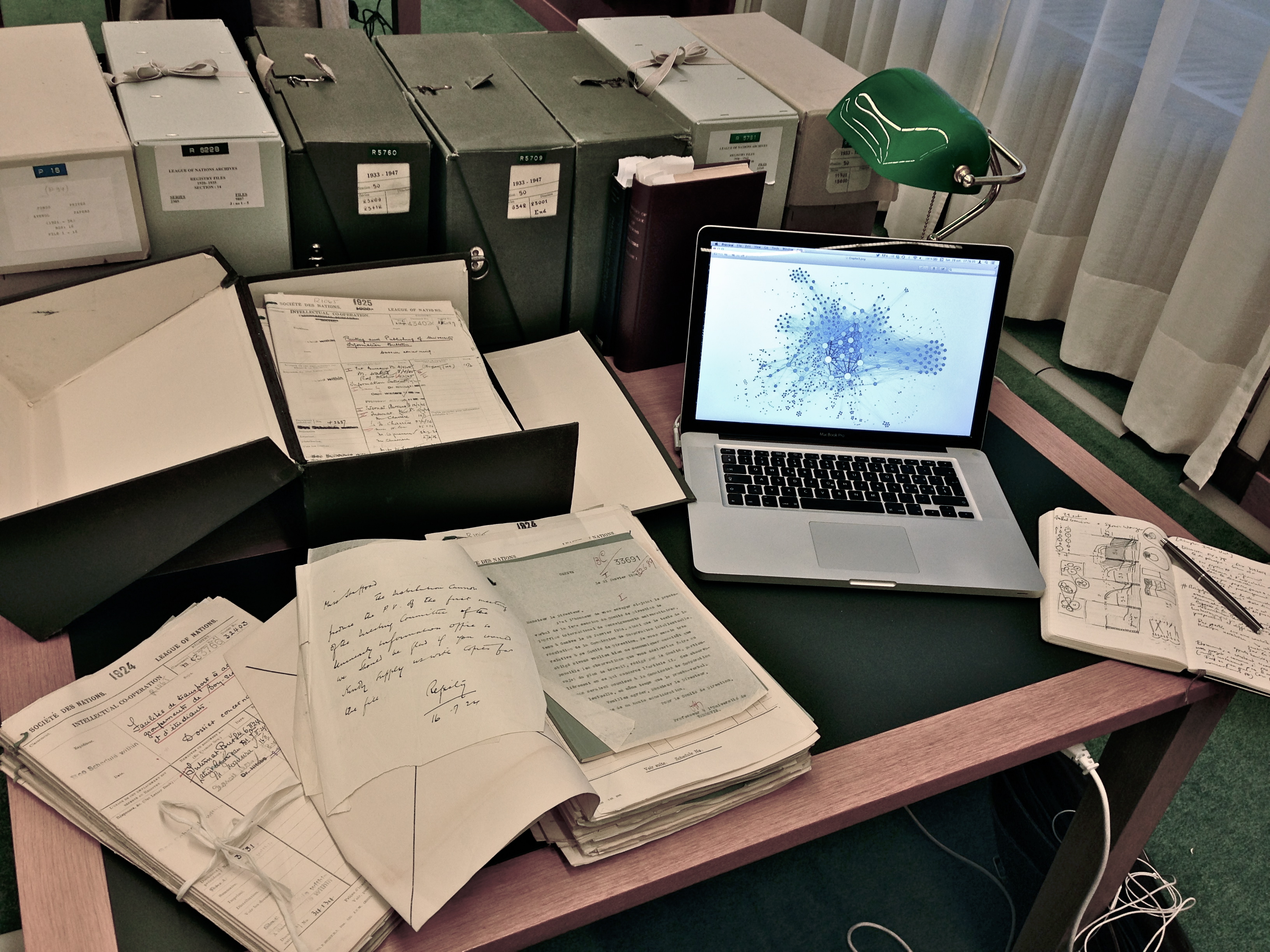
Illustrative image: A desk with various open files, an open laptop, and a notebook. The open files on the desk contain several papers with notes. On the laptop screen, a data report visualization is displayed.

Image by Calvinius (own work), CC BY-SA 3.0

Bibliometrics

The core of the new guide is focusing on guidance for using and understanding research metrics, such as bibliometrics, citation metrics, and altmetrics. It explains how to access citation counts through Scopus and Web of Science, and more complex normalised metrics through InCites. It also gives guidance on how to best interpret and understand those metrics, and advice on metrics to avoid using. The guide also covers the UCL Bibliometrics Policy, which governs the use of bibliometric data for internal assessments at UCL, and sets some limits on what should be used.

Guidance for Tools

Within the LibGuide, you will also find guidance pages for how to use specialised services like InCites, Altmetric, and Overton to measure research impact. Additionally, the guide offers advice on using other tools that UCL does not subscribe to but may be beneficial for research support. This includes three freely available large bibliographic databases—Lens, Dimensions, and OpenAlex—which provide broader coverage than Web of Science and Scopus. It also outlines how to use a range of tools for citation-network based searching like Research Rabbit, Connected Papers, and Litmaps, as well as modern AI-supported search and summarising tools such as Scite, Keenious, and Consensus.

These are of course not the only tools available – especially with AI-supported tools, there are frequently tools being released – but these are ones we have been asked to investigate by students and researchers. If you would like feedback on another tool you are considering using, please get in touch.

Publications data

The LibGuide also addresses broader questions about using publications data. It outlines how to download publication and metrics datasets from Web of Science, Scopus, InCites, and Altmetric, and gives some guidance on how to link datasets from different sources together. Learn more about using publications data.

Additionally, the guide also explains how best to interpret data drawn from UCL-specific sources such as RPS, data ensuring you can make the most of the data available to you.

This new LibGuide is an important resource for anyone looking to expand their understanding of research metrics and manage their publications data. Visit the guide today to explore these tools and resources in detail.

Further support

We offer regular online or in-person training sessions as part of the Library Skills program. Please see the Library Skills calendar for dates and bookings. There are also three self-paced online sessions available through the Library Skills Moodle.

For any enquiries about bibliometrics, please contact us on bibliometrics@ucl.ac.uk 

Get involved!

alt=""The UCL Office for Open Science and Scholarship invites you to contribute to the open science and scholarship movement. Stay connected for updates, events, and opportunities. Follow us on X, formerly Twitter, LinkedIn, and join our mailing list to be part of the conversation!


Launching today: Open Science Case Studies

By Kirsty, on 29 April 2024

Announcement from Paul Ayris, Pro-Vice Provost, UCL Library, Culture, Collections and Open Science

A close up of old leather-bound books on a shelfHow can Open Science/Open Research support career progression and development? How does the adoption of Open Science/Open Research approaches benefit individuals in the course of their career?

The UCL Open Science Office, in conjunction with colleagues across UCL, has produced a series of Case Studies showing how UCL academics can use Open Science/Open Research approaches in their plans for career development, in applications for promotion and in appraisal documents.

In this way, Open Science/Open Research practice can become part of the Research Culture that UCL is developing.

The series of Case Studies covers each of the 8 pillars of Open Science/Open Research. They can be found on a new webpage: Open Science Case Studies 4 UCL.

It is only fair that academics should be rewarded for developing their skills and adopting best practice in research and in its equitable dissemination. The Case Studies show how this can be done, and each Case Study identifies a Key Message which UCL academics can use to shape their activities.

Examples of good practice are:

  • Publishing outputs as Open Access outputs
  • Sharing research data which is used as the building block of academic books and papers
  • Creating open source software which is then available for others to re-use and develop
  • Adopting practices allied to Reproducibility and Research Integrity
  • The responsible use of Bibliometrics
  • Public Engagement: Citizen Science and Co-Production as mechanisms to deliver results

Contact the UCL Open Science Office for further information at openscience@ucl.ac.uk.

UCL open access output: 2023 state-of-play

By Kirsty, on 15 April 2024

Post by Andrew Gray (Bibliometrics Support Officer) and Dominic Allington Smith (Open Access Publications Manager)

Summary

UCL is a longstanding and steadfast supporter of open access publishing, organising funding and payment for gold open access, maintaining the UCL Discovery repository for green open access, and monitoring compliance with REF and research funder open access requirements.  Research data can  be made open access in the Research Data Repository, and UCL Press also publish open access books and journals.

The UCL Bibliometrics Team have recently conducted research to analyse UCL’s overall open access output, covering both total number of papers in different OA categories, and citation impact.  This blog post presents the key findings:

  1. UCL’s overall open access output has risen sharply since 2011, flattened around 80% in the last few years, and is showing signs of slowly growing again – perhaps connected with the growth of transformative agreements.
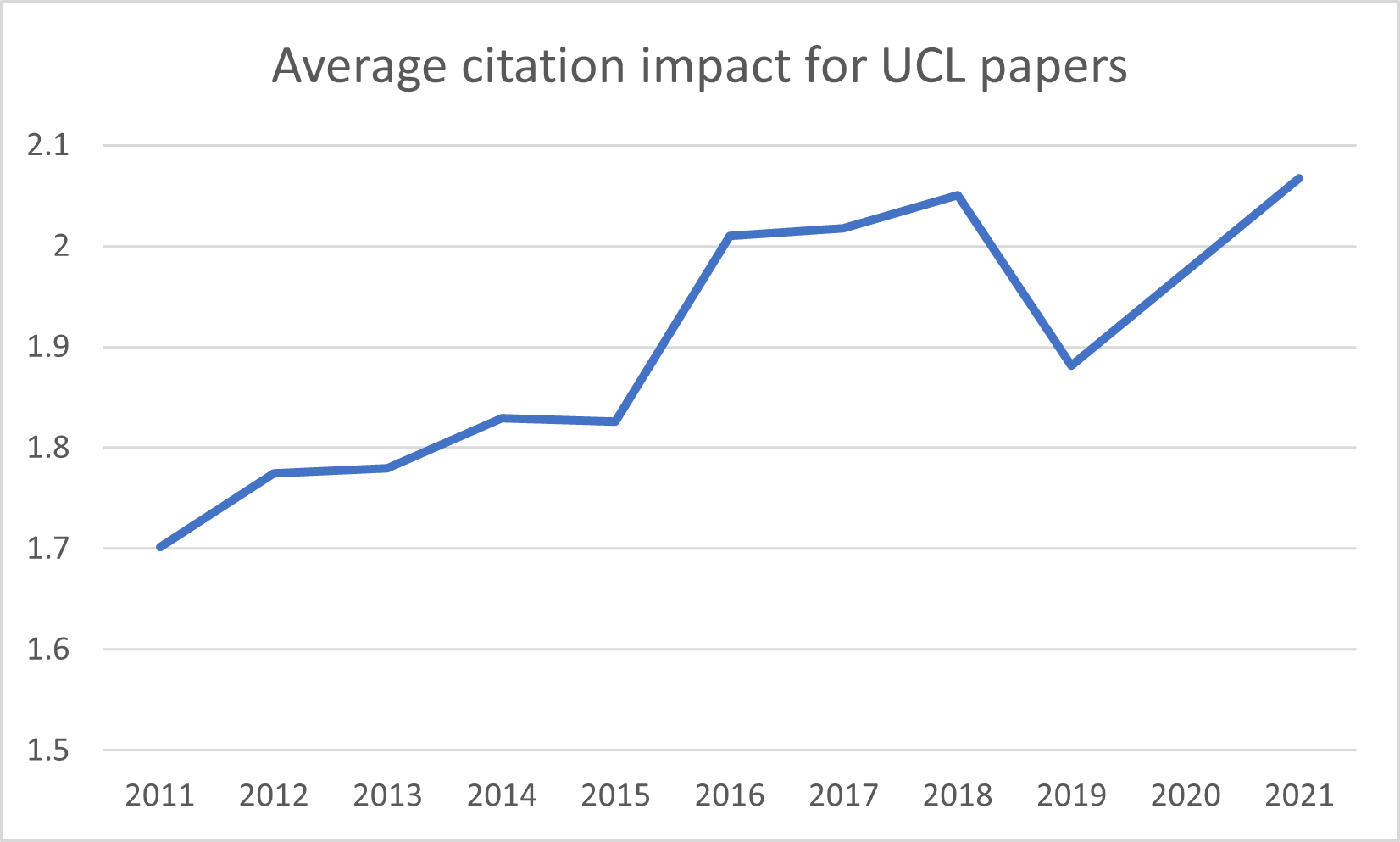
  2. The relative citation impact of UCL papers has had a corresponding increase, though with some year-to-year variation.
  3. UCL’s open access papers are cited around twice as much, on average, as non-open-access papers.
  4. UCL is consistently the second-largest producer of open access papers in the world, behind Harvard University.
  5. UCL has the highest level of open access papers among a reference group of approximately 80 large universities, at around 83% over the last five years.

Overview and definitions

Publications data is taken from the InCites database.  As such, the data is primarily drawn from InCites papers attributed to UCL, filtered down to only articles, reviews, conference proceedings, and letters. It is based on published affiliations to avoid retroactive overcounting in past years: existing papers authored by new starters at UCL are excluded.

The definition of “open access” provided by InCites is all open access material – gold, green, and “bronze”, a catch-all category for material that is free-to-read but does not meet the formal definition of green or gold. This will thus tend to be a few percentage points higher than the numbers used for, for example, UCL’s REF open access compliance statistics.

Data is shown up to 2021; this avoids any complications with green open access papers which are still under an embargo period – a common restriction imposed by publishers when pursuing this route – in the most recent year.

1. UCL’s change in percentage of open access publications over time

(InCites all-OA count)

The first metric is the share of total papers recorded as open access.  This has grown steadily over time over the last decade, from under 50% in 2011 to almost 90% in 2021, with only a slight plateau around 2017-19 interrupting progress.

2. Citation impact of UCL papers over time

(InCites all-OA count, Category Normalised Citation Impact)

The second metric is the citation impact for UCL papers.  These are significantly higher than average: the most recent figure is above 2 (which means that UCL papers receive over twice as many citations as the world average; the UK university average is ~1.45) and continue a general trend of growing over time, with some occasional variation. Higher variation in recent years is to some degree expected, as it takes time for citations to accrue and stabilise.

3. Relative citation impact of UCL’s closed and Open Access papers over time

(InCites all-OA count, Category Normalised Citation Impact)

The third metric is the relative citation rates compared between open access and non-open access (“closed”) papers. Open access papers have a higher overall citation rate than closed papers: the average open access paper from 2017-21 has received around twice as many citations as the average closed paper.

4. World leading universities by number of Open Access publications

(InCites all-OA metric)

Compared to other universities, UCL produces the second-highest absolute number of open access papers in the world, climbing above 15,000 in 2021, and has consistently been the second largest publisher of open access papers since circa 2015.

The only university to publish more OA papers is Harvard. Harvard typically publishes about twice as many papers as UCL annually, but for OA papers this gap is reduced to about 1.5 times more papers than UCL.

5. World leading universities by percentage of Open Access publications

(5-year rolling average; minimum 8000 publications in 2021; InCites %all-OA metric)

UCL’s percentage of open access papers is consistently among the world’s highest.  The most recent data from InCites shows UCL as having the world’s highest level of OA papers (82.9%) among institutions with more than 8,000 papers published in 2021, having steadily risen through the global ranks in previous years.

Conclusion

The key findings of this research are very good news for UCL, indicating a strong commitment by authors and by the university to making work available openly.  Furthermore, whilst high levels of open access necessarily lead to benefits relating to REF and funder compliance, the analysis also indicates that making research outputs open access leads, on average, to a greater number citations, providing further justification for this support, as being crucial to communicating and sharing research outcomes as part of the UCL 2034 strategy.

Get involved!

alt=""The UCL Office for Open Science and Scholarship invites you to contribute to the open science and scholarship movement. Stay connected for updates, events, and opportunities. Follow us on X, formerly Twitter, LinkedIn, and join our mailing list to be part of the conversation!


OOSS Annual Recap 2023

By Rafael, on 17 January 2024

As we step into a new year, let’s reflect on the collective achievements and milestones of the UCL Office for Open Science & Scholarship (OOSS) and our associated teams in 2023. This year witnessed the growth and integration of OOSS within the institutional culture of UCL, offering pivotal support to academic staff, researchers, and students. From the successful return to in-person events with our annual conference to pioneering initiatives and awards, let’s revisit the highlights that shaped our work last year!

Annual Conference & Open Access Celebrations

Poster for the Open Science Conference: 'The Case for Social Justice'

In April 2023, we successfully organized our annual conference, marking our first return to in-person events. Themed Open Science and the Case for Social Justice, the conference fostered important discussions on sustainability in research practices, addressing critical issues such as gender, language, authorship, and geographical disparities. Recordings of these insightful discussions are available. Notably, a workshop during the conference addressed equity in authorship, contributing to a forthcoming UCL statement on Authorship. Additionally, October saw the celebration of our Open Access week, themed Community over Commercialisation. This included a series of blog posts, activities, and discussions, emphasizing equitable access to a wide range of works.

Honouring Excellence: Inaugural Open Science and Scholarship Awards:Group photo of the 12 Winners of the inaugural Open Science and Scholarship Awards standing together in front of a white wall.

Another highlight was the inaugural Open Science and Scholarship Awards at UCL in collaboration with the UK Reproducibility Network. These awards aimed to recognize and celebrate the efforts of UCL students and staff who champion open science practices. Learn more about the winners and their innovative work!

Open Access: Profiles & Transformative Agreements

alt=""

The Open Access Team played a pivotal role in ensuring the open availability of UCL academics’ research outputs throughout 2023. A major achievement was the successful introduction of the new Profiles platform, replacing the outdated IRIS. Profiles acts as UCL’s public search and discovery tool, significantly improving the visibility of academic profiles, publication lists, research and teaching activities, and collaborations with UCL colleagues. The team also facilitated the Gold open access publication of 3,383 papers in 2023, contributing to the thriving UCL Discovery with over 44 million downloads. The repository now boasts over 166,000 open access items, including 23,400 theses, with over 18,500 uploads in the preceding twelve months.

Aligned with the UKRI and Wellcome open access policies, the Open Access Team provided robust support for UCL researchers. This included facilitating compliance through publishing in fully open access journals, making use of transformative agreements with publishers encompassing over 12,000 journals, and using funders’ language to secure the right to make accepted manuscripts freely accessible upon publication under the CC BY license.

Research Data: Enhancing Support to Researchers

The Research Data team introduced a more user-friendly version of the UCL Research Data Repository, incorporating enhanced features and a comprehensive user manual. The repository saw a significant influx of 193 new items, including data sets, media items, and software applications. Engaging with researchers, the team provided substantial assistance, reviewing 32 data management plans and conducting successful training sessions for 61 researchers. Additionally, the team expanded and refined frequently asked questions (FAQs) for better user support.

Citizen Science: New website and initiatives

Word cloud image featuring key terms related to citizen science

The Citizen Science Team expanded its reach and impact in 2023 through new Citizen Science website pages and an enhanced list of citizen science projects at UCL, fostering a greater understanding of the breadth of such initiatives across the university. The creation of a unifying definition of citizen science at UCL, accompanied by an inclusive word cloud, provided clarity on the diverse subject areas and disciplines covered by citizen science projects.

The development of the UCL Citizen Science Certificate, in collaboration with the UCL Citizen Science Academy, marked a significant milestone and underscored our commitment to fostering collaborative initiatives. A new Citizen Science community on MS Teams was launched, providing a dedicated space for discussions and updates. Get involved!

Bibliometrics: Measuring Research Impact

The Bibliometrics Team, in collaboration with the Open Access Team, played a crucial role in implementing the new Profiles system. Their research confirmed the citation advantage associated with open access practices. After a detailed analysis of UCL publications over recent years, the study demonstrated that open access materials are utilised and cited more extensively, and confirmed the place of the institution as leading organisation in making material available in open access.

Additionally, the team introduced new courses, including an introduction to altmetrics and the Overton database, aiming to assess the broader impact of published research in the wider world and cover policy documents and official documents. Another training provided an overview of understanding and demonstrating research impact, further supporting UCL’s researchers. The Bibliometrics Team’s dedication to understanding and demonstrating research impact through various courses and collaborations reinforced UCL’s position as a leader in research output accessibility.

Stay connected and Informed

alt=""

The combined efforts of OOSS teams in 2023 exemplify UCL’s commitment to open and accessible research practices across diverse disciplines. As we move forward, the OOSS remains dedicated to fostering an inclusive culture of open science and scholarship, shaping a transformative academic environment at UCL.

Join us in 2024 for updates and insights, and follow us on X, formerly Twitter, to find out more about open science and scholarship at UCL!

Altmetrics at UCL: one year on!

By Harry, on 29 August 2023

Guest post by Andrew Gray, Bibliometrics Support Officer

Altmetrics are the concept of “alternative metrics” – measuring the impact of research beyond scholarly literature. This covers a wide range of different things, ranging from social media discussions (e.g. Twitter or Facebook), mainstream news reporting, and grey literature such as policy documents. Understanding how research is being reported and discussed in these can help give us a broader understanding of the impact and reach of papers that we don’t see from looking at traditional scholarly citations.

UCL has a subscription to Altmetric, the primary commercial database for this information. It covers a broad range of materials. We also subscribe to a second source, which focuses purely on policy documents – Overton and can be a helpful complement.

There are several ways in which looking at altmetrics can give us information that wouldn’t otherwise be available. For example, we can see how different audiences outwith academia are responding to research, and we can look at what they’re saying to get an idea of the kind of response.

Some of the altmetric indicators (particularly Mendeley bookmarks) seem to have a close correlation with subsequent citations and can give us an early view of what citation figures may be like six months to a year in future.

Lastly, tracing policy citations through Altmetric or Overton can effectively demonstrate the wider research impact, for example, for use in a funding report or application.

Looking at activity

So what data can we see? Altmetric provides an aggregated “score” for each paper, indicating an overall activity level. While this isn’t a very exact measure, it lets us identify papers with high and low activity levels.

Looking over the past few years at UCL, the most obvious thing is that discussion of research is dominated by COVID-19. It accounts for thirteen out of the fifteen most heavily discussed UCL papers overall – by comparison, were we to look at pure citation counts, COVID papers account for none of UCL’s top fifteen overall, and only perhaps four out of the top fifteen from the past few years. This very striking difference highlights how altmetrics and citations can show different things.

The colour swatches on each show how the activity is broken down. For example, in this paper, we can see that most of the activity is from X/Twitter (light blue), with smaller contributions from Facebook (dark blue), news media (red) and blogs (yellow). Clicking through will let us drill down to see all the activity details.

Diving into data – day by day

One thing that surprised us with Altmetric is the sheer volume of data that they make available. Reports of 100,000+ papers can be downloaded, including DOIs and PubMed IDs, making it easy to link data to other sources such as RPS and InCites. This lets us do some analyses that wouldn’t be possible in other sources – but do tell us something unexpected.

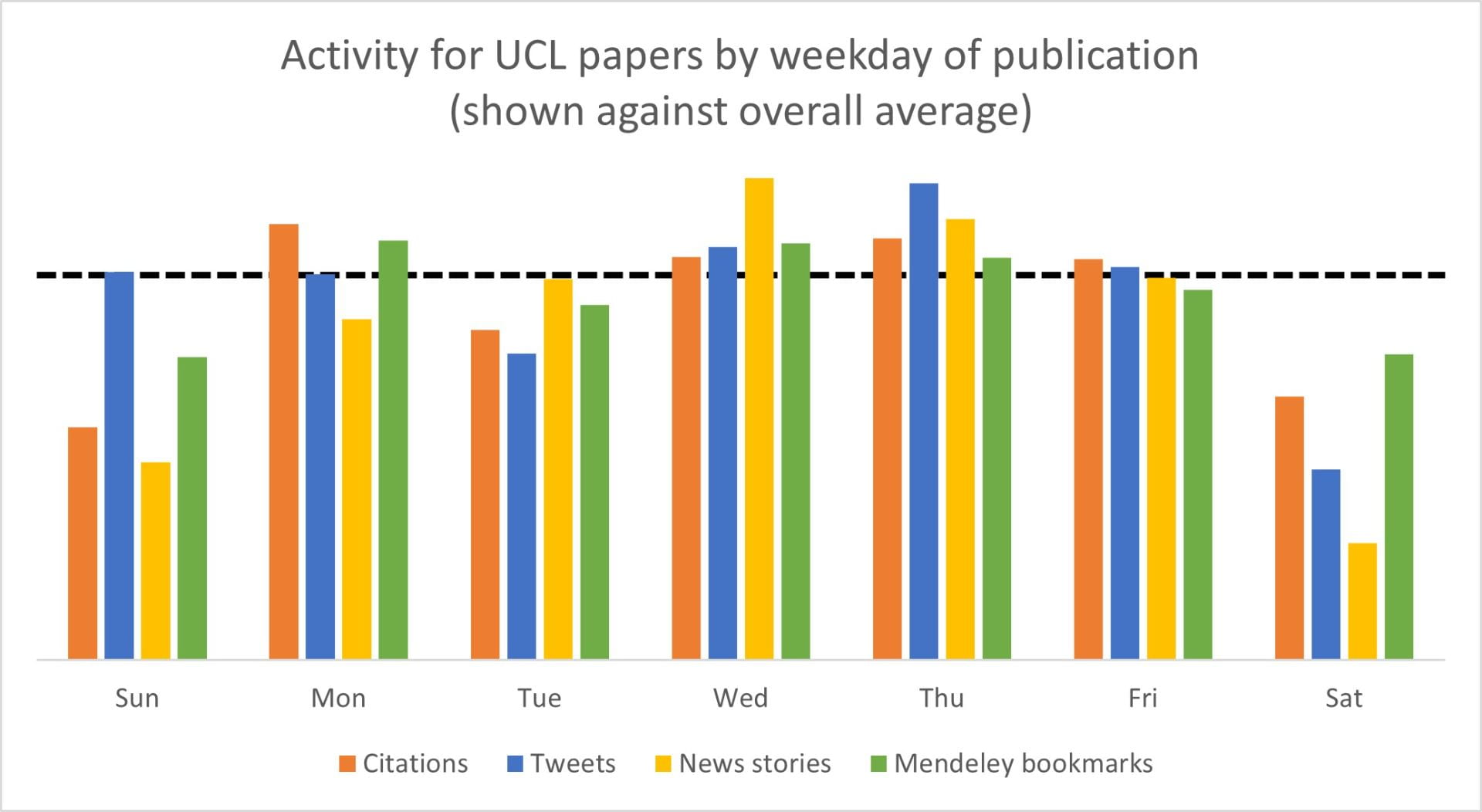
For example, it gives us the exact date papers were published. Looking at around 50,000 UCL papers published in 2020-22, we find that the response differs depending on the day of the week – papers on Wednesday and Thursday are above-average, and papers on Tuesdays are below average.

In part, it is because some of the most prestigious publications have fixed publication days – most Nature papers are released on Wednesdays, for example. These journals have a large share of high-impact papers and an excellent publicising system.

The weekends are interesting. Not many papers come out on the weekends, but the ones that do, have a noticeable citation/bookmarking penalty compared to weekday ones, suggesting they are less impactful on average. And they make much less of a stir in the news media – a weekend paper is less than half as likely to get news coverage as a weekday one.

But social media has a sharp difference – Sunday papers get significantly more Twitter activity than Saturday ones. An intriguing mystery!

Using Altmetric at UCL

Altmetric and Overton are both available to any user at UCL. You simply need to log in to Altmetric using a UCL email, which will set up your user account. For Overton, you can browse the data without an individual account or set up an account to save searches and other functionalities.

We have integrated Altmetric with RPS, the central UCL publications database. Every two to four weeks, every paper in RPS since 2013 is exported, tagged with the UCL author(s) and associated departments, and uploaded into Altmetric.

This means that we can use the Altmetric dashboard to dig down into UCL outputs in some detail – we can ask it questions like “news stories in the last month referring to a piece of research published by someone in Chemistry”. It is also possible to save and circulate reports from the dashboard – this report shows the top 20 papers from Chemistry in 2023 by Altmetric Activity.

Similar functionality is not yet available for Overton, but if you would like to search for papers from a specific department, we would recommend generating a list of DOIs from InCites (or even from Altmetric itself!) and importing those as an advanced search.

We will be running introductory training sessions for both Altmetric and Overton in the coming term – please contact bibliometrics@ucl.ac.uk if you would be interested in attending these or booking a 1:1 meeting to go through the services.

Office for Open Science & Scholarship 2022 review

By Harry, on 18 January 2023

A new exciting year is starting, and what better way to give the initial kick than celebrating the achievements and milestones of the multiple teams linked to the UCL Office for Open Science & Scholarship (OOSS). We are proud to see how the OOSS kept growing and consolidating itself inside UCL’s institutional culture, supporting academic staff, researchers and students.

One of last year’s highlights was undoubtedly the UCL Open Science Conference, reuniting people from all over the world in sessions discussing Citizen Science, Open data and code, Open and the Global South and more. You can still watch the recordings of day one and day two on our blog! And get ready to participate in the 2023 version in late April. You will hear about it soon on our pages and social media. We are working to make the event hybrid to facilitate participation across territories, do not miss your spot!

After various months of revisions and collaborative work, we published new Open Science Resources for 2022-2023. The first is the video ‘Open Science and Scholarship as part of UCL Research Culture’ and ‘Open Science – a practical guide for PhD students’.

Our office connects to several other teams inside UCL that make an exquisite blend of services, skills and expertise, and we want to celebrate their achievements and news.

The UCL Open Access team has grown their range of transformative publisher agreements and upgraded Research Publications Services (RPS). Users will notice a refreshed look and feel, differences to the Homepage layout, and a new menu structure and navigation. Check the step-by-step guide if you missed it!

UCL Press has proven the importance of open-access scholarly publishers, reaching six million downloads last May (and close to seven million now!), reaching 246 countries and territories, and publishing 272 titles since its launch in 2015.

The Bibliometrics team now is able to support Altmetric, which will be useful for anyone interested in public engagement or research impact, as well as individual researchers looking at the response to their work online. Altmetrics are “alternative metrics” – measuring the impact of research beyond scholarly literature. Helping to get a wider sense of the impact of papers that might otherwise be missed were we to focus on traditional academic citations.

Our Research and Data Management team upgraded their webpages, reviewed dozens of data management plans, and created brand new online Data Management Plan Templates with DMP online. Their services and the Bibliometrics team were both classified as excellent regarding the user’s experience of our online support service. We are proud of such a hard-working and supportive team!

During the second half of 2022, the OOSS gained two additional members: a Citizen Science Coordinator and a Support Officer. Both new team members are currently working with the Office Coordinator on ambitious projects that will see the light later this year, aiming to diversify the support and resources of our virtual office for wider audiences.

Undoubtedly, the diversity of professionals, backgrounds and interests made our small office inside Library, Culture, Collections & Open Science (LCCOS) a prosperous place to develop services, ideas and projects for wonderful audiences inside and outside our university.

Last year’s achievements were only possible due to the support of the university to embrace an open culture, thanks to the collaborative work between the teams, and always supporting each other and the office users. We will keep working together to democratise knowledge and keep UCL one of the Open Science & Scholarship leaders worldwide.

Altmetric – now available at UCL!

By Kirsty, on 2 September 2022

Guest post by Andrew Gray (Bibliometrics Support Officer)

What is it? 

Altmetrics are the concept of “alternative metrics” – measuring the impact of research beyond scholarly literature. It encompasses a wide range of activity in diverse sources  social media (eg twitter, blogs), news publications, and grey literature (eg policy documents). This can help to get a wider sense of the impact of papers that might otherwise be missed were we to focus just on traditional academic citations. 

The primary commercial database for these is Altmetric (https://altmetric.com) – UCL has just taken out a one-year subscription to this service. We hope it will be useful for anyone interested in public engagement or research impact, as well as individual researchers looking at the response to their own work. 

It is open to everyone at UCL by visiting https://www.altmetric.com/explorer/login and entering your UCL email address. It will then authenticate through the UCL single-sign-on system. 

How does it work? 

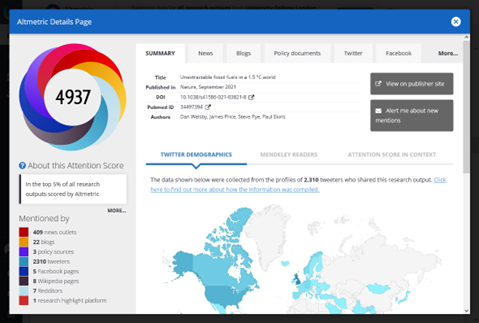
Altmetric tracks a range of individual sources looking for DOIs, links to papers, or free-text descriptions of articles. It then matches these to the underlying paper and produces an index of the mentions. Here we can see the range of responses to a climate-change study. 

You will also sometimes see this coloured “doughnut” on publisher or repository sites – clicking through will get you to this same page. 

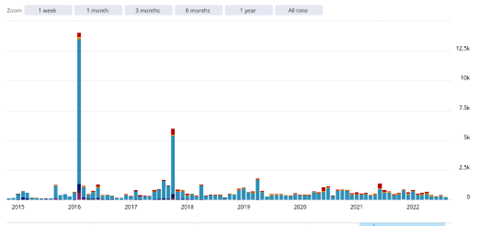
The most interesting part of the service, however, is the dashboard. This aggregates the results from all individual papers, and we can then filter down by subject area, date, publication venue, etc., to produce a more specific analysis. It is also possible to search for keywords to see the change in activity around a specific topic – one like “artificial intelligence” tends to show a steady level of interest, while one like “gravitational waves” shows very dramatic spikes connected with major discoveries. 

What can we do with it? 

The dashboard has been integrated with UCL’s RPS service, so it has a dataset of UCL papers since 2013, each linked to the faculty/department of the authors. This means we can do the same types of analysis for just UCL papers – or just those from a specific department or a specific author. 

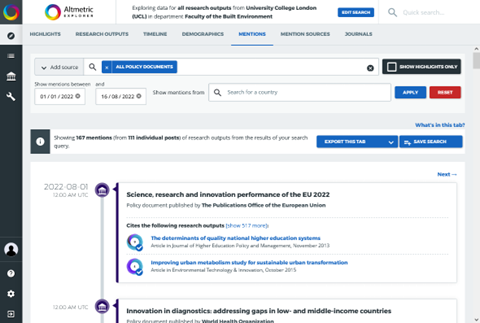
The search can also be tweaked to identify specific topics. Here we can see policy documents published in 2022 which cite a Bartlett paper. 

Policy documents are one of the key strengths of Altmetric – they can be used as evidence of wider impact, especially for the social sciences. While they are formal documents, and very distinct from more ephemeral news or social media mentions, they are not indexed in most citation databases and so this impact can often be hard to trace. 

Altmetric data can also be exported – any set of results can be exported so that we can do detailed offline analysis of sets of papers, or at the individual mentions that make up the score. This data includes identifiers such as DOIs and ISBNs, meaning it can be linked up to other datasets easily 

What next? 

We are very keen to get this tool in the hands of as many people at UCL as possible and find how it can be used most effectively. Please have a go and let us know what you think! 

UCL-specific training and guidance is currently under development, and will be published in September 2022. Until then, please feel free to get in touch with the team (bibliometrics@ucl.ac.uk) with queries or requests for assistance. We are happy to arrange training as well. 

The tool is currently provided with a static dataset drawn from RPS, covering papers published 1 January 2013 up to 12 August 2022. We are working with the providers to improve the integration so that it will include “live” data, refreshed from RPS every night; until then, we plan to make periodic updates so that publications are added on a rolling basis. 


Open Science monthly schedule outline – Academic year 21/22

By Kirsty, on 23 November 2021

New for the academic year 2021-22 the Office for Open Science and Scholarship is organising a monthly series of talks, showcases and training sessions across as many of the eight pillars as we can fit in for UCL colleagues and students at all levels.

All of the teams will be teaching their usual classes, keep watching your usual sources of training plus here and on Twitter for those, but these introductory sessions are intended to give a general overview of each subject area for a general audience with plenty of opportunities for discussion and questions. These introductory sessions will also be supplemented with ad hoc events throughout the year.

  • November
    Departmental UKRI Briefings – contact catherine.sharp@ucl.ac.uk to arrange a briefing for your team
  • December
    Introduction to the Office for Open Science & Scholarship – December 15th 2-3pm – Postponed, please express interest below
  • January 22
    Introduction to responsible metrics – January 27th 2-3pm – Online
  • February
    Introduction to Research Data Management – February 2nd 10-11am – Online
  • March
    Getting started with the RDR – Friday 4th Mar 10-11am – Online
  • April
    Open Science Conference (Dates TBC)
  • May
    Citizen Science project showcase (Details & Dates TBC)
  • June
    Citizen Science, Public Engagement & Research Impact (Dates TBC)
  • July
    ORCiD, DOI and beyond – Introduction to Persistent identifiers (Dates TBC)

If you are interested in any of the sessions above then please complete the MS form and the organisers will get back to you with calendar details and joining instructions for planned sessions. Any sessions without firm dates, we will contact you as soon as details are confirmed.