X Close

UCL Careers

Home

Find Your Future

Menu

Archive for the 'Careers Advice' Category

Charities & NGOS Week – Pursue a fulfilling career in this sector

By UCL Careers, on 25 January 2017

blog_image_charities_&_ngos
Charities and NGOs Week: 30th January – 2nd February 2017

Though important, there is so much more to working in the charities and NGOs sector than shaking a tin, volunteering or delivering aid to those in need on the frontline.  Many charities and NGOs are run as professional businesses that carry out functions such as research and lobbying, as well as raising and redistributing funds.  In the pursuit of addressing human or environmental needs, the sector can be intensely competitive in terms of attracting media attention, funding and other resources.  Most non-profit organisations rely on paid staff as well as volunteers and the sector attracts intelligent people with a passion for their work.

UCL Careers Charities & NGOs Week 2017 aims to dispel some of the myths that surround working within this sector.  Through a series of four events, this themed week will provide students with an opportunity to gain a deeper insight into the diverse range of roles available to them, from campaigning and policy work to international development and disaster relief.  The employer-led insight and applications session will help prepare students to demonstrate their motivation and enthusiasm and ultimately increase their chances of job success.  The final event in the series will provide an excellent opportunity for students to link up with employers, be inspired and pick up some top tips from the experts, who are currently working in the sector.

Charities attending include:

Oxfam
Greenpeace
MacMillan Cancer Support
Save the Children
Sustrans
The Wellcome Trust
Islamic Relief
and more…


For further details about UCL Careers Charities & NGOs Week 2017 including how to book:

http://www.ucl.ac.uk/careers/events/getinto/charitiesandngos


Employer Insight Profile: Katherine Ashdown, Private Banker, Coutts

By UCL Careers, on 8 December 2016

Screen Shot 2016-12-08 at 10.24.53


Katherine Ashdown, Private Banker, Coutts


What was the pathway into your role?

I studied Business Management at the University of Surrey, spending a year working at Unilever as part of my degree and graduating in 2011. I chose a fairly broad course as at the time I was not too sure what path I wished to follow. Once I graduated I spent year travelling before going back to work as a Financial Analyst at Danone. As this point I realised accountancy was absolutely not for me and moved to an algorithmic trading company as their Business Support Manager covering everything from finance to sales. Admittedly I was a slightly older graduate when I came to Coutts in 2014 but these previous roles gave me the opportunity to discover what I really enjoy about work: talking to people and having a job with a great deal of variety. I have since become a private banker in the Coutts Landowners team where I have been working for the last year.

Do you have any tips for students entering this sector?
Private banking is all about people. You have to really enjoy speaking to clients and be willing to go the extra mile in everything you do. By getting a part-time job at university which brings you into contact with customers or clients gives you a great opportunity to see if this could be a good career for you and gives you many things to discuss in the interview arena. Additionally, I have also found my slightly broader experiences have come in extremely helpful with clients; many of whom are well travelled and a little older than I. Being able to discuss a variety of hobbies has always stood me in good stead.

What do you enjoy about your role?
Essentially my job is to talk to people. I absolutely relish being face-to-face with clients, preferably on their estates in the country discussing their dynastic plans. Landowners are a particularly passionate set, many of them have had their estates in their family for hundreds of years and that passion and pride is infectious. On top of this the Landowners client group is possibly the best in the bank. We are a small but determined team and I am extremely lucky to be with such a strong, hardworking group who also have good fun.

What does a typical day in your job involve?
It’s a cliché but there really is no typical day. I could be on an estate in Hampshire wearing wellies and driving around in a battered old Land Rover; dressed up at an awards lunch or client event, or just at my desk speaking to clients, dealing with day-to-day queries and arranging a mortgage. I have done all these things in the last week alone!

What are the biggest challenges you face in your work?
In the modern world we are facing constant and deepening regulation. Although regulation is a positive thing which protects both the client and the bank, it can sometimes be difficult for older clients who were used to a very different lending and banking environment to understand why processes are often much more complex and vigorous now. This can usually be overcome by strong communication and the setting of expectations early but even I get frustrated on behalf of my client sometimes!

What do you like about the location you currently work in?
440 Strand in London where Coutts is based is an icon of British culture and history. We are a set slightly back from the Thames and right next to Covent Garden which is fantastic for lunches out and shopping, not to mention after work drinks. It is an extremely social office!


Find out more about Private Banking and apply at:
yourpassionyourpotential.rbs.com


The Cultural Heritage Forum In Short

By UCL Careers, on 24 November 2016

person-woman-art-creative.jpg_(JPEG_Image,_5877_×_3932_pixels)_-_Scaled_(28%)_-_2016-11-24_11.06.01

The Cultural Heritage Forum was held on the 15th November, as part of the Museums and Cultural Heritage Week. Although the five speakers were working in various heritage related fields and at different stages of their career, there were clear commonalities to their career journeys and consequently their recommendations to future graduates. Many of the panellists reflected on how they found themselves in their current career not through planning each step along the journey, but by proactively following their interests. Their collective story went something like this:

They noticed what areas of their studies (e.g. medieval over ancient archaeology) and/or aspects of their earlier work experiences (e.g. educating others) they enjoyed most and sought out opportunities to increase their knowledge in these areas. They remarked that working in smaller institutions can sometimes provide more meaningful and broader experiences than working in the larger more prestigious institutions. Although aspects of such entry-level work may have been less exciting or somewhat repetitive at times, they found these experiences offered more than simply knowledge or skills to be used as collateral for the next job. These early experiences opened up opportunities which they would not have known about otherwise. They attended events through these jobs, joined special interest networks, met people in the sector, were inspired by what they saw and heard, and built up a network of connections which later proved invaluable.

This was not a passive approach by any means, each of the speakers emphasised the importance of a proactive approach to take advantage of all opportunities. One of the panellists even managed to persuade their employer to pay for further study. It was also highlighted how one could use one’s masters dissertation, placements, or similar to make connections. There appeared to be consensus that one must seek out opportunities to build one’s range of skills and knowledge, contacting potential employers and explaining what one can offer them. Employment opportunities in this field are less likely to be advertised and approaching employers directly not only demonstrates one’s interest and commitment to the sector, but also saves them time and money when it comes to the recruitment process.

It was remarked how graduates may sometimes underestimate the value of their transferable skills (soft skills gained from academia, extra-curricular activities, or part-time work), or their unique experiences (e.g. language skills, or specialist knowledge regarding London). For many panellists it was how they expressed the unique combination of their experiences which made them stand out from the crowd and were particularly valuable to a specific project. This was not something which could have been anticipated and planned for, but was attained through following their interests, building connections, and being open to and proactively seeking opportunities.

It was acknowledged that setting out on a career in the heritage sector can require a lot of commitment, but a positive closing remark was made regarding those at graduate level. If one imagines a triangle where the pinnacle is being in a very specialist / niche role, as a graduate one is at the base of the triangle and has wider array of options to obtain experience (and indeed explore and test out potential careers).

You can listen to Working in the Arts panel discussion from Wednesday 16th November here – https://soundcloud.com/ucl-careers/working-in-the-arts-ucl-careers-themed-week-wednesday-16th-november


How to get started in the museums & cultural heritage sector

By UCL Careers, on 10 November 2016

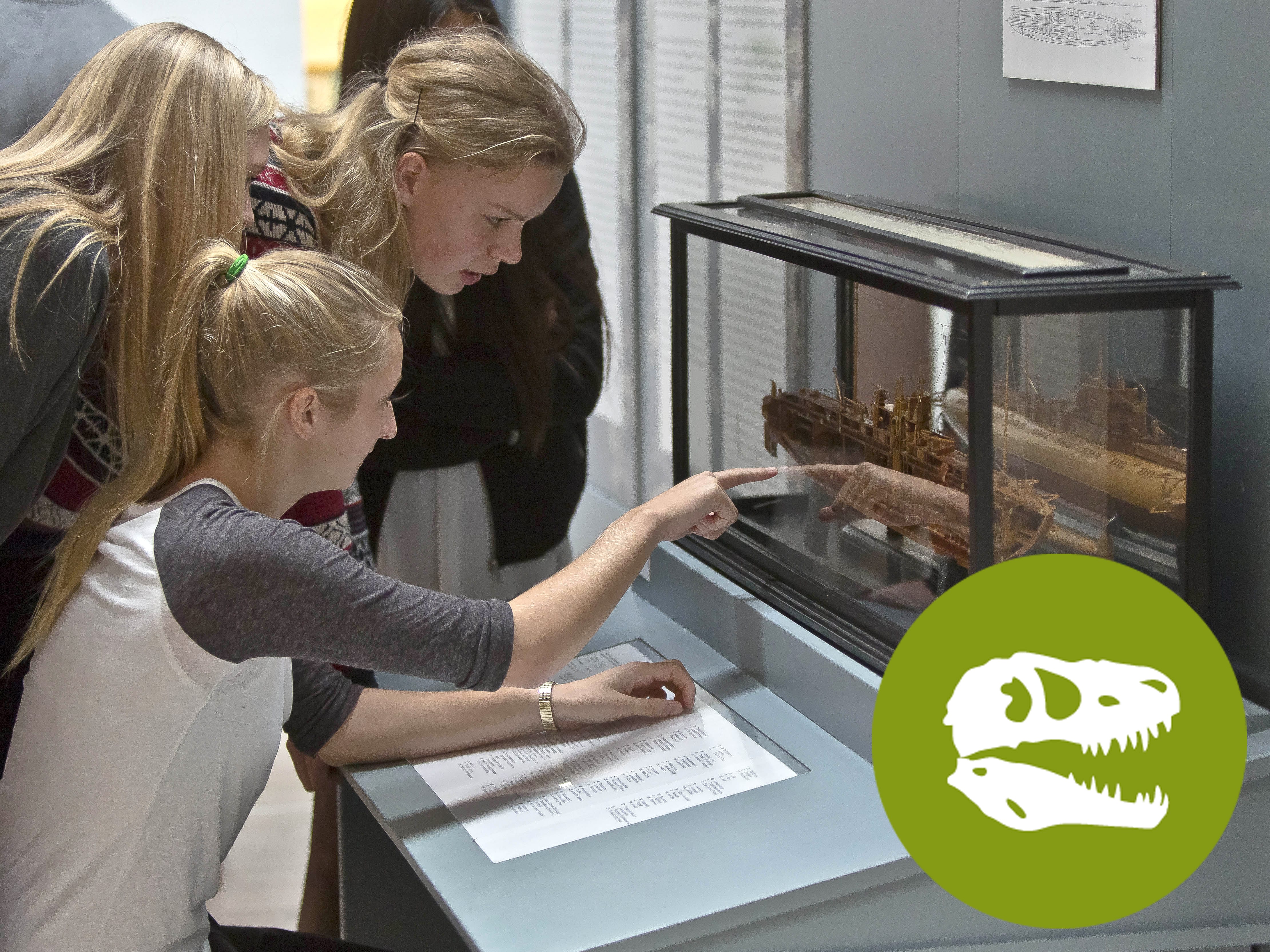
Museums Cult
Next week UCL Careers hosts Museums & Cultural Heritage Week, a series of panel events featuring panellists working in museums, cultural heritage and the arts. Each forum will feature expert speakers who will provide insight on the sector by sharing their own career journeys, their perspectives on what is currently driving the sector and what keeps them excited about this field. This series will offer the perfect opportunity for you to gain insight on the range of careers available and how you can launch your own career in this competitive but exciting sector. So if you’re interested in working in this industry sign-up to attend any of the panels to learn more.


The series begins with the Museums Forum taking place Monday 14 November which will include speakers from the Grant Museum, the Museum of London and the Victoria and Albert Museum (V&A). Read more about the featured panellists here.


On Tuesday 15 November the Cultural Heritage Forum takes place following the Museums & Heritage Volunteering Fair. This forum features six panellists:

Joe Flatman, Head of Listing Programmes, Historic England. Joe heads up the teams that lead on the delivery of the national statutory casework process. This includes listing historic buildings, scheduling archaeological sites and protecting wrecks, among other responsibilities. His teams also provide central support and liaison with the Department of Culture, Media & Sport DCMS, and promote the increase in designation activity through guidance, training, outreach and art policy development.

Gai Jorayev has worked with professional and research-led heritage projects over the last decade. He is responsible for the development and supervision of projects on behalf of the Centre for Applied Archaeology (Institute of Archaeology, UCL). He has extensive experience of working collaboratively on large-scale projects in different parts of the world and his current research is closely linked with initiatives of international organisations such as UNESCO, ICOMOS and UNWTO. He is involved in the ongoing UNESCO-led serial World Heritage nomination of the Silk Roads.

Freya Stannard entered into her first job in the cultural heritage sector in 2011. She worked as Assistant Secretary to the Reviewing Committee on the Export of Works of Art at the Museums, Libraries and Archives Council. Completing the Cultural Heritage Studies MA at UCL in 2012, she gained work experience with the Portable Antiquities Scheme administered by the British Museum. She spent two years working at Tate in two roles which focused on acquisitions and spoliation research. She then started in her current role in November 2015 as Manager of the Acceptance in Lieu and Cultural Gifts Schemes at Arts Council England.

Liz Vinson, Director at the Heritage Collective. Liz advises architects, developers, home owners and local authorities on the historic environment. Her experience includes but is not limited to numerous heritage assessments for listed buildings, sites in conservation areas and registered parks and gardens. She is experienced at EIA, especially with regard to wind farms, and including public inquiry work.

Sara Serafi currently works as an Assistant Heritage Consultant at Atkins’ London office. Her training and work experience as an Architect both in Saudi Arabia and the UK has allowed her to experience working on a wide range of worldwide projects that offer varying perspectives and approaches. She holds an MSc in Sustainable Heritage from University College London. She is particularly interested in the intangible dimension of heritage that relates to community inclusion and engagement.

Plus, a recent UCL graduate currently working at the Museum of London Archaeology will also participate. Having graduated with a BA in Egyptology, in 2014 Ashley completed an MA in Museums and Galleries in Education at the Institute of Education which complements almost a decade of experience working in education and heritage. Before joining MOLA he spent a number of years both working and volunteering with the National Trust at various sites across the south of England in various education and volunteer-leading roles, as well as working for Orleans House Gallery and the Mary Rose Trust and Imperial War Museum.


Finally, the series ends Wednesday 16 November with the Working in the Arts forum. This event will feature expert panellists representing diverse roles in arts management and administration at some of London’s major organisations, as well as freelance producers. Panellists for this event include:

Marion Crick, Head of Collections Management at the Victoria and Albert Museum. Prior to this she was Collections Information and Systems Manager, also at the V&A.

Emma Double, Assistant Press Officer at Tate. Emma is also an arts writer and blogger with numerous online publications, including with One Stop Arts London, Mouth London Magazine, One & Other Magazine and her personal blog.

Kate Rolfe, Head of Events at the National Gallery, provides strategic oversight of all events held at the National Gallery. Kate was previously Head of Visitor Events at the Natural History Museum.

Anne Wareing, Senior Development Manager at Battersea Arts Centre. After starting her career in arts fundraising in the States, Anne relocated to London in 2010. She has been with Battersea Arts Centre for four years and focuses on individual giving while also managing the organisation’s overall fundraising strategy. She is also obsessed with DataVis as a tool for impact reporting and evaluation.

Nadezhda Zhelyazkova is a freelance theatre producer. She incorporated her own production company last year with the aim of creating theatre that examines the pressing issues of our society. The company recently finished the run of its inaugural production Wasted, a play about consent.


This is your opportunity to meet specialists working in this sector and learn more about how you can launch your own career in this industry. Register to attend this and the other events online via your ‘My UCL Careers’ account.

UCL Careers Museums & Cultural Heritage Week is part of the #UCLInspireMe series.

Further details on the events in this series:

  • Museums Forum, 14 November @ 17:30
  • Museums & Heritage Volunteering Fair, 15 November @ 17:00
  • Cultural Heritage Forum, Tuesday 15 November @ 18:30
  • Working in the Arts, Wednesday 16 November @ 17:30

Employer Insight Profile: FINIMIZE ‘Financial news for everyday people’

By UCL Careers, on 4 November 2016

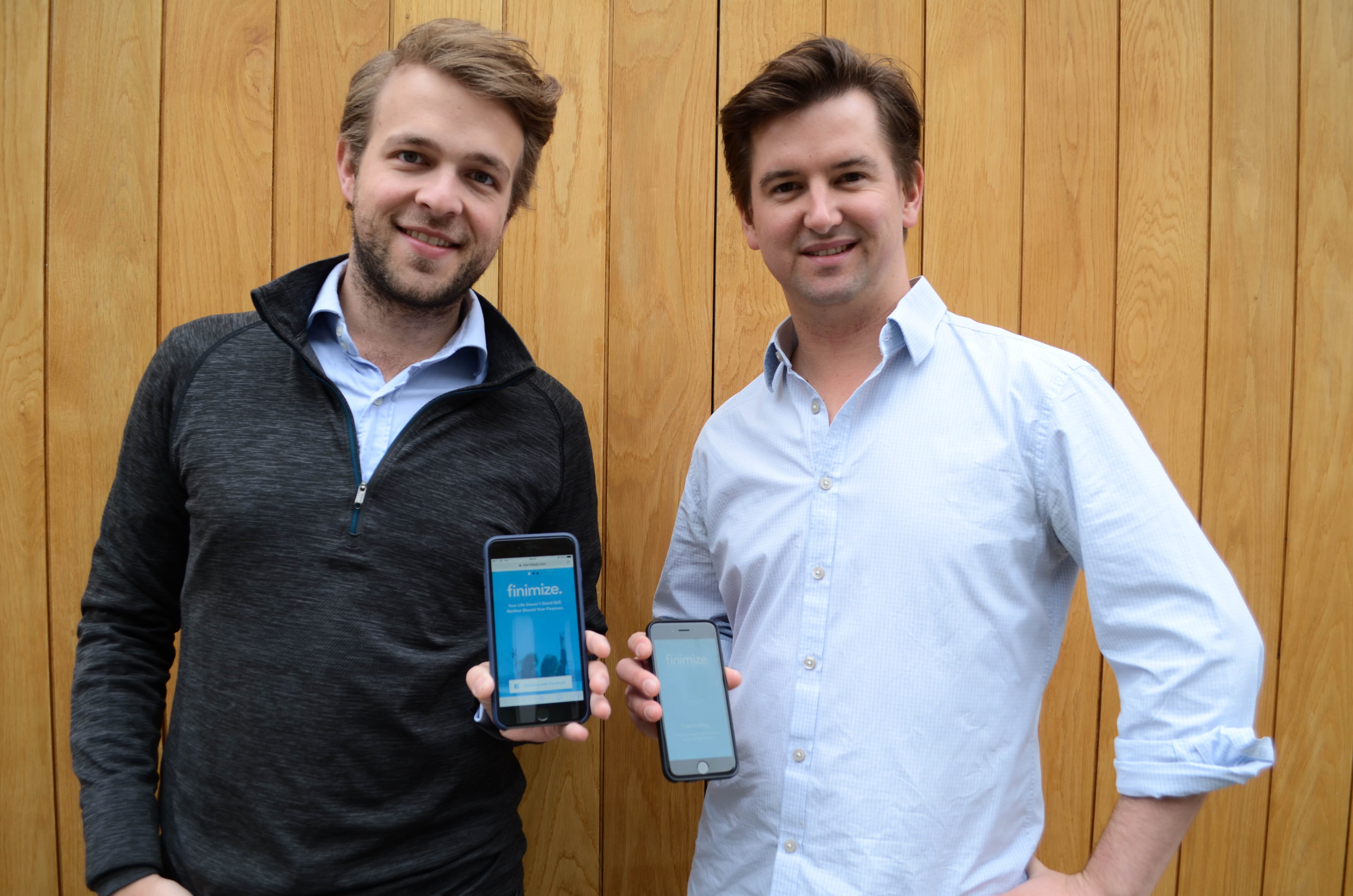
DSC_1553

Scott Tindle, Co–Founder & Head of Content of Finimize

How did you get into your role?

I co-founded Finimize, our financial news start-up, in 2015. After graduating from university I worked in equity sales at Barclays but after 7 years there I decided I needed a change. I wanted to do something more entrepreneurial. Around the same time, an old friend from university was starting to work on a new project called Finimize – and he needed someone with a finance background. There was a gap in the market for a financial news resource that was brief and not full of jargon – but still provided readers with the sophisticated information they wanted to know. So now, every weekday (and on Sundays!) I curate and explain the two most important financial news stories of the day and send it out to our subscribers.


What are the best things about working in your role?

I love the entrepreneurial aspects of working at Finimize. Co-running a small business means I get to do so many different things, from finding new stories to talking to investors – no two days are ever the same. Another definite pro is being able to shape the company’s destiny and take it wherever we want to go. Because Finimize is something that we have personally created it also means that its success is hugely rewarding – to know that we’ve made something that tens of thousands people appreciate and read is amazing.


What are the biggest challenges you face in your work?

Time! As an entrepreneur the most valuable commodity you have is your time and prioritising my time to get the most out of it is my biggest challenge. There are so many things I could be doing at once that I have to be disciplined and structure my day effectively. There’s also a lot of uncertainty that’s inherent in running a small business – dealing with that on a personal level can be stressful and is a big change from working at a big company (which can also be stressful, but often in different ways).


What top tips would you pass on to a student interested in this type of work?

Broadly speaking, there are two typical routes into the startup world. One is to dive in straight after university and look for internships or a junior position in a start-up. Another is to gain a bit of experience in a bigger company, acquiring skills and knowledge at a bigger company before switching tack to a startup. The benefit of the latter is that you learn a lot at big firms and you can bring that knowledge and experience with you to a small company. But jumping right into the startup world can also be the right move. There’s no “adjustment” to make later on and, especially now, the startup ecosystem is so well developed that you can gain relevant, high quality experience without working at a big traditional firm. In short, you have to figure out what’s right for you and run with it!!


More about Finimize:

Finimize is financial news for everyday people that strives to demystify finance by making financial news easy to understand, succinct and relevant to its readers. The email takes just 3-minutes to read each day, never uses any financial jargon and is a useful tool for students preparing for job interviews. Learn more and sign up here.

Thinking about working in museums, cultural heritage or the arts?

By UCL Careers, on 3 November 2016

MUSEUMSSo you think you might be interested in working in museums, cultural heritage or the arts but aren’t quite sure where to start? You’re probably not alone. Whilst there are broadly four types of museums and galleries in the UK – national, regional and local, university and independent  – these represent a vast array of collections, artefacts, objects, specimens and homes. From well-known and established collections to the history of anaesthesia it could seem a daunting task to know where to start.

In addition, unlike other sectors, there is no clear pathway for starting out your career, such as through a graduate scheme for example. Volunteering remains an important way to develop your interests and skills, though opportunities for paid work do exist. The good news is the sector requires people with diverse skills to thrive including education, programme, science, history, business, marketing, finance, and digital to name a few. And while funding cuts have meant that museums have to rethink the ways in which they operate, this also means that there can be lots of opportunity for those with creative ideas and an interest in innovating.

However, the sector remains competitive. Jobs in museums, galleries and libraries made up just 5% of jobs in the creative industries in the UK last year, a 6% increase since 2011 (Creative Industries: Focus on Employment June 2016). So being proactive, gaining valuable experience and making contacts is crucial.

London is an exceptional city in which to launch your career in this industry. With over 278 of the 2,500 museums in the UK located in London alone (Museums Association; Londonist) this city hosts a diversity of cultural places to work right on your doorstep. To help you explore the many options and opportunities for work in this sector, UCL Careers has organised a programme of panel events for Museums & Cultural Heritage Week beginning Monday 14 November: Museums Forum, Cultural Heritage Forum and Working in the Arts. A Museums & Heritage Volunteering Fair will also take place during the week.

Each panel event will feature expert speakers who will provide insight on the sector by sharing their own career journeys, their perspectives on what is currently driving the sector and what keeps them excited about this field. They will also offer valuable advice for those looking to get a foot in the door.

Kicking off the series is the Museums Forum featuring speakers from the Grant Museum, the Museum of London and the Victoria and Albert Museum (V&A). Panellists for this event include:

Jack Ashby, Manager of the Grant Museum and former head of Learning and Access for all UCL Museums and Collections for a period over 2009 and 2010. Jack has interests in scientific communications and evolutionary biology.

Jackie Kiely, Curator in the Department of Archaeology Collections at the Museum of London. Jackie has published widely on Roman artefacts.

Danielle Thom, Assistant Curator at the Victoria and Albert Museum. Danielle specialises in 18th century art and co-curated the exhibition A World of Fragile Parts a special project exhibition at the Venice Architecture Biennale running until 27 November.

The panel will also feature a current student who held a summer internship at the British Museum.

Register to attend this and the other events online via your ‘My UCL Careers’ account.

UCL Careers Museums & Cultural Heritage Week is part of the #UCLInspireMe series.

Other events in this series:

  • Museums & Heritage Volunteering Fair, 15 November @ 17:00
  • Cultural Heritage Forum, Tuesday 15 November @ 18:30
  • Working in the Arts, Wednesday 16 November @ 17:30


Screen Shot 2016-11-03 at 15.17.30


Source: Walt Disney – Donald Duck – Modern Inventions (https://www.youtube.com/watch?v=VSohVE6Zmjc)

UCL Careers Essentials – New for 2016/17

By UCL Careers, on 3 November 2016

Screen Shot 2016-11-03 at 13.29.24 A series of lunchtime talks and experiential workshops providing insight, advice and interactive opportunities to engage with all aspects of careers management and navigating selection processes no matter where you are in your careers thinking.

From understanding the graduate job market to career decision-making; mock aptitude tests to interview success; finding and funding a PHD to getting to grips with Linkedin and social media – the programme aims to equip you with the essential know-how to begin to move forward and engage more confidently with ‘Finding your Future’.

Talks and workshops titles will be repeated on a regular basis in the Autumn, Spring and post-exam season. Please register to attend using the links below. For more information and to register to attend – http://www.ucl.ac.uk/careers/events/essentials

Essentials Programme


Improve your CV
7th November 1-2pm,
repeated 21st November 1-2pm

Did you know that the average employer can spend less than 30 seconds assessing a CV? Is it true that some employers ignore personal profiles? Should a CV be more than just a life history of everything you’ve ever done?

Find out how to market yourself effectively in a UK CV in this interactive session. We’ll simulate a CV sifting exercise allowing you to ‘sit in the recruiter’s shoes’ and assess multiple CVs under time pressure. Understand how to create a strong first impression, keep the reader’s interest and make your evidence ‘relevant’.
Book Now


Application forms, cover letters and supporting statements
10th November 1-2pm,
repeated 22nd November 1-2pm

Do companies use ‘killer questions’ to sift out weaker candidates in application forms? Does a recruiter pay more attention to a CV or cover letter? What’s the difference between a ‘functional’ and a ‘narrative’ personal statement?

In this interactive session, we’ll review motivation and competency-based application answers, assess sample cover letters and personal statements and get an insider’s view on what recruiters are really looking for.
Book Now


Succeeding at interviews
17th November 1-2pm

Did you know that most interview questions are predictable or that what you say can be less important than how you say it?

If you’ve been invited to an interview, you’ve already impressed but for most, interviewing is a daunting experience – so how can you navigate interviews successfully?

Find out how to prepare ahead for the types of questions you can expect, create a strong first impression and learn answering strategies for motivational, competency and strength-based questions. We’ll critique videos of graduate-level interviews and get inside the recruiter’s head to understand what they’re really looking for.
Book Now


To register and find out about future Careers Essential events – http://www.ucl.ac.uk/careers/events/essentials UCL Careers

Five Common Mistakes in Job Applications – and How To Avoid Them

By Weronika Z Benning, on 22 September 2016

GlobalCE_0677


We’ve all been there. You sit for days and days, snuggled under your duvet, shooting off job applications. Out of fifty apps, you get seven responses – all rejections.

This is the reality of life after uni – or, for the proactive among us, final year. In a world where twenty people apply for every skilled job, half of them good enough for the role, what can make you stand out? And what are you doing wrong?

Here’s five common mistakes you could be making.

You don’t know what you’re applying for

This is the most common reason for rejection from a job. “Graduates and those seeking to further their careers often pay 99% of their attention to the big things on their CVs – their academic performance, employment history, achievements and so forth,” says employment expert Lillian Bususu. “But those things mean little when a company receives a CV addressed to the HR manager of their rival.”

For every single application, you must change your approach. Do your research; Google is there for a reason. Customise your CV, covering letter and the skills you advertise. 36% of employers reject copy/paste applications, and 14% turn you down for a lack of research. Don’t give them the excuse.

So repeat with me: “I would love to work at [insert company name here] because…”

Your CV isn’t up to scratch

How hard is it to write a decent CV? Very – or so anecdote suggests. HR and recruitment officials are always complaining about CV quality. So how can you put yours in the ‘good’ camp? Firstly, typos. It’s possible that you’re making the language mistakes this Guardian article seeks to eliminate. Check over your resume and amend where necessary.

Secondly, your formatting – is it professional? There are no real rules for CVs, which makes it harder in many ways. You want a recruiter to look at your document and go: “That looks like a serious, organised person.” Emojis and star-shaped bullet points are not your friends. Here’s an example of a grad CV format from the National Careers Service – or look at these from the Guardian. It’s best to design your own – originality, etc – but nobody will sue you for getting ideas from a template. Submit PDFs rather than Word docs where possible, to preserve your beautiful layout. And for the love of Miley, don’t go over two pages. Lastly, don’t sell yourself short. It’s easy to get caught up on what to include and what not to. But if you put everything in and order it well, nobody’s going to fault you.

You don’t have the experience

Your first job will always be the hardest to get. Universities may be stressful and work-heavy and possibly even impressive on a CV, but they are not work. They don’t prepare you for the rigmarole of the commute, the necessity of attendance and often rigid hours of an actual workplace. In fact, the only guarantee that a graduate can hold up in a real job is if she has had one before.

“But I’m only just out of university!” you cry. “I can’t have had a job!” True – but other applicants will have internships, part-time roles and volunteer experience to their name. They’ll have worked gap years and done summer placements. The more of this you have – whatever the industry or role – the more likely you are to be looked on favourably by an employer.

So, if you haven’t already, get out there. If your interviewer asks, “What are you doing at the moment?”, you need to be able to respond. Volunteer, build a website or tutor some local schoolkids. Sign up for a short course or online tutorials while you’re job-searching. There’s work out there for everyone.

You’re not using all your resources

Ever heard of hidden skills? If not, you might be overlooking your most employable attributes.

Hidden skills are abilities you have but don’t recognise. Are you always the one to organise outings and trips for your group of friends? That is people-management experience right there. This handy website can help you convert other activities into excellent CV and interview babble.

Additionally, you know those rejections you get? You can reply, you know. Follow up on rejections.

Generally, employers are open to giving feedback. This valuable tool, which so few jobseekers use, is a good way to identify the failures in your applications and improve future chances.

Finally, remember that you are a multifaceted person. You have lots of skills and could work in many different industries or positions. Spread your search – if one approach isn’t working, try applying for other roles. Want a job in marketing? Try applying for social media and content writing positions. They’re great experience that can strengthen a marketing CV in the future.

You’re not tied to your first grad job; switching industries and roles is commonplace. Concentrate on getting your foot on the ladder for now. The dream job can come later.

You’re too… young…

This is a hard one to accept. Millennials – those born between 1980 and 2000 – are not well-liked in the working world. We are unemployable and undesirable. Though we boast the technological hard skills required for many jobs, we lack soft people and business skills.

So you must work against your stereotype. If you look at the words ‘soft skills’ and frown, fix this issue. Don’t be yet another Gen Y recruit with no idea what the term ‘icebreaker’ means. It’s tough out there for our generation, but it’s not impossible.

Finally, it’s a numbers game. Apply to five jobs? Expect to hear nothing. Apply to five hundred? That’s more like it. Stay motivated and remember: you’re not alone. And if it all goes to pot, you can always write your CV on a sign and go for a walk.

Inspiring Interns is a graduate recruitment firm which specialises in sourcing candidates for internship jobs and giving out graduate careers advice. To hire graduates or browse graduate jobs London, visit our website.

Guest blog post from Inspiring Interns. Inspiring Interns is a graduate recruitment firm which specialises in sourcing candidates for internship jobs and giving out graduate careers advice. To hire graduates or browse graduate jobs London, visit our website.


Why arts and humanities degrees are valuable for your career: you can build on your degree

By Weronika Z Benning, on 17 August 2016

You can build on your degree

build-1159776_960_720


Your degree forms part of your CV, but potential employers will be just as interested – in fact, probably more so – in your work experience. Leaving university without having completed any internships, work experience, part-time work, or volunteering could leave you in a far rockier position than taking an English degree.

Even if you don’t really know what you want to do when you graduate, it’s worth trying to get some experience under your belt around the edges of your degree. Doing a summer internship will act as proof to employers that you are motivated to work and have an understanding of being in a work environment.

And the best thing about doing an arts and humanities degree is that you are very much in charge of your own time. You can certainly fit in some volunteering or work with societies around those five contact hours (and forty hours of reading) a week. Balancing your studies and other responsibilities can be tricky at first, but will set up well for the future.

“Why arts and humanities degrees are valuable for your career” is a guest blog series written by Claire Kilroy.  Claire works as a content writer for leading graduate recruitment agency Inspiring Interns. If you’re looking to get a start in your career, take a look at their graduate jobs London vacancies, or for more graduate careers advice, head over to their blog.


A leaver’s guide to job hunting

By Weronika Z Benning, on 16 August 2016

5267464686_14c3287819_b


Image: Young Woman With Diploma, ABQ Museum Photoarchives

Just graduated? Congratulations. The world is now your oyster. But for a lot of recent leavers, moving on from UCL doesn’t come easy and can be more than a little daunting. Don’t forget that as a recent leaver, you now have access to our services via UCL Careers Graduates, our 2-year provision of continued 1-1 coaching, workshops and events to continue supporting you.

In the meantime, here are 5 key tips to kick start your job hunt and keep you motivated :

1. Think of job hunting as a job

Like most things in life, the more you put in to something, the more you get out of it. Job hunting takes time. Put in as many hours and as much energy as you would doing a job in order to get things moving and keep up your motivation. As well as looking for roles and making applications, do your research and keep up to date with industry news. An action plan can be a great way of structuring your time and giving you a sense of achievement when you can tick things off that you’ve done.

2. Connect with people

Opportunities can come from those you know and those they know, but the biggest source of opportunities are actually people you don’t know – YET! Join Linkedin and start connecting with people who might be in a position to help. Contact a UCL alumni careers mentor, go to conferences or events organised by industries you’re looking to work in. Engage with the industry by following companies through social media and get involved in discussions. Connecting with people is a great way to gain more knowledge of an industry – find out what the realities of the job roles are, any skills and knowledge required and what the big issues are that are likely to define the industry going forward. People love talking about themselves and what they do – just give them the opportunity! Once you’ve begun to connect and establish relationships, who knows where those conversations could lead! Remember, more people find jobs through ‘word of mouth’ than online job boards so make sure you spend some time thinking about how best to use connections.

3. Be visible

The more you let people know what you’re looking for and make them aware of what you can offer, the more likely you are to find opportunities. Don’t be afraid to speak to people both on and off-line about your job plans as they may be able to give valuable insight or pass on contacts or information you could use. An up-to-date and complete Linkedin profile is fast becoming a must for students and graduates to manage their online brand. Employers use social media as a way of advertising jobs so get connected by following recruiters and relevant job boards. Upload your biography with a link to your LinkedIn account, and start engaging with people in your chosen industry sector.

4. Target your applications

Keep your CV and cover letters relevant and targeted to individual opportunities. Employers continually tell us they’re put off by applications that are general and not specifically adapted to the roles that they’re recruiting for. Use the person specification as a guide to the evidence you need to provide and format your CV in a way that allows the recruiter to relevant information easily. Use Careerstagged, our online careers library to learn how to draft targeted applications and get a UCL Careers consultant to look over your CV, cover letters and draft application form answers in a 1-1 appointment.

5. Create a balance and stay positive!

Job hunting can be a full time job, and like any job, you need to take time out. Make time for exercise, relaxation and fun. Meeting people, eating healthily, exercising and doing things you normally enjoy are all ways to stay positive and avoid the job-hunt taking its toll. Feeling daunted by taking the next step, dealing with rejection and lack of structure to your day can be difficult at times but it’s essential to try and keep a positive mind-set in order to keep your motivation up. Remind yourself of all your positive skills, talk to family and friends to boost your confidence. Remember, lots of recent graduates will be in a similar situation- read our job hunting case studies from previous graduates describing how they tackled the transition on from UCL and see if there’s anything you can learn from the experience.

Best of luck.

By Dave Carter, Careers Consultant.

For other next steps, connect with other UCL Graduates about the job hunt via our dedicated UCL Careers Graduates Facebook and Twitter pages, and make sure you’re subscribed to UCLAlert! to receive the weekly Graduates newsletter.