X Close

Researchers in Museums

Home

Engaging the public with research & collections

Menu

Archive for October, 2018

The Plagues of Egypt

By Hannah B Page, on 23 October 2018

For my blog post this week I am starting a new series based loosely on the Plagues of Egypt. The idea came to me while I was working in the Grant Museum and was thinking about possible connections between the Grant and the Petrie Museum of Egyptian Archaeology. For some reason as I was stood next to the insect cabinet, the plague of locusts was the first thing that came to mind.. and conveniently, I have already written a blog post about the 2nd plague of frogs. Before I launch in I must note briefly that I don’t particularly wish to talk about religion or religious texts. Instead I will use the 10 plagues to discuss some (hopefully) interesting zoological and sociocultural phenomena that link the two museums.

So, what are the 10 Plagues of Egypt?

  1. Water turning into blood
  2. Frogs
  3. Lice
  4. Wild animals
  5. Diseased livestock
  6. Boils
  7. Thunderstorms of hail and fire
  8. Locusts
  9. Darkness for three days
  10. Death of the firstborn

The first plague of water turning into blood is an interesting one to start with, but the topic of the two liquids is very pertinent to both collections. Water has an incredibly important role in the ideological and cultural landscape of ancient Egypt. The waters of the Nile were the lifeblood of ancient Egyptian society. It provided vital irrigation for farming, transport through the kingdom, and was linked closely with ideology and religion in Egypt. The Greek Herodotus is recorded as calling Egypt the “gift of the Nile”, implying that Egypt itself was born from the river—this further develops an idea I have discussed in a previous blog post: that the Nile is deeply connected with fertility. With this in mind it is not difficult to see how devastating the idea of water turning into blood would be for Egyptian society.

One papyrus from the twelfth dynasty (c.1991-1803 BCE) interestingly states that the “river is blood“, which has caused some debate over the occurrence of the plagues in Egyptian history. However, the most probable explanation is that during the harsh flooding of the Nile the disturbed red river silt would create this phenomena.

Blood as well as water was also symbolically significant to the Ancient Egyptians. Wine was given as “blood of the Gods” during certain religious offerings, something akin to the Christian symbolism of using wine as the blood of Christ, and the deity Shesmu is also linked with blood, being the lord of wine and the “great slaughterer of the gods”.

It is also not difficult to connect the Grant Museum with water and blood as they are both vital components to many living creatures on earth. For this post I wish to focus in on one of my favourite water dwellers in the museum and one that has a deep connection with ancient Egypt. This mammal can certainly displace a lot of water and coincidently produces a fluid over its skin that is often called blood sweat. The hippopotamus, known as a “river horse” by the ancient Greeks secretes a substance called hipposudoric acid. The liquid is red, which gives it its colloquial name, but it is neither sweat nor blood. In fact the secretion is an example of an evolutionary masterpiece—a natural sunscreen! This fluid is very much needed due to their skin being exposed in blistering high UV environments (and being a redhead who works in sub-Saharan Africa- I can fully appreciate this)! As well as the blood sweat creating UV protection it is also a very good antiseptic, which is useful as hippos can be extremely aggressive animals.
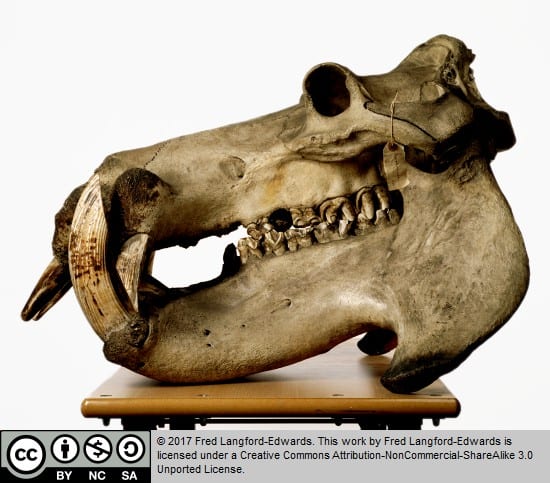
Fig 2. Hippo skull in the Grant Museum of Zoology (Catalogue no. Z32)

Sadly, the hippo is no longer found in Egypt but in dynastic times it was a hazard to boat travellers along the Nile and was present in ideological and cultural symbolism.  The deity Taweret was often depicted in the form of a pregnant hippo as she represented fertility (like frogs!). Hippo figurines are also found on ancient Egyptian sites (Fig 3) and hippo tusk ivory was used to make pendants, amulets and sculptural pieces.
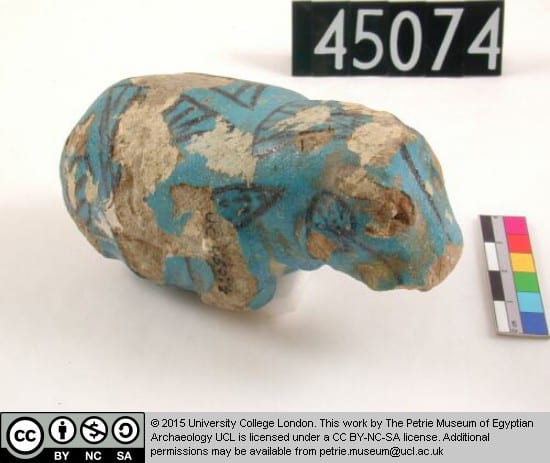
Fig 3. Blue glazed faience hippopotamus (Petrie Museum Catalogue No. UC45074)

As you can see, water and blood were and still are incredibly important cultural symbols, most probably due to their inescapable connection to the natural world and to life and death. It really is no wonder that that these themes come up time and time again all over the world.

I hope you have enjoyed my first foray into the Plagues of Egypt as much as I have… I’m quite excited about what direction they might take my research in next!
The rampant consanguinity in the Spanish branch of the Habsburg family

By Alexandra Bridarolli, on 18 October 2018

Welcome back to this series of articles on Consanguinity in History. In my previous article, you have heard about incest in Ancient Egypt and the case of Akhenaton and his son Tutankhamun. Let’s continue our investigations around consanguinity and look at another famous case: Charles II from the Spanish branch of the Habsburg family. We often hear that consanguinity is dangerous for the future child, but how dangerous is it exactly and why? The family story of this king followed might give you some food for thoughts.

Between the 15th and the 18th century, the Habsburg family ruled the Holy Roman Empire and, as such, was the most influential and powerful royal family in Europe. In the 16th century, the family separated into the senior Habsburg Spain and the junior Habsburg Monarchy branches, who settled their mutual claims in the Oñate treaty.

The kings of the Spanish Habsburg dynasty, and of the Habsburg house in general, are known to frequently marry close relatives in such a way that uncle-niece, first cousins and other consanguineous unions were prevalent in that dynasty.

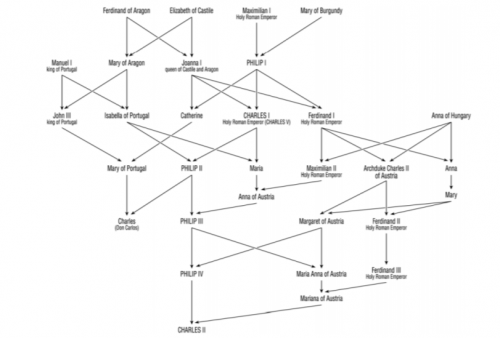
Figure 1: Family tree of the Spanish branch of the Habsburg family (kings are in capital letters) showing the inbreeding among Charles II ancestors. (Source: Alvarez et al.)

This branch disappeared in 1700 with Charles II, which many say was because of his family’s rampant inbreeding (see Figure 1). Charles II was indeed famous for being one of the ugliest kings. His nickname was El Hechizado or the Bewitched. He probably suffered from two genetic disorders. First, there was combined pituitary hormone deficiency, a disorder that made him short, impotent, infertile, and weak with a host of digestive problems. The other disorder was distal renal tubular acidosis, a condition marked by blood in the urine, weak muscles and having an abnormally large head compared to the rest of the body.


Figure 2: Portrait of Charles II of Spain (1661-1700) as well as two of his uncles and ancestors (Charles V (1500-1558) and Emperor Leopold I (1640-1705) (credits: Wikimedia Commons).


In order to understand the origin of these disorders, scientists have often used genetic analysis (such as in the case of Tutankhamun and Akhenaten) but not always. Gonzalo Alvarez et al. at the University of Santiago de Compostela recently came up with another innovative approach that enabled them to study 3000 family members of the Spanish branch of the Habsburg family over 16 generations. Using computational calculation of the coefficient of inbreeding (F) of each family member, the team was able to unravel the family history and its consequences on Charles II genetic disorders. The coefficient of Inbreeding (F) corresponds to the probability of finding, at a given position on a chromosome, two genes which are identical by descent. For two first cousins, for example, this probability will be equal to 1/16. For these reasons, consanguinity and inbreeding may significantly impact the occurrence and recurrence of recessive conditions and congenital anomalies (Holt 2013). This may lead to birth defects or children with genetic conditions.

These researchers showed that the inbreeding coefficient for Charles II (0.257), Phillip III (0.218) and prince Charles[1] (i.e. Don Carlos) (0.211) were the highest measured for all the kings of the Spanish Habsburg. This is not surprising as they were all born from either uncle-niece (Charles II and Philip III) or double first cousin (Prince Charles) marriages. However, what was surprising is that the coefficient calculated for each of them were almost twice the expected value for those types of consanguineous marriages (F = 0.125 in either uncle-niece or first cousins relationships) and very close to the expected value in an incestuous union as parent-child or brother-sister (F = 0.250 in both cases). These results were particularly stricking as they showed that “The inbreeding of the Spanish Habsburg kings was not only the consequence of a few generations of unions between close relatives as it is sometimes claimed” but that “ancestral consanguinity from multiple remote ancestors makes a substantial contribution to the inbreeding coefficient of the Spanish Habsburg kings and the contribution of this remote consanguinity is very similar in magnitude to that due to close consanguinity”.

By looking at death records for the family, Alvarez also found that children were much less likely to survive till their tenth birthday if they were born to kings with high F-values. The growing degree of inbreeding in the family meant that fewer and fewer children made it to adulthood, leaving the entire line resting on an infertile, handicapped and short-lived king. Paradoxically, it is thus the same desire that pushed the royal family to preserve the purity of their blood and to keep the “power” within their family that led them to lose it.

But inbreeding did not impact directly the royal lineage. It is, instead, the repeated inbreeding practice that gradually weakens the descendants’ mental and physical health. Incest simply increases the risk that the two parents share the same congenital condition which could then be transmitted to the child. But, what prevents two parents from different families to also share this anomaly? Nothing. Also, it has been shown that having a child with your first cousin raised the risk of a significant birth defect from about 3-to-4 percent to about 4-to-7 percent (Bennett et al., 2002). The authors concluded that this difference wasn’t enough to justify genetic testing of cousin couples and that most of the stigma associated with cousin unions in occidental cultures has little biological basis.

The incest taboo is resolutely very strong…

In the next episode: incest in the animal kingdom. An article in which you will hear about mongoose, termite which reproduce by producing clones of themselves, fish, salamanders and many more. Incest in nature is surprisingly more common than what you would think…

References:

Alvarez G., Ceballos F.C., Quinteiro C. (2009) The role of inbreeding in the extinction of a European royal dynasty. PLoS ONE 4: e5147.

Bennett, R., Motulsky, L., Bittles, A., Hudgins, G., Uhrich, A., Doyle, L., . . . Olson, R. (2002). Genetic Counseling and Screening of Consanguineous Couples and Their Offspring: Recommendations of the National Society of Genetic Counselors. Journal of Genetic Counseling, 11(2), 97-119.

Holt, R. L., and Trepanier, A. (2013). Genetic Counseling and Clinical Risk Assessment-Chapter 21. Emery and Rimoin’s Principles and Practice of Medical Genetics, pp. 1–40.

[1] Prince Charles was also strongly affected by his ancestors’ consanguineous unions. His behaviour suggests that he suffered from some serious mental problems. Rumour in the Spanish court had it that he enjoyed roasting animals alive and in one occasion blinded all horses in the royal stables. At age eleven he ordered the whipping of a serving girl for no known reason. Stories about Charles’ misconducts are numerous.

Colours of Ancient Egypt – Blue

By Anna Pokorska, on 16 October 2018

This is the second in the Colours of Ancient Egypt series; if you want to start at the beginning, click here

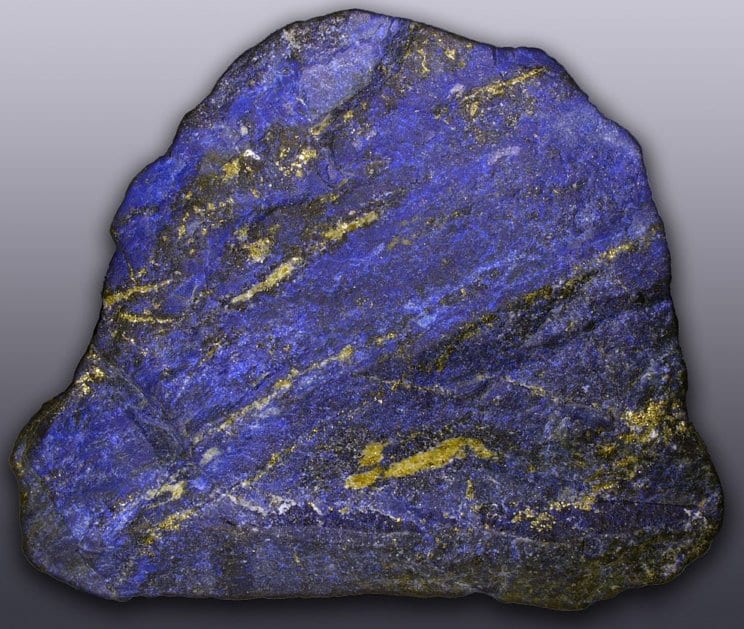
The colour blue has already featured in a couple of posts in this blog (e.g. check out Cerys Jones’ post on why the Common Kingfisher looks blue) but it seems impossible to me to discuss colour, especially in Ancient Egypt, and not start with blue. Arguably, blue has the most interesting history of all the colours, which can be attributed to the fact that it is not a colour that appears much in nature – that is, if you exclude large bodies of water and the sky, obviously. Naturally occurring materials which can be made into blue colourants are rare and the process of production is often very time-consuming. In Ancient Egypt, pigments for painting and ceramics were ground from precious minerals such as azurite and lapis lazuli; indigo, a textile dye now famous for its use in colouring jeans, was extracted from plants.


Left: two pieces of azurite (Petrie Museum, UC43790); Right: lapis lazuli (Image: Hannes Grobe)

However, all the above-mentioned colourants presented issues which limited their use. Azurite pigment is unstable in air and would eventually be transformed into its green counterpart, malachite. Lapis lazuli had to be imported from north-east Afghanistan (still the major source of the precious stone) and the extraction process would produce only small amounts of the purest colourant powder called ultramarine. Finally, indigo dyes can fade quickly when exposed to sunlight.

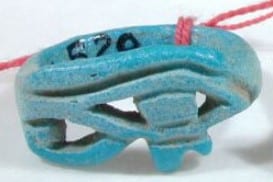
And yet it seems that the Ancient Egyptians attributed important meaning to the colour blue and it was used in many amulets and jewellery pieces such as the blue faience ring, lapis lazuli and gold bracelet or the serpent amulet from the Petrie Museum collection (below).

From left to right: blue faience ring with openwork bezel in form of uadjat eye (Petrie Museum, UC24520); lapis lazuli serpent amulet (UC38655); fragment of bracelet with alternative zig-zag lapis lazuli and gold beads (UC25970).

Therefore, the race to artificially produce a stable blue colourant began rather early. In fact, the earliest evidence of the first-known synthetic pigment, Egyptian blue, has been dated to the pre-dynastic period (ca. 3250 BC)[1]. It was a calcium copper silicate (or cuprorivaite) and – although the exact method of manufacture has been lost since the fall of the Roman Empire – we now know that it was made by heating a mixture of quartz sand, a copper compound, calcium carbonate and a small amount of an alkali such as natron, to temperatures over 800°C.


Fragment of fused Egyptian blue (Petrie Museum, UC25037).

This resulted in a bright blue pigment that proved very stable to the elements and was thus widely used well beyond Egypt. In fact, its presence has recently been discovered on the Parthenon Marbles in the British Museum due to its unusually strong photoluminescence, i.e. when the pigment is illuminated with red light (wavelengths around 630 nm) it emits near infrared radiation (with a max emission at 910 nm).

After its disappearance, artists and artisans had to make do with natural pigments and, being the most stable and brilliant, ultramarine became the coveted colourant once again. In fact, during the Renaissance, it is reputed to have been more expensive than gold and, as a result, often reserved for the pictorial representations of the Madonna and Christ. And so, the search for another replacement was back on. But it wasn’t until the early 1700s that another synthetic blue pigment was discovered, this time accidentally, by a paint maker from Berlin who, while attempting to make a red dye, unintentionally used blood-tainted potash in his recipe. The iron from the blood reacted with the other ingredients creating a distinctly blue compound, iron ferrocyanide, which would later be named Prussian blue. Naturally, other man-made blue pigments and dyes followed, including artificial ultramarine, indigo and phthalocyanine blues.

However, it wasn’t quite the end of the line for Egyptian blue, which was rediscovered and extensively studied in the 19th century by such great people as Sir Humphry Davy. And not only are we now able to reproduce the compound for artistic purposes, scientists are finding more and more surprising applications for its luminescence properties, such as biomedical analysis, telecommunications and (my personal favourite) security and crime detection[2].

References:

[1]  Lorelei H. Corcoran, “The Color Blue as an ‘Animator’ in Ancient Egyptian Art,” in Rachael B.Goldman, (Ed.), Essays in Global Color History, Interpreting the Ancient Spectrum (NJ, Gorgias Press, 2016), pp. 59-82.

[2] Benjamin Errington, Glen Lawson, Simon W. Lewis, Gregory D. Smith, ‘Micronised Egyptian blue pigment: A novel near-infrared luminescent fingerprint dusting powder’, Dyes and Pigments, vol 132, (2016), pp 310-315.

Museum Engagement Outside the Museum

By uctzcbr, on 9 October 2018

On a recent shift in the Grant Museum , I was talking to a small child about the bats. I explained that some bats will eat twice their own body weight in fruit in a single night. I like to share this fact with kids because I then ask them to imagine eating twice their own body weight in their favourite fruit and they are often extremely impressed (an opinion I think everyone should have of bats all the time).  On this occasion, I asked the child how much he thought twice his own body weight would be in his favourite fruit – cherries. He turned to his mum and asked her how much he weighed (17kg), he then patiently counted twice 17 out on his fingers and before replying, very seriously, “it would be 34kg in cherries”. I have been telling this fact to visitors, I estimate, for probably 3 years now. This is the first time anyone has calculated an answer to my follow-up question.

Needless to say, I was impressed, and also touched by how proud this boy’s parents were. Moments like these are one of many reasons I really enjoy speaking to children who visit the museums. They are like small sponges (so right at home at the Grant) and filled with questions that vary wildly and wonderfully from the collection (my favourites include “is everything really dead?” and “how did he brush his teeth?”).

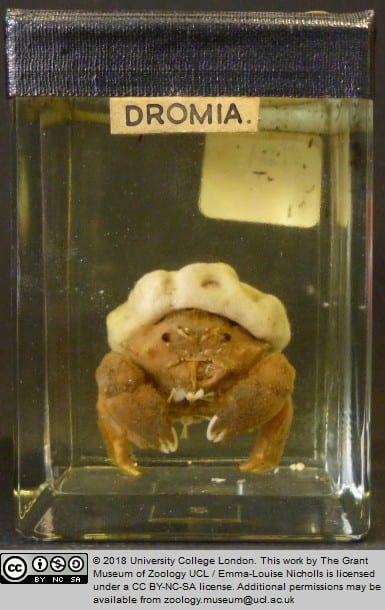
Whilst searching for a suitable image for this post, I discovered the Sponge Crab. This species of crab, that wears sponges as a hat, is an even better metaphor for children because it scuttles. (Image: Grant Museum)

The interesting conversations and literal hours of fact swapping with young visitors that I have enjoyed on my shifts are why I always enthusiastically volunteer to go on school visits and why, last week, I paid a visit to Fleet Primary School to talk to their students for Maths Week.

I was there to talk to the students about my research (in the UCL Crime Science department ) as an example of a something you could do if you studied maths. We talked about the different ways I use maths to understand Dark Net Markets (websites only accessible by anonymity preserving technologies such as Tor that facilitate the trade of illegal goods and services) and how it was similar to the maths they are learning in school. A lot of my research involves trying to measure the population size on these websites and evaluate if it’s been affected by a law enforcement intervention, so it’s basically adding and subtracting. I also look at the proportions of different types of products available to purchase; or, in other words, I divide things.

You may think that my research area is not an appropriate discussion topic for 8-11 year olds but, as ever, I was surprised by how much the students already knew. A good handful of them had heard of the Dark Web, some even knew about the types of the illegal purchases that could be made on it. Fewer had heard of the ways that the Dark Web is used by human rights groups, activists and whistleblowers to circumnavigate censorship and share information that might endanger them. Even though my research focuses on the illegal activity enabled by the Dark Web, a huge benefit of the outreach I am able to do with UCL is the opportunity to inform people about how important a space it can be. Plus I get to hear all of the insightful and interesting thoughts that the students I meet have about my research and being safe online.

The main role of the student engager is to hover in one of UCL’s museums and engage (ensnare?) visitors with conversations about the collections and our research. It takes a bit of getting used to – approaching strangers enjoying their lunch break or afternoon out and interrupting their visit with questions like “what do you think of the skeleton?”, “would you like to hear more about the history of this museum?” or “have you seen the bats?”, but it is a really interesting way to talk to people with lots of different lives and opinions about what happens at UCL. Sometimes, however, we get to take this conversation outside of the museum and learn a lot more about the people we talk to. It’s similar to the work we do in museums, but on a bigger scale, which allows for even more ideas to be shared. I really enjoy this part of the job, especially because I get to do the interesting talking-to-people part without the having-to-initiate-a-conversation  bit.


Question of the Week: Do Fish Pee?

By Arendse I Lund, on 2 October 2018

I seem to be asked a lot of fecal facts when talking to visitors in the Grant Museum, but here’s a new one to me: Do fish pee? Although fish are certainly discrete about it, they do!

A school of forage fish. Creative Commons photo by Oliver.Dodd.

At least one of these wee fish is doing its business (Image: Oliver Dodd)

Perhaps the first question is whether fish drink. Freshwater fish will passively intake water from their environment and then, as their insides are saltier than their surroundings, will excrete a diluted urine. Saltwater fish have to drink water more actively and, as their surroundings are saltier than their insides, will expel a more concentrated urine.

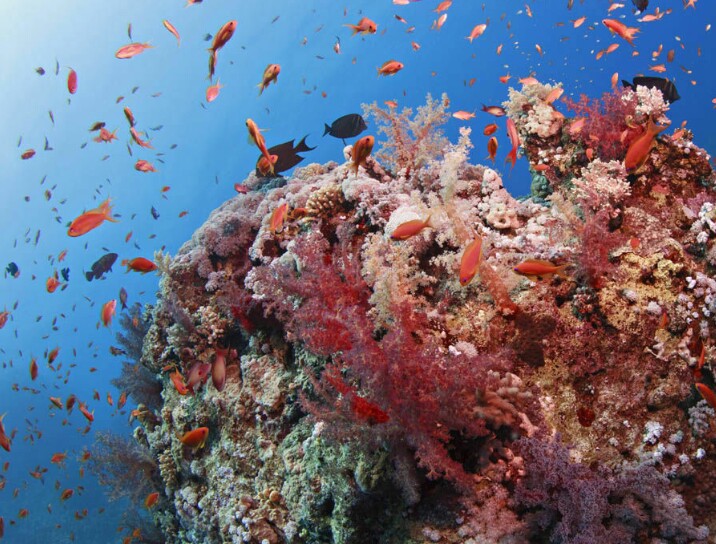
Why all the fuss about fish pee? Although you might think it’s gross that you’re swimming through the collected urine of the ocean’s creatures, this pee is critically important to the nutrient budgets of different ecosystems. Fish have kidneys which produce urine containing ammonium, phosphorus, urea, and nitrous waste. The expelled urine encourages plant growth on coral reefs; downstream benefits also include increased fertilization of algae and seagrass, which in turn provides food for the fish.

Coral reef biomass is correlated to species diversity (Image: Vikram Jadhav)

Fish urine thereby plays an important role in the biodiversity of coral reefs. If the supply of fish urine falls—through overfishing, for example—reef biodiversity suffers. A study in Nature Communications showed that overfishing “is reducing the capacity of coral reef fish communities to store and recycle nutrients by nearly half” and concluded that “rebuilding coral reef fish communities is of critical importance for food security and the livelihood of billions of people.”

As coral reefs rely so desperately on urination, life really becomes a fish’s creation. Nutrient recycling is an imperative in coral reef ecosystems as it is quite difficult to acquire new nutrients. Fish are the best recyclers around. Overfishing doesn’t just reduce the total number of fish species, it removes the largest fish (and their steady stream of pee) from the equation. The ecosystem suffers as a result.

While we can certainly all appreciate the trickle-down effects of fish urine, I’ll end with a quote from a poem by Sean Tyler B, which asks an important question:

Does a fish go pee
when it’s swimming in the sea?
Does it ever get the notion
when it’s swimming in the ocean?

The answer is a resounding yes.