X Close

Researchers in Museums

Home

Engaging the public with research & collections

Menu

Archive for July, 2018

Summer Lovin’: Why You Need a Pachyderm Paramour

By Sarah M Gibbs, on 23 July 2018

Here’s a special issue of Jungle-politan by our Senior Relationships Correspondent, Sarah Serengeti.

Hey there, Savannah Sisters. I don’t know about you, but when the temperature climbs, the first thing I think about (other than how to avoid crocodile attacks at ever-shrinking watering holes—those cheeky devils!) is summer love. But today’s confusing dating environment often leaves a girl with more questions than answers. Should you go Dutch on that leg of antelope? When is the right time to let him challenge your pack alpha? Is he really that buff, or is he just distending his salivary glands to impress you? Maybe you’re sold on the chimp’s personality. A man who can juggle? What’s not to like? Or perhaps you think the sloth would be your ideal “Netflix-and-Chill” partner. For some ladies, it’s the handyman—the industrious beaver has raised more than a few heart rates—while others live for the bad boy, lone-wolf wolf. But let me tell you from experience, he may hold your paw while you get that full moon tattoo, but he’ll have split long before the ink dries.

That’s why I’m pursuing a new type of man, one with a feature that just can’t be beat: a giant heart. That’s right, girls. This week’s column is dedicated to the African elephant, and let me assure you, the world’s largest land mammal is one of the few tall men whose parts are proportionate. Don’t believe me? Drop by UCL’s Grant Museum of Zoology, where the preserved heart below in on display.
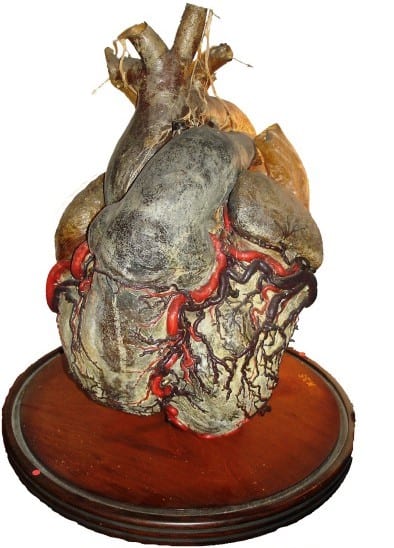
Elephant Heart (Grant Museum, Z639)

Who doesn’t want a partner whose heart weighs in at a mighty 20 to 30 kilograms? That’s a titanic ticker! It’s ten times as heavy as that purse dog you lost when Nigel the Anaconda got peckish on Fireworks Night. And who better to comfort you in your chihuahua bereavement than someone who will save each of his thirty beats per minute for you? Not to mention that elephant societies are matriarchal. This man will not be threatened by a powerful woman. Career girls, rejoice!

But maybe you’re not convinced. To win you over to Party Pachyderm, Encyclopedia Britannica and I have collected a few more elephant facts that are going to knock your hoof warmers off. Read on for more delightful details about the Stud of the Serengeti.

1. Forgot the snacks on the counter? No problem! Your date has a handy dandy trunk, or proboscis, a hybrid upper lip and nose unique to members of Proboscidea, a group that used to count more than 160 species (including mastodons) as members. With a load capacity of 250 kg, your squeeze can grab the crisps, drinks, and even the kitchen table while you recline on the sofa.
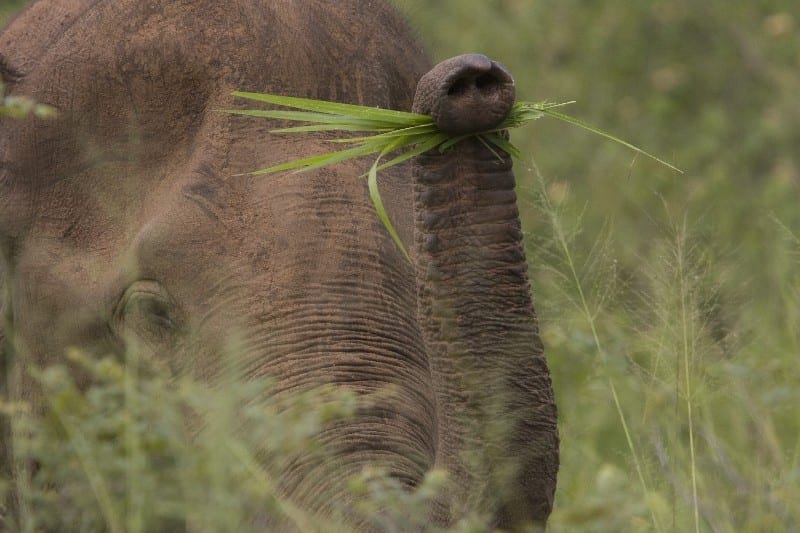
Elephant Trunk (Photo: Eco Images. Britannica Images)

2. Need to fell a tree on your property during spring clean-up? Lucky for you, elephants have been used as draft animals in Asia for centuries. Your pachyderm partner can uproot and carry off that endangered heirloom chestnut before you’ve even had time to water the perennials.

3. Tired of waiting for the bathroom? Your elephant love will never keep you idling outside the loo on a busy morning. Mature elephants have only four permanent teeth. Brushing and flossing is complete before you can say “Tusk-Whitening Toothpaste.” Speaking of tusks, talk about some useful enlarged incisor teeth! In addition to protecting the trunk, tusks help elephants dig water holes, lift objects, gather food, and strip bark from trees. And you’ll never feel afraid in that dodgy biker bar with your elephant by your side, as tusks are also super useful for defense.

African Elephant Skull with two visible teeth. (Grant Museum, Z764)

4. Wondering if he’ll remember your anniversary? Well, ladies, the adage is true: an elephant never forgets. How else would groups manage seasonal migrations to food and water? If that elephant can remember the location of water sources along lengthy migration routes, he’ll never buy tickets for the footie on your nine-month anniversary and then try and fob you off with an Arsenal beer cozy.

So next time you’re tearing your fur out waiting for a text from Mr. “You’re-such-a-pretty-prey-animal-you-make-me-want-to-go-vegan,” take a glance across the watering hole to that bulky bloke consuming his required 100 litres per day. You might just be looking at the elephant love of your life.

Myths in the Museum: The Dugong and the Mermaid

By Jen Datiles, on 21 July 2018

There’s a 2.7-meter-long skeleton of a big underwater creature in the Grant Museum of Zoology, right when you enter the main room. On my first Saturday shift as a PhD museum engager, a 7-year-old boy stopped to point and ask his mom what this monster was, and why it had hands. The mom glanced at the display label, read its name, DUGONG, and then stopped and looked at me — what on earth was this note about this animal starting the myth of mermaids? Was it for real?

The dugong skeleton making waves (Grant Museum, Z33)

As Rita Dal Martello has written on our blog before, dugongs and manatees both belong to the animal genus Sirenia, and share the common name ‘sea cow’. The mammary glands of females in the Sirenia genus are located on their upper bodies near their armpits, which are likely to have contributed to the reported ‘mermaid’ sightings of explorers and sailors. While manatees can be found in estuarine and fresh waters, dugongs are strictly marine mammals. They also possess a dolphin fluke-like tail. Dugongs are slimmer than their cousins, but this is relative — they still can grow to 3 meters in length and weigh up to a whopping 1000 kg! It’s not surprising, then, that sailors spotted these animals from their ship’s deck. And mistaking them for beautiful humanlike creatures is not entirely far-fetched… when one considers these men could have been at sea for years at a time and knew every tall tale of fantastical ocean creatures in the book.

The myth of humanlike water spirits has perpetuated over the centuries. The first depiction of a half human-half fish creature is thought to be of the Babylonian water god Oannes as far back as 5000 BCE. The ancient Greek sirens, which originally were described with human heads on birds’ bodies, have also often been portrayed with fishtails. Pliny the Elder dedicated an entire chapter of his 1st century book The Natural History to write on the forms of tritons and nereids, describing that “in them, the portion of the body that resembles the human figure is still rough all over with scales.” In the pacific island nation of Palau, where a 3,000-year-old cave drawing of dugongs was found, legends of young women transforming into sea creatures have been passed down over the years; the word dugong, in fact, derives from Malay for ‘lady of the sea’. Christopher Columbus reported seeing mermaids near Haiti in 1493, and the English explorer Henry Hudson (namesake of New York’s Hudson River) gave a vivid description of the mermaid his crew apparently saw off the coast of Greenland in 1608:

“From the navill upward her backe and breasts were like a woman’s,
as they say they saw her, but her body as big as one of us. Her
skin very white, and long haire hanging downe behind of colour
blacke. In her going downe they saw her tayle, which was like the
tayle of a porposse, and speckled like a macrell.”

An 1817 coloured engraving of mermaids. (Credit: Wellcome Collection)

Captain Hailborne at St. Johns Newfoundland, from Newe Welt und Americanische Historian by Ludwig Gottfried, 1655. (Credit: The Mariners’ Museum)

In the 18th and 19th centuries, mermaid specimens held a particular grip on Western popular imagination. The hype began when several astonishingly realistic mermaid ‘specimens’ from Asia — primarily from Japan — made their way to Europe during Japan’s isolation policy under the Tokugawa shogunate. When this ended in 1854, these ningyo (which translates to ‘man-fish’), began to circulate as objects of good fortune, supernatural potency, and — perhaps above all — as a means to spark the curiosity of the public. Mermaids were sought after by collectors and showmen alike to draw crowds, as P.T. Barnum famously did with the ‘Feejee Mermaid’.

A Mermaid by John Waterhouse, 1900. (Credit: Royal Academy)

The “mermaid” from the Horniman Museum. (Photo: Heini Schneebeli)

Henry Wellcome (1853-1936), whose massive collection has been distributed over the years to various museums including our own Petrie Museum of Egyptian Archaeology, saw mermaids worth purchasing for their anthropological value; his two specimens are now housed in the Science Museum over in South Kensington, and in the Buxton Museum. Even the British Museum down the road boasts having its own mermaid. And these ‘Japanese mermaids’ continue to captivate our interest into the present day, not only out of curiosity but for science and conservation studies; researchers at the nearby Wellcome Collection recently investigated what two of these cleverly constructed specimens (long assumed to be a monkey head sewn to a fish body) are actually made of. The answer, it turns out, is stuffed papier-mache, wire, fish teeth, scales, carved bone and wood!

So next time you’re at the Grant Museum, take a look at the dugong skeleton. It may not look like it now, but just think of how this creature inspired sailors, shamans, and showmen to perpetuate myths of mermaids across the world, and over hundreds of years!


Not a mermaid. (Photo: Julien Willem)

Additional Reading:

Viscardi P, Hollinshead A, MacFarlane R, Moffatt J, 2014. Mermaids Uncovered. Journal of Museum Ethnography, (27): 98-116.


The Invisible Glow of Egyptian Blue

By Cerys R Jones, on 20 July 2018

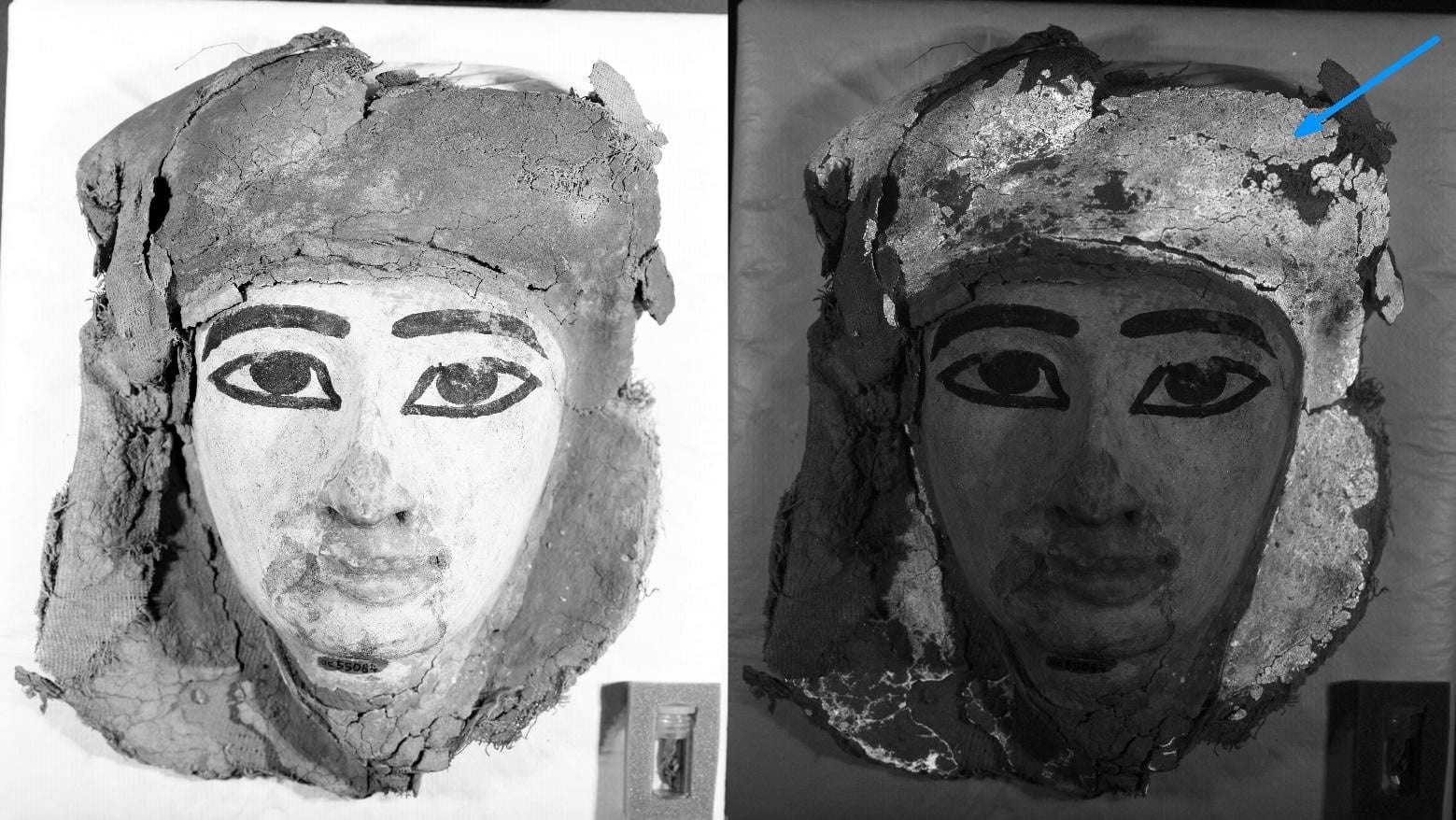
If you were to visit the Petrie Museum with infrared vision, you would probably be drawn to wildly different parts of the collection than you would normally. Certain artefacts would appear to glow before your eyes. This is because of the inventively-named pigment Egyptian blue, which, as the name tells you, is a blue pigment that was commonly used in Egypt. However, Egyptian blue has a special property that makes it stand out from the rest: when illuminated in visible light, it fluoresces infrared light. If you could see infrared light, you would see all of the artefacts that contain this pigment glowing. I haven’t yet evolved to have this special power, but I have a camera that does. This is a multispectral imaging system and is what my PhD research is focused on. Multispectral imaging involves capturing images of objects that are illuminated in ultraviolet, visible and infrared light to reveal features that cannot be detected by the human eye alone.

Last November, I captured multispectral images of this Egyptian mummy mask from the Petrie Museum. In the Petrie catalogue, it is described as a “linen-based cartonnage mask, painted with blue headcloth, white face, black brows, eye-borders and pupils, and red-edged yellow band around face.” This mummy mask would have placed over the mummified body to protect the deceased in the afterlife. The Petrie has several mummy masks in the collection, including some that are gilded with gold.

Late period cartonnage mask (Petrie Museum, 55084)

The mask was illuminated in visible light and an infrared filter was placed in front of the camera lens. This meant that only infrared light was able to pass through the lens and be captured by the camera. The resulting image is below. The blue headcloth appears brightly in the image, indicating that it is painted in Egyptian blue. We were also able to confirm that the little fragment of mask in the vial was also from the headpiece, as this also fluoresced.

The cartonnage mask illuminated in visible light (left) and captured with an infrared filter (right). (Photo: Cerys Jones)

When you search Egyptian blue in the Petrie catalogue, 194 results appear ranging from Egyptian blue scarab beetles to plaster with hieroglyphs written in Egyptian blue paint. Two of my favourite items from the collection are the Egyptian blue hippopotamus and the Egyptian blue paste amulet of a lion-headed goddess. The hippopotamus represents Taweret, the Ancient Egyptian goddess of childbirth and fertility. The lion-headed goddess is probably Bastet, the goddess of warfare in Lower Egypt .

Left, hippopotamus in Egyptian blue pigment (Petrie Museum, 6489) and right, Egyptian blue paste lion-headed amulet (Petrie Museum, 52875).

Next time you visit an Egyptian museum, keep your eyes out for any artefacts that are painted in Egyptian Blue that are glowing unbeknown to your eyes!

What is the relationship between frogs and fertility?

By Hannah B Page, on 10 July 2018

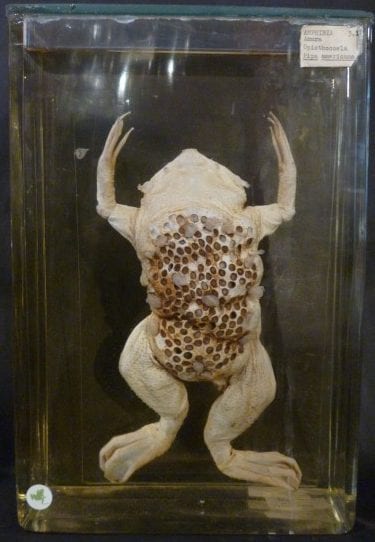
During my first few weeks as a student engager I began to notice the presence of frogs… everywhere. I saw them in various forms and objects in the Petrie Museum, and found frog and other amphibious specimens in the Grant Museum. The Surinam toad quickly became one of my favourite objects to show visitors—the female stores her eggs in her back, and they then burst through the skin when fertilised (Fig 1.). As you can imagine, when you tell people this, you get a mixed response. I took this all as a sign and decided I should do a bit of splashing around in the amphibian research pool and dedicate my first blog post to them.

Fig 1 Surinam Toad with emergent young (Grant Museum W332)

What became immediately obvious when I started to do some digging is just how common frogs are in cultural and religious belief systems. Frogs are used as characters in folk law and in fairy tales—just think of the frog prince in the Grimm stories—but I discovered that their use in religion and culture goes back much, much further. Both the ancient Egyptians and the Mesopotamians saw the frog as a symbol of fertility and life giving. This connection is obvious when you understand the importance these past civilisations gave to the rivers that flowed through their lands. The Nile, Tigris and Euphrates rivers are hailed as the facilitators of the fertile lands that made the development of the first major cities and the centralised hierarchical societies that lived there possible. So the frog, as a watery symbol of the life-giving waters, was then depicted in reliefs, sculpture and objects. One such object is a beautifully crafted, smooth limestone frog in the Petrie Museum (Fig. 2). In fact, frogs are such a strong and consistent symbol in ancient Egyptian culture that they are found depicted in important and specialist objects from the predynastic Naqada periods to the Roman period—some 4,500 years.

Fig 2 Limestone frog from Meroe in the (UCL Petrie Museum, UC.43984)

The Egyptians even depicted a goddess, Haqet, in the image of a frog. Unsurprisingly Haqet is the goddess of fertility and is often depicted either as a frog or in human form with the head of a frog. Amulets were then fashioned in the shape of frogs/Haqet, and were worn, providing fertility to the wearer.

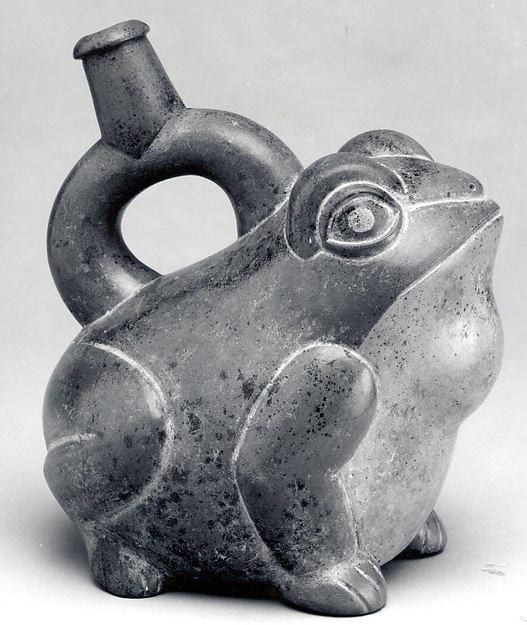
Frogs have also been the subjects of art in other areas of the world as well, for example for the Moche culture of Peru (Fig. 3). The frog species found in the Amazon basin are the most numerous and some of the most deadly, including the poison dart frog who has enough deadly toxin to kill between ten and twenty grown people. Interestingly enough, in Moche society they were also associated with fertility and growth, but with their toxicity (and sometimes hallucinogenic quality), it is thought that their symbolic meaning stretches far beyond this interpretation.

Fig 3 Moche Frog stirrup spout bottle (The Metropolitan Museum of Art, 1992.60.8)

However in Europe, frogs and toads haven’t always been seen in such a positive light. The prince in the frog prince was cursed and turned into a frog as punishment, and in the epic biblical poem Paradise Lost, John Milton depicts Satan as a toad poisoning Eve.

So, their social and symbolic importance is well recorded, but what about their biological history? For this I interrogated the case in the Grant Museum dedicated to them. Frogs and toads it seems started life in the Triassic period, some 240 million years ago. The museum even has a cast of an early German species (Palaeobatrachus) that lived around 130-5 million years ago. What is also striking about the frog is its wide native distribution across the globe, from Europe, to the Americas, Africa to Australasia. So it is unsurprising that these springy species have such an important and consistent cultural presence worldwide.

Finally in my research I discovered that the study of the relationship between human culture and amphibians even has a name: ethnoherpetology. Clearly we have a long and intimate history with our croaky friends.

So next time you’re close by, why not hop into the Grant or the Petrie Museum to see how many frogs you can find?

The Imperial Gentleman of China

By Carolyn Thompson, on 3 July 2018

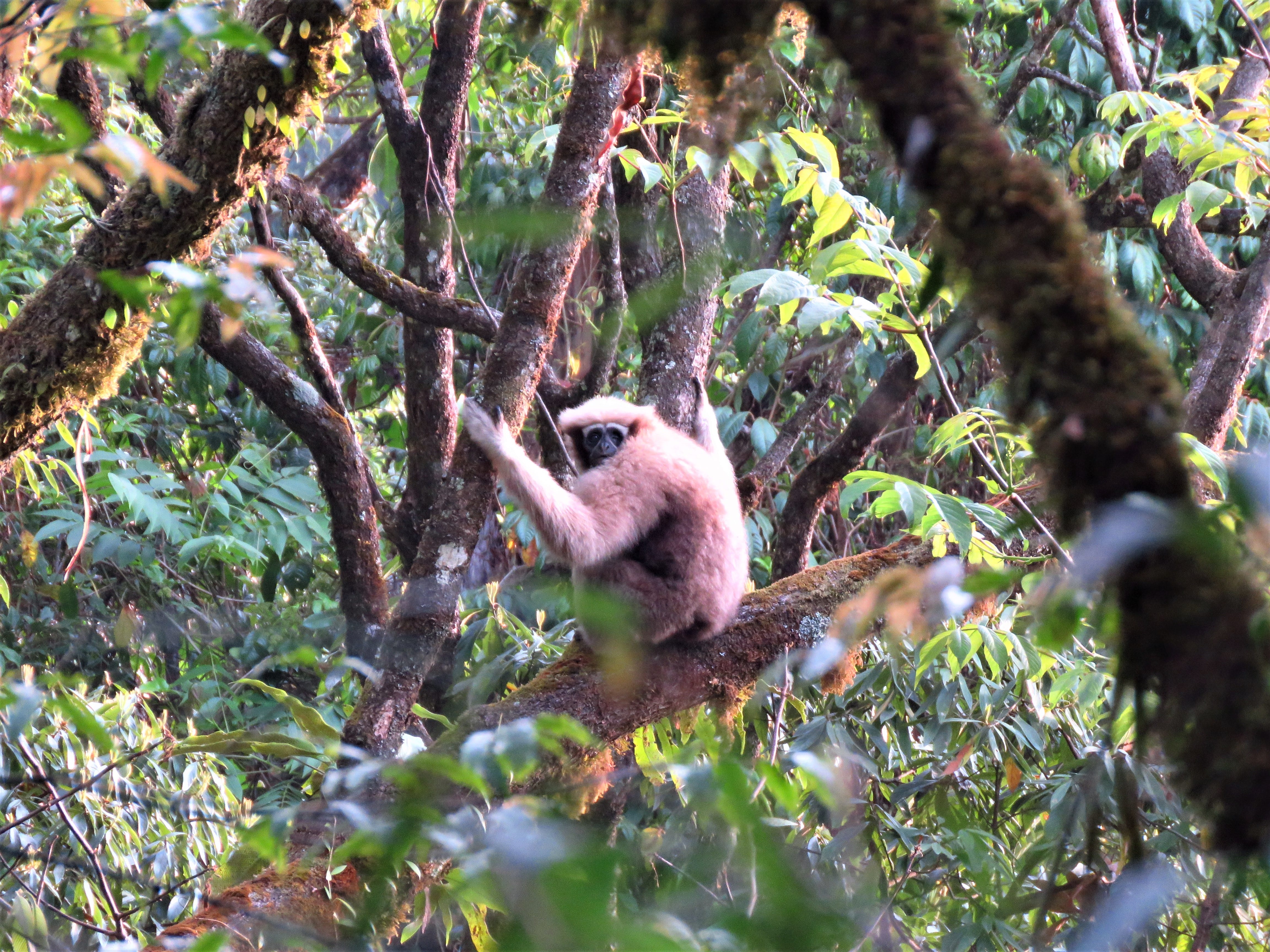
I am a primatologist; that is, a scientist who studies the behaviour, abundance and conservation status of monkeys, lemurs and apes. My specialty area and the focus of my PhD research here at University College London, is the plight of the gibbons, the smallest of the apes.

The Skywalker Hoolock gibbon (Hoolock tianxing). Photograph taken on Carolyn Thompson’s recent field trip to China. (Photo credit: Carolyn Thompson)

Gibbons are often forgotten in the shadow of their great cousins — the orangutans, chimpanzees, bonobos and gorillas — receiving less funding, as well as research and media attention. This is very unfortunate seeing as 19 of the 20 species are on the brink of extinction. The Hainan gibbon, for example, is the world’s rarest primate with a mere 26 individuals making up their entire global population.

I am always thrilled therefore to see media articles raising some much needed gibbon awareness, even if the news story doesn’t always paint us humans in the best light.

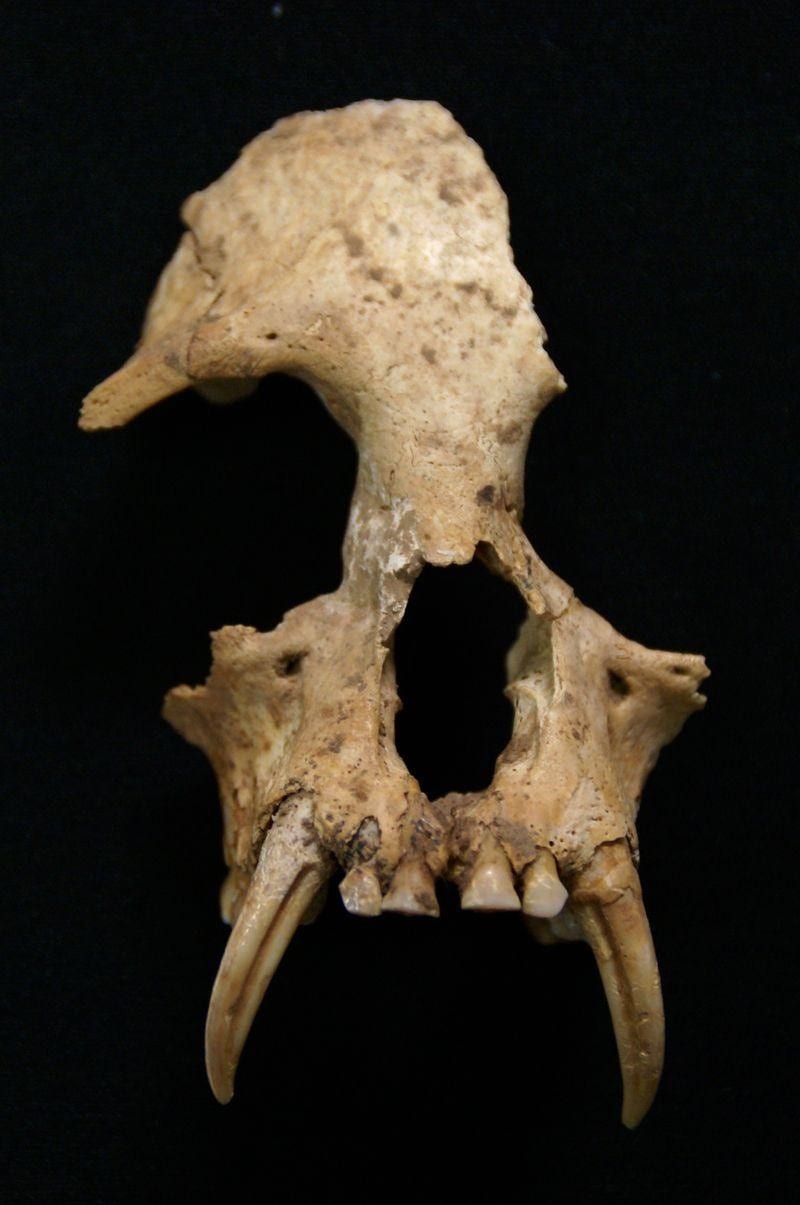
In 2004, one of my supervisors from the Zoological Society of London, stumbled across a gibbon skull inside a tomb in Xi’an, Shaanxi Province, China. The skull is believed to be ca. 2,200-2,300 years old and the potential property of Lady Xia, the grandmother of China’s first emperor, Qin Shihuang, who is famous for his striking terracotta army. Inside this ancient tomb was a whole menagerie of other animal skeletons including a crane, bear and a leopard — yet another example of human-animal relationships that have dated back millennia.

The skull of Junzi imperialis. (Photo credit: Samuel Turvey).

Although this exciting discovery could tell us a lot about our evolutionary shared ancestry with gibbon species, there are still many unanswered questions. We are unsure if the skull, now said to belong to Junzi imperalis (meaning the ‘imperial man of virtue’ due to the strong historical relationship between humans and gibbons in Chinese culture) is in fact a new species and where it came from. There are strong indicators, however, suggesting that this potentially new species of gibbon could be the first ape to have vanished off the face of the earth due to human pressures. Now extinct, we need to look at our current impact on the planet to ensure we don’t do the same with our other cousins.

Part of my PhD research examines the relationship between humans and animals, especially amongst local communities found in gibbon habitat regions. This intrigue, along with my love of mingling with the public, led me to my new role as a Student Engager in the UCL museums. For example, the Ancient Egyptians also had a strong connection with animals which I hope to explore over the coming months in the UCL Petrie Museum, and the Grant Museum of Zoology also has a couple of gibbon skeletons hanging around. Come and see for yourself!

In the meantime, keep your eyes peeled for my upcoming blogs on Twitter: @gibbonresearch and @ResearchEngager

What happens if a Neanderthal bites you?

By Josie Mills, on 3 July 2018

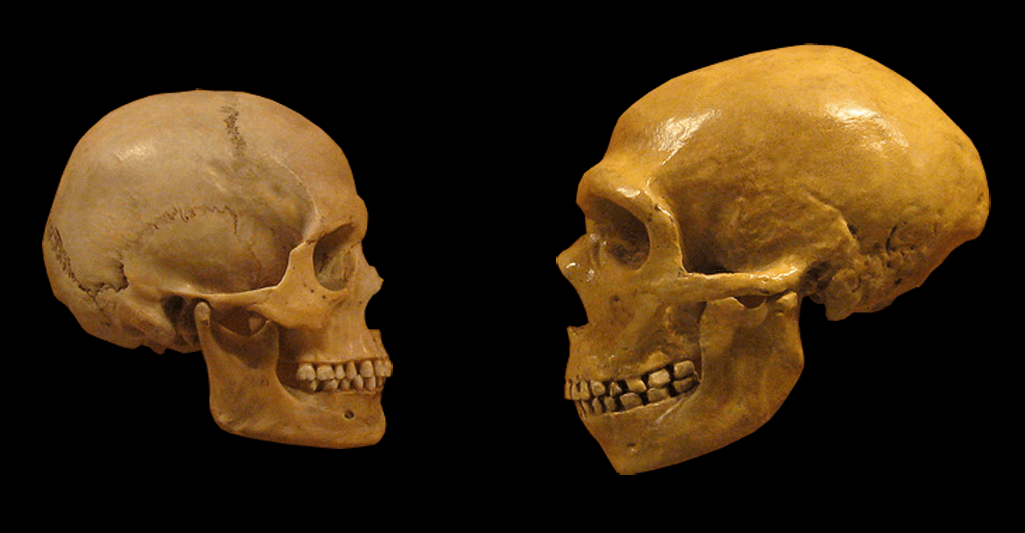
Neanderthals have a pretty robust bone structure in comparison to anatomically modern humans and the differences in facial bone structure are particularly striking. In the image below, you can see several of these features, like the high domed cranium and distinctive occipital bun (the pinching at the rear of the skull). To the front of the skull you might notice the large nasal aperture (hole from nose into head) and heavy brow ridge. They also have an extremely strong looking jaw!

It’s likely that these skeletal features are linked to some sort of adaptive process and three main theories are that they give Neanderthals:

1.) A stronger biting force.

2.) The ability to process large amounts of air quickly.

3.) More efficient survival in cold climates with dry air.

When compared the skull and consequent brain size appears larger this probably didn’t make them smarter as intelligence is linked more to how the brain is folded ! Image credit: hairymuseummatt (original photo), DrMikeBaxter (derivative work) [CC BY-SA 2.0 (https://creativecommons.org/licenses/by-sa/2.0)], via Wikimedia Commons

Recent research by Wroe et al. (2018) aims to shed light on this debate. Researchers analysed the biomechanics of bite strength across different hominin species, focusing on Homo heidlbergensis, Homo neanderthalensis and Homo sapiens. They used CT-scans of multiple crania to establish the bite efficiency in the different hominins.  The results suggested that Neanderthal bite strength was very similar to Homo sapiens and in fact anatomically modern humans could bite more efficiently using fewer muscles. The analysis also demonstrated that both species had nasal cavities that were adapted to condition air efficiently but Neanderthals could take significantly more air into their nasal pathway. Poor Heidlbergensis was the worst at everything… but that’s perhaps unsurprising as it is an older, less derived (evolved), member of the human lineage.

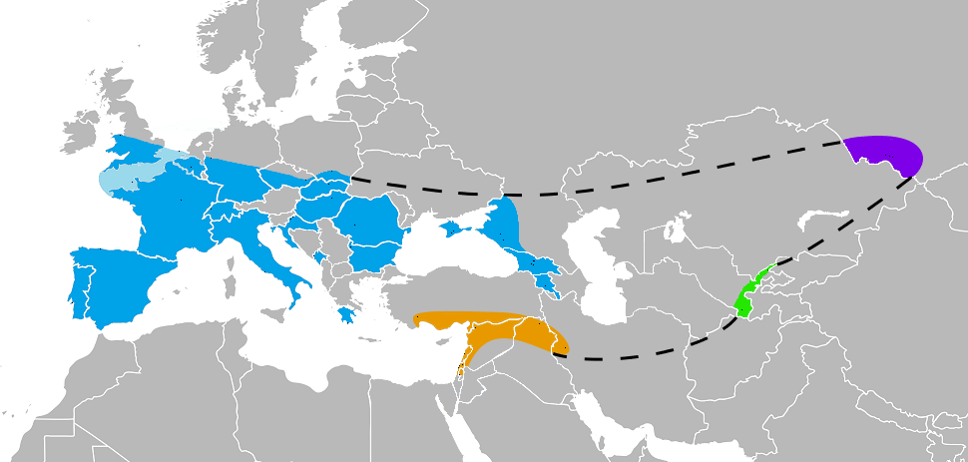
These results strongly support the theory that Neanderthals facial anatomy was adapted to high energy activity in cold, dry, climates. This makes sense in terms of the Neanderthal range and the fact that they evolved and lived outside of Africa. There is evidence of Neanderthal populations surviving during very cold periods of the Ice Age, for example at La Cotte de St. Brelade in Jersey. There are archaeological deposits from this site that date to Marine Isotope Stage 6 (between 191 – 130 thousand years ago), a time when cold conditions prevailed.

This new evidence also fits well with Neanderthal post-cranial adaptations like their large barrel shaped rib cage and short, stocky, stature. These features may have helped to improve survival in cooler climes by aiding air processing and retention of body heat.

This figure shows known Neanderthal range, which demonstrates that although some liked it hot evidence of their presence has been found as far north as England and Russia . Image credit: Nicholas Perrault https://commons.wikimedia.org/wiki/File:Range_of_Homo_neanderthalensis.png


So, to answer the question: being bitten by a Neanderthal would probably hurt like hell but it would be marginally better than being bitten by an anatomically modern human…

 References

Wroe, S., Parr, W. C. H., Ledogar, J. A., Bourke, J., Evans, S. P., Fiorenza, L., Benazzi, S., Hublin, J., Stringer, C., Kullmer, O., Curry, M., Rae, T. C., Yokley, T. R. 2018. Computer simulations show that Neanderthal facial morphology represents adaptation to cold and high energy demands, but not heavy biting. Proc. R. Soc. B 285: 20180085. http://dx.doi.org/10.1098/rspb.2018.0085