X Close

Researchers in Museums

Home

Engaging the public with research & collections

Menu

Archive for October, 2017

How to visualize the insides of an animal?

By ucbtch1, on 26 October 2017

When studying animals, sometimes we need to study them from the inside out —literally. One way to do this is to cut them open and looking at their internal structures, such as with the bisected heads or the microscope slides in the Grant Museum of Zoology. Another way to visualize the inside of an animal is to stain a particular body part while making everything else clear; researchers can do this by using chemicals and colour stains. For example, in the Grant Museum of Zoology, we can find specimens like the tarsier, with its skeleton stained in red, or the zebrafish with red and blue parts.

Adult tarsier stained with Alizarin Red to show calcium (Z2718)

Adult tarsier stained with Alizarin Red to show calcium (Z2718)

Adult zebrafish stained with Alcian Blue and Alizarin Red (V1550)

Adult zebrafish stained with Alcian Blue and Alizarin Red (V1550)


The process of staining these animals begins with the removal of the skin, viscera and fat tissue.  Then, soft tissues like muscle are cleared using a variety of different methods which mostly involve exposing the specimen to different baths of chemicals. Next, the bones are stained with Alizarin Red and the cartilage with Alcian Blue. It’s a long process that can take a couple of days because the stain needs to properly penetrate the tissues, but the results are amazing.

Initially, both Alizarin Red and Alcian Blue were used as textile dyes, but now they also have numerous biological applications. Alizarin Red staining is a method to visualize mineralized tissue because it stains calcium and Alcian Blue stains specific structures mainly found in cartilage. These stains constitute an important part of research because they allow researchers to visualize the intricate structure of tissues and thus understand how they form throughout development.

ADSCs

Image credit: Eleonora Zucchelli

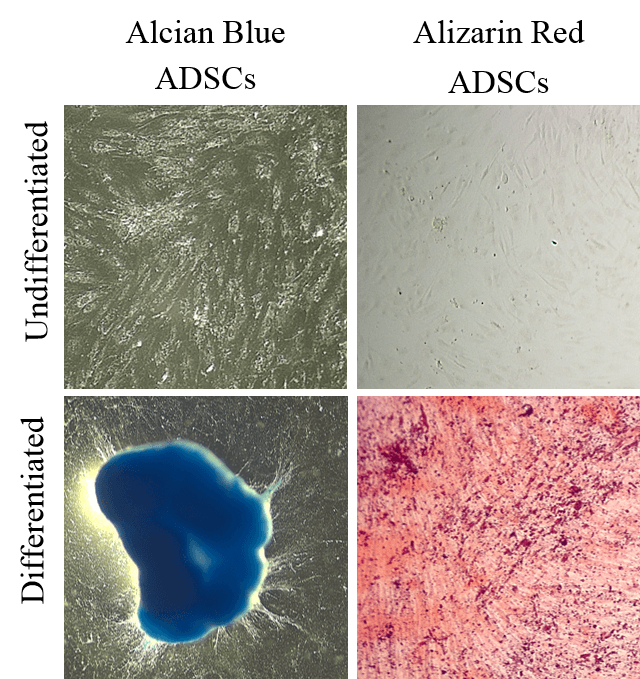
In the lab where I study, researchers work with adipose (fat) derived stem cells which have the capacity to become different kinds of mature cells. These stem cells are grown under specific conditions and by changing these conditions scientists can direct them into becoming mature cells like fat, bone or cartilage — a process called differentiation. But this process can take anywhere from a couple of weeks up to a couple of months! In order to determine if the differentiation is working, researchers stain the stem cells with Alizarin Red and Alcian Blue to identify if they are in fact turning into bone or cartilage. In the images depicted, undifferentiated adipose derived stem cells (ADSCs) on the top appear clear but their differentiated counterparts are stained in blue or red. This means the differentiation is working.

There are many other stains used on animals or cells. The process of clearing and staining can be very complicated depending on the specimen and what one wishes to stain, but the results can be quite fascinating. What animal would you like to see stained from the inside.


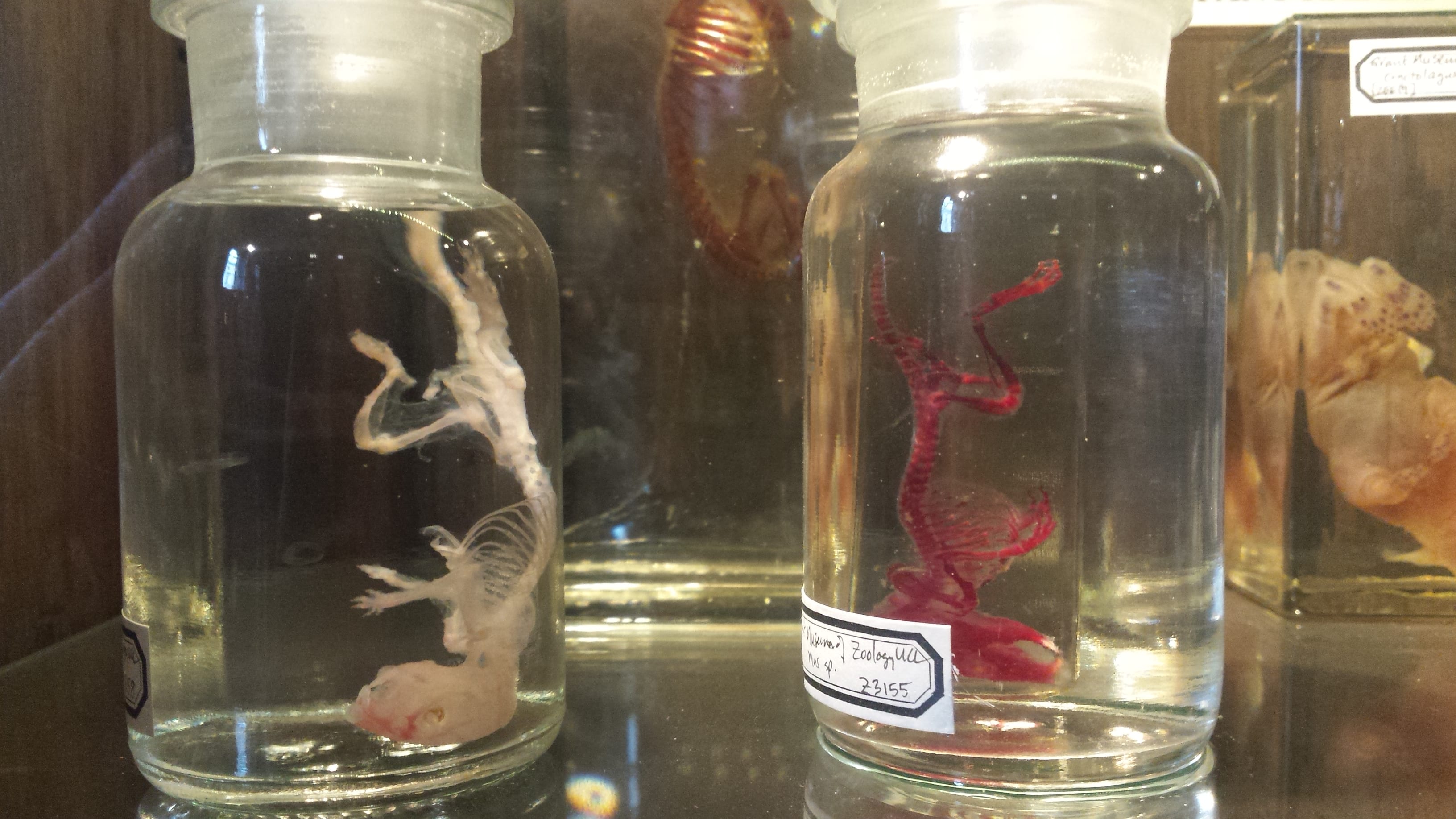
Mouse stained with alizarin red (Z3155)

Mouse stained with alizarin red (Z3155)


References:

PUCHTLER, H., Meloan, S. N., & TERRY, M. S. (1969). On the history and mechanism of alizarin and alizarin red S stains for calcium. Journal of Histochemistry & Cytochemistry17(2), 110-124.

McLeod, M. J. (1980). Differential staining of cartilage and bone in whole mouse fetuses by alcian blue and alizarin red S. Teratology22(3), 299-301.


Question of the Week: What’s this Museum For?

By Hannah L Wills, on 19 October 2017

By Hannah Wills


A couple of weeks ago, whilst engaging in the Grant Museum, I started talking to some secondary school students on a group visit to the museum. During their visit, the students had been asked to think about a number of questions, one of which was “what is the purpose of this museum?” When asked by some of the students, I started by telling them a little about the history of the museum, why the collection had been assembled, and how visitors and members of UCL use the museum today. As we continued chatting, I started to think about the question in more detail. How did visitors experience the role of museums in the past? How do museums themselves understand their role in today’s world? What could museums be in the future? It was only during our discussion that I realised quite how big this question was, and it is one I have continued to think about since.

What are UCL museums for?

The Grant Museum, in a similar way to both the Petrie and Art Museums, was founded in 1828 as a teaching collection. Named after Robert Grant, the first professor of zoology and comparative anatomy at UCL, the collection was originally assembled in order to teach students. Today, the museum is the last surviving university zoological museum in London, and is still used as a teaching resource, alongside being a public museum. As well as finding classes of biology and zoology students in the museum, you’re also likely to encounter artists, historians and students from a variety of other disciplines, using the museum as a place to get inspiration and to encounter new ideas. Alongside their roles as spaces for teaching and learning, UCL museums are also places for conversation, comedy, film screenings and interactive workshops — a whole host of activities that might not have taken place when these museums were first created. As student engagers, we are part of this process, bringing our own research, from a variety of disciplines not all naturally associated with the content of each of the museums, into the museum space.


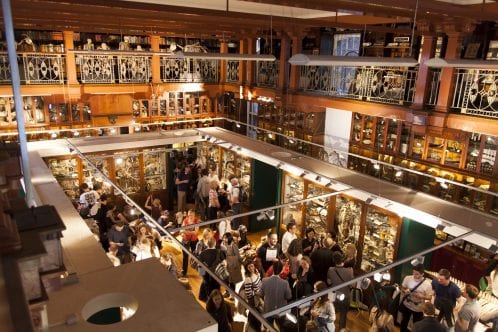
A Murder-Mystery Night at the Grant Museum (Image credit: Grant Museum / Matt Clayton)

A Murder-Mystery Night at the Grant Museum (Image credit: Grant Museum / Matt Clayton)


What was the role of museums in the past?

Taking a look at the seventeenth and eighteenth-century roots of the Ashmolean Museum in Oxford and the British Museum in London, it is possible to see how markedly the role and function of the museum has changed over time. These museums were originally only open to elite visitors. The 1697 statues of the Ashmolean Museum required that ‘Every Person’ wishing to see the museum pay ‘Six Pence… for the Space of One Hour’.[i] In its early days, the British Museum was only open to the public on weekdays at restricted times, effectively excluding anyone except the leisured upper classes from attending.[ii]

Another feature of these early museums was the ubiquity of the sense of touch within the visitor experience, as revealed in contemporary visitor accounts. The role of these early museums was to serve as a place for learning about objects and the world through sensory experience, something that, although present in museum activities including handling workshops, tactile displays, and projects such as ‘Heritage in Hospitals’, is not typically associated with the modern visitor experience. Zacharias Conrad von Uffenbach (1683-1784), a distinguished German collector, recorded his visit to Oxford in 1710, and his handling of a range of museum specimens. Of his interactions with a Turkish goat specimen, Uffenbach wrote, ‘it is very large, yellowish-white, with… crinkled hair… as soft as silk’.[iii] As Constance Classen has argued, the early museum experience resembled that of the private ‘house tour’, where the museum keeper, assuming the role of the ‘gracious host’, was expected to offer objects up to be touched, with the elite visitor showing polite and learned interest by handling the proffered objects.[iv]
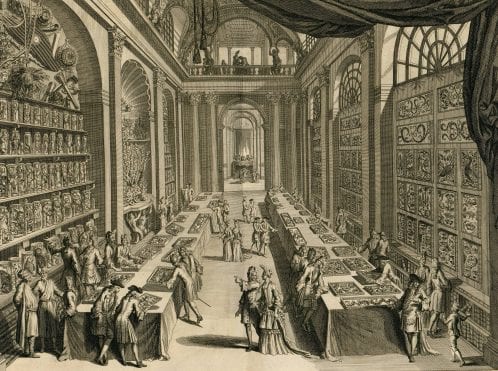
Aristocratic visitors handle objects and books in a Dutch cabinet of curiosities, Levinus Vincent, Illustration from the book, Wondertooneel der Nature - a Cabinet of Curiosities or Wunderkammern in Holland. c. 1706-1715 (Image credit: Universities of Strasbourg)

Aristocratic visitors handle objects and books in a Dutch cabinet of curiosities, Levinus Vincent, Illustration from the book, Wondertooneel der Nature – a Cabinet of Curiosities or Wunderkammern in Holland. c. 1706-1715 (Image credit: Universities of Strasbourg)


How do museums think about their function today?

In understanding how museums think about their role in the present, it can be useful to examine the kind of language museums employ when describing visitor experiences. The British Museum regularly publishes exhibition evaluation reports on its website, detailing visitor attendance, identity, motivation and experience. These reports are fascinating, particularly in the way they classify different visitor types and motivations for visiting a museum. Visitor motivations are broken down into four categories: ‘Spiritual’, ‘Emotional’, ‘Intellectual’ and ‘Social’, with each connected to a different type of museum function.[v]

Those who are driven by spiritual motivations are described as seeing the museum as a Church — a place ‘to escape and recharge, food for the soul’. Those motivated by emotion are understood as searching for ‘Ambience, deep sensory and intellectual experience’, the role of the museum being described as akin to that of a spa. For the intellectually motivated, the museum’s role is conceptualised as that of an archive, a place to develop knowledge and conduct a ‘journey of discovery’. For social visitors, the museum is an attraction, an ‘enjoyable place to spend time’ where facilitates, services and welcoming staff improve the experience. Visitors are by no means homogenous, their unique needs and expectations varying between every visit they make, as the Museum’s surveys point out. Nevertheless, the language of these motivations reveals how museum professionals and evaluation experts envisage the role of the modern museum, a place which serves multiple functions in line with what a visitor might expect to gain from the time they spend there.

What will the museum of the future be like?

In an article published in Frieze magazine a couple of years ago, Sam Thorne, director of Nottingham Contemporary, invited a group of curators to share their visions on the future of museums. Responses ranged from the notion of the museum as a ‘necessary sanctuary for the freedom of ideas’, to more dystopian fears of increased corporate funding and the museum as a ‘business’.[vi] These ways of approaching the role of the museum are by no means exclusive; there are countless other ways that museums have been used, can be used, and may be used in the future. My thinking after the conversation I had in the Grant Museum focussed on my own research and experience with museums, but this is a discussion that can and should be had by everyone — those who work in museums, those who go to museums, and those who might never have visited a museum before.


What do you think a museum is for? Tweet us @ResearchEngager or come and find us in the UCL museums and carry on the discussion!


References:

[i] R. F. Ovenell, The Ashmolean Museum 1683-1894 (Oxford: Clarendon Press, 1986), 87.

[ii] Fiona Candlin has written on the class politics of early museums, in “Museums, Modernity and the Class Politics of Touching Objects,” in Touch in Museums: Policy and Practice in Object Handling, ed. Helen Chatterjee, et al. (Oxford: Berg, 2008).

[iii] Zacharias Konrad von Uffenbach, Oxford in 1710: From the Travels of Zacharias Conrad von Uffenbach, trans. W. H. Quarrell and W. J. C. Quarrell (Oxford: Blackwell, 1928), 28.

[iv] Constance Classen, “Touch in the Museum,” in The Book of Touch, ed. Constance Classen (Oxford Berg, 2005), 275.

[v] For this post I took a look at ‘More than mummies A summative report of Egypt: faith after the pharaohs at the British Museum May 2016’, Appendix A: Understanding motivations, 27.

[vi] Sam Thorne, “What is the Future of the Museum?” Frieze 175, (2015), accessed online.

Label Detective: Are Bacteria ‘Ordinary Animals?’

By tcrnkl0, on 17 October 2017

A few weeks ago, the Grant Museum opened a new exhibit, The Museum of Ordinary Animals: boring beasts that changed the world. As a detective of the mundane myself, I am a huge fan. But I’m particularly curious about the ordinary animals we can’t see.

Rather than focusing on a specific artefact label, I answer the title question by visiting two places in the Museum of Ordinary Animals exhibition that help raise questions about how things are organised and labeled in zoology more broadly.

Case notes: Bacteria are everywhere. As I mentioned in my previous post, we have 160 major species of bacteria in our bodies alone, living and working together with our organ systems to do things like digest nutrients. This is also happens with other animals — consider the ordinary cow, eating grass. Scientist Scott F. Gilbert tells us that in reality, cows cannot eat grass. The cow’s genome doesn’t have the right proteins to digest grass. Instead, the cow chews grass and the bacteria living in its cut digest it. In that way, the bacteria ‘make the cow possible’.

IMG_1102

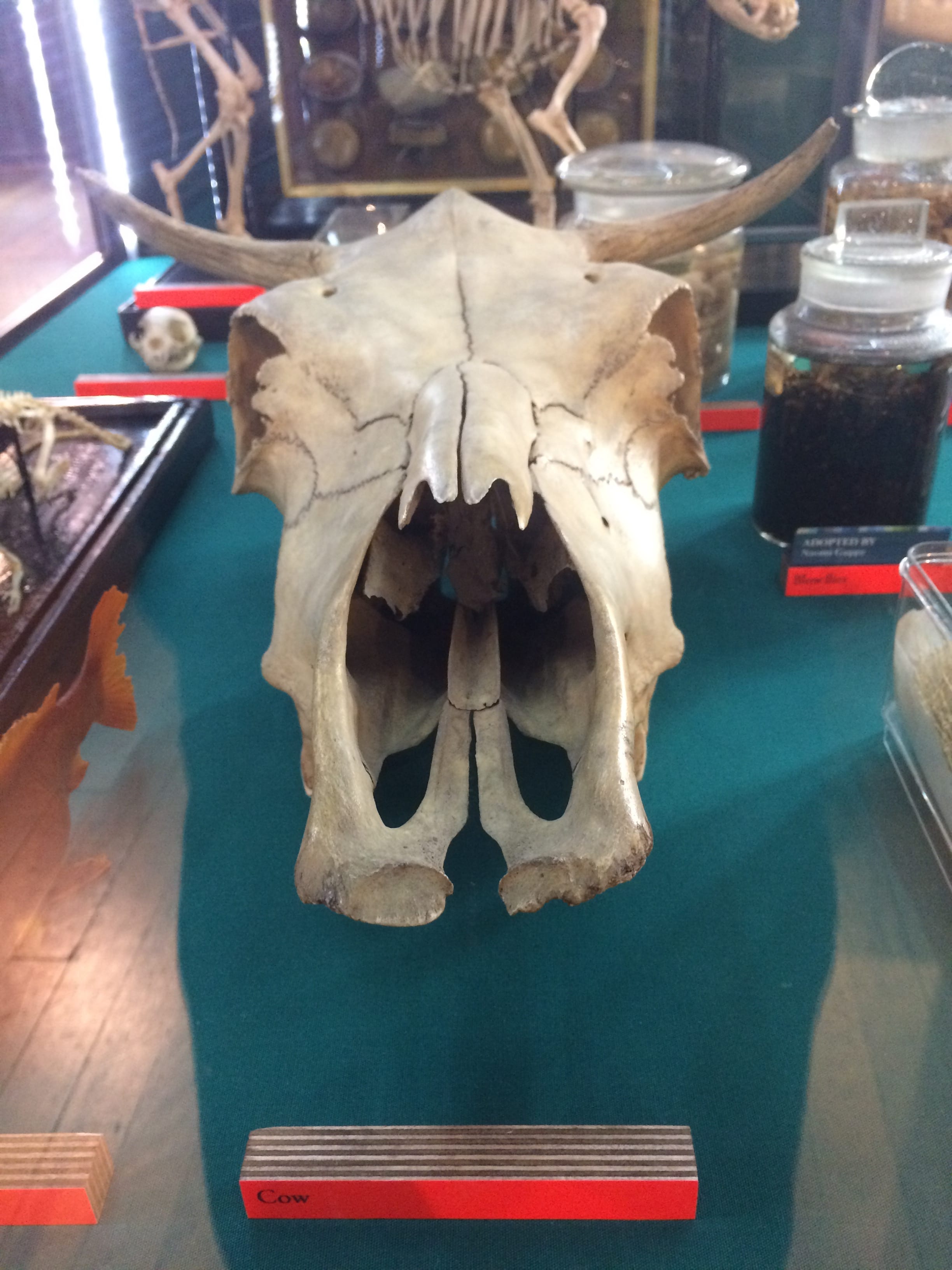
The Ordinary Cow, brought to you to by bacteria. Credit: Photo by author

Scientifically speaking, bacteria aren’t actually ‘animals’; they form their own domain of unicellular life. But, as with the cow, bacteria and animals are highly connected. Increasingly, scientists say that the study of bacteria is ‘fundamentally altering our understanding of animal biology’ and theories about the origin and evolution of animals.

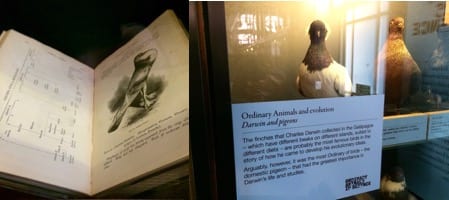
But, before we get into that, let’s go back to Charles Darwin (1809-1882). Darwin studied how different species of animals, like the pigeon, are related to each other, and how mapping their sexual reproduction shows how these species diversify and increase in complexity over time. This gets depicted as a tree, with the ancestors at the trunk and species diversifying over time into branches.

Picture1

Darwin’s Ordinary Tree of Pigeons. Photos by author

When scientists began to use electron microscopes in the mid-20th century, our ideas about what made up the ‘tree of life’ expanded. We could not only observe plants, animals, and fungi, but also protists (complex small things) and monera (not-so-complex small things). This was called the five kingdom model. Although many people still vaguely recollect this model from school, improved techniques in genetic research starting in the 1970s has transformed our picture of the ‘tree of life’.

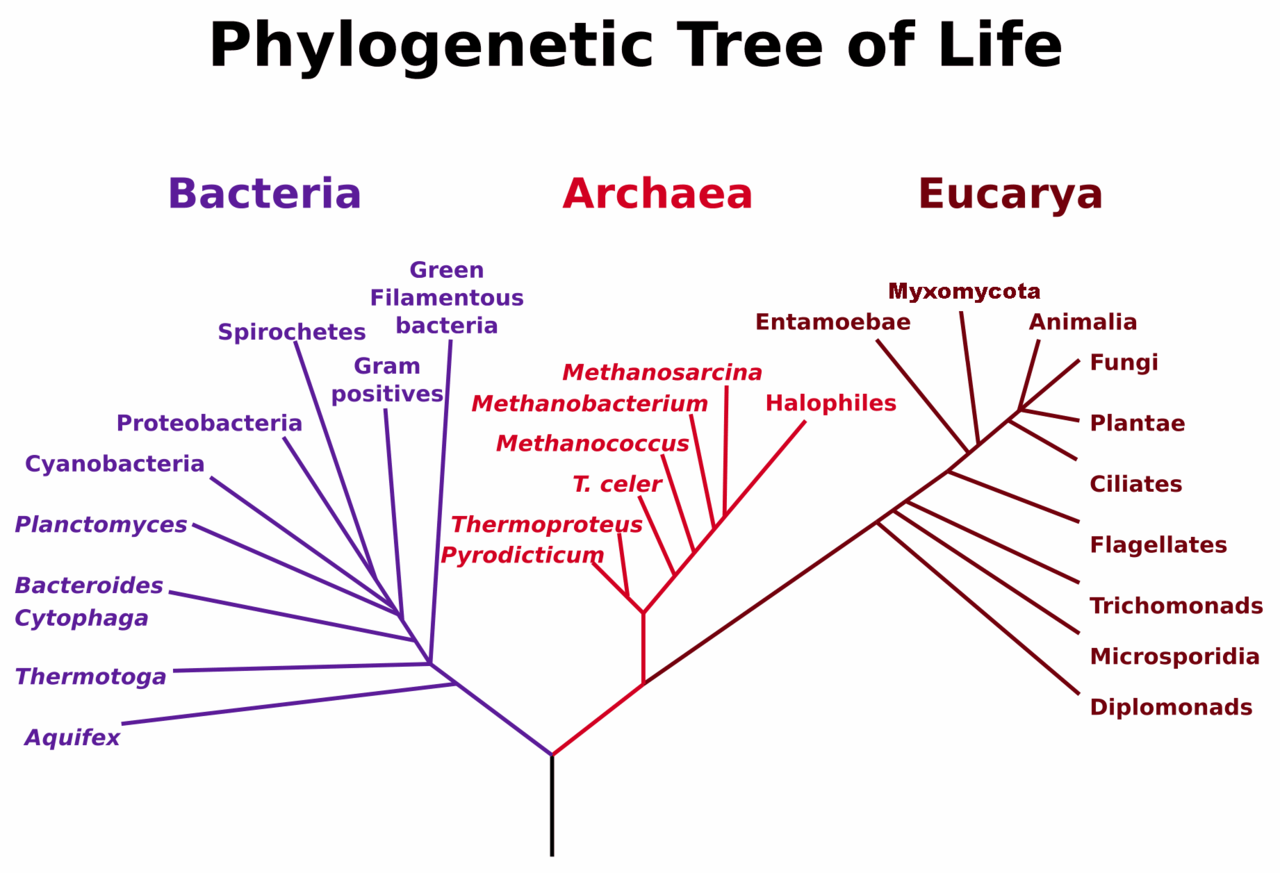
It turns out we had given way too much importance to all the ordinary things we could see, when in fact most of the tree of life is microbes. The newer tree looks like this:

Credit: Wikipedia Commons

Credit: Wikipedia Commons

Now there are just three overarching domains of life: Bacteria, Eucarya (plants, animals, and fungi are just tiny twigs on this branch), and Archaea (another domain of unicellular life, but we’ll leave those for another day).

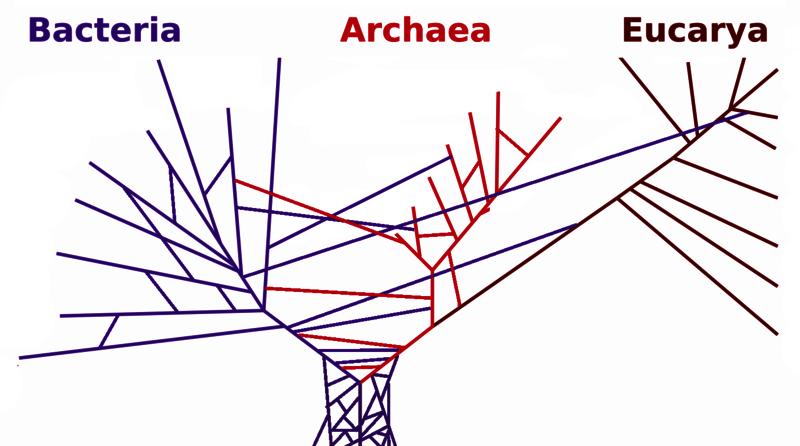
There’s a third transformation of the ‘tree of life’, and this one is my favourite. Since the 1990s, DNA technology and genomics have given us an even greater ability to ‘see’ the diversity of microbial life and how it relates to each other. The newest models of the tree look more like this:

Credit: Wikipedia Commons

Credit: Wikipedia Commons

This is a lot messier. Why? Unlike the very tiny branches of life (plants and animals) that we focused a lot of attention on early on in the study of evolution, most of life on earth doesn’t reproduce sexually. Instead, most microbes transfer genes ‘horizontally’ (non-sexually) across organisms, rather than ‘down’ a (sexual) genetic line. This creates links between the ‘branches’ of the tree, starting to make it look like….not a tree at all. As scientist Margaret McFall-Ngai puts it: ‘we now know that genetic material from bacteria sometimes ends up in the bodies of beetles, that of fungi in aphids, and that of humans in malaria protozoa. For bacteria, at least, such transfers are not the stuff of science fiction but of everyday evolution’.

Status: Are bacteria Ordinary Animals? We can conclusively say that bacteria are not animals. But, they are extremely ordinary, even if we can’t see them with the naked eye. In truth, they’re way more ordinary than we are.


Notes

As with the previous Label Detective entry, this post was deeply inspired by the book Arts of Living on a Damaged Planet, an anthology of essays by zoologists, anthropologists, and other scholars who explore how environmental crisis has highlights the complex and surprising ways that life on earth is tied together. Scott F. Gilbert and Margaret McFall-Ngai, both cited above, contribute chapters.

Add Like an (Ancient) Egyptian

By uctzcbr, on 12 October 2017

As student engagers, we work in each of the museums no matter how far from our own disciplines they are. I study cybercrime which is not clearly related zoology, art, or Egyptology; as a result, I have received many looks of surprise from visitors when they discover someone working in the museum is not an expert in the subject matter. To be a better student engager, I have learned a lot about the history of each museum and researched many objects so that I can answer questions and provide useful information to visitors, but I also like to talk about subjects related to my discipline. For the Grant Museum, this means talking about a study which looked at the trade (or lack thereof) of endangered animal souvenirs on the Dark Net; for the Art Museum, I talk about an art exhibition displaying objects purchased at random from Dark Net Markets. However, I have always struggled to link my research to Archaeology and the objects at the Petrie.

Instead, I like to talk about my undergraduate degree: Mathematics. There is evidence that the Ancient Egyptians had not only a counting system but prolifically and pragmatically used Mathematics. Records show that they used maths for accounting, architecture, and astronomy, amongst other things. Their techniques enabled a complex tax system and were even adopted by Greek mathematicians such as Pythagoras.

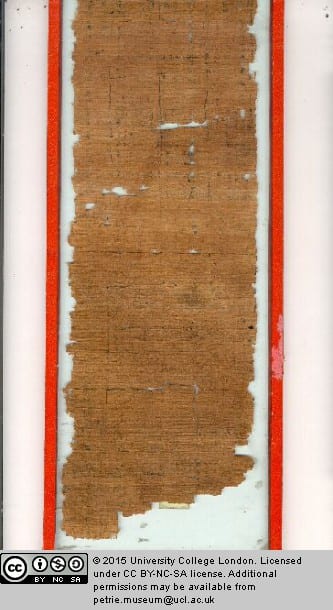
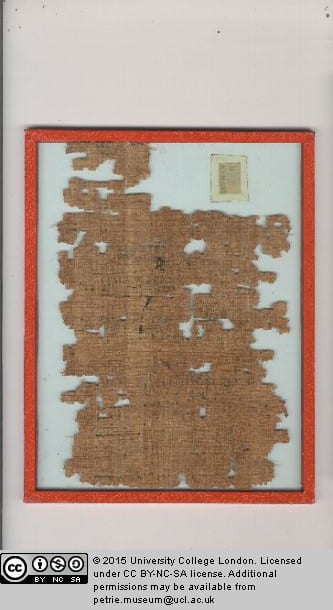
Papyrus showing mathematical calculations in Hieratic script.

Papyrus showing mathematical calculations in Hieratic script.

However, Egyptian mathematics was very different to that which we use today. Whilst they also used a base 10 system, at first they only had symbols for the numbers 1, 10, 100, 1,000, 10,000 and 100,000. This made writing numbers sometimes laborious – to write the number 7, you would need to write the hieroglyph for the number 1 seven times. The numbers 2-9 were added later after they began writing on papyrus using the Hieratic script instead of Hieroglyphs.  Fractions were denoted using a specific symbol and could only be of the form 1 , with a 1 as the numerator. This system made addition and subtraction simple but other tasks, such as multiplication, much more complex.

To do these more complex computations, the Ancient Egyptians would combine addition and subtraction in brute force methods that would provide approximations of the answer. For example, to multiply two numbers together, they would add the first number to itself the second number of times in a process of doubling not unlike the way computers are now programmed to do. As an illustration, to calculate 3 × 4 they would double 3 (that is 3 × 2) and then double 3 again (that is 3 ×(2+2)=3 ×4.

They would also rely on pre-calculated times tables to increase the speed of their work and prevent them from having to repeat the same problems again and again. This is believed to be the case because some of these tables have survived to today. For example, object UC32159 is a section of papyrus that displays division tables containing the answers to 2 being divided by the odd numbers from 3 to 31.

Remains of papyrus showing the division of 2, written in Hieratic script.

Remains of papyrus showing the division of 2, written in Hieratic script.

The collections in each of UCL’s museums are so large and varied that there will always be something relevant and of interest to anyone who visits.

What’s a monkey, what’s a primate?

By ucbtcwi, on 8 October 2017

I have something to admit. Before starting my PhD researching the primate gut microbiome, I didn’t completely know the difference between the terms “monkey” and “primate”. Perhaps this is somewhat forgivable given that I was primarily a microbiologist, but I remember still feeling a sort of sneaky shame in googling the differences after I read the project title, like it was something I should definitely know.

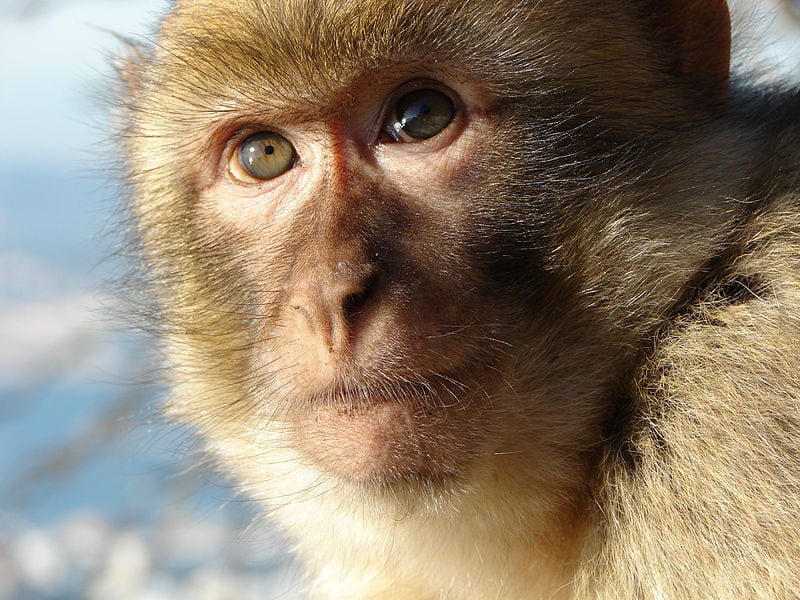
This is a monkey (a Gibraltar macaque). Licensed under CC0 3.0.

This is a monkey (a Gibraltar macaque). Licensed under CC0 3.0.

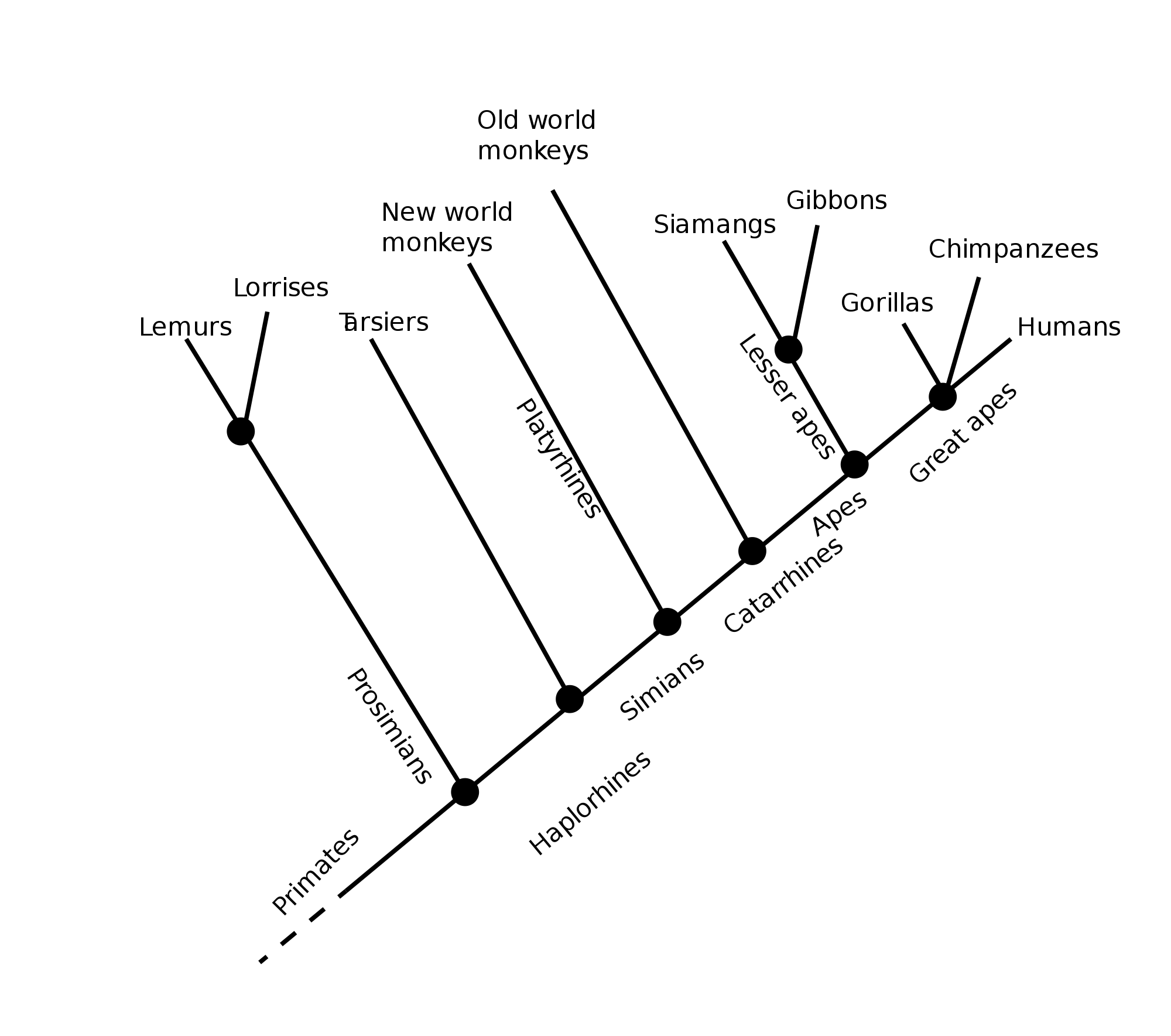
As it turns out, the rules of what’s what in the primate tree are pretty simple once you know them. The evolutionary history of primates can be traced back to between 63 – 74 million years ago (MYA), and as they stand today can be divided into two main branches, named Strepsirrhini and Haplorrhini, which based on molecular studies are hypothesised to have branched away from each other around 64 MYA. Interestingly, the two groups are named after their noses, with Strepsirrhini meaning “wet-nosed” and Haplorrhini meaning “dry-nosed” and were called so by a French naturalist friend of Robert Grant, named Étienne Geoffroy Saint-Hilaire.

A simple primate evolutionary tree showing the major branchings. Strepsirrhini were formerly known colloquially as "prosimians", although this is an outdated term now. Licenced under CC0 1.0.

A simple primate evolutionary tree showing the major branchings. Strepsirrhini were formerly known colloquially as “prosimians”, although this is an outdated term now. Licensed under CC0 1.0.

Strepsirrhini primates (unsurprisingly) tend to have wet noses, as well as a more pointed, almost dog-like snout rather than the flatter faces of their Haplorrhini cousins, and are thought to be most similar in appearance to the first primates. The clades that make up the Strepsirrhini primates are the lemurs of Madagascar, the lorises from South East Asia and India, and the pottos and galagos (or bushbabies) of Africa. Until recently, tarsiers were also thought to belong to Strepsirrhini, however now they’ve been moved to the sister clade of Haplorrhini.

A selection of strepsirrhines spanning the whole clade. Licenced under CC0 3.0

A selection of strepsirrhines spanning the clade. Licensed under CC0 3.0

If you’ve been wondering up to this point where the monkeys are, you need look no further than the Haplorrhines. In terms of number of species, this clade is almost entirely monkeys. The major two branches within this clade are between Catarrhini (meaning “down-nosed”), or Old World monkeys and apes found across Africa and Asia, and Platyrrhini (meaning “flat-nosed”), or New Wold monkeys found in Central and South America.

A map showing the distribution of monkeys across the globe, with Old World monkeys coloured in red and New World monkeys coloured in orange. Licenced under CC0 3.0

A map showing the distribution of monkeys across the globe, with Old World monkeys coloured in red and New World monkeys coloured in orange. Licensed under CC0 3.0

Within the catarrhines, the apes, or Hominoidea, comprise gibbons, orang-utans, gorillas, chimpanzees and, of course, us. Apes are thought to have formed their own distinct clade from Old World monkeys (or Cercopithecoidea) around 29MYA, so if you wanted to get really technical, and you were the kind of person who happily accepts birds as being modern day dinosaurs, it wouldn’t be entirely wrong to say that apes are actually monkeys too.

An orang-utan in Borneo, Malaysia. Licensed under CC0 3.0.

An orang-utan in Borneo, Malaysia. Licensed under CC0 3.0.

So, hopefully the next time you get stuck wondering whether the primate you’re looking at is a monkey or not, you’ll be a little more clued in.