As has been discussed extensively in this blog, Mongolians, both on a national and personal level, are tackling daily with the phenomenon of growing indebtedness. On the eve of receiving another bailout by the IMF, these questions over the growing debt are also linked to further unrest over the economic activities of politicians (that demand transparency and the revealing of offshore accounts). In short, Mongolians are currently struggling over the duties of politicians to citizens and how much of a role money and economic advancement should play in these relations. Yet, although these struggles are frequently framed as new, emerging discourses,[1] taking a foray into history allows us to see how Mongolians have been negotiating questions of debt, politics and obligation for centuries. Through the case study of one 19th century prince, Togtokhtör, and the protests in his province, we can understand more about the relationships and obligations inherent to debt in the Mongolian context—including how history might be repeating itself.
During the Qing/Manchu Dynasty (1644-1911), Mongolian territories underwent struggles over the debt, protest and politics. In this era, the current territory of the state of Mongolia was a vassal region under indirect Manchu colonial control. It was split into 4 large provinces (aimag) and, within those, smaller banner administrations (hoshuu) that were controlled by Manchu-selected, Mongolian aristocratic lineages. In return for the power to administer over their territories, the Mongolian princes had to levy taxes from their populace as tribute to the Manchu Dynasty; and were required to offer local men into service for the military, border control and postal relay stations. In addition to these regulations, they were to rule their areas in accordance with Manchu law, which, for example, endeavoured to maintain the nomadic, pastoral lifestyle of Mongolians (Namjim 2004: 224). Otherwise, the princes were relatively free to administer and implement policy as they pleased, taking advantage of the ‘variegated sovereignty’ (Dear 2014: 306) of the Manchu empire.
Although it had initially been discouraged by the Manchu elite, Chinese traders started entering the Mongolian territories at the beginning of the 19th century. Over the next 100 some years between their arrival and the start of the Mongolian Soviet Revolution in 1924, Mongolia saw the gradual accrual of large levels of debt by their princes (and also citizens) to the Chinese mendicant traders, trading houses (puuz) and banks. The contemporary trope of the Chinese usurer emerged during this period, as Soviet accounts heralded the revolution as a release of the ‘slaves of debt’ from their debt bondage (Sanjdorj 1980: 103) to said traders. Yet, more recent accounts (Dear 2014) discuss the consumer desires of Mongolians during this era. In an economic atmosphere without one clear currency or denomination of value, credit became a simple way of accessing new consumption items like tea, rice and silk (186). Whether extractive or consumptive (and likely, both), the levels of debt in Mongolia reached colossal proportions—by 1924, the total debt to Chinese shops in Mongolia reached 30 million taels of silver, equal in value to half the entire livestock of the country (Onon and Pritchatt 1989: 4; Wheeler 2004: 224).
This debt was carried by the general populace (ard) and managed through distribution among larger and larger swaths of peoples. According to Manchu regulations, princes were allowed to tax their populace for various needs—in practise, noblemen frequently paid their debts to Chinese houses though taxes collected from their populace. Consequently, princes and their populations negotiated the ever-rising debt by mobilizing ever growing population segments across networks. For example, Dear (2014) writes about a case in 1830 of a Tüsheet Khan Aimag nobleman who racked up debt purchasing luxury items from Chinese firms for daily use (208). The nobleman started paying back the debts through distributing the burden over several banner (hoshuu) territories, but, when many of them were hit by drought, he pleaded to neighbouring areas to help him. What followed, Dear says, ‘…was a complicated transfer of resources to remedy the debt, demonstrating the long-distance networks available to some Mongolians’ (2014: 208-9). In total, populations became accustomed to constant and distributed levying of duties and services. Through a triple burden of princely debts, personal debts and military service, the general populace was literally and figuratively overtaxed.
To Van: An ‘Odd Bird’ Amongst Princes
One prince who skilfully implemented mechanisms of debt and taxation in his province was Togtokhtör, better known as To Van (1779-1868; ‘Van’ being the word for his title).[2] I first encountered the legacy of To Van in my fieldsite area of Khalkh-Gol, which is the present-day location of the Manchu era province of ‘Ilden Gün’ hoshuu, which To Van inherited in 1822 from his father (Namjim 2004: 222). To Van continues to be well-known to this day, as he was considered a ‘rare bird amongst his fellows’ (Bawden 1968: 179) for the various economic and political reforms he carried out in the province. In fact, To Van is regarded as a prescient leader, because he was exemplary in implementing various alternatives to pastoral herding, including agriculture (despite being contrary to Manchu policy at the time), small-industry (like craftsman schools, handicraft shops and water mills) and even forms of mining. Within academic circles, To Van is well-known for having written the first economic text in Mongolian, his ‘Hevei Vangiin Aj Törökhiig Zaasan Surgaal’ or ‘Treatise on Livelihoods from the Hevei Van’. This text is a series of practical instructions compiled from his own province on how to run a culturally-appropriate, economic and self-sustaining pastoral-based household. Thus, To Van was erudite, farsighted, innovative and dynamic, which explains his continued positive reputation among contemporary academics and Khalkh-Gol residents.
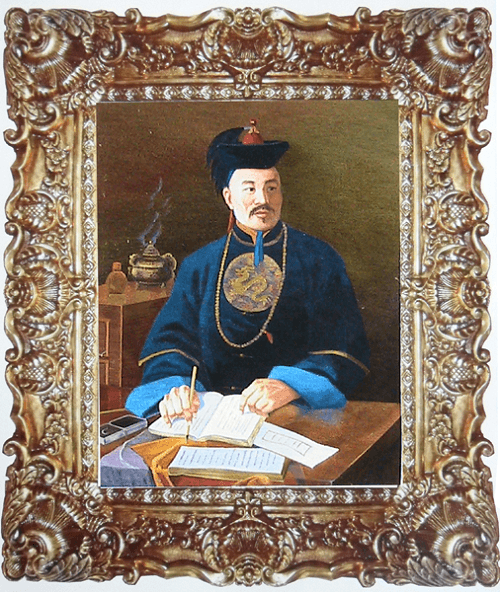
Portrait of To Van. Source: http://www.dms.mn/wp-content/uploads/2015/01/Tovan.jpg
However, according to historical texts, To Van was known within his own banner as hezuu or ‘difficult’ because of the intense and uncompromising aspects of his reforms. Although he ran his territory ‘…as an integrated and diversified economic and cultural unit’ (Bawden 1968: 180), it is unclear exactly what his motivations for this were. His ‘Treatise’ contain several instructions on how to maximize economy and live as frugally as possible, which the Soviet-era scholar Nasagdorj claims ‘…did not in the least spring from his consideration of the welfare of the people, but are to be explained as being aimed to reducing the people’s consumption as far as possible and increasing his own exploitation of them’ (quoted in Bawden 1968: 182). Indeed, To Van did utilise several loopholes and unclear legal rulings to tax at irregular intervals, under multiple justifications and even to tax his own lower princes (which was debarred under Manchu legislation) (Namjim 2004: 24-5). Despite his clever legal manoeuvring, however, the ultimate rebuke of his policy came from his own populace.
In 1837, as part of his reforms, To Van had a large, 60-room monastery built and ordered all of the over 1000 lamas of his province to be permanently installed there as pupils. In order to have this monastery built, however, he mobilised the resources and people of the entire province for four years—he had the locals provide all the transportation and construct the bricks and materials (he even had the disabled members of the community form a line by sitting on the ground and passing bricks) (Nasagdorj 1968: 23). This idea of having the lamas moved, however, was largely disliked by the populace, because it a) meant that the previous 11 religious schools in the area would be dissolved and therefore locals would lose independence over their practice, and b) lower lamas, who frequently lived together with their families, would have to leave their households permanently. Considering that the majority of families in the area were very impoverished, losing the labour of young men meant that families would have added work burdens. This idea was thus generally unpopular, but particularly in Daivan sum (one of four districts in To Van’s province). In this district, all the residents gathered, deliberated, and declined To Van’s plan, saying that their 98 lamas would not participate in the school. To Van temporarily acquiesced after he had a stupa dismantled and increased whippings and taxation in the area, but when the Manchu Dynasty declared To Van’s large new monastery an example of cultural heritage revitalisation in 1839, he redoubled his efforts. When he reiterated the order for all lamas to move to the monastery, Daivan sum members sent the missive: ‘We are having our own religious gathering. Our people are incredibly poor, and so they attend our own gathering to read religious texts, but then must go home to help our families. We can’t separate from them…This is the religious legacy of our forefathers and not something you control’ (Nasagdorj 1963: 228). With this sentiment, the locals of Daivan sum resolved to protest against their Van.
Fearing a swift and unforgiving reprisal from their prince (as per his reputation), the locals gathered and decided they must take up arms and fight. As Nasagdorj (1963 and 1968) describes, the people of the district and their three leaders—a commoner, a scribe and a lower lama—gathered all the religious devices, scythes, shovels, wood, and iron bars in the area, and then travelled to a leader’s camp to fell trees and make wooden clubs (1963: 228-9). They devised a plan in case the Van decided to send Manchu troops—they would protest at two locations, in order to force the troops to divide, and then lie in wait to ambush. As expected, To Van gathered 150 troops, provided weapons and gear, and sent them to Daivan district to capture the leaders of the protest. And thus, the troops went to Daivan sum and stole 170 horses, 16 yurts, 30 male sheep and many other items under the pretence of needing them for a relay station. Continuing to the first protest meeting point, the troops encountered over 100 lamas and laymen, wives and children, all standing there with weapons in hand, ready to fight.
When the representative of the Van encountered the people and demanded for them to stand down and to acquiesce, Tudev, a commoner leader, walked out and yelled:
“We don’t honour the words of half-witted helpers like you. We don’t follow your orders or the order of the Bogd Khan mandate, or the generals at Uliastai, or the ambassadors at Huree, or the Van… we won’t follow them, religion has lost the state, the government is broken, the iron pot has splintered, and we are not going to that religious school. And if the Van tries to come here, we will pummel him with dung!”
And with that, Tudev waved his wooden club in the air and the gathered people took up their arms and stormed, yelling, at the troops, tore the prince’s representatives from their horses, beat 30 of the troops mercilessly, and took back all the stolen goods that had been ransacked from their district earlier in the day. Scared of continuing to the second protest location, the prince’s representative sent a minor prince in his stead, who also encountered an angry rabble of lamas and laypeople who claimed:
“We aren’t going [to the religious school]. But because we don’t know you, we will [not attack and] only tell you this once. If many people come, we won’t tell them casually like this. Every person here will fight with all of their strength and kill. We aren’t afraid of killing people”.
At the same time, 80 some lamas that had already gathered at the cultural revitalization monastery, rose up and almost killed the proctor by attacking his ger with stones. In this way, the protest was a highly organised, explosive event at multiple locations that involved several hundred people.
Due to the inability of the residents and the Van to reconcile their differences, the Manchu ambassador at Huree (current Ulaanbaatar) had to get involved and began legal proceedings between the two parties. In the litigation claim submitted by the protesting locals, Daivan district residents enumerated 40 times between 1821 and 1839 that To Van has unlawfully taxed them and ‘burdened them through extraction’ (möljin zovookh) (Nasagdorj 1963: 231). For example, in order to get his princely position, he had gone to Beijing and took out an interest loan for 1000 lan [3] of silver, which he was now having paid back through taxation of the locals. They had various claims of false pretences he had taxed them under to maintain his traveling, consumerist lifestyle. But at the end of their litigation petition, they wrote to please be ‘merciful to the slaves’ that had calmly lived under the taxation from the Van’s lineage for seven generations and 140 years—their goal was reimbursement, not revolution. Although the protest was comprised of both lamas and laypeople, this statement points to the common denominator among all those involved—they felt unable to economically carry the perceived extreme burden of taxation (Nasagdorj 1963: 235-6; Bawden 1980: 183). Their goal, however, had not been to overthrow the order, but rather to make aware that its levels were becoming untenable, such as the lamas needing to stay at home to help their families economically survive.
The Manchu administration ruled largely in favour of To Van with the understanding that princes had the prerogative to tax their peoples (Namjim 2004: 224). The Manchu rulers called the 40 taxation incidences listed by the movement as ‘trivial and minute events’ (aar saar yvdal) (Nasagdorj 1983: 223), cutting To Van’s salary in half for 5 years, while condemning the leaders of the protest to die in chains as servants or in exile. The burden of the princes’ ongoing debts, exercised through extreme taxation, was deemed intrinsic to the role obligations between prince and peoples. However, these issues continued to crop up in other movements and lawsuits as the populace became increasingly dissatisfied by illegal taxation to finance personal debts (e.g. Bawden 2004 on Ayushi; Nasagdorj 1963 on Dugartsembel; Dear 2014 on Prince Otai).
Rather than a reaction to the state of indebtedness, however, the grievances of To Van’s citizens reflect a desire to rectify a perceived imbalance. They did not desire to escape their obligation to To Van but viewed his debts and taxation as a duty to be carried. In fact, these economic linkages formed a relationship between prince and peoples that contained expectations of obligation to one another. When, for example, nearly a decade later (in 1850), a multi-year drought hit To Van’s principality, he and his princes took out further loans from moneylenders and distributed their animals among the populace. Yet, a year later, To Van wrote the Manchu administration in a plea for help—his debt had become so large that he couldn’t find the money to buy animals to feed his people anymore. In this way, the exigencies of nature (and the economy) locked prince and peoples in an unending economic dependence—the prince who needs his people for debt payments, the peoples who need the prince to take out loans to help them in dire circumstance.
From an anthropological perspective, debt is a relationship formed between people that encompasses an obligation (Graeber 2011). From a Mongolian historical perspective, the peoples (ergo nation) have frequently jointly carried their leaders debt. Reflecting on her fieldwork among microlenders in India, the anthropologist Guerin considers the ‘inherent ambiguity of all debt relations’, which is reflected ‘…in the fact that while debt can provide protection and solidarity and a means of expressing reciprocal trust and respect, when it is not honoured or is too imbalanced, it can be a source of humiliation, shame, exploitation, and servitude’ (2014: S44). Precisely this tension between the need for visibility, recognition and protection, and the ability to live lives free of economic coercion was negotiated by To Van’s retainers through their protest.
This situation begets the question: Is history repeating itself? The Mongolian government, seeking IMF approval, is in the process of implementing austerity, a ‘bitter medicine’, in order to control the accruing debt of the country. Although the political motivations behind these moves are unclear, the point of debt in Mongolia has rarely been to reduce it, but to use it to form a relationship and obligation between entities. Just like during To Van’s time, Mongolian citizens continue to deal with their government’s (ergo politicians’) debt by sharing and distributing it amongst themselves (see also Marissa Smith and Lauren Bonilla’s blog posts), as their politicians accrue more debt through the misuse of monies. However, the flipside of this debt relationship is the expectation that the politicians will provide for people when they are in need. Austerity violates this understanding by requiring the people to carry the debt without return. If To Van’s time is any precedent, the current growing unrest hints to the stirrings of recalibration.
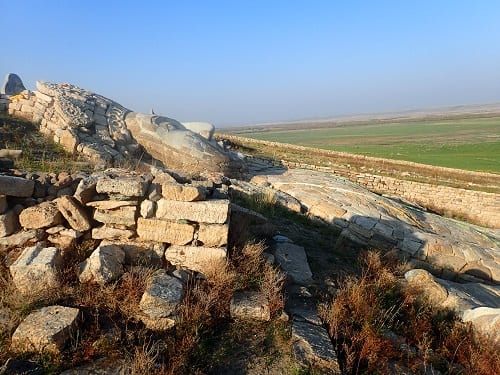
The Ikh Burkhant statue is a giant Buddha carved into a hill face located approximately 30 km from Khalkh-Gol sum centre. This complex was built by To Van between 1859-1864 to ward off catastrophe and in reaction to the many droughts and zuds (as discussed in this piece) that were killing off the animals. To Van’s presence thus remains to this day.
References:
Bawden, C. R. 1968. Modern History of Mongolia. New York: Frederick A. Praeger, Publishers.
Dear, D. 2014. Marginal Revolutions: Economies and Economic Knowledge between Qing China, Russia, and Mongolia, 1860 – 1911. Ph.D. thesis, Harvard University.
Graeber, D. 2011. Debt: The First 5000 Years. New York: Melville House.
Guerin, I. 2014. Juggling with Debt, Social Ties, and Values: The Everyday Use of Microcredit in Rural South India. Current Anthropology (55) 9, S40-S50.
Namjim, T. 2004. Mongol Ulsiin Ediin Zasag: Boti 1. Ulaanbaatar: Interpress.
Nasagdorj, Sh. 1968. To van tuunii surgaal. Ulaanbaatar: Shinjlekh Ukhaanii Akademiin Hevlel.
Nasagdorj, Sh. 1963. Manjiin Ersheeld Baisan Ueeiin Khalkhiin Khuraangui Tüükh. Ulaanbaatar: Ulsiin Khevleliin Khereg Erkhlekh Khoroo.
Nasanbaljir, Ts. & Sh. Nasagdorj. 1966. Ardiin Zargiin Bichig—XYIII—XX Zuunii Ekhen. Ulaanbaatar: Shinjlekh Ukhaanii Akademiin Khevlekh Üildver.
Onon, U. & D. Pritchatt. 1989. Asia’s First Modern Revolution: Mongolia Proclaims Its Independence in 1911. Leiden: E. J. Brill.
Sanjdorj, M. 1980. Manchu Chinese Colonial Rule in Northern Mongolia. London: C. Hurst & Company.
Wheeler, A. 2004. Moralities of the Mongolian ‘Market’: A Genealogy of Trade Relations and the Zah Zeel. Inner Asia (2004) 6, 215-38
[1] As a feature of the recent, post-2012 boom-and-bust cycle and not as a historical reoccurring phenomenon; see for example, ‘Mongolia: Living from loan to loan’ and ‘How the World’s Fastest Growing Economy Went Bust’.
[2] The following historical information on To Van’s life is a consolidation of information from historical sources including Namjim 2004; Bawden 1968; Nasagdorj 1968; Nasanbaljir & Nasagdorj 1966; and Nasagdorj 1963. The Soviet-era scholar Nasagdorj used 170 documents, including litigation and postal relay missives, from the National Archives to compile this history, as well as To Van’s own written work (Nasagdorj 1963). I would like to thank Uchral Enkh for bringing the last two books to my attention.
[3] 1 lan is around 37 grams of silver. According to the historian Namjim, in 1919, one piece of tea was worth .8 lan of silver and one one-year-old sheep was worth 1 lan (Namjim 2004: 195).
 Close
Close