 Close
Close


Writing Amazing Cover Letters | CareersLab
By skye.aitken, on 14 November 2019
Have you ever wondered what to include in Cover Letters? What length they should be and what tone to strike?
Well UCL Careers Consultant, Raj, shares his top 2 tips for writing beautifully executed cover letters, every time!
We’re posting a new CareersLab video every week on the UCL Careers YouTube channel and right here on the UCL Careers blog.
If you’re a UCL student or recent graduate and you have a question you’d like Raj to answer in a future CareersLab video then please email us at careers.marketing@ucl.ac.uk.
Don’t forget to subscribe to our YouTube channel and the UCL Careers Newsletter so you never miss an episode.
My Global Internship: where to start and how to find one
By skye.aitken, on 14 November 2019
Written by Rhiannon Williams, Global Internships Manager at UCL Careers.
 Welcome to the second blog in our ‘My Global Internship’ series. Last week we learnt about global mindset and now we’re going to talk about how you can find an international internship, what you should think about when searching and places you can look to get you started.
Did you know students who go abroad during their studies are more likely to gain a 1st degree and be in graduate-level jobs six months after graduation? They’re also likely to have a fantastic time and build their confidence, so it’s a win-win all round! If you haven’t thought about going overseas before, perhaps because you don’t even know where to start, then we’re here to help you.
Before you start
Before you start actually finding specific roles to look at, you should think about the following things:
- What sort of work do you want to do and what are you aiming to get out of the whole experience?Are you looking to travel and explore a new culture (and thus open to all opportunities) or do you want to do a particular role related to your degree or career objectives? Perhaps you want to work in a large corporate environment or you want to try a smaller company or start-up where you may get more responsibility?
- Where do you want to go?Have you got a particular city, country or continent in mind? This may depend on your answer to question 1 as there might be particular countries or regions that are better suited to the work you’d like to do. Write down all the places you’re keen to consider – it’s worth drilling down to city-level as the experience can differ within country.
- How feasible is it to work in a particular area or country?You will need to think about travel and accommodation, and find out if you need a visa. Also, do you need to be able to speak the local language? Some countries are more accessible for English speakers than others, so if you don’t have a second language then perhaps start with these (but remember that the business language in some countries not on this map might still be English).
- What is the environment / culture like and how will you adapt to this?Whilst this is something you will prepare for once you’ve already secured an internship, it is a good idea to also research this early on because it may help when making applications.

All of the above will take both some thinking on your part, but also some research. A great place to start is the GoinGlobal website. Access this site via the Working Outside of the UK page on the UCL Careers website. You can also use the working abroad pages on TargetJobs and Prospects to help you. Make a note of your answers to the above – they might change over time as you explore new places, and that’s absolutely fine!
Looking for opportunities
 After you’ve done a bit of thinking, next up is to starting looking for opportunities. Finding an international internship in a country you have limited experience with requires you to be proactive, but the rewards will be worth it. Here’s some places to start:
- myUCLCareers jobs board – click on the Search tab > Vacancies and use the locations or country filter on the left to narrow down the options.
- LinkedIn can be a valuable tool to help you find companies or contacts in countries that are of interest to you. Use the locations filter on the search function to target a particular country, or search via industry if you know what sector you want to work in.
- General job boards such as Indeed, Reed and Google all have options to search by country and industry. org is a great platform for finding opportunities in specifically in Europe.
- Local job boards can also be a great way to find opportunities, particularly from smaller organisations focusing on targeting local students. Search ‘job boards in x country’ to see what is recommended. For example, Welcome to the Jungle is a popular job platform in France for students to find opportunities in French SMEs.
- Directories are a great way to help you find companies that you might be interested in working in, particularly ones you haven’t heard of yet! Sites like co allow you to search for companies by sector or location and provide general company information as well as links to jobs. If the company doesn’t have any jobs listed, there’s no harm in applying speculatively – we’ll cover this in the next blog!
- Direct application to an organisation – this is the DIY route to finding an internship abroad. Take a look at the Careers Essentials module on guides on job huntingto help you with various stages of the job hunting process, whether at home or overseas.
So, open your laptop and start a spreadsheet – this will help you to keep track of websites you’ve explored, information you’ve found out and log some companies that you’re interested in applying to. Who knows what you might find and where you might end up going! Next time we will drill down into how to make an application, focusing on important things to consider when applying for overseas roles.
My Global Internship: what does it mean to have a ‘global mindset’?
By skye.aitken, on 6 November 2019
Written by Rhiannon Williams, Global Internships Manager at UCL Careers.
 Welcome to the first in a series of blogs aimed at helping students to find, apply for, prepare for and undertake a global internship (usually meaning outside the UK and probably your home country). We will be publishing blogs under the #myglobalinternship tag across the autumn and spring terms, so keep an eye out!
So maybe you’ve been applying for international internships already, or perhaps it’s something you’d like to start doing. Wherever you’re at, you may have come across the term ‘global mindset’ and you might wonder what this actually means.
One of the simpler definitions we like is ‘the ability to operate comfortably across borders, cultures, and languages’ and for a student to be a ‘global graduate’ they need to be able to possess a range of competencies such as team-working, adaptability, resilience and self-awareness.
Why is it important?
In an increasingly globalised workplace, employers require their staff to have intercultural competence to enable them to collaborate effectively with their colleagues and in different cultural settings (such as in a country you may not have experience before). They also need employees from diverse backgrounds to represent their client base, who can also grasp the interconnectedness of international business.
A report from McKinsey’s Global Institute shows that ‘cross-border data flows are increasing at rates approaching 50 times those of last decade. Almost a billion social-networking users have at least one foreign connection, while 2.5 billion people have email accounts, and 200 billion emails are exchanged every day. About 250 million people are currently living outside of their home country, and more than 350 million people are cross-border e-commerce shoppers’.
In addition, ‘increased global interconnectivity puts diversity and adaptability at the centre of organisational operations’ according to the Future Work Skills 2020 report. This means employers are looking for candidates who can keep up with this rate of change and collaborate virtually by working productively and effectively as part of a virtual team (e.g. one across different global sites).
What kind of experiences can you draw upon?
By studying at UCL, you are already in a great position to talk about your experiences of interacting with individuals from different cultures, given that there are over 150+ nationalities represented on campus. You can also demonstrate your global mindset by talking about the following experiences on your applications and in interviews:
- Living abroad (during upbringing or as part of course)
- Picking up language skills
- Transitioning from home to London
- Coming to London from outside of the UK
- Representing one organisation at its interface with another in a different region/country/culture
- Presenting papers at international conferences or in committees
- Having an interest in current affairs, listening to/reading global business news (be prepared to back this up)
- Independent travel
- Sensitivity to different regional/class/cultural attitudes, e.g. travel, voluntary work, vacation jobs
Plus, if you decide to undertake a global internship in summer 2020 then that will enhance your global mindset even further! For further reading about global skills, you may enjoy the QS 2019 Global Skills Gap Report which aims to provide a greater understanding of the gaps between graduate skills and employer expectations around the world. You can also book a careers appointment to talk about these skills and explore how you can highlight yours to future employers!
Future blogs in the series will look at:
- How to find international internships
- Making applications for international internships
- Conducting video interviews for overseas roles
- Preparing for your time abroad
- Working in a global workplace
How To Develop Your Career Ideas | CareersLab
By skye.aitken, on 4 November 2019
Do you have some career ideas? Confused what to do next?
UCL Careers Consultant, Raj, shares his top 3 practical tips on how to develop those ideas into the career you’ve always wanted!
We’re posting a new CareersLab video every week on the UCL Careers YouTube channel and right here on the UCL Careers blog.
If you’re a UCL student or recent graduate and you have a question you’d like Raj to answer in a future CareersLab video then please email us at careers.marketing@ucl.ac.uk.
Don’t forget to subscribe to our YouTube channel and the UCL Careers Newsletter so you never miss an episode.
UCL Careers Themed Weeks 2019: Top 5 Lessons From Government & Policy Week
By skye.aitken, on 1 November 2019
Written by Colm Fallon, Careers Consultant, UCL Careers
You may have missed Government & Policy Themed Week 2019, but don’t fret, you can access recordings from this year and previous year’s events and related resources by heading to our website.

It’s impossible to sum up all of the valuable insights shared throughout the week, but here are 5 things we learned from Government & Policy Themed Week 2019:
- Rapid changes are the norm
Working in the Civil Service can sometimes resemble the TV show ‘The Thick of It’. There may be fewer expletives used, but things can change rapidly, and you have to be adaptable. For example, you may be working on and promoting one policy in the morning, but by the afternoon priorities may have shifted and you find yourself having to completely change your focus.
- Evidence is key
Our speakers also emphasised how working in a space where the agenda can be set and changed by forces outside of your control may not be for everyone and that’s OK! You may spend months working on a policy but due to public pressure or economic factors, it may not be implemented or may have to be adapted to meet the changing circumstances (the world as it is, not as we wish it to be). The work of advising Ministers means focusing on the evidence and that is not affected by changes in public opinion.
- Experience is knowledge
You can gain useful experience working on the fringes of government, e.g. public affairs, lobbyists, think tanks, charities, and so on. You’ll gain an outsider perspective on how government works. Importantly, working in the Civil Service means being apolitical, you need to be impartial and able to provide policy arguments, not political arguments. If you have political ambitions you may be better off gaining experience outside or of course working directly with parliamentarians and political parties. Some MPs would suggest that working completely outside of and removed from politics can be beneficial. Learning about business, people and the world can help you better serve your constituents.
- Change takes time but the results can be very rewarding
Influencing policy is being a voice in the discourse, one of many. Although it can be difficult to be heard the most rewarding aspect is seeing the impact on individuals of the policy changes you’ve fought for and implemented. It’s important to realise that change takes time, and the key to success is to make sure that the long term impact is understood and prioritised over short term gains and personal biases.
- Everyone gets imposter syndrome
Imposter syndrome (feeling like a fraud who will be found out at any moment), can be common and it’s a normal way to feel. Be kind to yourself, have realistic expectations and remember that learning is a process. No one can be expected to know everything right away. The key to success is to work on upskilling and build relationships with colleagues and mentors. Utilise your network for support and advice, most people would have been through the same experiences as you at some stage.
Out&Proud Research Event. What We Learnt And How We Can All Be Better Allies
By skye.aitken, on 1 November 2019

Written by Joe O’Brien, Marketing Communications Assistant, UCL Careers.
On Friday 11th October, UCL Careers ventured east to Clifford Chance’s Canary Wharf office. We were attending a special panel event devised to launch the Out&Proud research from UK Trendence Research, a leading student-focused research firm. Poignantly released 50 years after the Stonewall riots, the research was 9 months in the making and aimed to delve deep into the experiences of LGBT+ students and graduates in higher education. The research saw 4100 young people take part from 122 universities across the UK, with 91% aged 18-29. Of respondents, 19% were graduates now in employment.
The research itself is fascinating and we won’t attempt to fit all of its findings into one blog post so what we’d recommend is heading over to the UK Trendence Research website and requesting access to the report. We promise it is a truly valuable report which sadly includes some shocking and eye-opening statistics. From a career standpoint, the report highlighted how those who are open about their sexuality in the workplace are 12% more likely to report an improvement in wellbeing. Here are some of the more damning findings from the report:
- 1 in 3 LGBT+ students have experienced hate crime and/or sexual assault
- LGBT+ students 38% more likely to report depression
- 6% more likely to report a decline in wellbeing when starting university
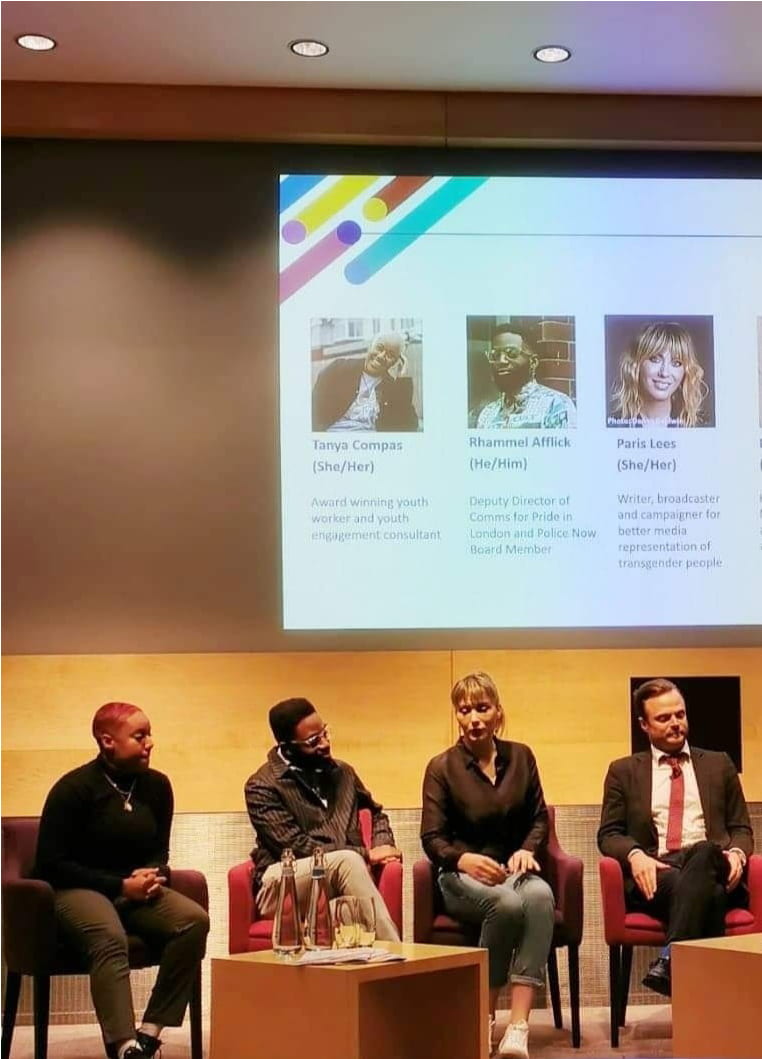
We were treated to two fantastic panels; firstly, a panel made up of allies from organisations who sponsored the research and secondly, from a selection of LGBT+ figures from a broad range of careers and experiences. Allyship – providing support as an ally even if you do not identify as LGBT+, was a recurring theme throughout the day, with a number of speakers emphasising that the fight for equality and respect for LGBT+ people is a responsibility that shouldn’t rest solely on their shoulders.
Tips for being an ally:
- Tanya Compas, an award-winning youth worker and LGBT+ Case Worker, explained how even something as simple as including your pronouns in your email signature can help to create an inclusive environment.
- Tiernan Brady, Global Head of Inclusion for Clifford Chance, spoke about how progress is not linear and by no means inevitable. We can’t assume it’s only the older generations who discriminate against LGBT+ individuals, in fact recent Galop research into attitudes in our society has shown that the age group most likely to think of LGBT+ people as “immoral” are aged 18-24. He also implored allies to remain vocal supporters and not to assume the fight is over. As Tiernan put it, “if we take our foot off the gas, we stop and then we lose the progress we have fought for”.
Another common theme throughout the day was the importance of intersectionality. Zee, a final year undergraduate student from School of Oriental and African Studies (SOAS), who was on the second panel explained how “what’s diverse for a gay white man is not diverse for a black trans woman.” There are a number of examples in the Out&Proud research which hone in on this, with an LGBT+ Muslim student explaining how coming from a heteronormative background, steeped in religion and culture, leaves them living a double life. For this reason, it’s important to remember the diverse backgrounds and added difficulties that can arise from this conflict.
Rhammel Afflick, Director of Communications for Pride in London, told us his coming out story – writing an article for Huffington Post in which he came out publicly, what Rhammel found most surprising wasn’t that he received homophobic abuse, he unfortunately expected that. It was the fact he received racist abuse despite the article focusing solely on his sexual identity as a bisexual man. This is a great example of the importance intersectionality has on LGBT+ issues.
Our 3 actions for you to take from this post:
- Read the Out&Proud research and be aware of what your fellow students are going through and struggling with.
- Engage with the UCL LGBT+ Student’s Network. It’s a great way to make friends, develop new skills, and it looks great on your CV to be involved in any engaging and proactive society.
- Try to reflect and constantly question how inclusive and supportive you are being as a student, colleague, family member, or friend. Like Tiernan said, progress is not inevitable and it takes all of us to make sure we keep moving.
Stuck For Career Ideas? | CareersLab
By skye.aitken, on 31 October 2019
Are you stuck for career ideas? Do you have no idea what you might want to do?
Join UCL Careers Consultant, Raj Sidhu, as he shares his best 5 ways to generate new career ideas.
We’re posting a new CareersLab video every week on the UCL Careers YouTube channel and right here on the UCL Careers blog.
If you’re a UCL student or recent graduate and you have a question you’d like Raj to answer in a future CareersLab video then please email us at careers.marketing@ucl.ac.uk.
Don’t forget to subscribe to our YouTube channel and the UCL Careers Newsletter so you never miss an episode.
UCL Careers Themed Weeks: Museums, Arts and Cultural Heritage Week 2019
By skye.aitken, on 24 October 2019
Are you considering a career in Museums, Arts or Cultural Heritage? Then this is the week for you! Come and find out more about these sectors from professionals working in various roles within these sectors. All events are open to students and recent graduates from across UCL.
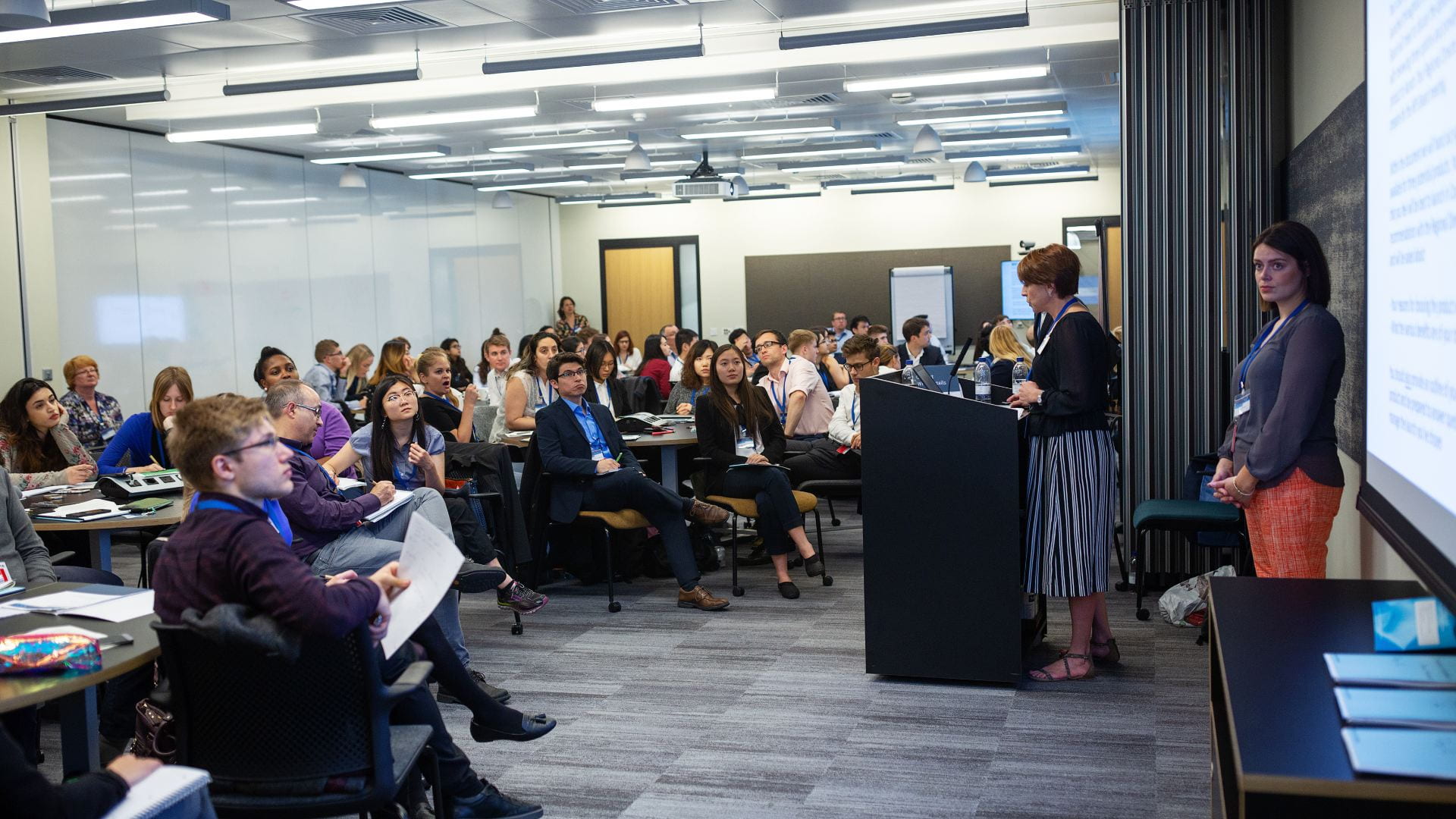 If you haven’t attended events organised by UCL Careers before, we strongly recommend you read through our Themed Weeks page for information on what to expect, how to prepare and how to book.
Events can be extremely popular, so book early to avoid disappointment!
Watch event recordings on our Themed Week archive. These include complete panel discussions and in-depth interviews with experts.
Please note that photographs, video, sound and/or written submissions taken at our themed week events may be used in future printed and electronic UCL promotional material. Photographs/video will be stored electronically as well as in hard copy.
Events open for booking on Monday 28 October 2019
Careers in Museums
Monday 11 November 2019: 6pm-7.30pm
Come and meet representatives from the museum sector to hear about their job roles and what excites them about working in this sector. There will be a panel discussion, Q&A session, and a chance for informal networking after.
Among the museums represented will be:
View event details and book your place
Working in the Arts
Tuesday 12 November 2019: 6pm-7.30pm
Thinking about working in the Arts? Come along to this panel event and have the chance to hear from professionals currently working in managerial, creative and organisational roles within a variety of arts settings. Speakers will discuss aspects of their experiences such as: what they enjoy about working in the arts, how they got into their current role and their ‘top tips’. The panel discussion will be followed by a Q&A and informal networking.
Panellists work in organisations such as:
View event details and book your place
Careers in Cultural Heritage
Thursday 14 November 2019: 6pm-7.30pm
Interested in working in the diverse world of cultural heritage? Come to a panel discussion with cultural heritage professionals, to hear about their roles and career path and to gain tips on how to get into the sector. The panel will be followed by Q&A session and informal networking.
You will hear about experiences working in:
View event details and book your place
UCL Careers Fairs 2019: Law
By skye.aitken, on 21 October 2019
Interested in a career working within Law?
The UCL Careers Law Fair features top employers including Solicitors, Barristers’ Chambers, Course Providers and Professional Services.
Most of the organisations are keen to speak to both Law and non-Law students.

Employers will be hiring for training contracts, pupillages and some other graduate roles, and in some cases for vacation schemes and placements. This fair is primarily aimed at penultimate year law students and final year non-law students from any other degree discipline with an interest in pursuing a legal career.
Other years are welcome to attend to research firms, and find out about open days and insight sessions, but we recommend you research which firms are offering these in advance.
When: Monday 28th and Tuesday 29th October | 5:00pm – 7.30pm
Where: North and South Cloisters, Wilkins Building
Some employers attending include:
Day 1 |
Day 2 |
| · Clifford Chance
· Allen & Overy · Freshfields · Linklaters · Slaughter & May · CII · Simmons & Simmons · Herbert Smith Freehills |
· The University of Law
· Mayer Brown · Winston & Strawn · Government Legal Profession · Cooley · Dechert · Baker McKenzie · Mishcon de Reya |
Plus many more!
For a full list of employers attending the fair, visit:
You do not need to book to attend our Careers Fairs, but you must bring valid UCL ID to gain entry.
For more information on about the fair and how to prepare, visit: http://www.ucl.ac.uk/careers/about/events/careers-fairs
The Law Fair 2019 is kindly sponsored by Deloitte (Day 1) and The University of Law (Day 2)
How To Ace Video Interviews | CareersLab
By skye.aitken, on 21 October 2019
This week on CareersLab, careers expert, Raj Sidhu, talks us through his top tips for acing video interviews – from getting the sound quality right to perfecting your preparation.
Did you know that over 50% of graduate recruiters now use video interviewing as part of their recruitment process? Have you ever wondered how to ace these and to move ahead compared to your competition?
Well, Episode 5 of CareersLab has you covered. Watch this video for 6 ways you can maximise your chances of impressing at the video interview recruitment.
We’re posting a CareersLab video every week on the UCL Careers YouTube channel and right here on the UCL Careers blog.
If you’re a UCL student or recent graduate and you have a question you’d like Raj to answer in a future CareersLab video then please email us at careers.marketing@ucl.ac.uk.
Don’t forget to subscribe to our YouTube channel and the UCL Careers Newsletter so you never miss an episode.