X Close

UCL Culture Blog

Home

News and musings from the UCL Culture team

Menu

Archive for the 'Grant Museum of Zoology' Category

Object of the Week 365: A Model Boat

By Anna E Garnett, on 2 November 2018

Over the last year, Olivia Foster (MA student in the Institute of Archaeology, UCL) worked as a valued member of the Petrie Museum team as collections volunteer. During this time, Olivia has undertaken a range of work on collections care, documentation and object loans, and in this blog she discusses one of her favourite objects in the Petrie Museum collection.

This small and unassuming model boat in the Petrie Museum collection (UC10805) was recovered from a tomb in Abadiyeh during Flinders Petrie’s excavations in the late 1890s. The decorated pottery object has been dated to the Naqada I period and the original function of the item is unclear.

UC10805

Objects such as this are important when it comes to understanding Predynastic Egypt, as they represent technology that has not survived in the archaeological record. Despite the important economic and symbolic role that boats are thought to have played in the Predynastic, no complete vessels have been found and archaeologists must instead rely on the art of the period to learn about their construction, size and function. This object and others like it also played a pivotal role in the heated debates between Petrie and his contemporaries as they discussed what exactly was being depicted in the decorated pottery of the era.
(more…)

Object of the Week 364: Cast of rickets

By Nina Pearlman, on 25 October 2018

Dr Nina Pearlman is Head of UCL Art Collections and curator of  Disrupters and Innovators: Journeys in gender equality at UCL (UCL Octagon Gallery till February 2019)

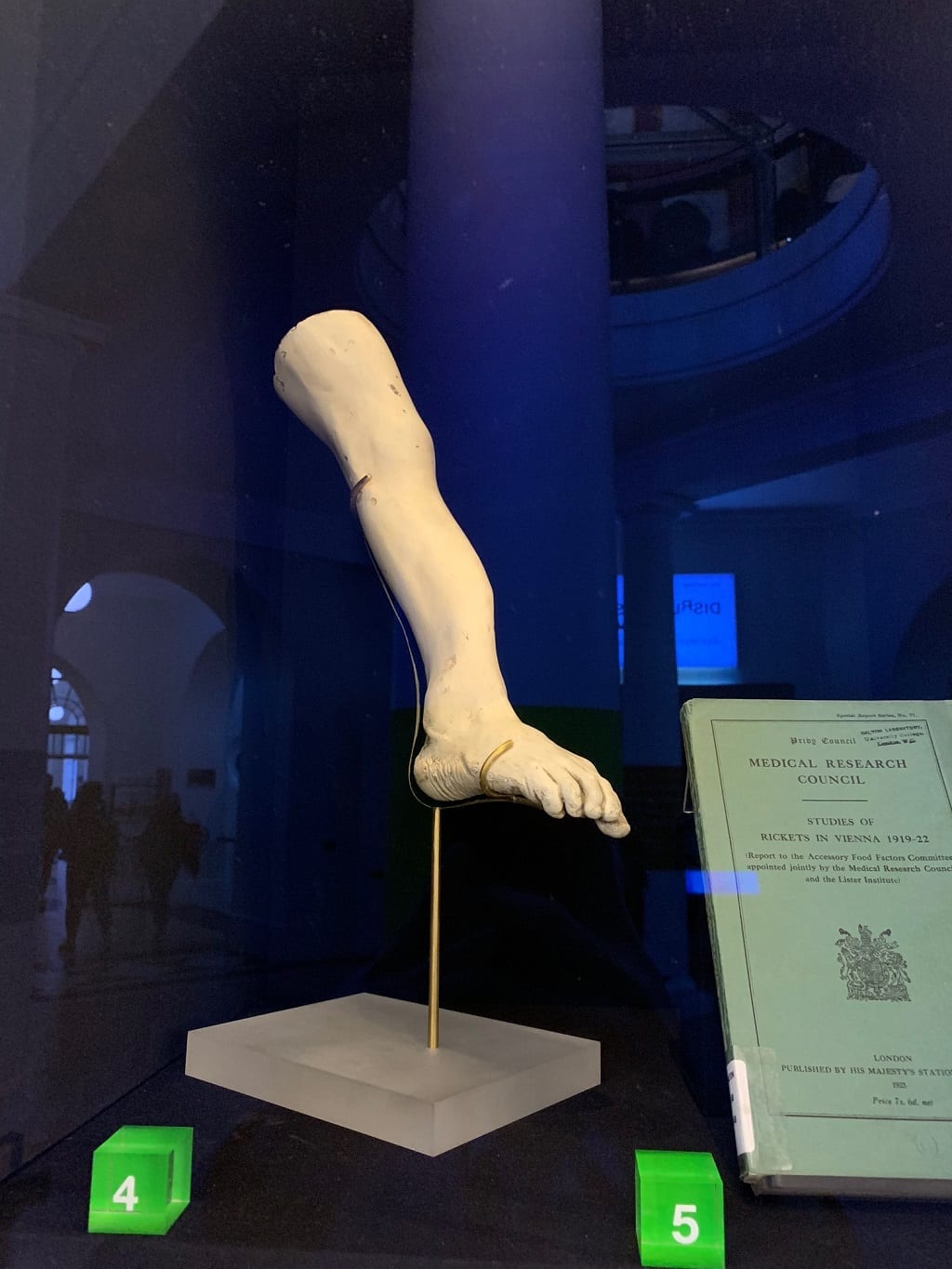
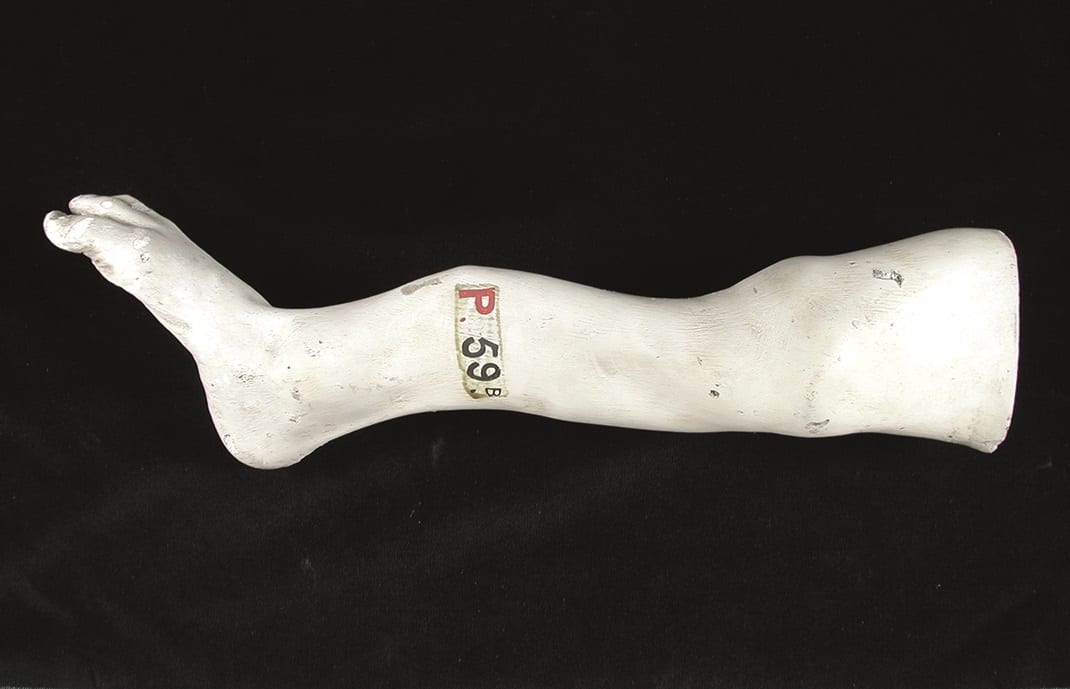
My object of the week is a plaster cast of a child’s leg deformed by the disease rickets (UCL Pathology Collection P59b), included in the Disrupters and Innovators exhibition in the display case that features UCL women scientists. Amongst these scientists is Dame Harriette Chick (1875-1977) who is credited with finding the cause and cure for rickets. Her many contributions to preventative medicine were recognised with both a CBE and a DBE.

This object gives me pause to ask, how were women scientists perceived in the early twentieth century? What anti-feminist sentiments did they have to contend with and how did they go on to make groundbreaking and lasting discoveries despite the persistence of the anti-feminist agenda, at the time labelled anti-suffragist?

(more…)

Specimen of the Week 363: The kangaroo stomach

By Christopher J Wearden, on 19 October 2018

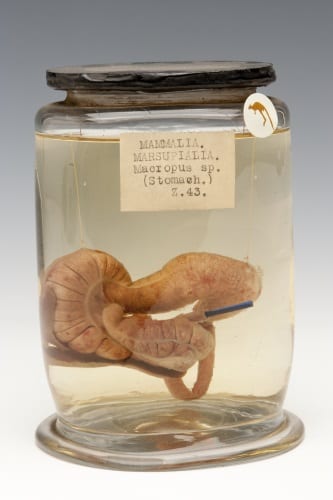
After nearly a year working at the Grant Museum I realise I have become accustomed to aesthetics of my working environment. Decorations in your typical office might include team photos, prints of inspirational quotes and once a year, some tinsel. Here our walls are decorated with skulls, intestines and pickled reproductive organs. An interaction between a visitor and myself might involve them asking me ‘what is THAT??’, only for me to matter-of-factly reply ‘oh, that’s a bisected seal nose’. Not all interactions are so cordial however; when one visitor recently told me that our displays were ‘gratuitous’ I gently reminded them that our museum is primarily a teaching collection, meaning students across a wide range of disciplines often look at certain ‘unappealing’ parts of an animal in great detail. I hope that by writing about today’s specimen I can demonstrate why we have these ‘gratuitous’ objects on display, and what they can teach us about animals. Okay readers let’s hop to it, it’s the…

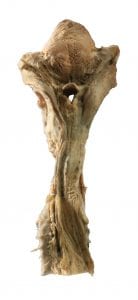
Kangaroo stomach, Macropus sp. LDUCZ-Z43

(more…)

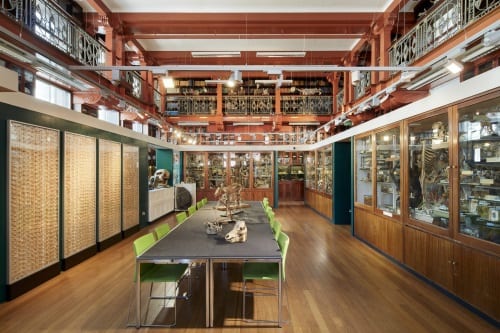
Teaching in the Grant Museum

By Tannis Davidson, on 15 October 2018

Grant Museum of Zoology, UCL

Grant Museum of Zoology, UCL

At UCL, Term 1 is now fully underway – ID cards have been issued, classrooms have been located and routines have been established. Object-based teaching has also begun at the Grant Museum where students from UCL and throughout the London area will have the opportunity to use museum specimens in their practicals.

During a typical academic year, around 2500 university students use the Grant Museum collection as part of their formal coursework on a wide range of courses including zoology, palaeontology, the history of art, geography, museum studies, communication and even dance. The Museum and its collection is also used by students for project work and postgraduate research or as a testing ground for museum engagement, new technologies and visitor research.

The Grant Museum invites use of its collection for teaching to any faculty at UCL. We’re pretty good at what we do (if we do say so ourselves), because we’ve had 190 years of practice… (more…)

Specimen of the Week 362: Acid Poisoning

By Subhadra Das, on 12 October 2018

Today’s specimen of the week comes from UCL Pathology Collections. The Collections are displayed at the UCL Pathology Museum at the Royal Free Campus of the UCL Medical School in Hampstead. The museum includes a medical teaching collection of nearly 3,000 specimens of human remains illustrating the history of disease. To open up these specialist medical displays to a wider audience, we’ve developed a trail of 10 specimens of well known diseases. As the museum only opens to the public for special events, we’re sharing the trail as part of the Specimen of the Week series.

All of the entries for the UCL Pathology Collections Top 10 Medical Trail have been written by Nazli Pulatmen, who worked with us for her MA Museum Studies placement in the summer of 2018.

Today’s specimens of the week are presented together because they show the effects of ingesting corrosive acids.

Oesophagus and stomach with sulphuric acid poisoning

ALIM.A.2 Sulphuric acid poisoning

Tongue and Oesophagus: acute necrosis from hydrochloric acid poisoning

ALIM.A.3 Hydrochloric acid poisoning

(more…)

Object of the Week 361: Alice Joyce Smith, Drawing of Drapery, First Prize (Equal), 1918

By Andrea Fredericksen, on 5 October 2018

Alice Joyce Smith, A Study of Drapery, 1981 (LDUCS-6061) © the copyright holder

It’s not difficult to imagine what Alice Joyce Smith (b.1896) felt when she learned she had won the very first Drapery Drawing Prize awarded by the Slade School of Fine Art back in 1918. How she handled sharing it as First Prize (Equal) with fellow student artist Dorothy Josephine Coke (b.1897) is another matter. (more…)

Specimen of the Week 360: The Pinktoe Tarantula

By ucwehlc, on 28 September 2018

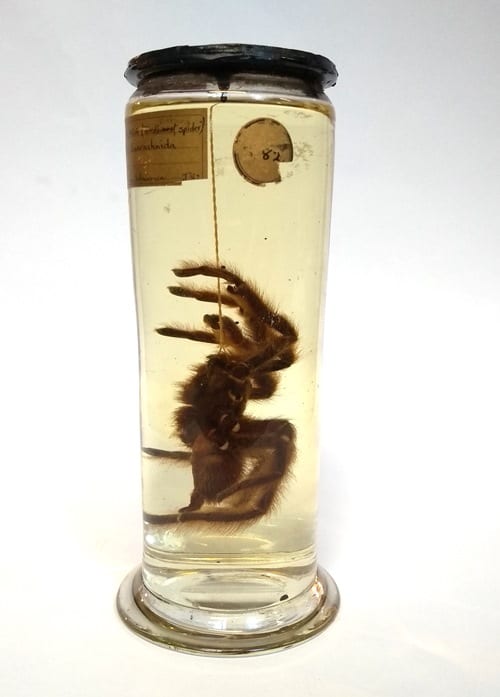
Specimen of the Week this week is a lovely, fluffy little chap. Despite his fearsome reputation, he means you no harm (unless you are a grasshopper, cockroach or small lizard). With spider season upon us and Halloween around the corner it is the perfect time to convince you he’s not-so-spooky….

Tarantula Avicularia sp. LDUCZ-J82

Tarantula Avicularia sp. LDUCZ-J82

(more…)

New Grant Museum exhibition ‘Agonism/Antagonism’ is open

By Tannis Davidson, on 21 September 2018

The Grant Museum is delighted to announce the opening of  Agonism/Antagonism, a new exhibition exploring evolution and genetics through the stunning artworks of multidisciplinary artist Neus Torres Tamarit and computer scientist Ben Murray – the art and science duo known as Phenotypica.

Acrylic Sculpture. Neus Torres Tamarit

Acrylic Sculpture. © Neus Torres Tamarit.

The exhibition is the result of Neus’ residency with the Max Reuter laboratory at UCL Department of Genetics, Evolution & Environment, where she has been immersed in the research, techniques and tools used to study the genetic evolution of the fruit fly Drosophila melanogaster.

Dr. Max Reuter and his team use fruit flies to conduct research into the evolution of sexual dimorphism. In sexually reproducing species, the genetic needs of the two genders are often in direct conflict; a phenomenon known as sexual antagonism. The tension between the genders is eventually broken by mutations that decouple the traits in males and females, resulting in new differences (dimorphisms) between them.

Acrylic Sculpture. Neus Torres Tamarit

Acrylic Sculpture. © Neus Torres Tamarit.

Reflecting the aesthetic environment of the laboratory and exploring the uneasy alliance that exists between males and females of a species, Agonism/Antagonism is the intersection between art, science and technology. Artworks include bioplastic sculptures which float among the skeletons, digital art and projections, animated explorations of genetic antagonism in virtual reality and CT scans of fruit flies.

Gender A - Gender B. Neus Torres Tamarit.

‘Gender A – Gender B’. Neus Torres Tamarit. 2018.

Neus and Ben are interested in how artworks about genetics interact with the subject and with the audience, and how accurately such artworks present their scientific concepts. The aim of their work is to remove the boundaries that often separate science from the rest of human activity and reveal the creativity and beauty in scientific research and discovery.

Agonism/Antagonism runs until 22nd December 2018. Full details on the exhibition’s website.

The Grant Museum of Zoology is open from 1–5pm Monday to Saturday. Admission is free and there is no need to book.

Tannis Davidson is the Curator of the Grant Museum of Zoology


Specimen of the week 359: The Infant Elephant Molar

By Christopher J Wearden, on 21 September 2018

If you were to look inside your mouth (I hope) you would see four different types of teeth: the incisors, canines, premolars and molars. As omnivores with varied diets, humans need these different types of teeth to eat. Our molars are used for chewing, crushing and grinding the food which has been gripped, torn and sliced by the incisors, canines and premolars. Like the animal kingdom itself animal teeth are incredibly varied in their shape and size, making them a fascinating topic of study. Today’s specimen comes from an animal with fewer types of teeth than humans, but considerable size to make up for it. Without further ado let’s get our teeth into this week’s Specimen of the Week…

Infant elephant molar, Elephas maximus LDUCZ-Z250

(more…)

Specimen of the Week 358: Sternum and ribs in rickets

By Subhadra Das, on 14 September 2018

Today’s specimen of the week comes from UCL Pathology Collections. The Collections are displayed at the UCL Pathology Museum at the Royal Free Campus of the UCL Medical School in Hampstead. The museum includes a medical teaching collection of nearly 3,000 specimens of human remains illustrating the history of disease. To open up these specialist medical displays to a wider audience, we’ve developed a trail of 10 specimens of well known diseases. As the museum only opens to the public for special events, we’re sharing the trail as part of the Specimen of the Week series.

Sternum and ribs in rickets

The sternum and ribs of a 2-year-old showing advanced rickets.

All of the entries for the UCL Pathology Collections Top 10 Medical Trail have been written by Nazli Pulatmen, who worked with us for her MA Museum Studies placement in the summer of 2018. Today’s specimen of the week post comes with a content warning for child death as a result of neglect. We’ve done our best to handle this topic with sensitivity and respect.

(more…)