X Close

UCL Culture Blog

Home

News and musings from the UCL Culture team

Menu

Archive for March, 2019

Specimen of the week: Trichobezoar

By Katie Davenport-Mackey, on 29 March 2019

Our blog this week is from Subhadra Das, Curator of Science Collections at UCL Culture.

Today’s specimen of the week comes from UCL Pathology Collections. The Collections are displayed at the UCL Pathology Museum at the Royal Free Campus of the UCL Medical School in Hampstead. The museum includes a medical teaching collection of nearly 3,000 specimens of human remains illustrating the history of disease. To open up these specialist medical displays to a wider audience, we’ve developed a trail of 10 specimens of well known diseases. As the museum only opens to the public for special events, we’re sharing the trail as part of the Specimen of the Week series.

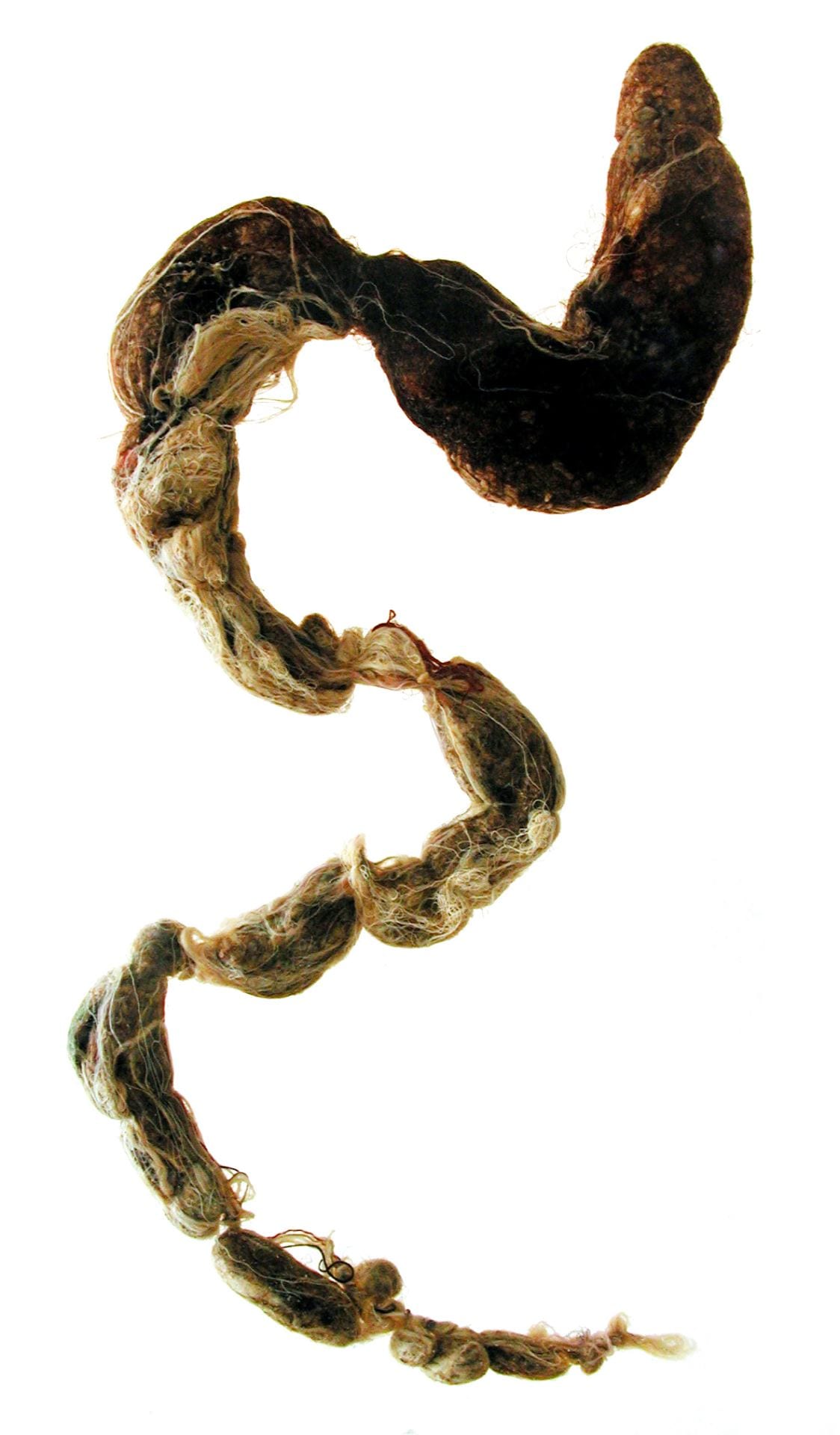
This week’s specimen is a trichobezoar — a mass of undigested hair from the stomach and large intestine of a young girl. As with most of the specimens in UCL Pathology Collections, we know little about the person the specimen comes from beyond their sex and their age, but this rare condition provides an interesting window into the practice of medicine, and its cultural significance extends into the realms of magic. (more…)
Object of the week 378: Tess Jaray, Always Now

By Nina Pearlman, on 22 March 2019

Today’s entry has been written by Viktoria Espelund. Viktoria gained her MA in History of Art From UCL and has worked with the UCL Art Museum team throughout her studies as a volunteer and later in a professional capacity as well.  We are thrilled to see her knowledge and expertise gain a wider audience through her recent contribution as a writer to a current exhibition at the Barber Institute of Fine Art in Birmingham. Her experienced is shared in this post.

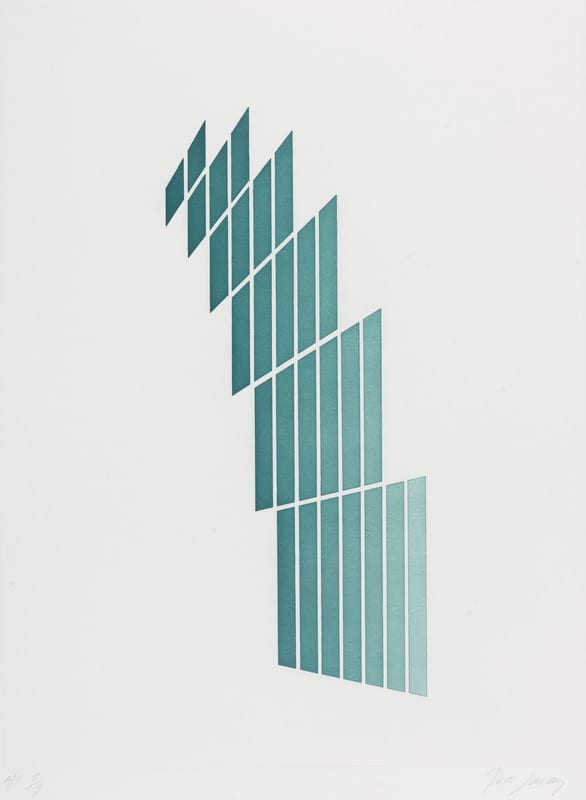
Always Now (LDUCS 7876) is a print by the British painter and printmaker Tess Jaray RA (b. 1937, Austria).  This print is one of nine works that are held of Tess Jaray in UCL Art Museum’s collections and is incredibly special to me, being the first ever work I saw by the artist now showing new work at the Barber Institute in Birmingham. The aquatint derives from a painting completed in 1982. Whereas the painting is painted with a soft colour palette of lilacs and blues against a cream-coloured background, the print has been executed in bright turquoise on paper.

A turquoise geometric print by Tess Jaray 1982 from UCL Art Museum's collections number 7876

Tess Jaray, Always Now, 1982, aquatint, UCL Art Museum LDUCS 7876

Tess Jaray has been an influential figure in the British art world since the 1960s. As both a Senior Royal Academician and an Honorary Fellow of the RIBA, her career spans more than fifty years, throughout which time she has produced a vast body of work. Jaray arrived with her family to the UK as an infant in 1938 as part of the flight of Jewish refugees from the Nazis. Aged sixteen she embarked on her journey as an artist and enrolled first at Saint Martin’s School of Art in London later at the Slade School of Fine Art (1957-1960), studying under the likes of William Coldstream, Bartos Dos Santos and Ernst Gombrich. Jaray has further been a great influence on younger British artists through her writing and the thirty years spent teaching at the Slade (1968-1999).  (more…)

Specimen of the Week 377: The Lobster Claw

By Graham Isted, on 15 March 2019

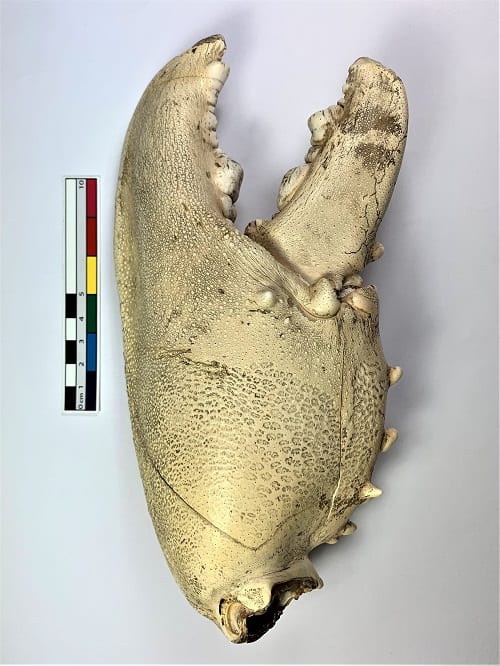
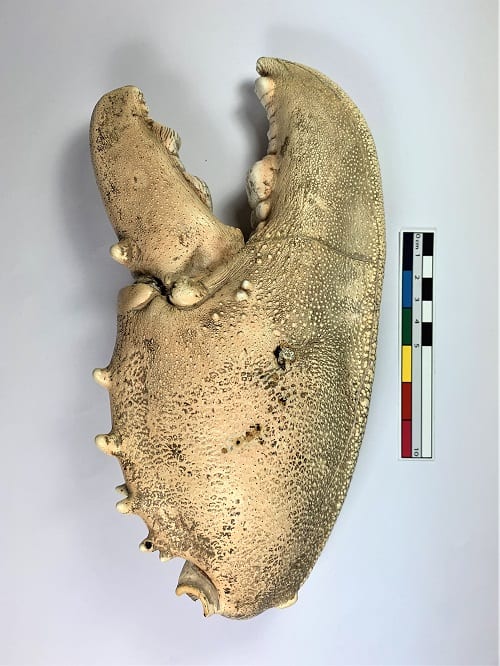
Hello and welcome to the next instalment of Specimen of the Week. This week’s specimen is a mighty claw (LDUCZ-H671) from the lobster species Homarus gammarus, also known as the European or common lobster. Lobsters are great, whether you like them to be freely going about their lives at the bottom of the sea or perhaps prepared by a chef on a dish with some butter. Either way, I am fairly certain there are aspects of their lives you are unaware of and this blog will hopefully either make you hungry for more knowledge or perhaps just dinner.

Lobster claw LDUCZ-H671 Homarus gammarus

(more…)

Specimen of the Week 376: Carcinoma of the breast

By Subhadra Das, on 8 March 2019

Today’s specimen of the week comes from UCL Pathology Collections. The Collections are displayed at the UCL Pathology Museum at the Royal Free Campus of the UCL Medical School in Hampstead. The museum includes a medical teaching collection of nearly 3,000 specimens of human remains illustrating the history of disease. To open up these specialist medical displays to a wider audience, we’ve developed a trail of 10 specimens of well known diseases. As the museum only opens to the public for special events, we’re sharing the trail as part of the Specimen of the Week series.

All of the entries for the UCL Pathology Collections Top 10 Medical Trail have been written by Nazli Pulatmen, who worked with us for her MA Museum Studies placement in the summer of 2018.

Today’s specimen of the week is an advanced example of breast cancer. The specimen shows how the cancerous tissue has expanded to such an extent that it has completely misplaced and replaced the healthy tissue within the breast. The patient reported that the lump began at about the size of a pea and developed to this enormity over the course of 10 months.

Image of a cross-section of breast tissue showing malignant cancerous growth

Breast.25.1: Carcinoma of the breast. The cancerous tissue appears solid compared to the normal, fibrous breast tissue surrounding it.

(more…)