X Close

UCL Culture Blog

Home

News and musings from the UCL Culture team

Menu

Archive for 2011

Is Planet Dinosaur a Documentary?

By Mark Carnall, on 9 November 2011

Nearly three years ago I wrote a book chapter called Walking with dragons: CGIs in Wildlife ‘Documentaries’ the abstract can be found here. For one reason or another the book will only just be coming out someday soon, which means the content of the chapter went from state of the art, through to snapshot of thought in the noughties and is now practically an historical essay, such is the speed in which visual technologies change. The short summary of the chapter is that (chiming with Sir David Attenborough’s recent comments) CGI documentaries like Walking With Dinosaurs are a product of fact inspired fiction and presented as educational programmes. Ideally, this means that they should be as intellectually transparent as possible, the facts that inspire the fiction should be highlighted so audience members can get an idea of where porgramme makers have used artistic license to create an entertainment product. Can this be achieved in CGI documentaries without taking away from the spectacle of shows like Walking with Dinosaurs? This fact from which the fiction is derived can be called paradata and my book chapter examines how the paradata can be shown in these kinds of programmes. (more…)
Specimen of the Week: Week Four

By Emma-Louise Nicholls, on 7 November 2011

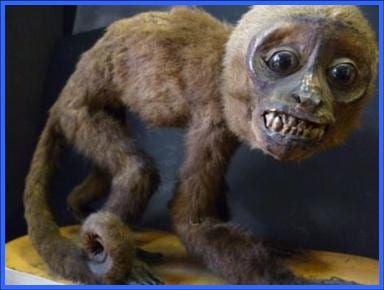
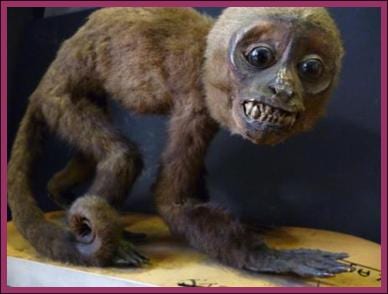
Scary MonkeyWelcome to the 100th UCL Museums and Collections blog post!!! What an honour! I shall definitely be sharing a wine with scary monkey (see left) later on and he says he gives you all permission to leave work early for the momentous occasion. When you first start writing a weekly blog you suddenly become very aware of time and more to the point, how quickly it whips by! Already it is week four of the new specimen of the week blog. Someone pointed out yesterday it was only seven weeks until the new year. Frightening!


Anywho, this week I have decided to choose one of my most favourite animals to tell you about. It is one of the largest species of the group to which it belongs and famous for its weird appearance. This week’s specimen of the week is… (more…)

Listening to what objects say

By Rachael Sparks, on 31 October 2011

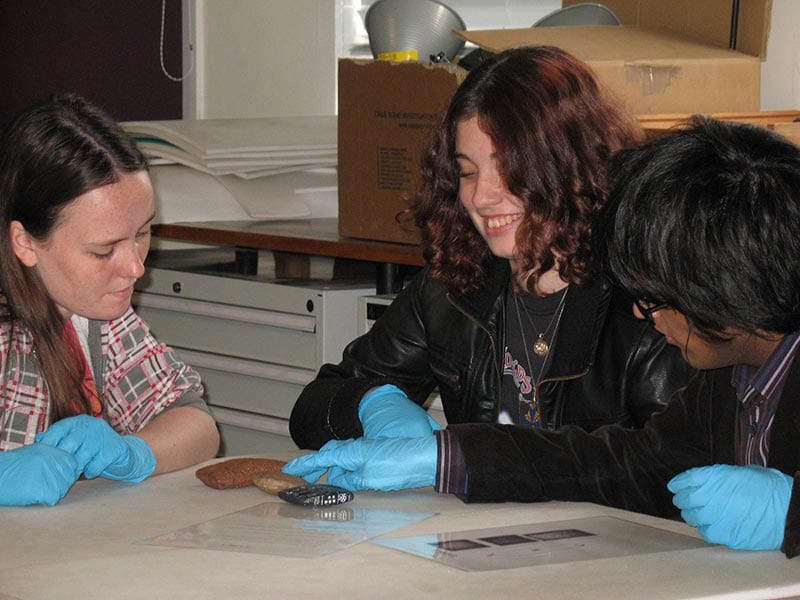
The university term is now in full swing and lecturers are starting to prowl around the Institute of Archaeology Collections looking for a few nice objects to keep their students awake once winter sets in. So it’s been a busy couple of weeks down in the artefact store, getting material ready for handling classes.

Cuneiform tabletsI like to teach with objects. No, let me correct that – I absolutely love it. Even the most hardened student shows a spark of interest when faced with some small but significant piece of the past. That’s ancient dirt, right there. The ghost of another era. You know you want to touch it, go on, have a go …

So here’s some of the object handling classes that have been going on behind closed doors of late: (more…)

Specimen of the Week: Week Three

By Emma-Louise Nicholls, on 31 October 2011

Specimen of the Week: Week ThreeFirstly, HAPPY HALLOWEEN EVERYONE!!!!

Secondly…

This week’s specimen of the week is a scary creature of the deep that uses deception and cunning to survive in a hostile world. The specimen of the week is… (more…)

England Looking Outwards

By Nina Pearlman, on 28 October 2011

Our regular readers will by now be familiar with the delight we take in talking about our Pop-Up Exhibitions. The reason we like talking about them is because this simple low tech platform offers huge possibility for new ideas to emerge. Research is a strange beast. It’s origins never singular. An argument can develop out of a hunch or a passion and upon occasion even an obsession. Mix in a welcome happenstance or two, and you are on your way to a great idea! The colour mauve wasn’t discovered by someone who was looking for a colour, and photosynthesis was discovered by someone who was not a botanist at the time – he simply went on holiday to a country house to escape the grind of his day job (which if my memory serves me correctly had something to do with the chicken pox vaccine (?)).

Anyway…. as I ramble on…the bottom line here really is that research doesn’t come from nowhere, and neither do interdisciplinary collaborations, so you really need an environment that is conducive to this type of thinking. The Pop-Up set up offers just that. To our guest curators we say – bring your passion or even your research driven agenda to our rich and vast collections of print and drawings and see what happens!

Our recent Pop-Up exhibition by Professor Helen Hackett was all about cultural promiscuity. Yes, the hybrid, the appropriation of images and ideas in support of often competing ideologies… all this was present hundreds of years ago, way back in the Early Modern Period. We didn’t invent it. Helen’s Pop-Up impressed further  these ideas, starting with the Albrecht Dürer’s Whore of Babylon. It’s relevance to issues confronting contemporary British politics was recently highlighted in this blog by Lara Carim (Editor, UCL News). I hope you enjoy the read.

Alex Sampson’s Pop-Up exhibition is on Tuesday 15th November 1-2pm.

Pop-In for 10min or more!


A minute’s silence for the Vietnamese Javan rhino

By Emma-Louise Nicholls, on 25 October 2011

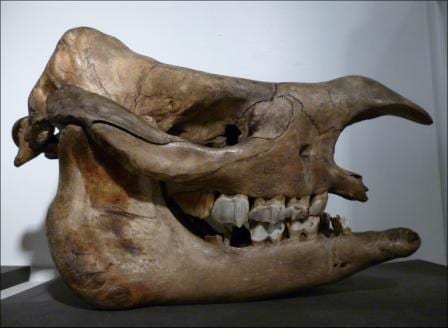
Skull of a Javan rhinoDear readers,

It is with a very heavy heart that I bring you the news that the second subspecies of Javan rhino, the Vietnamese Javan rhino, has been driven to extinction thanks to poachers. The third subspecies, the Indonesian Javan rhino, is now the last remaining representative of this entire species. The loss of the population in Vietnam is called a local extinction for the species and means that Vietnam has now lost all of its rhinos. A sad loss of heritage for the people.

The last individual was found dead, with a bullet hole in its leg and its horn removed.

Rhino horn is used in Traditional Chinese Medicine. However, it is made of keratin, the same material as your finger nails and has been repeatedly scientifically proven to have no medicinal value whatsoever. The rhinos are dying for nothing. (more…)

Specimen of the Week: Week two

By Emma-Louise Nicholls, on 24 October 2011

Scary MonkeyThis week I have selected one of the most beautiful creatures I have seen. You absolutely have to see images of these animals because they are stunning!

As one of the most beautiful species we have on our planet, the specimen of the week is… (more…)

Egypt around London

By Debbie J Challis, on 23 October 2011

One of the occasional events that the Petrie Museum runs from April to October are lectures or walking talks exploring Ancient Egypt in London through Egyptianizing architecture and other monuments. Under the heading ‘Out and About with the Petrie Museum’ we have so far gone to Cleopatra’s Needle, looked at sphinxes in Crystal Palace Park, explored factories such as the Carreras Building in Mornington Crescent and the Hoover Factory in Perivale, as well as Kensal Green and West Norwood Cemeteries, and more besides. These tours are given by an expert in Egyptianizing architecture Cathie Bryan and on occasion, when about the Victorian period, by myself.

Twickenham Bridge

This summer Cathie proposed going to the west of London and exploring Egypt in Richmond. My colleague at the Museum of Richmond, Phillippa Heath, agreed to do a joint event as part of National Archaeology Week on 16 July 2010. Cathie’s programme was as ever ambitious and involved the various obelisks in Richmond and Richmond Park, a factory in St Margarets, and Twickenham Bridge. In May, Phillippa and myself joined Cathie for a reccie to check timings and so we could publicise the event properly. (more…)

Hidden gems of the Grant Museum: Introducing ‘Specimen of the week’!

By Emma-Louise Nicholls, on 17 October 2011

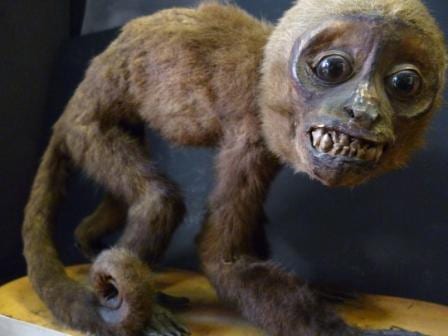
The woolly monkey with the manic grinThis story is not about adoptions, but that is where it begins…


Being majorly involved in our stupendously popular adoption scheme, I get to speak to a lot of our new members and potentials about their specimen choice. A phrase I hear a lot from people who have just arrived is “everything has already gone!” Oh so how untrue my friends. You see, the asset which endows the Grant Museum with its astounding atmospheric ambiance, is the Victorian ‘squeeze as many specimens in as possible’ display method. As a result, although we are approximately the size of 1/6th of a football pitch (apparently?) compared to the Natural History Museum in South Kensington which probably covers around 9000 football pitches, we have the same number of specimens on display to the public. Yes! I’m not making that up! (Except the 9000 football pitches… possibly…) So, is everything already adopted? Of COURSE not! Yes most of the very large articulated skeletons have gone but we have around 6,800 specimens on display and currently 201 adopters caring for a total of 213 adoptids. That leaves 6,587 orphans, and that is only counting the ones on display. There are a further 61,200 orphans back stage that us Grant Museum staff have to cater to the emotions for. What people are sadly missing in their excitement are the hidden gems of the Grant Museum. Of which, there are literally thousands. You just have to look more closely… (more…)

After the flood – this month’s New Scientist blog

By Jack Ashby, on 14 October 2011

This time last year two of the museum storerooms flooded. A loose pipe meant that when the mains water supply was switched on in the floor above, high pressure water jetted into our space, soaking the cabinets that contained some 40,000 of the museum’s objects.

To add to our frustration, the storerooms had only been built a few months earlier. It had taken us two months to install the collection, carefully replacing the specimens’ old locations with their new ones in our database so that nothing would be lost. It took two hours to evacuate all the specimens, and there was no time to document them in our frantic rush to get them to dry land. In this flood, the animals certainly went in far greater numbers than two by two.

This is the start of my latest New Scientist Big Wide World blog post. It’s about the flood recovery, why no natural history museums know what they have in their collections, and things being misidentified in museums. Read the rest of it here: http://www.newscientist.com/blogs/bigwideworld/2011/10/lost-information-and-misidentified-opossums-recovering-from-the-flood.html