X Close

Global Social Media Impact Study

Home

Project Blog

Menu

Archive for February, 2015

Facebook and the State: propaganda memes in Turkey

By Elisabetta Costa, on 27 February 2015

Propaganda meme that has widely circulated on social media during the protest of March 2014

Propaganda meme that has widely circulated on social media during the protest of March 2014

The academic and journalistic accounts on the political uses of social media have mainly emphasized the practices of activists and dissidents, or alternatively the control and censorship by States, but I believe that one area of research has been largely overlooked: the government’s production and distribution of social media outputs for propaganda purposes.

After having observed the political uses of social media in Mardin for a long time, I was struck by the wide circulation of videos, memes and news supporting the government and the ruling party AKP. Most of this material was produced and originally shared by institutional sources or other informal groups whenever some significant events occurred. For example, in March 2014 anti-government protests erupted all around the country when a 15 years old boy died after having been in a coma for 269 days, the boy had been hit by tear gas while he was going to buy bread during the Gezi Park protest in Istanbul. In March 2014 the social media sphere in Mardin was populated by memes that were reproducing the government discourses and minimising accusations of police brutality. The image posted above is only one example of the several memes of this kind, the caption says: “This is not the way to buy bread/This is.”
The Turkish government’s engagement with social media was also documented by few journalists, and it was reported that in September 2013 the governing AKP party created a team of 6000 social media users to help influence public opinion. However, I have never come across any detailed report or research about this crucial and important topic.

In Mardin the active usage of social media by the government and the ruling party AKP, is also interlinked with State’s control and surveillance, as a consequence of these two factors, government opponents were not very active online. All this leads me to argue that social media in my field-site, far from creating a democratic public space, have rather reproduced and reinforced existing inequalities and exclusions of political and ethnic minorities.


“I’m Feeling …” – Status Messages on Social Media

By Shriram Venkatraman, on 25 February 2015

Photo by Sean MacEntee (Creative Commons)

Photo by Sean MacEntee (Creative Commons)


“Smiling :)”

“Happy !!!!!!!”

“Feeling Sad…”

“Irritated!”

Do the above look like private messages that one sends? More often than not at Panchagrami, they end up as Status messages on Facebook or WhatsApp groups.

Though these messages might authentically represent a person’s state of mind at a given point of time, there is no denying that such status messages receive much more responses (As Likes or Comments on Facebook or as questions on WhatsApp) at a rate faster than other posts. These kinds of messages normally occur with higher frequency among the young people  (less than 30 years old) at Panchagrami.
Status messages such as these tend to have a sense of mystery attached to them and would never reveal the whereabouts of the person (home/office/college or at a shopping center – where does he/she post this message from?) or if this message is related to ones personal or professional life or just something they encountered.

For example: A message such as “Pissed Off!” normally tends to have responses that could be put into several categories,

it could be serious —– “Sorry for you…What happened?”
it could be sarcastic —– “Once again?” or “Me Too!”
it could be an advice —- “Take a walk bro…things would be alright”
or offering immediate support —- ” Call me at +9199******08″
or it could be a joke —- “Take a leak” or “Don’t do it on your chair”

and for no reason a message such as this can attract two dozen Likes on Facebook – now this cannot be categorized under anything.

A message such as “I am smiling” can have responses such as

“I know why”

“What’s brewing?”

“Its good to smile. Smile often”

“hmmmm… hmmmm…”

A look at these messages leads one to reason out the ready support system that a person might have, though one cannot deny that there is a
level of performance associated with this as well. However, letting your ready audience know of a state of mind that one is in has its own strong and weak points. While several point out that channeling your frustration with your boss at work onto WhatsApp/Facebook as a status message and attracting a few soothing responses might calm your nerves, several also believe that people tend to overuse this platform for venting out their day to day frustrations, a few even criticize the neediness of the people who post such messages.

However, interviewing college students at Panchagrami revealed that authenticity of such messages in itself needs to be questioned at times.
Observing that such messages now attract a lot more responses, a few use it to their strategic advantage in order to receive more Likes and comments on their profile.

Now…”I’m Amused!”

Password sharing: I get by on QQ with a little help from my friends

By Tom McDonald, on 17 February 2015

Group of Chinese schoolchildren

Friendship is only a shared password away. (Photo by Athena Lao, CC BY 2.0)

One of the surprising features of my conversations with primary and middle school students in our rural fieldsite in the north of China was the number who said that the pressures of schoolwork meant they didn’t have any time to ‘care for’ (zhaogu) their social media profiles. Many spoke of the importance of needing to ‘invest time’ (touru shijian) and ‘invest money’ (touru qian) in their QQ account or QQ online games in order to achieve high levels or status on these platform.

For this reason, a number of people that I spoke to, particularly middle school students, told me that they would ask their friends to ‘look after’ their account, or various parts of the games that they played.

Having somebody else responsible for looking after one’s QQ account constituted a very significant indicator of trust, and this seemed especially so in the case of school children. A high proportion of middle school students told me they shared their social media passwords with other people, most often their close friends.

Often when I asked middle school students who it was that they shared their QQ password with, a considerable number of male students would use the term ‘senior male fellow student’ (shixiong) which often indicates incredibly close relationships (similar to ‘best buddies’ or ‘best mates’); whereas for female middle school students, it was often the case that they said the person they shared their social media password with was a female best friend (guimi). In both cases, it seemed that if QQ passwords were shared with friends then it was far more likely that these people were of the same gender as the people doing the sharing.

This not only highlights a different attitude towards privacy on social media, but it also speaks to how platforms can be used to cement long-lasting friendships for young people.

Comparative ethnography: Local and global levels

By ucsanha, on 12 February 2015

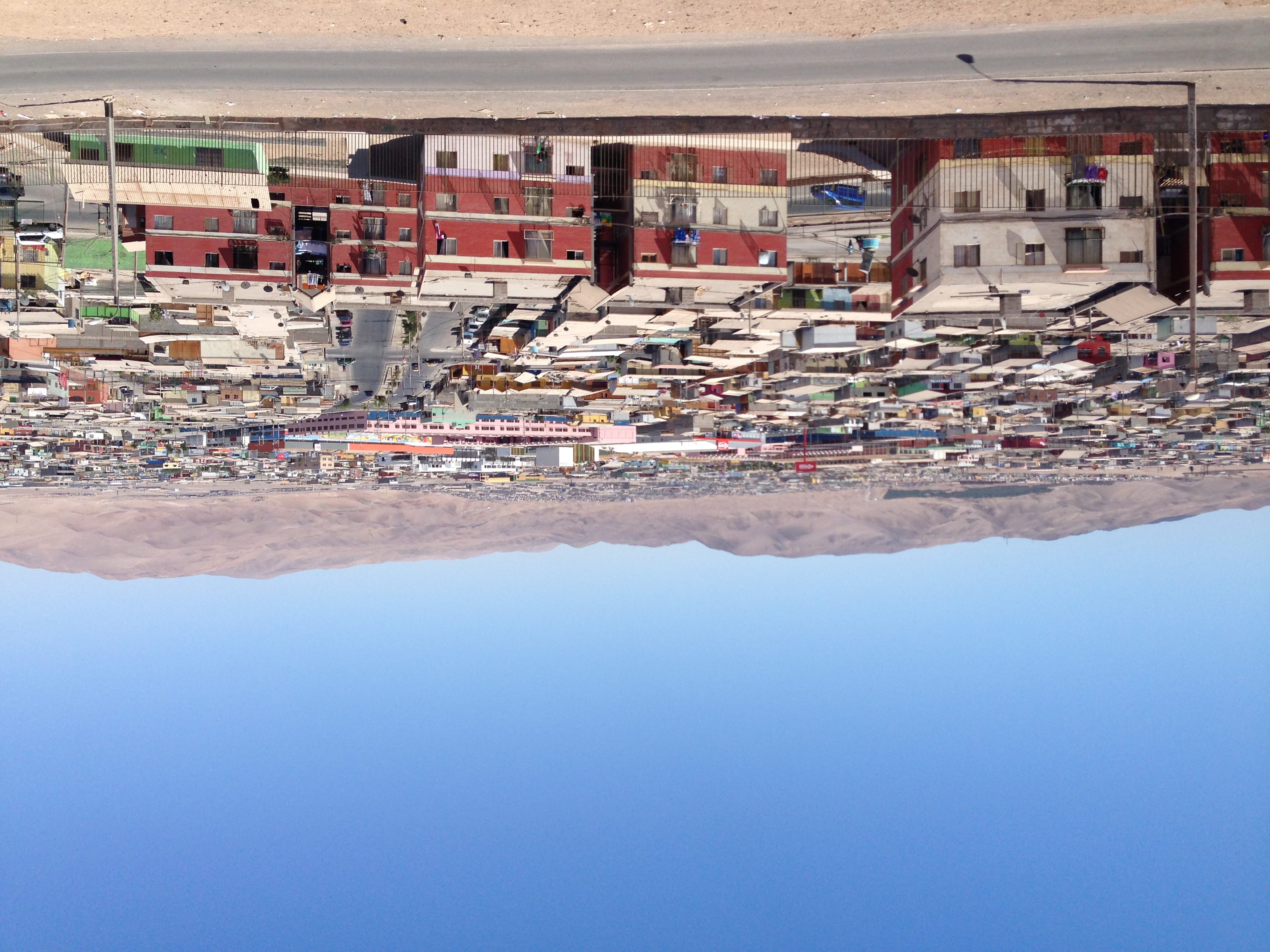
For the first year of my fieldwork, I lived in Alto Hospicio, Chile, a city considered marginal and home to the working poor (as the US class system would call them). I spent the year chatting with neighbors in my large apartment building, kicking balls back to children playing in the street, shopping at the local markets and grocery stores, buying completo hot dogs from food vendors, walking along the dusty streets, and taking the public bus to and from Iquique. Now, for my last few months of fieldwork, I am living in Iquique, the larger port city, just 10 km down the 600 m high hill that creates a barrier between the two cities.

iqq beach 1

Photo by Nell Haynes

This project is based on comparative ethnography, but usually this means comparison across continents, hemispheres, and language barriers, at least. Yet, I have learned a great deal from comparing Iquique and Alto Hospicio, even in just one short month. Iquique is more lively, with a US-style shopping mall, many bars and restaurants, more variety in terms of grocery stores, a beach, a casino, and the sort of variety of different jobs and services available in mid-sized cities across the world. By comparison Alto Hospicio seems bare, even barren. There are no billboards there advertising the latest Tommy Hilfiger perfume (available in the TH shop in the tax free import zone of the city). There are no Peruvian-Italian fusion restaurants, or even cuisines like vegetarian, Indian, Mexican, Thai, or Italian alone. There is no theater, no yearly film festival, and—perhaps most disappointing for me last year—bars with happy hour deals on mojitos.

But what I know of Alto Hospicio, is that while there is less investment in infrastructure and commercial activity (or even advertisement), it is still a lively place. Neighbors chat, people take Saturday trips to the beach with their family, and friends gather to pass time or celebrate special occasions. But in many ways the lack of commercial activity gives Alto Hospicio a homogeneity that one does not encounter in Iquique. As I’ve written before, from the very shape of the houses to the clothing people wear, the spectrum of aesthetics is limited. People work in mining, in service industries, or own small businesses such as a corner store. And everyone knows that for “once” (pronounced own-say), the evening tea, the table will be equipped with bread, margarine, sliced cheese, and sandwich meat to accompany the hot tea. And most people seem quite content to share these things in common with their neighbors.

aho mirador

Photo by Nell Haynes

I wrote last month that the acceptance and even pride surrounding normativity is reflected on social media. But in looking at the social media in Iquique this becomes even more apparent. Foreign newspaper and magazine links are much more prominent. People post pictures from events they attended or even displaying the new throw pillows they’ve purchased for their couch, while in Alto Hospicio photos taken inside the home are rarely are intended to demonstrate the interior decoration. And the percentage of funny memes is much much higher in Alto Hospicio.

None of this shocks me. Coming from a middle-class US background, Iquique feels more like home, and Facebook usage from those residing here looks much more like what my friends at home post. But what this reminds me of is the ways that homogeneity may be working as the world becomes more and more connected. Iquique begins to look and feel like the Midwest of North America (well, with the added bonus of a Pacific Ocean beach), while Alto Hospicio remains very locally focused. That is to say, perhaps certain places are more or less likely to be both homogenized by social media, and have that homogeneity reflected on social media, given their figurative proximity to the global centers (in terms of economics, aesthetics, consumption, services, education, and work opportunities). By looking across all 9 sites of the Global Social Media Impact Study, this may become more or less apparent. We may find that those places that remain on the global “periphery” remain peripheral on social media as well. There may only be a 10km highway separating Alto Hospicio from Iquique, but the differences seem continental.

Does Targeted Advertising Work?

By Daniel Miller, on 5 February 2015

Photo by Mike Licht (creative commons)

Photo by Mike Licht (creative commons)

As Ethan Zuckerman noted in The Atlantic (14/08/2014) even though many groups and initiatives really didn’t want to go down that route, targeted advertising has become the default funding model for the internet, as people failed to find an alternative. A combination of developments such as big data and mining information from sources such as search engines and social network sites means that today it is possible for ads to be honed quite precisely to the interests of individuals as revealed by their online activity.

It is not at all surprising to find that English people who, as many of my blog posts have argued, are hugely concerned with privacy and keeping people away from their homes and intimate worlds, vociferously complain about the development of targeted advertising. The two most commonly quoted examples are Facebook and the supermarket chain Tesco. A typical complaint was ` Google will change your settings on your cursor, so that every time it goes back and tells them what you are using it for. Then they send you certain adverts….If you join Tescos, every time you go through the till it records everything you’ve brought. And suddenly they start sending you vouchers to buy meat… or this persons a drinker. Everything you do.’

In our project we anticipate cultural variation and it was interesting to read an article in the Financial Times recently (28/01/15) that suggested in China customers of WeChat felt personally insulted when they were not included in a targeted advert for BMW. This leaves us with at least two interesting possibilities. The first is that people say they resent the advertising but actually find them convenient and use them, which is why they continue to spread. Alternatively corporations tend to follow technological advances and do this simply `because they can’, even if in actuality these adverts did not in fact work. When I studied businesses (Miller, D. 1997 Capitalism: An Ethnographic Approach) I found that fear of what the competition might do was much more important than evidence for what customers actually do in understanding business practice around advertising. The academic work on the topic is still slight, and it is starting to look like targeted adverts in some combinations might actually be sending people away from companies rather than building their profits (e.g. Goldfarb, A., and C. Tucker. 2011 “Online Display Advertising: Targeting and Obtrusiveness.” Marketing Science 30.3 (2011): 389-404). In the meantime I have been faced with some of the most egregious examples of such advertising through my research with hospice patients. As one put it `I’ve joined the moving-on group now, since I’ve finished treatment, try and move on. Sometimes I get a lot of feeds and it does get a bit much. Don’t want it in your face all the time, keeps coming up, so I had to stop a lot of the feeds, otherwise every other thing was cancer cancer cancer and I’m not moving on. Think I’ll get rid of these off my Facebook.’

Using social media for teaching social media

By Tom McDonald, on 2 February 2015

QQ icon in dock on Mac

QQ: China is just a click away (Photo: Tom McDonald)

This term our research team has been teaching a completely new Master’s module on the Anthropology of Social Media at UCL, with many of the students taking the module being from our fantastic MSc in Digital Anthropology.

In addition to incorporating the results from our own research in each of our fieldsites into our teaching, the students have been doing their own research on social media through mini-practicals taking place every week.

Last week, I wanted the students to experience QQ themselves, to get a feel for the platform, and to get a chance to see and think about how Chinese people interact on these platforms. In order to do this they joined a QQ Group and had a chance to communicate with English-speaking Chinese students in Beijing.

It was really interesting to see the two groups interact – albeit in very different ways – and it seemed from our conversations in the seminars that many people found examining the differences between QQ and non-Chinese social media platforms a useful starting point to think about Chinese practices in communication, social relationships and culture.