X Close

Centre for Education Policy and Equalising Opportunities (CEPEO)

Home

We create research to improve the education system and equalise opportunities for all.

Menu

Archive for the 'Schools' Category

Staying ambitious, motivated and focused during Year 11 is worth half a grade per GCSE subject

By IOE Editor, on 20 July 2020

New research shows the impact that drive and ambition can have

By Professor John Jerrim 

Much has been written recently about learning loss and the COVID-19 crisis. With the country locked down and schools shut, some children are bound to have learned less over this period than others.

It has been noted that learning loss is likely to particularly affect the life chances of young people with high-stakes examinations next year, such as those entering Year 11 in the autumn.

All other things being equal, those who are motivated, driven to succeed and ambitious are likely to have continued to work hard in their studies even while their school was closed. On the other hand, those pupils who are less motivated and have no clear post-school targets or plans, may well have taken their foot off the pedal.

But how much does being driven and ambitious during Year 11 really matter for GCSE outcomes, even in normal times?

Quite a lot, it turns out.

Unique data

New research of mine (along with my colleagues Nikki Shure and Gill Wyness), published today, looks at a nationally representative cohort of Year 11s who took their GCSEs in 2016, and considers their ‘drive’ (e.g. how they responded to questions such as ‘I want top grades in most or all of my courses’ and ‘I want to be the best, whatever I do’) and their ambition (measured by whether they want to go to university and, if so, which one they want to attend). They answered these questions in November/December of Year 11 – around six months before taking their GCSEs.

From this, we can compare GCSE outcomes for Year 11 pupils who score highest on these measures (e.g. who say they want to be the best at what they do and plan to apply to an Oxbridge university) to their school peers who lack any such motivation. Importantly, we can also account for a wide array of background differences between such teenagers, such as their levels of prior achievement, socio-economic background and the school that they attend.

The results show that drive and ambition really do matter during Year 11. Ambitious and driven young people achieve – on average – around half a grade higher per subject in their GCSEs than comparable Year 11s, with the same level of prior achievement, who are not determined to succeed.

Implications

What does this finding imply?

First, even during ‘normal’ times, motivation and determination in Year 11 matters a lot. Clearly, there is only so much that schools, teachers and parents can do. At the end of the day, the buck stops with young people themselves.

Second, in the current climate, this provides one clear reason why educational inequalities in GCSE grades may widen next year. During this last term – with schools not open to most children – the onus has been placed upon young people to continue putting in the hours on their school work. The driven and the ambitious pupils will have done this. Those lacking motivation and direction will not have.

It would therefore be no surprise at all if the gap in GCSE outcomes between such teenagers increases dramatically next academic year.

You can read the full research here.

10 things you may not know about educational inequality

By IOE Editor, on 15 June 2020

1. There are large inequalities in the home learning environment

Families from lower socio-economic backgrounds may experience challenges in supporting their child’s home learning. For example through:

  • Limited access to resources(including tech devices);
  • Lack of reliable and fast Internet connection;
  • Low levels of parental numeracy and literacy;
  • Anxieties towards learning (especially maths).

Current evidence suggests it is important to focus on the quality of children’s home learning, rather than simply the quantity. 

2. Parental inputs affect early child development

By the time children start school, socio-economic gaps are evident in child skills. Exploring the role of various parental inputs, we find that financial resources are an important channel, explaining up to 59% of the effect on child cognitive skills. Parental investments of health behaviours during pregnancy and monetary investments at home explain a further 14% of the test score gaps.

3. Jobless parents invest less money but more time in their children’s learning

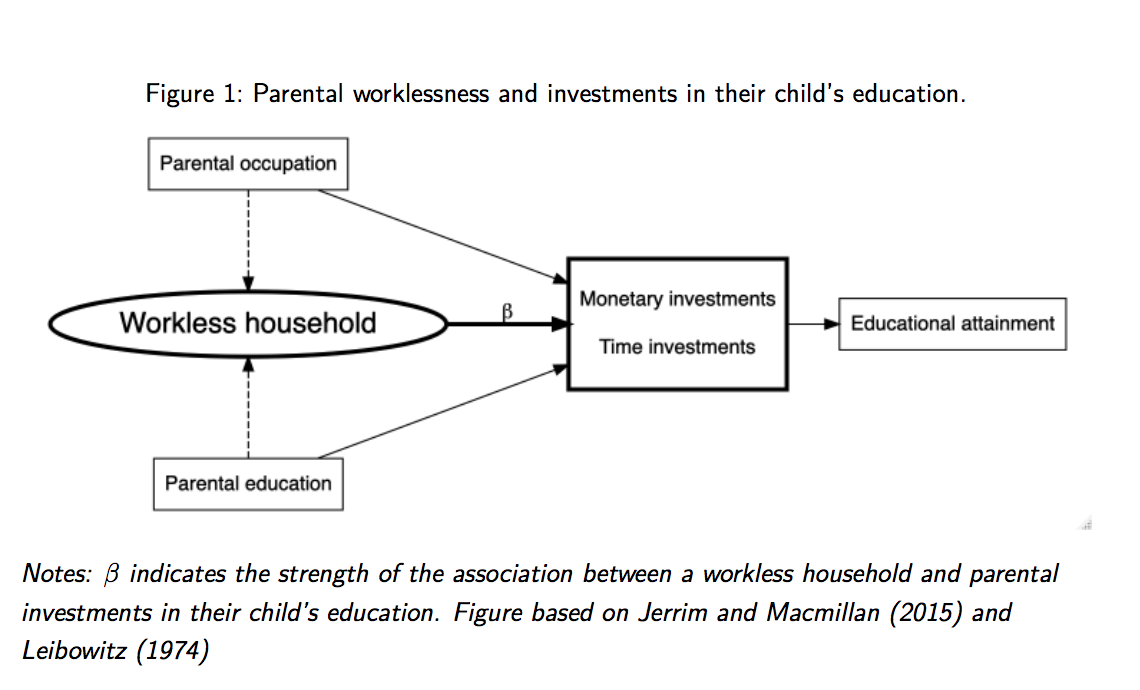
Parents out of work, but with otherwise similar backgrounds to working parents, provide lower monetary investments but more time investments in their children’s learning, such as helping with homework. These findings could help guide future social policy aimed at equalising opportunities for children living in workless households.

4. There are large inequalities in the courses that university students attend, by family background.

We examine inequalities in the match between student quality and university quality. We find that students from lower socio-economic groups systematically undermatch, that secondary schools play a key role in generating these gaps, and that while there are negligible gender gaps in the academic match, high-attaining women systematically undermatch in terms of expected earnings, largely driven by subject choice.

5. There is a great deal of inaccuracy in predicted grades.

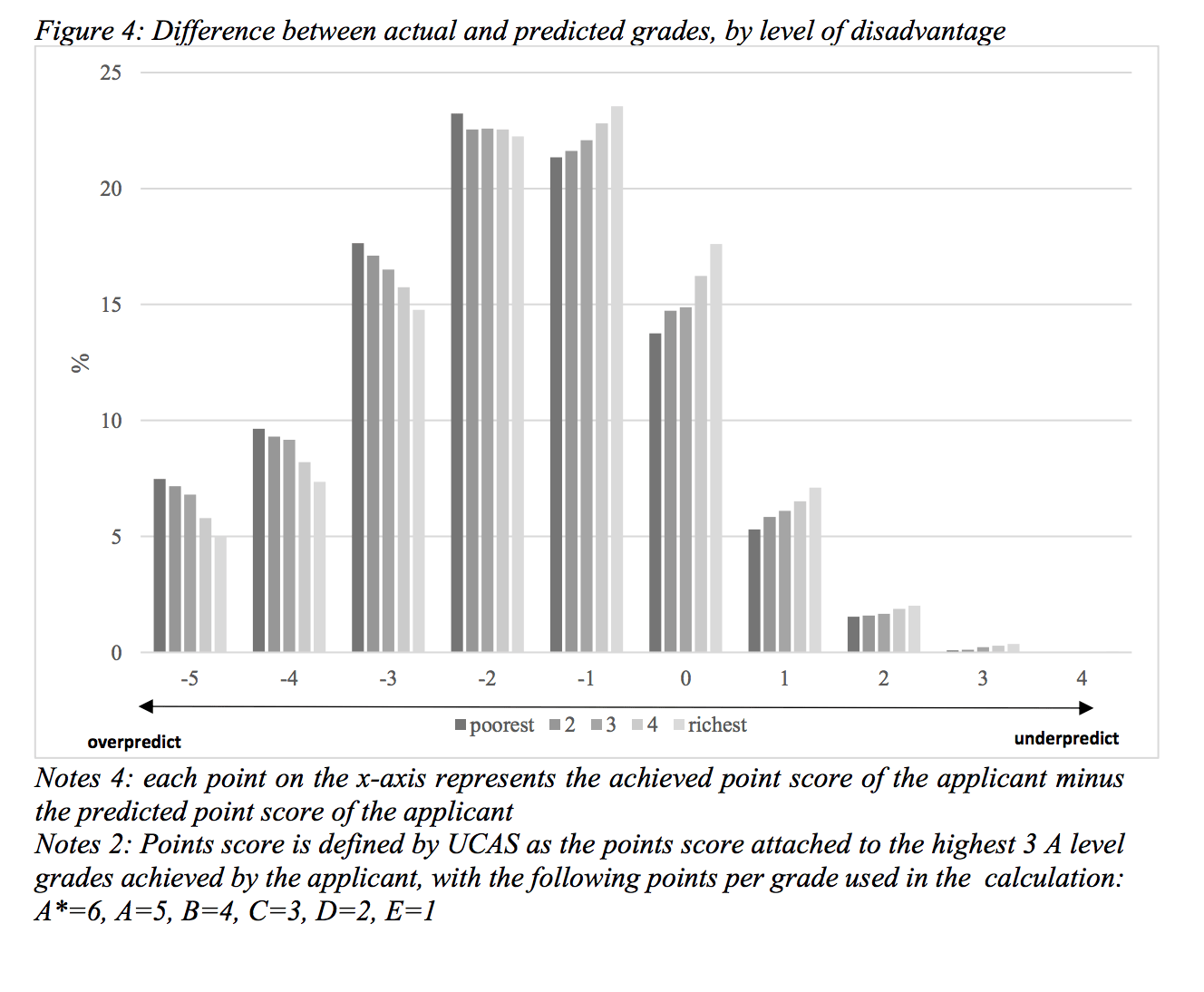
Only 16% of applicants’ to the UK University system have predicted grades that are accurate. While 75% of applicants have their grades over-predicted, high-attaining, disadvantaged students are significantly more likely to receive under-predictions. Those under-predicted candidates are more likely to enrol in courses for which they are overqualified than their peers. The use of predicted rather than actual grades has important implications for student’s labour market outcomes and social mobility in general.

6. Non-monetary incentives can improve teacher retention.

The French have a non-pecuniary (non-money based), “career-path oriented” centralized incentive scheme designed to attract and retain teachers in French disadvantaged schools. We find this incentive scheme has a statistically significant positive effect on the number of consecutive years teachers stay in disadvantaged schools and decreases the probability of inexperienced teachers in disadvantaged schools to leave the profession.

7. Teacher’s working hours have remained stable despite initiatives to reduce them

Surveys have revealed that teachers in England work far longer hours than their international counterparts. However, contrary to current narrativeswe do not find evidence that average working hours have increased. Indeed, we find no notable change in total hours, work during evenings and weekends over the fifteen to twenty years. The results suggest that policy initiatives have so far failed to reduce teachers’ working hours and that more radical action may need to be taken in order to fix this problem. The article concludes with a discussion of how official data on working hours could be improved.

8. There are large inequalities in who accesses grammar schools

Inequalities exist in who attains places at grammar schools by socio-economic status, with more disadvantaged children far less likely to attend a grammar school than their more advantaged peers. This is true even when comparing those with similar levels of academic achievement. 

9. Private school choices are based on values, not just money

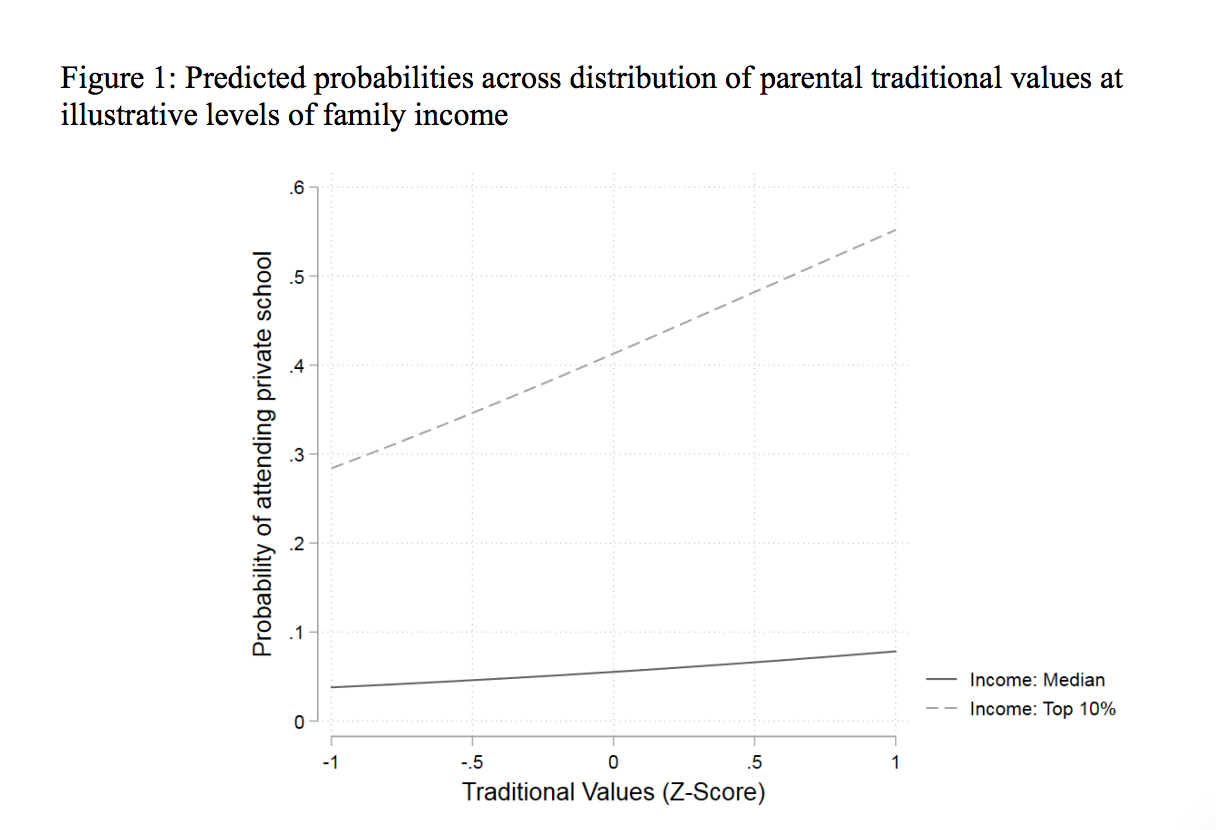
Given the high and rising fees required to send a child to private school, one might think that the decision is entirely connected with financial resources. However, while these remain an important factor, we argue that other determinants are also important. In particular, we highlight the importance of parental values and geographical proximity to choosing high-quality state school alternatives. 

10. Bullying casts a long shadow on attainment

Both type of bullying and its intensity matters for long-run outcomes such as obtaining a degreeincome, and mental health. We can assess the effects of bullying victimisation on short- and long-term outcomes, including educational achievements, earnings, and mental ill-health at age 25 years.

Home schooling during lockdown: Inequalities in inputs and perceptions

By IOE Editor, on 5 June 2020

By: Dr. Jake Anders, Professor Lindsey Macmillan, Professor Patrick Sturgis and Dr. Gill Wyness

The past few weeks have been challenging for parents across the country working hard to support their children to continue to learn during the COVID–19 lockdown. One of the reasons for the big push to get kids back to school is the concern over inequalities driven by differences in home learning. Using new data from a high-quality random sample collected using the Kantar Public Voice Survey, we examine the extent of inequalities in home schooling during lockdown from the end of April to the beginning of June. We find stark differences in the time spent home schooling but also in the perceptions of parents, in terms of their ability to adequately support their children’s learning, and in how the burden of home schooling is divided between mothers and fathers.

Differences in days spent home schooling

While very similar proportions (around 75%) of graduate and non-graduate parents report doing any home schooling, graduate parents report home schooling their children on more days compared to non-graduate parents. While almost 80% of graduate parents are home schooling their children at least 4 days a week, only 60% of non-graduates are home schooling this often. This is consistent with other surveys covering the same period that have found inequalities in the amount of time spent home schooling by parental income.

Differences in perception of ability to home school

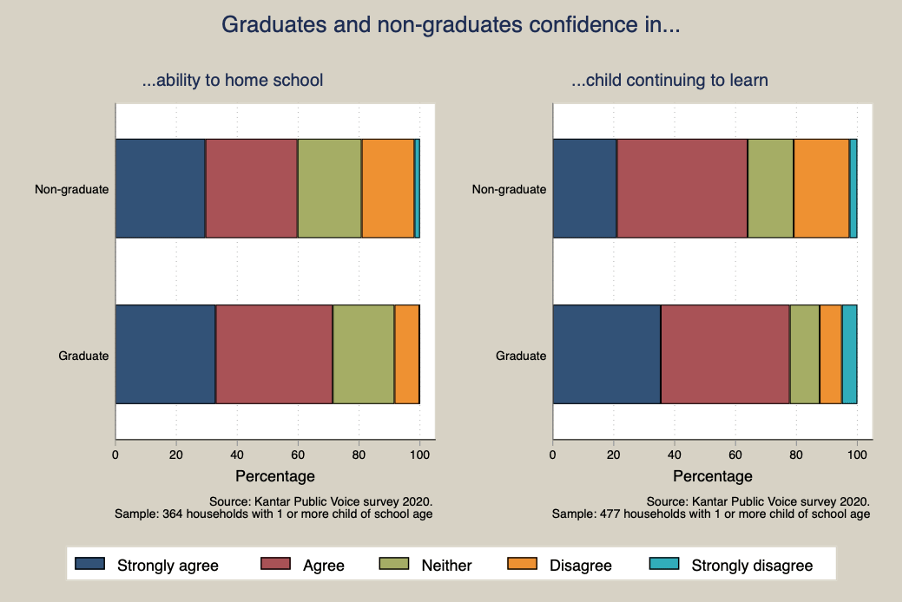
These differences in time spent home schooling could be driven, in part, by graduate parents having greater confidence in their abilities to home school their children. In our survey, graduates were more likely (70%) to agree with the statement ‘I am confident in my household’s abilities to home school my child’ compared to non-graduates (60%). Similarly, graduate parents report more confidence that their child’s learning is continuing. This confidence gap in ability to home school is concerning, as studies show that children who have parents with anxiety about maths tend to perform worse in maths.

Differences in perceptions of interfering with their job

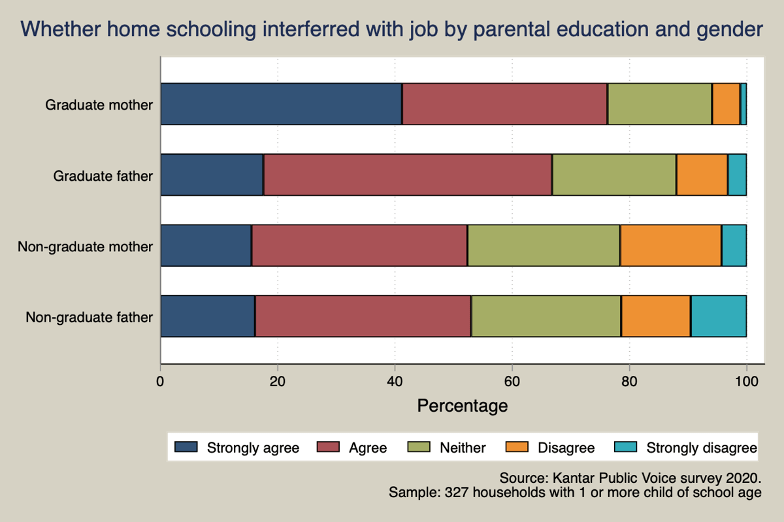
These differences in time spent home schooling seem to have a consequential effect on whether parents’ feel able to do their jobs. Graduates are substantially more likely to agree that home schooling is interfering with their job, a difference this is particularly pronounced for mothers, with nearly 80% of graduate mothers agreeing that home schooling had interfered with their ability to do their job, compared to 67% of graduate fathers, and 50% of non-graduates.


Differences in perception of who is doing the most home schooling

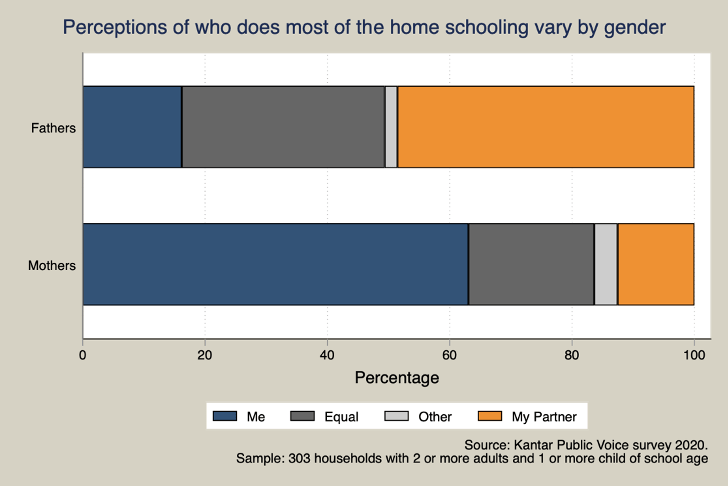
This inequality between mothers and fathers can also be seen when we consider who is doing the most to support their child with schoolwork during lockdown. Around half (49%) of fathers say that their partner does most of the home schooling, with the other half split between those who say that they take on the lion’s share (16%), and those reporting that this responsibility is split equally (33%). This contrasts with mothers, with almost two-thirds (63%) saying they devote most time on this task, with only one fifth (21%) reporting an equal split, and just 13% saying that their partners are doing the majority of home-schooling. These patterns are, again, particularly pronounced for graduate mothers. Similar differences in perceptions between mothers and fathers have also been found in the US, where 45% of fathers said they did most of the home schooling – but just 3% of mothers reported that their partner was making the largest contribution.

Support for children and working mothers

Taken together this new evidence from a high-quality random sample of parents suggests that inequalities arising from home schooling during lockdown will exacerbate existing inequalities in education. We know that children of graduate parents already have higher levels of cognitive and socio-emotional skills on school entry. These inequalities are only likely to widen if children from less advantaged backgrounds are spending less time on home-schooling during lockdown. Non-graduate parents are also less confident in their ability to home school their children and this may be detrimental to the quality of the support they are able to provide.

Our survey also reveals gender disparities in the impact of home schooling, with graduate mothers particularly likely to report that home schooling is interfering with their jobs. But parents perceptions do not align on who is sharing the greater burden; while half of fathers say they are doing at least an equal share, a clear majority of mothers think that this level of paternal input is exaggerated.

Catch up strategies when schools re-open should be mindful that returning children will have been exposed to different levels of home schooling. Similarly, employers should be mindful that the burden of home schooling during lockdown is more likely to have affected mothers compared to other employees, and factor this into future pay reviews and promotions.

Dr. Jake Anders is Associate Professor of Educational and Social Statistics and Deputy Director of the Centre for Education Policy and Equalising Opportunities (CEPEO), UCL

Professor Lindsey Macmillan is a Professor of Economics and Director of CEPEO, UCL

Professor Patrick Sturgis is a Professor of Quantitative Social Science at the LSE Department of Methodology

Dr. Gill Wyness is Associate Professor of Economics and Deputy Director of CEPEO, UCL


Widening Participation practitioners won’t let COVID-19 closures stop them from delivering HE access activities.

By IOE Editor, on 26 May 2020

By Professor Anna Mountford-Zimdars, Academic Director of the Centre for Social Mobility, University of Exeter

School closures have led to widely discussed concerns regarding the safety, well-being and attainment and progression of students already considered disadvantaged or at risk. Unfortunately, our newly published paper exploring the impact of lockdown reveals widespread cancellation of widening participation (WP) activities such as face-to-face sessions in schools, residential summer schools and university taster days that are designed to help these pupils progress into Higher Education.

Encouragingly, ingenuity has been many practitioners watchword and new modes of delivery are springing up that could preserve some activity in the face of adversity and even create new ways of reaching potential students: after initial cancellations, universities are offering alternative virtual offer-holder or taster days as well as support materials and webinars for students, teachers and parents

No underestimating the upheaval

As part of this OfS funded study, The Centre for Social Mobility at The University of Exeter worked with think-tank The Centre for Education and Youth to survey WP and Uni Connect practitioners. Uni Connect, formerly known as the National Collaborative Outreach Programme (NCOP) consists of 29 partnerships between universities, colleges and local partners working with over 180,000 young people and 1,613 schools to support decisions around and progress into higher education. The aim was to highlight issues and concerns while developing policy and practice recommendations to ensure universities doors do not close to traditionally underrepresented groups.

Our findings show that school closures have impacted negatively on all but a handful of respondents work. The most common implication has been postponement or cancellation of planned activities and alarmingly, one Uni Connect partnership said 182 events had been cancelled so far.

Where events have been postponed, practitioners were in no doubt about the knock on effects that were likely to follow. These will not be short-lived. One Uni Connect practitioner said much of the work they have spent the last four months planning is now postponed and finding new dates and re-booking events will detract from the work that would normally start in September.

From adversity springs innovation

Encouragingly, respondents also identified new approaches that they were planning for, or had already pursued. Several were optimistic that developments introduced due to For example, one WP Officer commented that the current situation has opened new channels for communications with schools, and that telephone conversations have taken on a more personal touch.

Increasing the use of online materials and a shifting to online delivery of events were at the forefront of new developments but respondents also described online mentoring, virtual residentials and tailored support via email.

We found that:

  • Seven out of ten respondents in university WP and related roles said that open days would be offered online.
  • Over six out ten said their universities were offering online events similar to teaching, alongside static online resources.
  • Online forums or Q&A with current undergraduates featured for 58% of university respondents overall, and just under half (49%) were offering online events for teachers and advisors.
  • Respondents in Russell Group institutions were more likely than those in other types of institutions to offer static online resources.
  • More respondents in the post-92 and other categories of institutions were offering bespoke higher education transition support compared to those in Russell Group institutions.
  • Around two-fifths in post-92 institutions (39%) and a quarter in other types of institutions (24%) were offering online events for parents, compared to 14% of respondents in Russell Group institutions.
  • Virtual residentials featured more highly for respondents in Russell Group institutions (44%) compared to only 17% of respondents in other institutions.
  • Respondents in the other category of universities were most likely to say they were reviewing or creating contextual admissions policies (41%), well above twice the share of respondents in the Post-92 and Russell Group institutions.

*Caution low base

Backing the bounce-back

None of this is easy and it would be optimistic to think these responses will be enough to overcome the considerable hurdles in the way of efforts to ensure all young people have fair and equitable access to HE. It is clear that it cannot be left to individual universities to patch up the gaps in provision. Respondents therefore called for national-level support and leadership to help them ensure young people bounce back from the pandemic.

I would like to see an offer of a national programme of online activities/events/webinars that students and parents can access during this time which can help to prepare for the next step.

Clear and concise messaging to pass to schools and students about HE progression and the UCAS process this summer.

The cancelling of A levels and the proposed use of constructed grades is causing a lot of concern and also raising questions about how they and other measures can be used for selection while still being fair and encouraging widening participation.

Quantitative data from our survey also showed that there was a particular desire to focus on well-being and to provide support for young people falling behind.

Rising to the challenge

A generation will feel the effects of this school and university closures if WP activity is allowed to stumble in the face of the pandemic. A combination of sector-led ingenuity and national action is therefore needed to mitigate current circumstances. The online world offers many opportunities for overcoming some barriers disadvantaged students are likely to face in accessing outreach activities. These include challenges around transport, timing and the time involved in participating in face-to-face events. If connectivity to the internet and access to physical resources such as laptops and smartphones and quiet places to study were equal, the online provision would go a very long way to equalizing access to information, advice and guidance. The involuntary massive online move may thus act as a positive catalyst for enhancing outreach practices long-term.

We are encouraged by the fact that our research suggests Widening Participation practitioners are taking the first steps, and in doing so, learning lessons and developing new approaches that could inform future practice. It is now time to ensure this practice is replicated across the sector, and that national action backs up on-the-ground innovation.

Prof Anna Mountford-Zimdars*, Joanne Moore*, Dr Sam Baars**, Loic Menzies**
*University of Exeter, **The Centre for Education and Youth 
Notes
For a longer report on the survey of admissions and outreach staff, please see
Mountford-Zimdars, A and Moore, J (2020) Safety, food and well-being are a greater concern than attainment: The views from university widening participation staff in the context of Covid-19, Centre for Social Mobility, University of Exeter, Working Paper.
http://www.exeter.ac.uk/media/universityofexeter/aboutusresponsive/wideningparticipation/CV-19_Implications_Widening_Partricipation_practitioners_14.05.2020.pdf
The research had ethical approval and started five days into the school closure, the survey was available from 25th March to 20th April and received 262 responses.
Some data collection was supported by an OfS commissioned project/contract. For further information on the University of Exeter and Centre for Education and Youth on the impacts of School Closure survey please see: https://www.exeter.ac.uk/socialmobility/projects/
The project team for this work are from the University of Exeter unless otherwise indicated: Anna Mountford-Zimdars, Joanne Moore, Sam Baars (Centre for Education and Youth) Nicola Sinclair, Kevin Denny (University College Dublin), Annabel Watson, Will Shield, Katherin Barg, Nick Long, Luke Graham, Paul Woolnough, Sara Venner, Taro Fujita, Julie Mason, Verity Hunt, ZhiMin Xiao, Dongbo Zhang, Neil French, Judith Kleine Staarman, Alison Black, Emily Warwick, Brahm Norwich. We would like to thank our critical friends for feedback on the surveys: Ciaran Burke (University of the West of England), and Steven Jones (University of Manchester).

The Covid-19 crisis and Educational Inequality

By IOE Editor, on 22 May 2020

By Professor Simon Burgess, University of Bristol and Professor Anna Vignoles, University of Cambridge

This article was originally commissioned and published by the Campaign for Social Science as part of its Covid-19 programme https://campaignforsocialscience.org.uk/hub-of-hubs-social-sciences-responding-to-covid-19/.

Younger generations will pay a heavy price for our response to this virus. First, their educational opportunities and attainment are being affected by lockdown, variable home-learning facilities, and changing assessment methods. Second, leaving school in a recession is always harder, and the coming recession is likely to be worse than for many years. Whilst the health impact of COVID on older people is more severe, young people are vulnerable educationally and in their long-term employment prospects. The crisis will lay bare the already stark inter- and intra-generational inequalities in educational attainment that are a feature of the UK.

Learning loss from school closures

The decision to impose a school lockdown has been taken in most (but not all) countries and is the result of weighing the health risks to pupils (and their families) and teachers against the loss of skills and growing inequalities. With schools shut, the plan was for learning to take place remotely. But the amount of time children are spending on school-work varies enormously both by school and by parents’ ability to support remote schooling. Recent work from the UK[1], Ireland[2] and the Netherlands[3] all illustrate the factors behind growing educational inequality.

It is difficult to quantify the extent of the likely attainment loss. Extrapolation from studies that have looked at differences in the number of hours of instruction a pupil receives in different countries may guide us. Lavy[4] found an additional hour of instructional time in a subject per week over the school year was associated with a gain in test scores of 6% of a standard deviation. Carrlson[5] also estimate the impact of more days to prepare for a test. This is relevant to the current crisis as most pupils are not receiving the same hours of schooling remotely that they did face to face, irrespective of the quality. If students lose 3-4 hours of each main subject per week for a term, this would equate to about an hour over the academic year, i.e. 6% of a standard deviation[6]. The actual loss of learning will vary by context, depending on what schools and families have been able to provide. We also know that the earlier years of a child’s life are pivotal for their development, and investment during this time is particularly valuable, in terms of improving their cognitive and non-cognitive skills. Hence the negative impact from a lack of face to face school provision is likely to be particularly large for younger children.

Learning loss will be worse for socio-economically disadvantaged students.  Household income and family environment are major determinants of children’s academic achievement in normal circumstances. Socio-economically advantaged parents also tend to compensate for any deterioration in schooling to a greater extent. A recent Sutton Trust survey[7] suggests that during this crisis 44% of middle-class parents are spending more than 4 hours a day on homeschooling. One-third of working-class parents are doing so.  Andrew et al reported similar findings: children in the richest quintile of families spend over 75 minutes per day more on schoolwork than children in the poorest quintile of households. This quickly accumulates: over the (at least) 34 days that schools will be closed, this difference adds up to more than 7 full school days. For some year groups, particularly those nearing end of schooling, this might have a major impact on their attainment.

Post compulsory education

Even in normal times, the 50% of students who do not go on to university are less likely to find a good job and more likely to have lower wages. Of course, this crisis has taught us that many of those low wage jobs are also hugely socially valuable. So policymakers should not measure success by what people earn in the labour market. That said, the group who leave school with very low-level qualifications will find it particularly difficult in this tumultuous labour market.

The labour market prospects of students will vary hugely depending on what qualifications they get. It is perhaps striking that the vocational qualifications with the greatest firm involvement, such as apprenticeships, are some of the most economically valuable. Given the financial hit to firms, and the fact that many have had to suspend their apprenticeships, this is a route that will be badly affected by the COVID crisis. It is imperative that we support firms to restart their training. Unfortunately, training in the UK is pro-cyclical: firms train less in bad times. So policy intervention will be essential.

For students who would normally be university-bound, there are still problems. The fear is that, despite the poor labour market which should encourage students to remain in education, there will be a sharp decline in students going on to HE in 2020/21 due to safety fears or unwillingness to undertake remote learning. However, the main concern is that students from poor backgrounds may miss out. First, they’re A level grades may be negatively affected because COVID has meant that teacher judgement will play a major part in the grade they are awarded, and there is evidence that teachers under-estimate grades of poor students[8]. Even if universities are willing to accept students with somewhat lower grades (given spare places due to the decline in international student numbers), being awarded a low grade may affect the motivation of such students to progress. But the bigger issue is that poorer students are more likely to fund their studies with paid work. Many work in the sectors that are being hardest hit.

More positively, with empty places at universities, this is an opportunity for students from lower-income backgrounds not only to go to university but also to attend a higher-ranked institution than they might otherwise have done. This could be an opportunity to widen participation,

Policy options

So what can policy do? Interventions are needed to support socio-economically disadvantaged pupils and those who have fallen behind academically.  The decision on when schools should return is both complex and emotionally charged. As well as the obvious health risks, each additional month of sub-optimal learning is likely to widen the socio-economic gap in achievement, over and above any loss for the whole cohort.

Younger years should be prioritised, given the importance of the earlier years. Additional support on return to school will be required to address learning loss. Small-group tuition has been found to be effective, but it is expensive, and the pupil premium paid to schools to support disadvantaged children would have to be supplemented. We also need to be mindful that a far greater number of students will now be in families with economic difficulties.

The FE and HE sectors need to communicate strongly that they are open next year and undertake outreach to encourage disadvantaged students to continue their studies. The government needs to work with firms to find ways to continue apprenticeships or to move them in the case of firm failure. We need to invest in the post-compulsory schooling of these vulnerable cohorts, targeting the most disadvantaged students. We know that the long-run negative scarring effect from leaving education during a recession is significant, and we should encourage students to shelter from the worst of it in education and acquire useful and productive skills as they do so.

These policy solutions imply increased spending in an era when government finances are going to be tested. Despite this, investing in the human capital of the young should be central to any economic recovery plan. However, the socio-economic gap in educational achievement was large and persistent before COVID, despite attempts to reduce it. This is because drivers of the disparity in achievement have worsened, e.g. child poverty. COVID has brutally revealed the health inequalities in our society, so too it illustrates the educational ones that have arisen for similar reasons. Perhaps this unprecedented crisis is a time to rethink how we go about reducing deeper economic inequalities that underpin these problems.

[1] Montacute, R. (2020) “Social Mobility and COVID-19”. Sutton Trust Report https://www.suttontrust.com/wp-content/uploads/2020/04/COVID-19-and-Social-Mobility-1.pdf
Andrew, A., Cattan, S., Costa Dias, M., Farquharson, C., Kraftman, L., Krutikova, S., Phimister, A. and Sevilla, A.  (2020) ‘Learning during the lockdown: real-time data on children’s experiences during home learning’ IFS Briefing.Note. https://www.ifs.org.uk/publications/14848
[2] Doyle, O. (2020) “COVID-19: Exacerbating Educational Inequalities? “Public Policy Ireland. http://publicpolicy.ie/papers/covid-19-exacerbating-educational-inequalities/
[3] Bol, T. (2020) “Inequality in homeschooling during the corona crisis in the Netherlands. First results from the LISS panel” https://osf.io/preprints/socarxiv/hf32q
[4] Lavy, V (2015), “Do Differences in Schools’ Instruction Time Explain International Achievement Gaps? Evidence from Developed and Developing Countries”, Economic Journal 125.
[5] Carlsson, M., Dahl, G. B., Öckert, B. and Rooth, D. (2015) “The Effect of Schooling on Cognitive Skills” Review of Economics and Statistics vol. 97(3) pp. 533–547.
[6] Burgess, S. and Sievertsen, H. (2020) Schools, skills, and learning: The impact of COVID-19 on education. VOX-EU.
[7] Sutton Trust (2020) COVID-19 Impacts: School Shutdown.
[8] Murphy, R. and Wyness, G., 2020. Minority Report: the impact of predicted grades on university admissions of disadvantaged groups (No. 20-07). Centre for Education Policy and Equalising Opportunitites, UCL Institute of Education.

Lockdown and the 11-plus

By IOE Editor, on 6 May 2020

By Dr. Matt Dickson and Professor Lindsey Macmillan

Unlike GCSEs, A-levels, SATs, Scottish Nationals and Scottish Highers, the secondary transfer test (otherwise known as the 11-plus exam) is the only high-stakes school assessment in Britain that is still scheduled to take place, as usual, this year. The test, taken by students beginning year 6 in September of each year, is the primary way in which places at grammar schools are allocated. The top performers on this test are offered a place at a state-funded grammar school, while those below the cut-off threshold attend state-funded comprehensive or secondary modern schools depending on the area. There are currently 163 grammar schools in England, educating around 5% of state secondary school pupils, and selecting their pupils according to their performance on this ‘11-plus’ test.

Why does this ‘business as usual’ approach to this particular exam matter? It matters because we already know from the extensive research literature in this area that access to grammar schools is strongly related to socio-economic status, with more disadvantaged pupils far less likely to attain a grammar school place than their more advantaged peers. This remains true even when comparing those with similar levels of academic achievement. There are numerous reasons for this inequality in access, and many of them will be exacerbated during the current COVID-19 pandemic and resulting lockdown. As a consequence, if the ‘11-plus’ goes ahead as planned, with no account taken of the differential impact of the lockdown on children from different backgrounds, the inequality in access this year is likely to be more extreme than ever.

How unequal is access?

Official statistics show that in 2019 only 3% of grammar school pupils were entitled to free school meals (FSM), compared to the 15% of pupils in non-selective schools across England. This isn’t a perfect comparison as grammar schools are not equally distributed around the country, so this low FSM percentage might just be reflecting the types of areas that grammars tend to be located in. This is partly true, however even when comparing grammar school pupils just to the other children in the same area, stark differences remain: a recent study found 2.5% of grammar pupils are eligible for FSM, compared to 8.9% amongst the other pupils in the area. This disparity is a consistent finding, echoing earlier figures from 2013 and 2006.

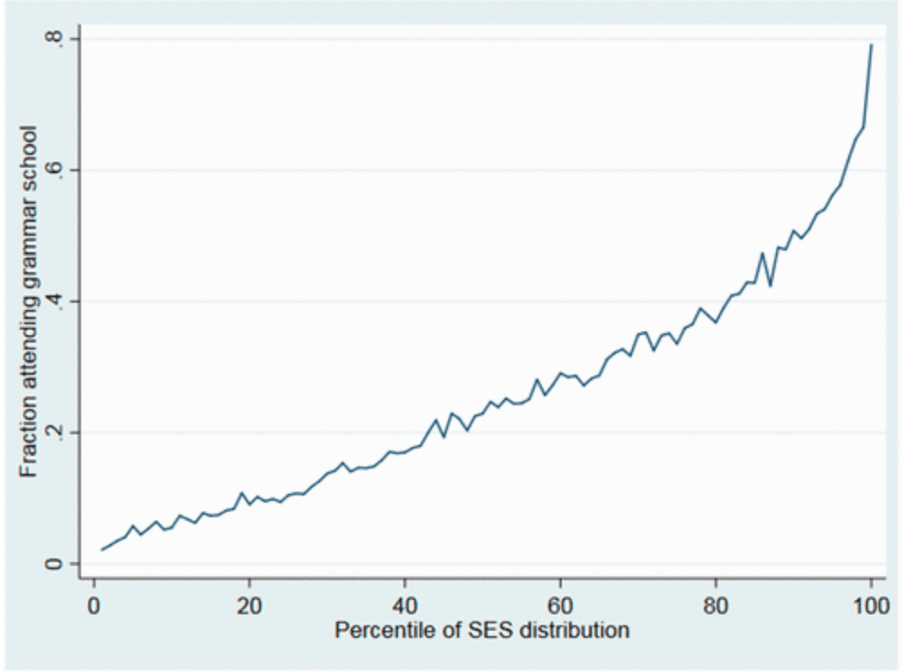
Using the binary FSM division is a useful way of contrasting access probabilities but can only tell us about the inequality between (roughly) the lower 15% of the income distribution and the upper 85%, potentially masking important differences in access chances among the children in the middle. An alternative is to look at grammar school place probability across the full socio-economic spectrum and this is what was done in another recent study, using a socio-economic index measure.[1] This index measure is divided into percentiles allowing the probability of attaining a grammar school place to be computed at each point in the socio-economic status (SES) distribution.

This shows that access increases almost linearly with the SES index for the most part, before steepening in gradient in the top quintile of the distribution (see Figure 1). At the 10th percentile of the distribution, only 6% of children attend a grammar school. This increases slowly such that, at the 40th percentile – the ‘just about managing’ families – 17% of pupils attend a grammar. By contrast, 51% of children at the 90th percentile attend a grammar school and 79% of those in the top 1% most affluent families attend a grammar school. In total, half of the grammar school places are taken by the best-off quarter of families.

Notes: Figure 1 from Burgess, Crawford and Macmillan (2018)

Part of this social gradient is driven by the large differences in attainment at age 11 between children from different family backgrounds. Achievement gaps between children from the most and least disadvantaged families open early in childhood and widen through primary school. Gaps in cognitive test scores between children from more and less disadvantaged children are observed as early as age 3 and by the time they hang their coat on their peg for the first time at primary school, children from low- and middle- income families are five months behind children from high-income families in their vocabulary skills. This gap increases through school from Key Stage 1 at age 7 to Key Stage 2 at age 11, at which point pupils from the most disadvantaged families are (on average) over 20 percentiles behind pupils from the most advantaged families in their performance ranking. It is not surprising therefore that we see such a steep gradient in grammar access by SES.

However, even comparing children with the same achievement, there remain large differences in the probability of accessing a grammar school place in selective areas, depending on family socio-economic status. Splitting combined performance on Key Stage 2 (age 11) tests in English, maths and science, into percentiles (1=lowest score; 100=highest score), the chances of grammar attendance for children with the same level of performance but different family backgrounds can be compared. Figure 2 shows that very few pupils in the lower half of the performance distribution go to grammar schools, whatever their socio-economic background. For the upper half, at every point in the performance distribution, there is a clear socio-economic gradient in the probability of attending the grammar school. For example, at the 80th percentile of attainment, the best-off families have a 70% chance of attending a grammar, compared to only 25% for children from the worst-off families.

Access to grammar school places is very strongly related to family background and this remains the case even when comparing children with the same achievement on national tests at age 11. Whatever advantages grammar school attendance conveys, it is very much concentrated on pupils from more affluent backgrounds.

Notes: Figure 2 from Burgess, Crawford and Macmillan (2018)


What factors lead to this disparity in access even for children with the same attainment at age 11 and how will lockdown affect these?

There are a number of reasons why children from disadvantaged backgrounds have lower achievement than their more advantaged peers, and many relate to disadvantaged families facing more constraints in terms of both their resources and their time – constraints that are likely to be tightened during lockdown. Recent research reveals that higher maternal education is associated with better child outcomes in part because it leads to an increase in income but also because it is associated with greater educational resources available in the home during a child’s early life, improving cognitive skills at ages 5 and 7. Similarly, it has been shown that mothers with university degrees spend a higher proportion of time engaging with the child’s learning at home, compared to mothers with no qualifications, and this is linked to increased child literacy and socio-emotional outcomes between ages 3-7 years. Emerging findings on home inputs during lockdown suggest that these gaps in the home learning environment are evident in the ‘homeschooling environment’ too: there are significant concerns over access to electronic devices for learning and the internet. 15% of teachers from deprived schools reported concerns that a substantial portion of their students would not have access to online learning, compared to only 2% of teachers from the most affluent state schools. There are also differences in terms of how confident parents are about helping their children, with more educated parents much more likely to report they feel confident in directing their children’s learning.

These barriers in terms of the home environment are exacerbated by the investment that most advantaged parents make in their children’s education in the form of extra-curricular tutoring. More advantaged parents are more likely to invest in extra English and maths lessons and arrange tutoring or coaching. This is particularly pronounced in selective areas, and in the subjects that are core to the ‘11 plus’ examination (but not in science, which is not an ‘11 plus’ subject), supporting the view of grammar school headteachers that children from more affluent, middle-class families are coached to pass the entrance exam. This inequality enhancing investment and coaching happens in every year, but the emerging evidence from the Sutton Trust suggests that this continues even more so this year: children in households earning more than £60k are currently twice as likely to be receiving tutoring during school closure as those children in households earning under £30k.

In sum, the evidence suggests that all of these barriers will be more pronounced for the current cohort of year 5s who are due to sit the ‘11 plus’ examination in September 2020. The current school shutdown is very likely to widen the achievement gap between the most and least disadvantaged pupils with direct impacts on who accesses grammar schools.

What are the alternatives to ‘business as usual’?

Unlike other high stakes exams where alternative methods are available to assign grades – i.e. coursework grades, module marks, teacher evaluations – this route is not really feasible for the ‘11-plus’ exam. While all pupils in areas with selective schools are eligible to take the test, state primary schools are not allowed to spend time directly preparing children for the test and the test itself is standalone rather than being part of the child’s profile of work within the school year, making it difficult to transpose other assessments into a predicted outcome of the test. Moreover, teachers would be reluctant to risk undermining relationships with local parents if the future school destination of pupils – and everything this bifurcation entails – is determined solely by the teachers’ assessment.

Two policies that could be implemented, with or without the deferral of the exam date, are the provision of a ‘pupil premium’ type of payment/voucher to allow lower-income families to access additional tutoring in English and maths for their year 5 children. This would help to mitigate some of the resource constraints faced by disadvantaged families, although this still raises questions over methods of delivery with social distancing going nowhere fast. Another option, and one that is becoming more widely accepted in access to higher education, is the contextualising of marks on this year’s test, taking into account the socio-economic circumstances of each child. Marks are already adjusted in some settings to account for the month of birth of the child (adjusting up the younger summer-born kids). This type of explicit adjustment, based on socio-economic status, would go some way to acknowledging the differential experiences of these children in the lead up to this important junction in their education path.

Reference:

Burgess, S., Crawford, C. Macmillan, L. 2018. Access to grammar schools by socio-economic status. Environment and Planning A: Economy and Space, vol. 50(7): 1381-1385.

[1] The index is constructed from the index of multiple deprivation (IMD) scores, A Classification of Residential Neighbourhoods (ACORN) categories (based on the socio-economic characteristics, financial holdings and property details of the 15 nearest households), and the proportion of the nearest 150 households working in professional or managerial occupations, with education at Level 3 (post-compulsory) or above and who own their own home, in addition to FSM eligibility.

Why wait until clearing to improve information available to students?

By IOE Editor, on 5 May 2020

By Dr. Gill Wyness

Incongruously announced in yesterday’s university support package, alongside the return of numbers caps and the bringing forward of quality-research related funding and tuition fee payments, is UCAS’ new Clearing Plus system. Clearing Plus is a new service which “matches students to universities or other opportunities based on their achievements and course interests.”

The idea of improving the match between students and universities sounds promising. Research by CEPEO’s Gill Wyness and Lindsey Macmillan, with colleagues from UCL Institute of Education and University of Texas at Austin, found a significant amount of mismatch in the UK system. Comparing undergraduate students’ qualifications to those of their fellow students revealed that around 15% of students were undermatched (attending a course that was less selective than expected, given their A-level results) and a similar amount were overmatched (attending a course that was more selective than expected).

Of course, we have no information about the preferences of students, and it may be the case that undermatched students simply preferred to go to the “less selective” course for a myriad of reasons. But, our results also revealed that students from disadvantaged backgrounds were more likely to undermatch and less likely to overmatch, choosing less academically selective courses than their more advantaged counterparts at every point in the attainment distribution. In other words, taking two students who had exactly the same A-level grades, no matter if they were three As or three Es, the poorer student would end up in a less selective course than the richer student. We even accounted for how difficult the A-level subjects were in our modelling, and this result still held.

When disadvantaged students behave in a way that is so systematically different from richer students, this has to ring alarm bells for social mobility. And interestingly, we found no evidence that geography – often cited as the key issue behind mismatch – was a factor in these socio-economic gaps. Nor was subject choice responsible. School attended appeared the biggest factor, suggesting that information provided by schools could be improved.

So, on this basis, Clearing Plus sounds promising. As part of a new “personalised Clearing system for students,” it will be produced in partnership with BBC Bitesize, and will allow unplaced applicants to “sign in to see their individual list of matched courses, and easily send an expression of interest to a university. Universities can then contact interested students, who will be able to add a new course to their UCAS application.”

Given our findings that mismatch is fairly prevalent in the UK, it seems strange that this new service will only available to those students who enter clearing. UCAS have pointed out that Clearing Plus can also be used by students who already have a confirmed place: however, to use the service, they have to first “self-release” into clearing. This sounds risky, especially this year, when students are already confused about the calculated grades system, and worried about their chances of securing a place. We also know from existing research that low SES students are more risk averse, so they may be less likely to take this risk, which could even exacerbate the SES gaps in match.

Surely a better idea would be to allow all students to avail themselves of a matching tool before they make their initial university choices, rather than once they’ve found themselves in clearing? We make this exact suggestion in our report on mismatch for the Nuffield Foundation, suggesting that the UCAS application service could be used to make course suggestions to students, based on their grades and subject preferences (and potentially other preferences such as location) at the point of application.

Even better, of course, would be a service which allows students to see their matches long before they start the application process. The cabinet nudge unit had a successful trial, in which high achieving GCSE students at schools which sent high proportions of students to their local university were sent a letter from a previous student at their school, encouraging them to apply to a better matched university, given their grades. There has also been successful work in this kind of information and guidance in the US.

Ending lockdowns by reopening schools first? The potential implications for teachers’ health and well-being

By IOE Editor, on 15 April 2020

By Dr. Asma Benhenda

Many policymakers around the world are grappling with the inextricable dilemmas of lockdowns, and how and when to end them.

As several European countries are announcing their plans to ease lockdowns, some choose to reopen schools first.  Denmark and the German region of Saxony, for example, have announced that schools will reopen as early as this week.

In France, President Emmanuel Macron announced yesterday that schools will gradually start to open from the 11th of May.  While he did not give any details yet about the precise arrangements, it has already sparked a backlash from teachers, who feel the government is putting them at risk.  Teacher unions say that “teachers do not want to be the victims of a second wave by being on the front line with children all day who can be carriers”.

We are in completely unchartered territories and it is definitely too early to know whether ending lockdowns by opening schools first is the right decision. However, we can already try to think about the potential implications of this decision on teachers’ health and well-being. Knowing these potential implications ahead of time can help policymakers address them more efficiently.  In this blog post, I will try to think about this question in the context of France, which is among the first countries to announce school reopening. It can help other countries, such as the UK for example, which seems to be at a different point of the epidemiological curve, learn from it.

The underlying physical health of teachers

The first important point to consider is the underlying physical health of teachers. Teaching is fundamentally based on social interactions, and physical distancing is likely to be very challenging to implement in schools. While I am not aware of French statistics on the physical health of teachers, general demographic data can give us a broad, though a little bit speculative, picture.

According to statistics from the Ministry of Education, there are more than 900,000 teachers in France. More than 70 % of them are women against around 48 % in the total active French population. The average age is 43 years old, which slightly more than the average active population (around 40 years old).   Around 30 % of teachers are above 50 years old, which is more than in the average working age population (around 20 %).

Overall, the existing data on COVID-19 suggests that men are more likely than women to become critically ill from the virus (even if it is not clear yet why). It also appears rather clearly that age is a major risk factor.  According to a recent study published in the Lancet, the case fatality ratio is 0.14 % for people aged 30-39 years old, against more than 1.2 % for those aged 50-59 years old, and 3.9 % for those aged 60-69 years old. This is rather worrying for teachers as they seem to be slightly older than the general active population.  The situation might be slightly different in England as there is some evidence than the age profile of teachers has changed in important ways since the early 2010s.  According to a 2018 NFER report, the proportion of teachers older than 50 has decreased from 23 % to 17 % in 2016, while the proportion of teachers aged less than 40 years old has increased since 2010.  Furthermore, teachers have a younger age profile than nurses or police officers, two other large public sector professions in England. For example, about a third of the nursing workforce is age 50 or older.

Another major health risk factor is underlying conditions.  According to US hospital data, 78 % of people put into intensive care have underlying conditions.  While I am not aware of statistics on underlying health conditions for teachers in France nor the UK, a few years ago, the French Ministry of Labour ran a declarative survey on civil servants (which includes teachers) and alarmingly found that teachers – and more specifically primary schools – are much more likely to say they suffer from underlying conditions than other civil servants with comparable levels of education.

Potential Impact on Teacher Well-being

Another important factor to consider is the potential impact of the feeling of “being put on the front line” on teacher mental health.  Teachers already feel that they are not valued by society. According to the 2018 OECD TALIS survey, on average, only 26% of teachers in OECD countries think that the work they do is valued by society. According to this survey, this issue is particularly severe in France where only 5 % of teachers feel valued, against around 40% in England.

Anecdotal evidence suggests teachers might feel even more “frustrated, angry and anxious” at what they feel is a lack of concern for their wellbeing.

Furthermore, it is likely that many teachers already feel overwhelmed by the transition to online learning. Major readjustments will likely need to be made to safely reopen schools and this is likely to significantly increase teacher stress and workload. Teacher burnout and workload is already a major issue in many developed countries, especially in England, where teachers work far longer hours than their international counterparts.

This potential impact on teacher well-being needs to be taken seriously because it can have long term negative consequences on their health, and more broadly on the attractiveness of the teaching profession.

Conclusion:  teacher health and well-being is an important point to consider when reopening schools

We are in an unprecedented situation and it is definitely too early to say anything definitive about whether opening schools first is the right decision. However, this decision is likely to have significant implications, potentially in the long run, on the physical and mental health of the teaching workforce and more generally on the attractiveness of the teaching profession.

A quick analysis of demographic and declarative survey data in France seems to suggest that teachers are slightly older than the general active population and also seem to be more likely to have underlying conditions than other workers with comparable levels of education.  The age profile of teachers in England seems younger, even if a significant share of the workforce is over 50.  As physical distancing can be very challenging to implement in schools, this is an important point to consider. Furthermore, opening schools first can reinforce teachers’ feeling that they are not valued by society. It can also have a significant impact on their workload, which is an important question given that, teachers, even before the pandemic, were at significant risk of burnout.   It is important that policymakers are aware of these points to have a chance to mitigate them efficiently ahead of time.

Why have we waited until now to improve the accuracy of predicted grades?

By IOE Editor, on 3 April 2020

By Dr. Gill Wyness

For those students expecting to take their A-Levels and BTECs this summer, the impact of COVID-19 will be profound. Instead of taking the formal examinations that they were preparing for, Ofqual confirmed today that school leavers will be provided with a set of grades based on teacher judgement, which will, in turn, form the basis of their university applications. This plan has attracted a fair amount of criticism, with fears that the system may be biased, and might lead to certain groups of students missing out on a university place because of a bad prediction.

But it is worth noting that this is already how students apply to university, so it is perhaps surprising that there is suddenly such widespread resistance to the idea of predicted grades. However, my recent study with Richard Murphy (University of Texas at Austin) suggests that fears that these predicted grades might be inaccurate may be well-grounded.

The UK’s system of university applications has the peculiar feature that students apply to university on the basis of predicted rather than actual exam grades. In fact, only after they have applied, received offers, and shortlisted their preferred two courses do students go on to sit their A-level exams. If the student achieves grades in line with the offer (i.e. grade requirement) of their chosen university course, the course is bound to accept the student and the student is bound to go. If the student misses their offer (i.e. fails to achieve the grades their course required) the course may still accept them, or they may need to enter a process known as ‘clearing’ (in which courses which still have places available are advertised which unplaced students can then apply to) in the hope of gaining access to a place on a course that still has vacancies. In short, A-level predictions are actually a very important feature of the university admissions system.

Surprisingly then, little is known about how accurate these predictions are, largely due to data constraints. Our study uses aggregate data on university applications to study the accuracy of predicted grades and to examine where students with different predictions end up. Our results show that only 16% of applicants achieve the A-level grade points that they were predicted to achieve, based on their best 3 A-levels. And the vast majority of applicants are over-predicted – i.e. their grades are predicted to be higher than they actually go on to achieve. This is in line with other related work (e.g. Dhillon, 2005).

We also find evidence of socio-economic (SES) gaps in predicted grades: among the highest achieving students, those from disadvantaged backgrounds receive predicted grades that are slightly lower than those from more advantaged backgrounds. This may have consequences for social mobility since under-predicted students are more likely to be overqualified for the course they eventually enrol in.

One potential explanation for the inaccuracy of these grades is that, to date, the guidelines given to teachers have been lacking. Information on the UCAS website advises that “a predicted grade is the grade of qualification an applicant’s school or college believes they’re likely to achieve in positive circumstances”. UCAS also suggest that predicted grades should be “aspirational but achievable”, but that ‘inflated’ predictions are “not without risk, and could significantly disadvantage [applicants]”.

These guidelines are confusing at best, and it may not be surprising that predictions are typically inaccurate. Moreover, teachers may be using predictions as an incentive, a target for students to try and meet, rather than as a true picture of their ability. This is one explanation for the high degree of overprediction we observe.

So, what does this mean for the students who will receive estimated grades this year (and who unlike previous students, will never learn what their grades would really have been on the day)?

If we see the same patterns of over-inflation in predictions, this could result in there being a significant increase in the number of students qualified for university (i.e. those who previously may have missed their offer). This could prove tricky for university admissions staff, who may decide to add additional criteria when choosing students. This could lead to universities instigating their own entry tests.

However, a crucial difference in the grade predictions being made this year is that they are already under much more scrutiny than in previous years. Ofqual has already given detail on how grades should be judged and exam boards will be required to “put all centre assessment grades through a process of standardisation using a model developed by Ofqual”.

So we might actually end up with a fairer system than the one we have been using for the last 50 years.  Which begs the question of why have we waited til now to improve the accuracy of predicted grades, bearing in mind just how high stakes they are.

Dr. Gill Wyness is Deputy Director of CEPEO and a Research Associate with the Centre for Economic Performance at LSE.


GCSE results in English and maths: Whatever approach is taken, here is how it should be validated

By IOE Editor, on 24 March 2020

The National Reference Test could help validate the grades to be awarded.

By Professor John Jerrim

We found out last week that GCSE grades for the 2019/20 cohort will be based upon judgments made by teachers. It has been announced that Ofqual will be working with the sector to provide guidance on how this should be done, with one possible approach suggested by FFT Education Datalab here.

As many people have pointed out, one of the potential problems with teacher-determined grades is that they could be biased for or against certain groups (e.g. children from lower socio-economic status backgrounds receiving worse grades than their more advantaged peers). It is therefore critical that a. such predictions are underpinned by data wherever possible, and b. that the guidance issued by Ofqual (and the approach taken by teachers in making their predictions) has been validated.

This is how I suggest it could be done in English and maths.

Could the National Reference Test (NRT) be our “get out of jail free” card?

The approach I suggest draws heavily upon the National Reference Test (NRT). For those who don’t know, this is a test of English and maths skills taken by Year 11 pupils in England. It is designed to assess the same skills as GCSE English and maths, and is nationally representative, with around 600 schools and 14,000 pupils randomly selected to take part.

Critically, in 2020, this test was conducted between February 24th and March 6th; just before the current situation blew up here in the UK. Schools and pupils are not provided with any information on how they did on this test, which means it cannot be used by teachers in these schools to inform their view on GCSE grades.

This makes it the best available data source to validate the guidance Ofqual will publish – and the approach teachers will take – on how to award GCSE grades.

How exactly would this be done?

Although the finer details would need to be ironed out, here is how I believe this could be done.

  • First, Ofqual would work out their provisional guidance to teachers and schools, as I am sure they are already doing.
  • Second, let’s randomly split the NRT sample of 600 schools into half. This means we have about 300 schools to initially work closely with – 150 of whose Year 11 students completed the NRT English test and the other 150 of whose Year 11 students completed the NRT maths test.
  • Ofqual would then ask these schools to follow their provisional guidance, and provide grades for these students as soon as possible. They would also ask the schools to provide any additional test data they hold about these students, such as their scores on internal assessments (particularly those from commercial providers).
  • Ofqual would then hold a database that includes, for these 150 schools, information on Year 11 pupil’s Key Stage 2 scores, NRT scores and any other data test data the school holds. This database, combined with data on pupil characteristics, could be used to investigate the psychometric properties of teacher-determined grades, including if there is any evidence of bias for/against certain groups.
  • The guidance to be provided to schools/teachers could then be altered if necessary, if problems of bias do arise – or the information could be used later to inform their moderation of grades.
  • Ofqual could then repeat this process with the other 300 schools that participated in the NRT, to test out their revised guidance.

Can this be done in practice?

Can this be done in practice?

The honest answer is that no one really knows – we have never been in this situation before! And there are only four months until GCSE results will be released.

For it to work, it will require a lot of goodwill from the schools that participated in the NRT, while also requiring staff at the exams regulator to work non-stop over the coming months (although I am sure that is likely to be the case anyway).

But, to be credible, it is vital that the approach to awarding GCSE grades is tested and to some extent validated first.