X Close

Global Social Media Impact Study

Home

Project Blog

Menu

Archive for the 'Themes' Category

Facebook for children?

By Elisabetta Costa, on 14 March 2014
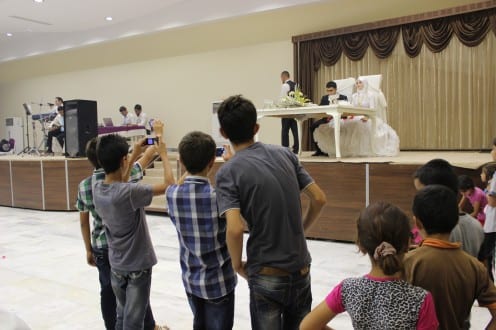
Photo by Elisabetta Costa

Youth taking photos at a wedding in the Turkey fieldsite (Photo by Elisabetta Costa)

In common with many of our other fieldsites, here in south-east Turkey the sentiment is that Facebook is also not as ‘cool’ as it was before among teenagers. However, as Amber explained in her blog post, the increasing use of other social networking sites does not necessarily mean that Facebook is used less than before. This is a trend in common with findings in our fieldsites in other countries, as UK and Brazil, but the reasons of the change are specific to each field-site. Here people aged between 16 and 19 are telling me that Facebook is not so cool anymore because it is used more and more by younger children. According to the data emerging from my in-depth interviews Facebook is used by a large majority of students (age 6-10) in primary schools to play games and chat with school friends. And it’s used by almost every student (age 11-13) in middle schools. Also in the streets of the town it’s very common to see groups of  primary school aged children talking about Facebook, and playing games on Facebook using the smartphone of some older brother or cousin. Adults and parents often describe Facebook as a tool more appropriate to children than adults. And assumptions about Facebook as a media appropriate to play games, to have fun, and not to discuss serious topics or to read news are very common here.

Then, the massive diffusion of Facebook among children is also explained by a positive attitude towards technology in the generation of parents in their twenties and thirties, an attitude that is completely absent among parents in their forties and above. The latter, especially women, are rarely users of social media. Mothers of teenagers are usually ‘digitally illiterate’ housewives with a  low level of education. While parents in their twenties and thirties are more educated, they are users of internet and digital media and they do have a more positive attitude towards new technologies. The significant generational gap between the generation of parents in their twenties and thirties, and those in their forties reflects the big economic boom and  massive growth of public education experienced by Turkey in the last ten and fifteen years. The evidence emerging from my ethnography is confirmed also by some simple quantitative data: according to data from the Turkish Statistical Institute in the province where my fieldsite is situated, the number of women with a university degree in the age of 30-34 is six times higher (1933) than those in the age of 40-44 (337).

It seems that increased wealth and  familiarity with digital technology causes young parents to support the use of social media by their kids. Not only this: the use of smartphone and computers by children play an important role in the affirmation of middle-class status of their family. In this growing consuming economy, the presence of digital technologies in the family plays a very important role within the new hierarchy of taste, in the sense given by Bourdieu (1984).

Thus, in front of the increasing usage of Facebook by children, teen-agers are starting to explore new social media platforms such as WhatsApp and Twitter that are seen as more stylish and trendy, and are used mainly by a narrower group of peer-friends. But Facebook still remains the favourite media to have access to a wider audience, to achieve more popularity, to play games and to communicate with strangers.

Facebook, death and memorialisation

By Daniel Miller, on 13 March 2014

Photo by Rosie O’Beirne (Creative Commons)

Alongside my ethnographic research in The Glades I have now been working for over a year alongside The Hospice of St Francis. When I am in the UK I try to spend a day a week interviewing their patients who are mainly terminal cancer patients. I was delighted to hear this winter that the wonderful hospice director Dr Ros Taylor was awarded an MBE in this year’s honours list. My intention in working for the Hospice was a concern that a project of this size should also have an applied or welfare aspect where we could see the direct benefit. The initial work was simply an attempt to see how the hospice could benefit from new media. The report was published on my website, but once I was working with them I realised that in a way the hospice was the clearest example of what the whole team have endeavoured to demonstrate through this blog.

The hospice movement represents no kind of technical or medical advancement. It is entirely the product of a transformation in collective consciousness. Previously it was assumed that when people knew they were dying this was tantamount to a stage in merely their withdrawal from the world. We talk about ‘investing in our children’ as though there were long-term financial assets. The same logic would condemn the dying as of limited value. The Hospice movement was all about saying that knowing someone is terminal should be seen as an opportunity. It is no longer a medical issue, they will not be cured, instead we can concentrate on their quality of life and make this stage of life, since that is what it is, as enjoyable and fulfilling as it could be. Everything that Dr Taylor says and does demonstrates this, as does my colleague in this research Kimberley McLaughlin a senior manager of the hospice.

On reflection this is perhaps our single most important finding also as anthropologists of social media. People become fixated on the technological advances of new media. What each device can now be capable of – the latest app or smartphone or platform. These certainly feature throughout our work. But the vast majority of our blog posts are not about that. Instead they describe changes in the same collective consciousness: the social uses that people creatively imagine for these media as part of their lives.

The two issues come together in my observations of Facebook in relation to death and memorialisation. One of my early informants was a woman who felt that she wanted to use the experience of terminal cancer to help educate the wider world about her experience. A subject people tend to avoid but need to gain a better understanding of. I last saw her six days before she died and she was quite clear that using Facebook as almost a daily blog had enabled her to do just that. I am hoping (if I obtain the funding) to make a film based on her and other patients who have used Facebook in this manner.

I would be equally positive about the ways people have found to use Facebook in memorialisation and grief. Previously we have tended to use highly formal and religious institutionalised frames for dealing with death. As I argued in my book Tales From Facebook, this was out of synch with changes in our notion of the authenticity of the individual. Where once we took formal posed pictures, now we like to capture images that seem spontaneous, informal and thereby more ‘real’ to us. Similarly we needed a form of memorialisation that contained this element of personalisation and immediacy. People on Facebook can put both serious and jokey memories and do so at a time of their choosing. I find these sites poignant and effective. I don’t find other social media sites, such as Twitter or Instagram, as having the same potential, so I hope we retain this capacity of Facebook.

But the point is that the inventors of Facebook were certainly not thinking about its relationship to death or memorialisation. Rather, as in the case of the invention of the hospice movement, this reflects a change in our collective imagination in what we could potentially do in relation to death and grief. This is why we argue it is anthropology rather than more tech-driven studies of new media that are most suited to understanding what social media actually become. Most of these reports reflect not the technological potential, but the imaginative realisation of social media.

Glamorizing social mobility through market research

By Juliano Andrade Spyer, on 28 February 2014

Photo by Juliano Spyer.

Nike cap, international sports shirt, colorful shades, and softdrinks – all items teens use to display financial progress. Photo by Juliano Spyer.

Fantástico, a popular Sunday TV news programme in Brazil, had two long pieces related to social mobility this past week. One was about teens learning to install braces themselves as they became a fashionable item. The other is about slums and how, in contrast to the common (external) view, residents now feel happy about living there (both links conduct to pages in Portuguese).

The first story is not framed as something related to social mobility (I will suggest the relation further ahead), but simply as another weirdness that became cool among teens and that can have serious consequences to one’s health. The other story is grounded in market research conducted with over two thousand people by Data Popular, a research institute specializing in investigating what has been called Brazil’s “new middle class”.

A distorted view

It is a good thing to see national news pieces such as the one linked above that question the social stigmas related to living in favelas. At the same time, I found the research to be problematic in the sense that instead of engaging with the usually complex and paradoxical social realities, it shows only positive aspects as a way of promoting this new consumer segment.

The data analysis reinterprets the idea of progress, bringing individualization and breaking social bonds. As an informant explains during the report, outside the slum, life is not just unsafe but also boring. Alternatively, in slums families progressed economically but retained the dense sociality and the networks of cooperation that existed before.

A more nuanced view

I have been living in a working class villa for the past 11 months; I wouldn’t call it a slum although it resembles one in many aspects including the aesthetics of the urbanization.

So signs of prosperity do appear all around but this prosperity is strictly combined with a great sense of competition. Part of consuming is only a way of showing off ones financial conditions. So buying a large TV is not necessarily a choice related to the desire to have that item, but also a form of informing the others about one’s economic progress.

Nobody wants to be seen as the lower part of the social latter; it is as if one’s reputation now corresponds to his or her ability to have and display wealth. If a neighbor buys a certain item, the others around may use all means possible to get the same thing, even if that results in spending the money she or he does not have.

The illusions of progress

This sort of competition does not necessarily make people work harder. In some cases, it has the opposite effect as individuals and families spend a lot of energy partying – because expensive loud speakers and the burning smell of barbecues are efficient ways of displaying one’s means.

But this competition brings even more serious consequences. The poorer families are being more violently confronted with their lack of conditions, and it is the youth from those families that show greater propensity to choose drug dealing as a way of acquiring respect and money.

Using braces, then, is yet another symbol of economic improvement as teenagers have become a sort of showcase for the family’s progress. Similarly, not having to work is equal to not having the obligation of helping in the household. But these changes are affecting the structures of families and society.

Junk food, branded clothes, and quick money

Using braces is as much a health problem as, for instance, the desire to consume highly industrialized goods such as chips and sugar drinks. Either one has the means to purchase junk food or it means their family are “struggling”.

Another problem is that most teenagers on my field site seem to look at schools as only a social arena; a sort of extension of their Facebook friend’s list. It is the place to display one’s means through wearing fashionable items. As an education coordinator told me recently, the poorest ones feel almost obliged to wear the most expensive brands.

Studying is not really something they see as being valuable. Having a diploma is maybe necessary, but learning is not clearly perceived as an advantage. Almost all my informants at this age group said they would much rather have a motorcycle – to show off and make quick money – than to have a professional degree.

So, yes, there is something significant happening in Brazil related to social and economic mobility. A large number of those that previously lived outside of the formal economy are now intensely involved in consuming. The problem is using statistics and research methodologies to simply support a claim that ultimately serves as a sales pitch and does not necessarily improve people’s lives.

The ideal of education and social networking sites

By Razvan Nicolescu, on 26 February 2014

Schoolroom - Photo by Gerry Balding (Creative Commons)

Schoolroom – Photo by Gerry Balding (Creative Commons)

I have spend quite a while now looking at the impact of social media on the education system in the Italian fieldsite. This blog post will present a few ideas related to the place of education in the local society and some implications for social media.

People in this area conceive education as being the duty of two major institutions: the family and the public education system. While the family is responsible with the moral aspects of education, the different public education services seem to have more functional roles for the individual and the family. Maybe the most important role is considered to be the capacity of public education system to help people attain the desired jobs and social positions.

In a report on education I wrote for the GSMIS I discussed how this works differently at three levels: at the first level we have the hard nucleus of family, represented in many ways through the distinct couple mother-children. At this level, I suggested that public education could be seen as a commodity even if for different reasons that could range from the need to reify the mother-children unity and assure particular relationships within household for more traditional families to a necessary milestone on the road to acquiring a certain sense of self-autonomy in the more progressist families.

At another level, we have the local community where public education is to a great extent still a matter of family in which the role of the teacher or master is usually considered either in terms of the existing social relations within the community or in relation to a bigger ideal of the family. The third level is represented by the region and the state. It is at this level where people could start to say that things are not really working or the forces that play at this level are so powerful and remote so that you have no means to really change or move something.

Social networking sites have an interesting role here as they seem to articulate a sort of vehicle for people to relate to the bigger social issues. Most people use this mostly to make fun of a status-quo that nobody seems to be able to change. Social activists and people involved in politics could use the power of memes and other content on social media to try to send their messages to the higher level of the state in different ways that could be violent in many ways: from the daily accusations of corruption, derision of the public education system, to the realpolitik practised by some important politicians in close relation to social media. Many supporters of such kind of social media violence claim that the only way to change the systems or ‘mentalities’ is to react in a way that could not be ignored by authorities and should determine some reaction.

I will not detail these issues here, I will just mention a few thoughts on social media use among adult people with high education. One of the main things these people are most interested in on social media is to relate to their ex-colleagues or friends from University. This is true especially as most of the people who followed University studies in North Italy remained to live there at least a few years after finishing their studies and before returning to their hometown. The time spent away from home could typically be anywhere between 6 and 10 years, when they tried mainly to find a workplace or to start a family. The main reason for which the majority of 30-40 years old returned to their hometown is related to the fact that they found at least one of these two ideals difficult – either to attain at all or to preserve.

At the same time, recent data from the Italian Ministry of Public Education show that Italians under 35 years of age are by far the least able to find a job. Therefore, it seems that these people returned home just a few years before having a greater chance to find work. As most of these people lack economic resources within the family, their chances of obtaining a job in their hometown is even lower than in the bigger cities from where they returned. At the same time, most of them are not and do not want to take part in the local network of exchanging favours. As a consequence, a sociologist works as a part-time waiter, an engineer seasonally performs as a singer, and many others just do not look for a job anymore. In this context, for them social media responds primarily to their need to relate to the values they share with their ex-colleagues and friends from elsewhere rather than to the local community.

This is similar to Danny’s suggestion that for adult people the use of social networking sites seems to be related to a certain nostalgia and memorization. In this case, nostalgia is related to the ideal of Italian society rather than that of the local society, to its delights and difficulties, and the personal attempts to overcome these.

To conclude, if education acts in different ways at these levels it seems that individuals find themselves in less difficult situations when they do not cut the links between the levels. If high education could be in contradiction with many of the implications of family and local education, social networking sites allow highly educated adults to live locally and relate to distant values. The local tradition of learning a practical skill through apprenticeship has been really challenged by the insistence of the numerous Italian governments and European Union that state education system should respond to the request of labour market. In this context, social networking sites tend to work not upward towards the job market and the political economy but towards the individual need to live locally, which includes relating to ideals that are often in contrast local ones.

Social media and mass media: the CCTV Chinese New Year’s Gala

By Tom McDonald, on 23 February 2014

Poetic couplets hung on the door of a village house in preparation for Chinese NewYear (Photo: Tom McDonald)

Poetic couplets hung on the door of a village house in preparation for Chinese New Year (Photo: Tom McDonald)

I passed the recent Chinese New Year in my fieldsite in North China with the Wang family in their rented shopfront-cum-home on the small rural town’s commercial street, with Mr Wang, his wife and son, 16 year old Little Wang, who had just finished his term at the high school in the nearby county-town, and was back home for the school holidays.

One of the most interesting elements of the festival is social media’s relationship with the mass media event of the day (and probably the year), which is the CCTV New Year’s Gala programme produced by China Central Television. The programme is basically a variety show. But at the same time it is the most difficult variety show on the planet to get right, because its 700 million–1000 million viewers (53-76% of the country’s population) are comprised of every generation of Chinese families, who watch the show together as they eat they ‘reunion meal’. As such, the programme makers have to attempt to appeal to all these drastically different audiences. No mean feat when we are talking about elderly people who grew up in the Republican-era, witnessed the Sino-Japanese war, and the founding of the People’s Republic; or middle aged people who were children during the hardships of the cultural revolution, and then saw the enormous transformations bought by the reform-and-opening period; or China’s youth, those born in the 80’s, 90s, and 00’s, often single children, many of whom have grown up with a material aspirations on par with western society. So you end up with a variety show that is a bizarre and wizardly mix of revolutionary songs, trapeze artists, dancers performing to happy hardcore music, magicians, ‘hip’ youth TV hosts, recognised family performers and national pop stars. The show traverses the utterly naff and absolutely incredible. One cannot help but feel that the show tries so hard to appeal to everybody that it is perhaps doomed to failure.

At the Wang’s house we watched and chatted as the show went on, slowly devouring the dinner while Mr Wang and I knocked back baijiu, a fiery Chinese liquour. I soon noticed that Little Wang’s attention had waned, however, and after eating a little food, he left us and moved into the shop area of their house, where the computer is located. Soon after I followed him into the room. I noticed that he was alternating between browsing QZone, and chatting on the QQ Instant Messaging client. He was using the QQ IM client to send New Year’s ‘blessings’ (zhufu) to his classmates, while browsing his QZone. Many of the status updates from his friends were related to the television show. For example, one of the features of the show was a young girl dressed in a flowing white dress who was introduced by the presenters at the start of the programme. The presenters explained that she would spin around on the spot up until midnight (4 hours) to symbolise the changing seasons of the year. Indeed she managed to do this quite successfully. One of Little Wang’s friends had forwarded a meme of a photo of the girl asking ‘spinning girl, have you eaten Xuanmai chewing gum?’. Xuanmai chewing gum recently ran an advertising campaign with the tagline ‘Xuanmai chewing gum, unable to stop’ (xuanmai kouxiangtang, tingbu xialai). The advert featured a young man singing, with powerful sound waves coming out of his mouth, and he was challenged to see how long he could sustain the singing. After eating the chewing gum it seemed to give the man somewhat cosmic powers to continue with his crooning. What is interesting about this case is we can kind of see the spillover from a mass media event onto social media, so while people do not seem to be happy posting about news or other big events, the Spring Festival Evening Party seems to be prime fodder for discussion of QQ, but especially among young people.

There is precedent for this, as traditionally the show is something people often talk about and critique for days after, even offline. But in addition to young people talking about the New Year’s Gala online, I got a feeling during the evening that young people were having a kind of separate New Year’s Eve party on QQ with all their friends. Chinese New Year is a key moment of reunion for Chinese families, and I get a feeling that even this moment of togetherness is being affected by social media as young people are living a large part of their spring festival online with their classmates.

Does this mean that the ‘traditional’ Chinese New Year is at risk? I want to get away from the idea that social media’s presence in the spring festival necessarily has to be good or bad, or even assume that social media is ‘transforming’ the Chinese New Year (anymore than the Chinese New Year is transforming social media). It is not that Little Wang’s practices are heralding the decay of the Chinese New Year, but rather I think it is signalling the importance of classmates being part of that reunion. It seems to be an acknowledgement that family ties are not the only thing that matters, and the deliberate decision for classmates to include each other in their spring festival reunion meals suggests a willingness to apply family ideals to educational peers.

The continuum of visibility

By Jolynna Sinanan, on 17 February 2014

Photo by Jolynna Sinanan

Photo by Jolynna Sinanan

If Facebook is a visual platform-one where people can show aspects of themselves through words in posts, or what was status updates or comments and in photos that they have taken themselves or photos taken of them in posts, uploads and albums, or share something made by someone else in memes, clips, audio and video-then we also have to think about how people engage with each other through visibility.

Since returning to field work in Trinidad last week, I have been continuing working with Dr Gabrielle Hosein at the University of the West Indies on spectacular politics, work which started when I documented the hunger strike of Dr Wayne Kublalsingh last year.

Now, we are thinking about how people engage with each other though the Facebook tools: Like, Comment, Post and Share. What can these things say about how social life plays out on Facebook? Trinidad is well versed and have a language for degrees of visibility. The most extreme, the spectacle, is played out for four days of the year, culminating on Carnival Tuesday. Playing Mas is about being the spectacle and being the show, ‘playing yourself’, externalising a true self that can’t be enacted the rest of the year, on the festival of disruption and inversion of the usual social order. The literature on Carnival speaks to how people come to exist through visibility, being seen and being in stage, whether or not one is being seen as themselves, or through a mask (Lovelace, 1979, Birth, 2008, Mason, 1998, Franco, 1998).

As Carnival has specific understandings within Trinidadian culture, the cultural understanding of the usage of Facebook is less about Facebook, than an enactment of a cultural world that is Trinidad (Miller, 2011, Miller and Sinanan, 2014). So what can ‘likes’, ‘comments’, ‘posts’ and ‘shares’ tell us about the degrees of visibility? The first very important factor to note is the research that is informing this pre-theorising is based in a small town. El Mirador has all the ideals and frustrations of small town life. It’s a town that is considered to hold ‘traditional’ family and community values and most people know each other or at least know of each other and each other’s families. El Mirador can be too social, where everybody knows everybody’s business.

We’re starting to ask people when and how they use ‘likes’, ‘comments’, ‘posts’ and ‘shares’ and we are finding there is a distinct correlation to ‘offline’ social life. ‘Like’ represents the benign sociality of the local idiom of ‘liming’, hanging around, gentle acknowledgement and visible presence, and the other end of the spectrum is ‘post’, which is really putting yourself out there, on show. The majority of posts are sharing of moods, what people are doing, where they have been, holidays, family events, parties etc, there is very little political comment or commentary. When asked when they would not engage with something someone has posted, that is when they ‘do nothing’, the majority respond around ‘TMI: too much information’- when people are too visible. ‘Sharing’ is directed to specific groups or individuals, there is less sharing on an individual’s wall, but more general sharing that would resonate with certain individuals or groups. ‘Commenting’ is more personal, it is one degree down from posting, people comment when they feel strongly about something: ‘if it affect me’.

If usage of Facebook is embedded in existing social relations and spaces, it is worth unpacking the nuances of what ‘posts’, ‘comments’, ‘shares’ and ‘likes’ connote. The hazards of becoming too visible, even through online engagement on Facebook invites controversy and invites attacks on the self, whereas gentle acknowledgement, hanging around and being present is, in this context, more socially acceptable.


References:

Birth, Kevin, 2008, Bacchanalian Sentiments: Musical Experiences and Political Counterpoints in Trinidad, Durham and London: Duke University Press

Franco, Pamela, 1998, ‘Dressing Up and Looking Good: Afro-Creole Female Maskers in Trinidad Carnival’, African Arts, Vol. 31, Iss. 2, pp. 62-67

Lovelace, Earl (1979), The Dragon Can’t Dance, London: Longman

Mason, Peter, 1998, Bacchanal! The Carnival Culture of Trinidad, London: Latin America Bureau (Research and Action) Ltd

Miller, Daniel (2011) Tales From Facebook, Cambridge: Polity

Miller, Daniel and Sinanan, Jolynna (2014) Webcam, Cambridge: Polity


Public and private: space and media

By ucsanha, on 10 February 2014

Photo by Nell Haynes

Photo by Nell Haynes

When Daniel Miller came to visit my fieldsite in Northern Chile a few weeks ago, I took him on a walking tour of the city. He had just arrived from his own fieldsite in Trinidad, and as we walked he kept remarked that two places are quite different. They share certain aspects: warmth, nearby beaches, revealing clothing, and gated homes. Yet, he told me that compared to the razor wire or broken glass-topped fences in Trinidad, these just didn’t seem as intimidating. Similarly, we discussed the ubiquity of car alarms as the continuously sounded that evening as we sat in my apartment. “Are they really protecting anything if one goes off every three minutes?” I asked.

A few days after Danny left, I was having coffee with a Catholic priest in a nearby neighborhood. Telling me about his perceptions of the town after living here 6 years, he lamented the lack of “confianza” or trust between neighbors. “Neighbors like each other, but there’s not much trust between them.” He suggested this is a product of the fact that the city is new. It has only been incorporated for a decade. None of the adults who live here grew up in these neighborhoods. The fences are high but there is no neighborhood watch group here.

In a lot of ways this explains the ways I have been warned about safety here. People just don’t seem to trust what might happen in public space. The fences around houses may in fact be a way of delimiting the private from the public in a way that leaves no questions as to where the boundaries lie. And by claiming the space as private rather than public, perhaps that makes it a little safer.

One thing I noticed right away upon arriving here is that people rarely use their phones in public. Not in the plaza, on the bus, or while waiting in line at the supermarket. When Danny and I visited the local market near the municipal gymnasium, we asked a group of vendors about this. One woman, who has a clothing stall in the market told us people never have their phones out in public because they are afraid someone will come by and swipe it. The most recent statistics I could find were from 2008, when 1,236 non-violent robberies (the type that might result in having their cell phone stolen from their hands as they sit in the plaza, or their pocket in a busy market). This is not particularly high, roughly matching national statistics, yet I am given pause that perhaps many such thefts go unreported. About a year ago, online security company ESET reported almost 60% of Latin American residents have had at least one cellular phone stolen. The Catholic priest also told me that the most recent statistics he has seen suggests that about 40% of Alto Hospicio residents have had some personal effect stolen in the last year. “Probably because their billfold or phone is sticking out of their pocket in a public place.” While statistics like “40%” and “1,236 reported” might not necessarily reveal much, I do sense that cellular phone theft is quite common and the vendedora is correct: people know this and protect themselves by not using their phone in public.

So, I wonder then, if there is a certain “privateness” to the cell phone. And perhaps to the internet in general. Though one may interact with their friends though social media, that is generally something done while in private space. Even the local call center/internet café provides patrons with rather large cubicles while they use the computers. Though you might be airing your dirty laundry on facebook for all of your friends, the person physically next to you wouldn’t (or shouldn’t) know.

So these walls, these fences, these car alarms, and these cubicles provide a sense of delineation. A car alarm may be tripped just as easily by someone doing a bad parking job or a ball thrown amiss as by someone trying to steal it. Fences can be jumped. Cubicles can be peeked around (at least one young man quickly turned off his pornographic video as Danny and I walked by in the internet center). But that is not the point. The point, perhaps, is to say this is mine, and this is private. If you touch this, walk past it, or look at my screen, you are transgressing a boundary. So however social, social media might be, for these Northern Chilean users, it ideally retains a sense of the private.

Facebook and the vulnerability of the self

By Elisabetta Costa, on 7 February 2014

Photo by Elisabetta Costa

Photo by Elisabetta Costa

A social panic surrounding Facebook has arisen in my field-site in south-east Turkey: nasty cheaters use hacker applications to steal Facebook user names and passwords in order to damage people’s reputation!

The practice of stealing Facebook passwords to post shameful images and video, and swear words on other people’s walls seems to be quite common among young adults. Apparently the town is full of hacking applications that allows spiteful people to enter other Facebook pages and make unpleasant jokes. I met several people whose Facebook profile has been stolen and used to post nasty surprises that ruin their honour. And many young people are really afraid that such a thing can happen to them as well: “Facebook can be very dangerous” I’ve been told several times. I don’t know if hacking applications are really effective here in Dry Rock Town. But surely people continuously share common computers and smartphones, and probably forget to log out from their accounts, giving the opportunity to strangers and perfidious friends to commit these offences.

One of the most prevalent fears people have is that of losing control of their public image that can bring public disapproval. The public image on the Facebook wall can be seen as an extension of the person, but this in turn makes the person more vulnerable. Photos, images, thoughts, and private talks are all significant parts of the self that are “out there” and can be easily violated by others. A simple joke can indelibly violate the self: everybody in the large network of friends and acquaintances can potentially become a threat to the self by entering into its boundaries after having stolen a password. In the age of Facebook the borders of the self are extended, but at the same time more fragile and vulnerable. And when these borders of the self are vulnerable, honour can be shattered.

This moral panic surrounding Facebook reflects the anxiety related to the vulnerability of the self that Facebook has made more apparent. I really believe that traditional codes of honour and shame are given new life in the age of social media.

Photography in the age of Snapchat

By Daniel Miller, on 2 February 2014

Photo by Island Photography

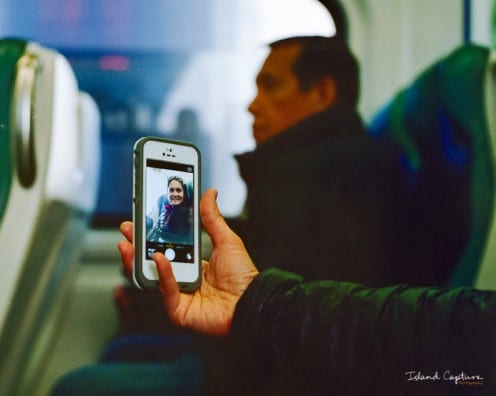
Photo by Island Capture Photography (Creative Commons)

I want to suggest that conventionally when we consider the role of the photograph in society, we see this as a kind of three stage movement. First there is the practice of photography itself. We have assumed that this was merely the requisite technology, largely the handmaiden to the desire to have a photograph. Then there is the object, the photograph, and that was assumed in turn to be the handmaiden to the ultimate aim, which was to record something. The photograph was there to serve as an object of memory, a technical facility to retain an image beyond the relatively poor ability of the brain to accurately retain images of the past. It could be as an art, but it was more often a wedding or holiday.

Today most photographs are taken for their use in social media. Figures quoted online vary but it is suggested around 350 million photos are shared per day on Facebook, 55 million on Instagram, 400 million on WhatsApp and 450 million on Snapchat.

I want to suggest that as a result, we need to completely turn on its head our conventional understanding of photography. Memory has been reduced merely to the legitimation of having a photograph, but the photograph itself has lost its position as the aim of the exercise since mostly the photo is merely the excuse for what now takes centre stage which is the act of taking a photograph. Photography as an activity has moved from background to foreground. Fortunately we can see this sequence more clearly because it corresponds to the development of three social media sites in sequence. The movement from Facebook to Instagram to Snapchat/WhatsApp.

Photography on Facebook
Facebook now appears as the convenient bridge between more traditional photography and the more recent social media. Facebook places considerable importance on the photo album and the collecting of images. Everything shared whether tagged or not is also stored. One of the reasons Facebook’s long term future is likely to be older people, is that it is very effective in this role, certainly compared to conventional photograph album and the analogue photo. As Xinyuan recently noted you can turn to QQ to see yourself as you looked ten years ago when you first joined QQ, soon this will be common on Facebook.

Photography on Instagram
Photography on Instagram has a much more transient feel than Facebook. In working with young people I find that Instagram gives them a kind of creative project. All day they can think about what would make a good photograph? (similarly, what would make a clever tweet?). If they don’t see anything else, they can always take a Selfie. This gives purpose to the day and becomes a bulwark against the constant concern with being bored. As such, where once we framed the photograph, now we use photography to frame experience. Here we see the reversed sequence. Storing the photo, as in Facebook, is exposed as mere excuse for having a photo, which in turn is mere excuse for the real purpose, which is the project enacted by the act of photography itself.

Photography on Snapchat/WhatsApp
It was Snapchat that bludgeoned to death our conventional view of photography. If the photo can only last for a maximum of ten seconds, then we can’t even pretend it’s about memory or even about the image. The point about Instagram is now made explicit. It can only be the act of taking that matters. Except that on Snapchat/WhatsApp we realise that this is not just individual experience it is a social act, we take pictures in order to share, and to see the response to our sharing. We have to take the word ‘Snapchat’ literally – the photograph is just a form of chat, saying Hi, a more interesting emoticon. WhatsApp is a bit less violent a repudiation of the photograph, but still highly transient. Clearly we may work with all three of these social media and all three of these relationships to photography.

As I will argue in a more extended paper, the mistake is to think this makes photography more superficial, actually I will argue this makes photography more profound.

The Future of Facebook: What will we learn from the study of Chinese social media?

By Xin Yuan Wang, on 29 January 2014

Image courtesy of emreterok, Creative Commons

Image courtesy of emreterok, Creative Commons

China is a dreadful desert to Western social media giants such as Facebook and Twitter, however it is a tropical rainforest to many local species. It is curious to note that even though none of the participants in my field site use, or have even heard of Facebook or Twitter, the way they use Chinese social media such as QQ and WeChat provides an interesting parallel to the way UK teenagers in Danny’s study differentiate a range of social media in their daily life, even though as social media QQ, or WeChat are both significantly different from Facebook.

Among certain groups of Chinese people, like teenagers, QQ seems to be in stasis. For teens with relatively high education and social status that are more willing to try something new and urban middle-class, QQ is not cool at all, just as what Danny reported about Facebook in his previous blog article. It is not rare to find people who have used QQ for more than 10 years in China given QQ started to become popular almost 15 years ago. In fact, QQ could be considered Facebook’s predecessor and to some extent through the study of QQ’s development in China we may ‘foretell’ what will happen in ‘Facebook land’ in the future. Many of my participants have told me that around 10 years ago, QQ represented the coolest thing about urban life because rural migrants who came back to their village during Chinese New Year showed off that they had a QQ account in front of their stunned fellow villagers. After 10 years, when almost half of the Chinese population have QQ accounts, QQ numbers rather than mobile phone numbers are exchanged most frequently as  permanent contact details (it is reported that people change their mobile phone much more frequently than their QQ account). QQ has lost its association with trendy or cool things, especially for urban Chinese people who want to escape from the ‘hustle and bustle’ QQ land which somehow has been associated with rural Chinese. On one hand, some people report that they use QQ less and less in recent years since Wechat’s audio message is more fun and convenient, and WeChat seems to be more in line with urban life. Some report that their closest friends and frequent contacts all moved to WeChat. On the other hand, people admitted that they would always come back to QQ when they wanted to catch up with long-lost relationships, such as old classmates or previous colleagues. As one informant put it, those contacts “didn’t move to other social media,” but remain in the “old home” of QQ. Those contacts may also have started using WeChat or other social media, but from my participants’ perspectives, they ‘belong’ to QQ. These friends may not have updated their social media details because of sparse communication, or are regarded a part of ‘past old days’ in one’s mind and QQ is the PLACE to go.

That is to say, people didn’t quit QQ because of their engagement with other social media. Rather, QQ survives time and thus obtains a ‘senior’ status, something like an old friend who has witnessed one’s ups-and-downs in life even though they may only meet once a year. QQ may also be regarded like one’s birthplace, which my rural migrant informants only visit during Chinese new year but always remains as one of the most import places in their lives. People don’t dump QQ, but keep it, and use it in a different way.

So the quick conclusion is QQ seems to be in stasis among certain groups of people not because of ‘being QQ’, but because of the law of ‘nature’ – here let me call this the nature of social media. And it also makes sense if one replaces “QQ” by “Facebook” in this argument.

And what is the nature of social media? You may need a bit more patience to read through the following academic ‘block’ to get a clearer picture:

First, stuff becomes more than the material after being used by people. For example the pen from your passed-away grandpa is to you by no means equal to any other pen which was produced on the same factory assembly line. If we have to use jargon, we call the process ‘objectification’ where an object consumed by people is domesticated and becomes part of the person and their relationship to others. That is where material culture starts, and the context in which we study digital technology. Digital technology, as a form of material, is no more sophisticated or mediated than any other object in terms of the relationship between material and human beings. Having said that, however, it is worthwhile to highlight the uniqueness of social media in the way that social media show the relationship between the digital and social relationship in a more visible and obvious way. That is to say, without people’s engagement and usage, social media is next to nothing. In a way, ‘Facebook’ and ‘QQ’ are only half finished goods before being used by people. Social media is produced through the consumption, as the terminology ‘prosumption’ suggested. Thus, it is safe to say social media is highly entangled with the ‘self’ and personal relationship to the degree that it somehow grows with the person and has its own life (Gell’s theory of ‘agency’ also shed light on this argument).

Furthermore, the concept of ‘polymedia’ describes another feature of social media. Each social media platform finds its niche in specific personal relationships and people take moral responsibility for their choice of different social media. In the case of ‘Facebook’, as Danny suggested, at the moment when people got friend request from their mother, the social medium is transformed into a family-orientated place rather than the place where people share secrets with their close friends. Also the concept ‘remediation’  helps to illustrate the way how certain social media (like QQ and Facebook) become ‘old’ because of the development of other social media. Dialectically, there is no so-called old or new social media without the comparison with others, that is to say people tend to re-define certain social media in the context of polymedia.

Even though my research is still unfinished, let me ‘jump to the conclusion’ and put my incomplete version of ‘the nature of social media’ here: First, social media as a social agent grow with the person and own their own lives. Second, social media were applied and valued by people in a context of polymedia.

Having discussed the nature of social media, then, let’s go back to my argument from the beginning – QQ seems to be in stasis among certain group of people not because of ‘being QQ’, but because of the law of ‘nature’, and so does Facebook. It is important to not treat social media as functional technology like we would computers. In terms of technology, new social media are not more advanced than pre-existing ones. It makes sense to say that today’s computers have taken the place of the early bulky computer, whereas we can’t say that a certain social medium is dead completely because its users turn to new ones and use others more actively. The situation in practice is like the way people treat friendship and the attitude toward one’s birthplace. From time to time, my participants in this Chinese town used “old friend” or “lao jia” (hometown) to describe their QQ profiles. For some of them, the usage of WeChat is more frequent and active than the usage of QQ. They report and I have observed that WeChat is more for recent contacts one meets in face-to-face situations, and generally speaking closer friends in a smaller circle. QQ on the other hand is used to keep up with all kinds of friends, acquaintances, and communities (QQ offers a group function, such as ‘class group’  used in one middle school) that one has accumulated over a relatively long term. In some cases QQ has become some people’s digital legacy where they keep the ‘silly self’ of 10 years ago. As one of my informants said she won’t use QQ to communicate with her new friends anymore since “on QQ you will encounter a little girl of 10 years ago”, however it is always good to view that ‘self’ in the past as it remains alive on QQ. QQ has become the PLACE, the legacy. Each generation, each human being owns their own history, and in the digital age, social media have become the place people store their history, and where old friends and memory dwell. I have witnessed it already in the usage of QQ among Chinese people and I don’t see any reason why Facebook will not follow suit.

Finally, the findings in China, with the absence of Facebook, actually reinforced our essential argument that the study of digital anthropology and this GSMIS project go beyond specific usage of a certain social medium. Social media usage is the point of entrance which allows our digital anthropologists to look into, understand and interpret the social relationship and the relationship between people and technology in different cultures and societies in the digital age.