 Close
Close


Funding for collaborative research: Higher Education in Africa
By Sophie Vinter, on 16 March 2016
UCL researchers collaborating with partners in South Africa can apply for new funding to support their work.
The Economic and Social Research Council (ESRC) and the National Research Foundation (NRF) are inviting collaborative proposals that contribute to the economic development and welfare of both South Africa or wider Africa more broadly.
Proposals should offer additional value to existing programmes of education research, addressing the following themes:
- Organisation of higher education systems, higher education institutions (HEIs) and alternative providers
- Equity in higher education access and participation
- Curriculum, pedagogy and modes and levels of provision
- Higher education for the public good
- Higher education and the labour market.
Between four and six projects will be funded through the scheme, to which the ESRC has allocated up to £2.5 million and NRF has allocated RAND 10 million.
Each joint proposal may request £415,000 – £630,000 (at 100% Full Economic Costing) from the ESRC and R1.67m to R2.5m from NRF over 20 months in duration. Each project will require both a UK and a South African principal investigator.
For further information visit the ESRC website.
The deadline for proposals is 3 May 2016.
Building the global engagement network
By Sophie Vinter, on 4 March 2016
 The newly formed Global Engagement Office (GEO) and wider networks are already connecting stakeholders from across the university to help tell UCL’s global story better.
From an initial seven members of GEO staff in November, out of a total 18 posts, we now only have two more posts to fill. The team (some of whom are pictured here) provides advice, support and resources to help develop overseas partnerships, in line with the Global Engagement Strategy (GES).
Pro-Vice-Provost (International)
Dr Karen Edge and Professor Gudrun Moore have joined the GEO as Pro-Vice-Provost (International) – job sharing a 0.8 (FTE) post. Together they bring a deep knowledge of global academia and higher education.
Working with our network of Pro-Vice-Provosts (Regional) and Vice-Deans (International), Karen and Gudrun will lead data gathering, analysis and knowledge sharing activities to profile and celebrate global engagement across the whole of UCL – from undergraduate student to Emeritus Professor. They will work with academic and professional services colleagues to amplify the influence of global engagement on our research, teaching and consultancy activities both globally and locally.
Engagement through our regional networks
In the autumn we re-launched our regional networks, increasing the number from five to seven (North America, Latin America, Europe, Middle East and Africa, South Asia, South East Asia and East Asia). Our newly appointed regional Pro-Vice-Provosts are leading stakeholder and outreach engagement for their regions – find out more about them here.
Our 11 Faculties each nominated a Vice-Dean (International) to act as focal points for implementing the GES in line with their own Faculty priorities and help showcase the wide range of collaborations across the university. View the full list here.
To find out more about the GEO team, wider networks and upcoming regional network meetings, please visit the UCL Global website or contact us.
Shaping how society tackles Climate Change
By Sophie Vinter, on 23 February 2016
 A UCL professor held the floor in front of more than 100 international thought leaders, including Nobel Prize winners, during a major scientific congress in Chile.
Chris Rapley, Professor of Climate Science at the Department of Earth Sciences, was among expert influencers presenting to delegates and the public at the Congreso del Futuro in Santiago in January.
The unique congress is one of the biggest scientific and technological events in Latin America, helping to shape progress of how societies adjust to global challenges.
UCL’s representation builds on strong developing partnerships with Chile, one of our priority countries for institutional engagement in the region.
Professor Rapley delivered five presentations over the course of the event, with topics covering the communication of climate change and society’s ability to adapt to climate-related impacts ahead.
His talks were streamed live and covered widely in the media.
Developing a public dialogue
The Chilean constitution is being rewritten and Professor Rapley has agreed to work with Chilean environmental lawyers to develop public dialogue aimed at its including specific reference to climate change and sustainability. Professor Joanne Scott from the UCL Laws faculty has agreed to be involved with the participation of some Chilean students.
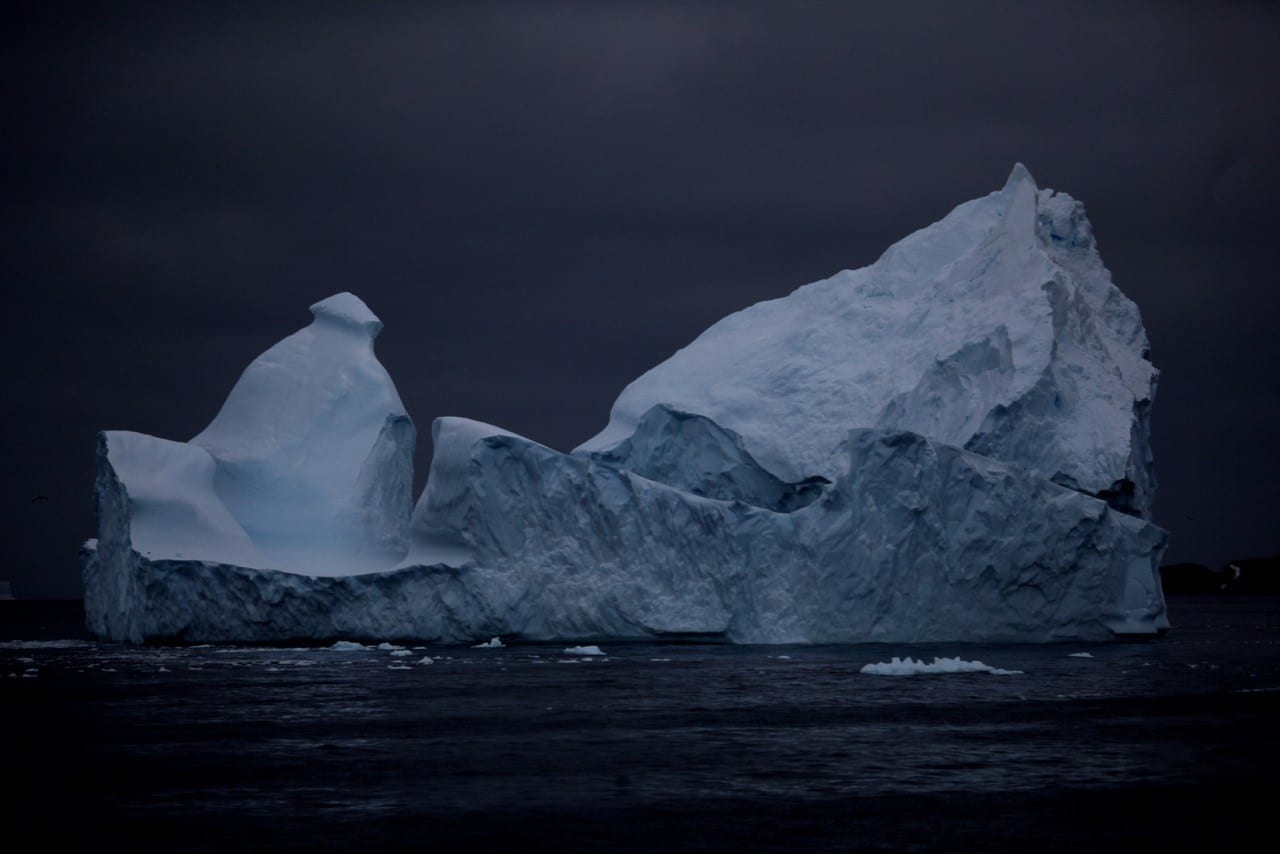 The vast landscapes of the Antarctic and Torres del Paine National Park provided the backdrop to thought-provoking discussion ahead of the congress, which was the brainchild of Chilean Physician and Politician, Senator Guido Girardi.
Professor Rapley said: “On the one hand the economy in Chile has soared compared with its neighbours, but on the other it is suffering the ills of the free market such as extremes of inequity, weak social functions in health and education, and environmental damage. Many Chileans are saying ‘we need to try something else.’ The idea of the congress is to bring together world-leading thinkers to address these issues.
“It was certainly one of the most intellectually stimulating and interesting events that I can recall being part of. The knowledge, insights and experience represented within the body of participants were truly stellar. The trip to the Antarctic and to Torres del Paine was an extraordinary ‘bonding’ opportunity, as well as being a logistical feat of brilliance, and a stunning visual experience.
“As a result of my presentations I have established numerous strong contacts and was asked by the Senator to continue to help him with his mission in the future.”

Strengthening collaborations
UCL enjoys a broad range of collaborations with Chilean institutions, ranging from mining and disaster management to crime science and beyond.
Last year the university hosted visits from Chile’s Minister for Finance and its Minister for Mining.
During a reciprocal visit in December 2015, UCL academics engaged with a number of leading Chilean universities and the Mining Ministry, leading to deeper understanding and broadening of their collaborations.
- Interested in finding out more about UCL’s work in Chile and around the world? Try our interactive map
- Read the latest news from UCL’s Environment Domain
- Visit the Congreso del Futuro website
- Through the Global Engagement Strategy, UCL can support academics such as Professor Rapley in their overseas collaborations.
UCL Research Catalyst Award Winners – 2015/16
By Sophie Vinter, on 23 February 2016
A new round of Santander Universities Research Catalyst Awards launched in November 2015, with the aim of fostering new research collaborations between UCL and universities in Argentina, Brazil, Chile, Colombia and Mexico.
Colleagues from across UCL applied for funding, with the winners shown below.
The Catalyst Award winners will undertake their visits over the coming academic year, in order to develop collaborative activities with their chosen partners.
Congratulations to all of this year’s winners.
| UCL Award Winner | UCL Department | Partner Institution |
| Arroyo-Kalin, Manuel | Institute of Archaeology | Universidad de Los Andes; Universidad Nacional de Colombia |
| Boano, Camillo | Development Planning Unit | Pontificia Universidad Catolica de Chile |
| Edwards, Stephen | Hazard Centre | Pontificia Universidad Catolica de Chile |
| Hamilton, Ian | Energy Institute | Universidad Diego Portales |
| Kalaskar, Deepak | Division of Surgery and Interventional Science | Universidad Industrial de Santander |
| Mookerjee, Raj | Institute for Liver and Digestive Health | Universidade Federal de Pernambuco |
| Phelps, Nicholas | School of Planning | Universidad Catolica del Norte |
| Ricardo, Silva | Statistical Science | Universidade Federal do Ceara |
| Whitmore, David | Cell and Developmental Biology | Universidad Nacional Autonoma de Mexico |
| Zaidi, Zehra | Institute of Risk and Disaster Management | Universidad Nacional de Colombia |
| Zuluaga, Maria | Medical Physics and Bioengineering | Universidad Nacional de Colombia |
UCL academics supporting developing countries to tackle corruption
By Sophie Vinter, on 19 February 2016
UCL academics helping developing countries to combat corruption have secured British Academy funding to support their research.
Professor Alena Ledeneva (School of Slavonic and East European Studies) and Dr Christian Schuster (Department of Political Science) are part of teams that recently secured grants from the Academy’s £4 million global anti-corruption research scheme.
Run in partnership with the Department for International Development (DFID), the scheme funds projects that will identify new initiatives that can help developing countries tackle corruption and the negative impact it has on millions of people’s lives.
Professor Ledeneva is working with academics at the Basel Institute on Governance (Switzerland) and SOAS on a project proposing to emphasise the role that informality plays in fuelling corruption and stifling anti-corruption policies in East Africa.
Drawing on a global network of scholars, Dr Schuster is co-investigator on a project researching civil service reform and anti-corruption in developing countries. The initiative will obtain tools and evidence from eight countries across Africa, Asia, Latin America and Eastern Europe, investigating the impact of civil service practices in key areas such as recruitment, dismissal and integrity management.
Their research will provide new evidence for use by DFID and its partners.
Lord Stern, President of the British Academy said: “Endemic corruption is an enormous international challenge that blights far too many countries and research such as this is one of the most worthwhile ways that the UK can offer practical support.”
- Read the latest UCL Research news here
- Find out more about The School of Slavonic and East European Studies here
- Read more news from the Department of Political Science
Scholarship opportunity in China – apply by 19 February
By Sophie Vinter, on 4 February 2016
An excellent funding opportunity has arisen for UCL students with an interest in China. The Chinese Government Scholarship scheme covers tuition fees, medical insurance, accommodation and a living allowance for successful applicants to study Chinese language for a period of up to one academic year.
Students must satisfy the following criteria in order to be eligible to apply:
- Be a national of a country other than China
- Be under age 45 and with at least two years of Undergraduate level study
UCL will be shortlisting nominations for this scholarship scheme.
How to apply
In order to submit an application for consideration by the UCL panel, please send the following documents by email to Oliver Tomlinson (o.tomlinson@ucl.ac.uk), Partnership Officer, as soon as possible and by 19 February at the latest:
- CV
- Academic transcripts (find more information on how to obtain UCL transcripts here)
- Two recommendation letters from UCL academics
- Study Plan (minimum of 500 words)
For more information about the Chinese Government Scholarship programme, visit their website.
UCL welcomes FCO’s emerging young leaders
By Sophie Vinter, on 29 January 2016
 A group of talented young leaders from around the world visited UCL to find out more about our work and discuss the challenges facing global higher education.
The rising stars took part in a roundtable discussion with Vice-Provost (International) Dame Nicola Brewer and Russell Group Director of Policy, Dr Tim Bradshaw, as part of a visit arranged by the Foreign & Commonwealth Office (FCO)’s International Leaders Programme.
During the visit the delegates, who were visiting from countries including Brazil, Ukraine and Uzbekistan, learned more about UCL’s research impact around the world.
They enjoyed a whistlestop tour of our London campus, including the Auto-icon of Jeremy Bentham, the main library and the Institute of Making.
The FCO programme identifies potential global leaders of the future and brings them to the UK for a week’s programme of high–level meetings, discussions, visits and briefings. It includes engagement with the UK government, media, business, education and civil society.
It aims to highlight the UK’s innovation, economic vibrancy, tradition, global outlook, diversity and values as well as the challenges it faces, ultimately promoting lasting partnerships with a new generation of global decision makers.
An Erasmus+ update
By Kerry Milton, on 18 November 2015
Erasmus+ is the European Union programme for education, training, youth and sport. It runs for seven years, from 2014 to 2020, with organisations invited to apply for funding each year to undertake creative and worthwhile activities.
Over 360 UCL students lived and studied abroad as part of Erasmus+, with that number set to grow.
Lucy Gaunt, UCL’s Erasmus Institutional Coordinator explains, “Student mobility is shown to improve overall graduate prospects, as well as enriching an individual’s sense of independence, confidence and resilience. By making these changes, we ensure that we are able to continue offering these opportunities to students for mobility in Europe and beyond, enhancing the student experience and building strong collaborations with our partners overseas.”
As a result, how Erasmus+ is managed across UCL has recently been changed to ensure it continues to run smoothly and offer the best mobility experiences for students and staff.
Institutional co-ordination
Erasmus Institutional Coordinator (EIC)
Lucy Gaunt
l.gaunt@ucl.ac.uk
Lucy is the first point of contact for academic departments with operational queries relating to an existing Erasmus+ partnership.
Based within Student and Registry Services (SRS), Lucy has oversight of the programme as a whole, and is the liaison point between UCL and the UK National Agency (the British Council, in partnership with Ecorys UK).
Student mobility
Study Abroad Team
study-abroad@ucl.ac.uk
The Study Abroad team has oversight of all student mobility opportunities.
They are the first point for contact for outbound students with regards to grant payments and ensure all incoming students adhere to the Erasmus+ programme and standard expected by partner institutions.
Staff mobility
Organisational Development
Vathani Mariampillai
v.mariampillai@ucl.ac.uk
Organisational Development manages the promotion, coordination and selection of participants for staff mobility opportunities.
They organise outbound staff travel grants, advise on Erasmus+ regulations and can assist departments with arrangements for inbound participants.
Partnership management
Global Engagement Office
Mike Winter (interim contact)
erasmus@ucl.ac.uk
The Global Engagement Office (GEO), formerly the Office for International Affairs is the first point of contact for advice and guidance in institutional strategy and policy relating to EU mobility.
For more information on Erasmus+, visit the Study Abroad website
UCL and Chile: Visit by the Chilean Minister for Finance and the Minister for Mining
By Kerry Milton, on 18 November 2015
UCL’s relationship with Chile continues to develop and deepen following a number of high level visits to UCL over recent months.
Chilean Minister for Finance and Chile Day 2015
The Chilean Minister for Finance, Rodrigo Valdés Pulido was welcomed to UCL by Professor Michael Arthur, President and Provost on 7 September 2015. Minister Valdés Pulido’s visit began with a private meeting with Professor Arthur and Dame Nicola Brewer, Vice-Provost (International) to discuss UCL’s strengthening relationship with Chile and the challenges Chile’s economy is currently facing. The Minister was joined by H.E. Fiona Clouder, British Ambassador to Chile and H.E. Rolando Drago Rodríguez, Chilean Ambassador to Great Britain.
The private meeting was followed by a public lecture given by the Minister and introduced by Professor Arthur. The lecture, titled ‘Chilean Economy: challenges ahead’, had an audience of over 150 people, formed of UCL staff and students as well as senior colleagues from the Chilean and British finance sectors attending Chile Day 2015 events across London.
The visit was a fantastic opportunity for the Minister to also engage with Chilean students studying at UCL and academic colleagues with an interest in developing collaborations to support Chile’s economic development.
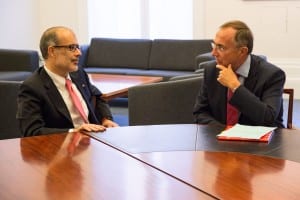

Chilean Minister for Mining
The Minister for Mining, Government of Chile was welcomed to UCL on 13 October 2015 by Dame Nicola Brewer, Vice-Provost (International). The Minister visited UCL to discuss the challenges facing Chile in relation to the Mining sector and to explore ways in which UCL could support development of solutions to these challenges.
In addition to meeting with Dame Nicola, the Minister held a roundtable discussion with UCL academics and students from Faculty of Engineering Sciences, Bartlett Faculty of the Built Environment and Faculty of Mathematics and Physical Sciences. During the discussion the Minister outlined specific issues facing the mining sector broadly related to energy and water supply, environmental rights and mine tailings with UCL colleagues noting the expertise at UCL which could support development of solutions to these challenges. As a result, a follow up meeting will be held in Santiago with Dame Nicola Brewer and academic colleagues on the UCL delegation visit to Chile, 3-4 December 2015 to discuss next steps in developing collaboration.
Dame Nicola has said of the developing relationship with Chile ‘Chile is one of UCL’s priority countries in Latin America. We welcome increasing numbers of Chilean students to study here every year – UCL now being the number one destination in the UK for Chilean students. We are committed to developing strong partnerships of equivalence with Chile and will undertake an institutional visit there from 3-4 December in order to build on the growing number of engagements from Chilean national agencies and universities.’
Santander Universities W30 and W50 programmes for UCL staff
By Kerry Milton, on 16 November 2015
Applications are open to UCL staff for a range of programmes supported by Santander Universities:
W30 Programme
The 2016 edition of the W30 Programme is organized by the Anderson School of Management at the University of California, Los Angeles (UCLA). The program will take place from June 27 to June 30, 2016.
The W30 Program was launched in 2013 and has more than 90 alumnae from universities belonging to the Santander network.
W30 is designed to prepare women currently in university faculty and administration for leadership positions of increasing responsibility within higher education. More details about the program can be found here.
W30 candidates should go to the website and complete an online application.
W50 Programme
The 2016 edition of the W50 Programme is organized by the Anderson School of Management at the University of California, Los Angeles (UCLA). The program will take place from June 26 to July 1, 2016.
UCLA’s highly successful W50 Program was launched in 2011 and has more than 270 alumnae from universities belonging to the Santander network.
W50 is designed for women — between 35-40 years old — who exhibit strong leadership skills, high professional potential and will become the next generation of global women leaders as board members. More details about the program can be found here.
W50 candidates should go to website and complete an online application.
Application deadlines and requirements for W30 and W50 Programmes
The deadline for applications for both Programme is March 15, 2016.
English proficiency is required.
Due to the strong interest in this program, admittance is highly selective. UCLA Anderson handles the selection process and will directly contact all applicants with their decision.
The programmes include tuition costs, programme materials and accommodation. Travel costs are excluded. Participants will stay at a hotel near campus. Details will be sent to participants once they have been admitted to the program.
Globalization TrendLab 2016
The 2016 edition of the Globalization TrendLab 2016 is entitled, “Water: Scarcity, Excess, and the Geopolitics of Allocation.” The programme is presented by The Lauder Institute, Wharton School, University of Pennsylvania, and supported by Santander Universities US. The program will take place on March 21-24, 2016. The working language is English.
The Lauder Institute invites applications from faculty and researchers affiliated with the global network of Santander Universities for a four-day workshop and conference. The Globalization TrendLab at the Lauder Institute and The Wharton School seeks to generate new knowledge and analysis on the problems and opportunities inherent to a global economy through annual academic conferences linking highly respected global scholars and practitioners. The sixth workshop and conference will focus on the theme of Water: Scarcity, Excess, and the Geopolitics of Allocation.
Accommodation and select meals will be covered for participants. Further information regarding accommodations will be provided upon admission notification to the conference. Participants are responsible for all travel expenses to/from Philadelphia.
The application deadline is February 1, 2016.
For further information and to apply please click here