 Close
Close


New paper – are agrochemicals needed for harvest of madecassic acid?
By Chris Serpell, on 26 November 2025
Liver cancer is a serious problem in Vietnam, in part due to agrochemical use. Madecassic acid, found in a common Vietnamese herb, is a starting point for development of a drug against the disease. Can we farm the herb without using the chemicals which increase the risk of liver cancer itself? Our work with farmers at the Quang Tho commune in Hue Province is now out in Industrial Crops and Products.

Review article: achieving complexity in the self-assembly of DNA-peptide conjugates
By Chris Serpell, on 3 October 2025
We have a new review paper out in Trends in Chemistry – it explains a lot of the background and motivation to our ongoing DNA-peptide work (more coming soon…)
New results: identifying the mechanism of madecassic acid against liver cancer, and understanding societal expectations around it in Vietnam
By Chris Serpell, on 26 August 2025
The results of two important studies from the UK-Vietnam Centella Asiatica Project (UV-CAP) looking at the use of madecassic acid (a natural product of Centella) against liver cancer are now online as preprints:
We’ve used chemical proteomics to identify the proteins with which madecassic acid interacts, and observed how this fits in with the processes of liver cancer. This will help us to design more potent and selective analogues.
Drug discovery happens within a societal context, and we have conducted quantitative work to establish what existing views are about the medical use of Centella in Vietnam, and whether a traditional-modern crossover drug based upon madecassic acid would be acceptable.
Preprint: antibacterial activity of madecassic acid
By Chris Serpell, on 19 June 2025
Linking up with Dr Mark Shepherd at Kent, we’ve shown that madecassic acid and its derivatives can inhibit bacterial cytochrome proteins, which are not found in human. Read the preprint here.
New paper: in vivo anti-obesity activity
By Chris Serpell, on 18 April 2025
Continuing our work on pentamethoxyflavone, a natural product from Malaysia, we have shown in this collaboration with Taylor’s University and UNIMAS that it can be effective against obesity in a zebrafish model. Read about it here.

New paper: reviewing chemical modification of aptamers
By Chris Serpell, on 11 April 2025
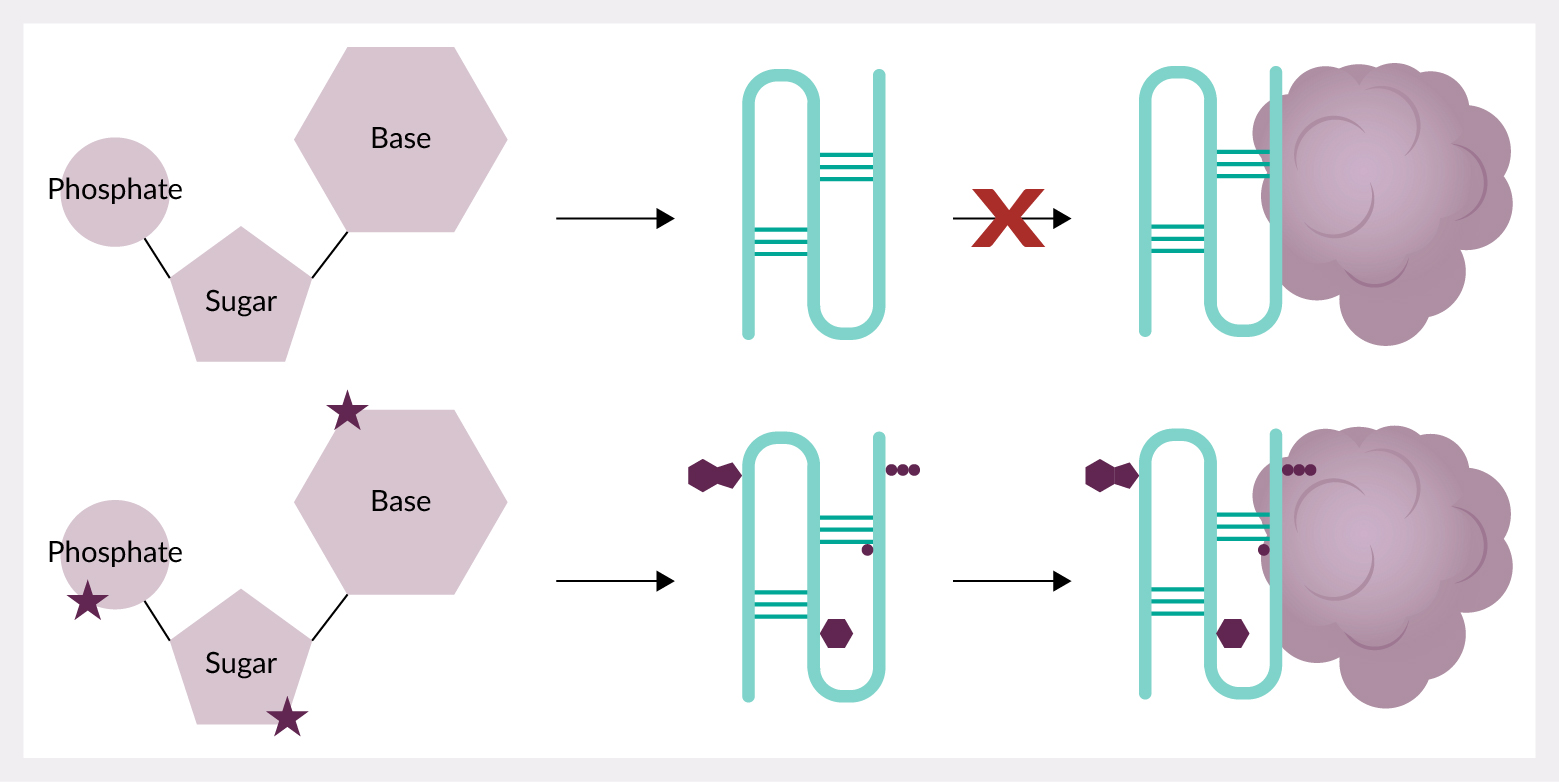
Henry, along with our PharmAlliance collaborators at UNC Chapel Hill and Monash University, has put together a review on chemical modifications for therapeutic aptamers – read it at Nucleic Acid Insights
Preprint: chemically adjusting natural products against liver cancer
By Chris Serpell, on 18 February 2025

Continuing our work with partners in Viet Nam on liver cancer, we have a new preprint out looking at selective acetylation of silybin, a natural product, and how this influences its anticancer properties. Click here to read it.
Postdoc position open
By Chris Serpell, on 30 January 2025
We’re excited to be advertising for Leverhulme Trust-funded postdoc who will control the entanglement and knotting of polymers using exact polymer sequence, building on our work with aromatic donor-acceptors (Chem. Commun., 2022, 58, 12200-12203). If you’ve got a background in synthetic supramolecular chemistry, this would be great for you, but we’d also be interested in people with expertise in oligonucleotide synthesis and nanoscale characterisation. Do get in touch if you are interested.

Discovering phosphoestamer sequences to block cancer-causing protein-protein interactions
By Chris Serpell, on 20 January 2025

Bini’s paper which combines our synthesis of phosphoestamers with an automated selection process to discover sequences which interfere with protein-protein interaction is out now in Chemical Science. We’ve used the KRAS G12D/RAF interaction as a model, which is highly relevant for pancreatic, lung, and colorectal cancer.