X Close

The Nahrein Network

Home

Fostering the sustainable development of heritage in post-conflict iraq and its neighbours

Menu

Archive for the 'Policy' Category

Iraq’s Higher Education Cultural Heritage Curricula and Teaching Materials. Mapping, Assessment and Knowledge Exchange

By Zainab, on 24 March 2025

We talk to Dr. Ahmed A. Al-Imarah, Professor of Higher Education Management at theUniversity of Kufa. Dr. Ahmed held a Nahrein – BISI Visiting Scholarship at the University of Oxford, Department of Education. Dr. Ahmeds project is titled Iraq’s Higher Education Cultural Heritage Curricula and is under the supervision of Professor Nigel Fancourt.

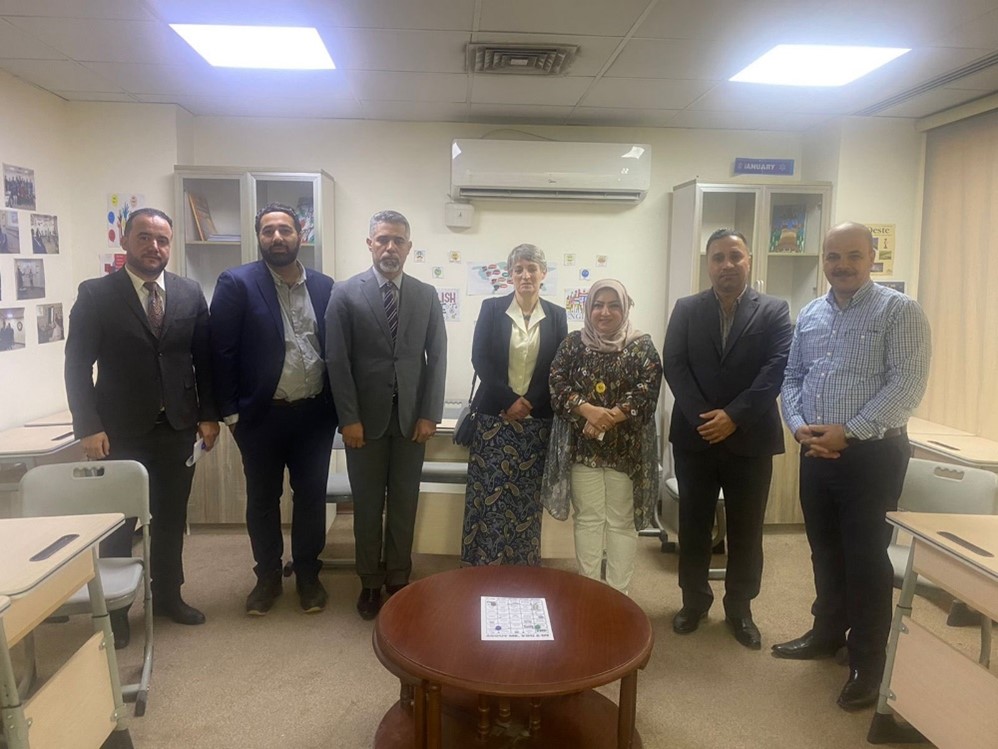
Dr Ahmed at UCL

What were the main benefits of your scholarship?

  • The scholarship provided the opportunity to systematically map, assess, and enhance cultural heritage curricula in Iraq’s higher education system.
  • Collaboration with Oxford University academics, particularly Professor Nigel Fancourt, led to developing a research proposal on how universities can support cultural heritage.
  • Access to Oxford’s scientific references and academic resources significantly contributed to advancing research.
  • Participation in weekly seminars, lectures, and networking with faculty and PhD students expanded academic skills and research perspectives.
  • Visiting museums deepened the understanding of tangible heritage and its role in fostering social cohesion and cultural appreciation.

What was the main highlight of your scholarship?

  • A key highlight was the development of a collaborative research plan with Oxford University staff to address gaps in cultural heritage education. This included examining how universities can support cultural heritage and engaging in meaningful discussions about its societal impact.
  • Another significant moment was delivering a joint lecture with Professor Fancourt at the Iraqi Embassy in London, discussing opportunities for collaboration between Iraqi and British universities.

What were the main things you learned from your host institution?

  • Insight into curriculum design mechanisms across different educational systems, with a focus on improving Iraq’s cultural heritage education.
  • The importance of interdisciplinary collaboration in cultural heritage studies.
  • Effective methods for integrating cultural heritage themes into university programs to promote social cohesion and national diversity.
  • The value of museums in preserving history and fostering a shared cultural identity.
  • Best practices for conducting and publishing academic research, particularly in underexplored areas like Iraqi universities and their role in cultural heritage.

How has the scholarship helped you in your work in Iraq?

  • It has provided a foundation for enhancing cultural heritage curricula in Iraqi universities by incorporating global best practices.
  • The collaborative research proposal with Oxford University will contribute to addressing gaps in Iraq’s higher education sector.
  • Connections established during the visit will facilitate future academic partnerships and knowledge exchange between Iraqi and British institutions.
  • The insights gained from museum visits and academic discussions will be applied to promote awareness of Iraq’s tangible and intangible heritage.
  • The discussions at the Iraqi Embassy contributed to shaping higher education policies by identifying areas for cooperation between Iraqi and UK universities.

What will you do to continue your research in Iraq?

  • Implement the findings from the research project into the cultural heritage curricula at the University of Kufa.
  • Continue collaboration with Oxford University through the extended university ID, allowing further access to academic resources.
  • Organize a training program on global research methodologies for Iraqi professors.
  • Work on publishing research on the role of Iraqi universities in supporting cultural heritage.
  • Promote interdisciplinary approaches to cultural heritage studies and encourage faculty members to integrate these topics into their teaching.
  • Advocate for academic partnerships between Iraqi and British universities, focusing on faculty exchange, student opportunities, and research collaborations.

Dr Ahmed at UCL

Strengthening Academic Collaboration: Scientific Symposium at the Iraqi Embassy in London

By Zainab, on 8 March 2025

On February 10, 2025, the Iraqi Embassy in London hosted a scientific symposium focused on strengthening academic collaboration between Iraqi and British universities. The event brought together embassy officials, the Iraqi Cultural Attaché, and esteemed professors from various British universities to explore opportunities for excellence in higher education.

The symposium featured insightful discussions led by Nahrein Network – BISI Visiting Scholar, Professor Ahmed A. Al-Imarah and his Research Supervisor, Professor Nigel Fancourt from the University of Oxford. Their joint lecture highlighted key topics such as common challenges in higher education, opportunities for development, and essential elements for successful university partnerships.

A major outcome of the event was the proposal of four priority areas for collaboration:

  • Enhancing academic culture
  • Hosting academic visitors
  • Inviting postgraduate students
  • Sharing unique research data

The discussions emphasized that careful planning is crucial to ensuring these collaborations benefit both parties. Moreover, the success of partnerships should be measured by tangible outcomes, rather than simply signing agreements. While challenges exist, they can be overcome through strategic cooperation and shared commitment.

This symposium aligns with recent government initiatives to strengthen partnerships between Iraqi and British universities, following the Iraqi Prime Minister’s visit to the UK. The recommendations from the event will be submitted to the Iraqi Ministry of Higher Education and Scientific Research, contributing to long-term academic and research collaboration.

The Nahrein Network and the Ministry of Higher Education in Iraq sign an MoU

By Zainab, on 4 February 2025

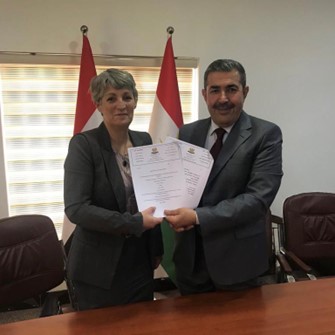
Professor Eleanor Robson, Director of the Nahrein Network, signs an MoU with the Ministry of Higher Education.

On 16 January 2025, the Nahrein Network and the Ministry of Higher Education, in the presence of the Prime Minister of Iraq, signed a Memorandum of Understanding (MoU). The event was held in London, which coincided with an Iraqi government delegation visit to the United Kingdom. The MoU covers the organisation of research grants, scholarships and support to Iraqi universities in the fields that the Nahrein Network focuses on. 

In addition to the Nahrein Network, the Ministry of Higher Education signed 12 MoUs with universities in the United Kingdom, some of which were for specific research programmes. The majority of those agreements were however for paving the way for the Iraqi Government’s initiative to fund 5,000 masters and PhD scholarships, many of which will be at universities in the United Kingdom. 

After the ceremony was completed, a workshop was organized by the British Council, which is spearheading the ‘Academic Bridge Programme’, an initiative to strengthen research and knowledge exchange between UK and Iraqi universities. The Academic Bridge Programme is about upgrading Iraq’s intellectual and technical capacities across all sectors and fields and is designed with a view to harnessing higher education opportunities and to support upskilling Iraq’s universities to better address the country’s challenges. 

The Digital Heritage Internship Program: From Idea to Impact

By Zainab, on 16 July 2024

In this blog, Dr. Rozhen Mohammed-Amin, Co-Director of the Nahrein Network, discusses the Cultural Heritage Organisation’s (CHO) new initiative: the Digital Heritage Internship Program (DHIP).

Follow CHO on X: @Cho_Kurdish

In 2016, my post-PhD academic plans hit the walls of a (largely) disconnected higher education system in Iraq and its Kurdistan Region. Bringing students from different disciplines and departments to think together and deliver interdisciplinary digital heritage projects proved much more difficult than I had anticipated and prepared for. The stubborn silo and teaching-intense higher education system also brought teaching overload for students and faculty members’ competition for those teaching hours. Add to these a debilitating economic crisis in the Kurdistan Region that resulted in an up to 75% reduction in the salaries and (therefore) reduced working hours of public servants, including academics in public universities. These and other factors left the departments with no time, space, and (for most) motivation to explore new teaching and learning approaches for their students. Outside of curriculums, the local higher education landscape, environment, and culture were/are not very receptive to new non-traditional approaches either. After all, in practice, interdisciplinary research papers involving academics from different disciplines are not approved for academic promotion purposes. So, justifying interdisciplinary projects for undergraduate credits in different departments within such a silo system was/is a very difficult task.

My Nahrein Network Co-Investigator fund empowered me and my team to try transformative teaching and interdisciplinary learning approaches through our new Digital Heritage Internship Program (DHIP). The program brings together and trains local youth (mainly graduates) from different disciplines to conceptualize, design, develop, promote, and fundraise for innovative digital heritage projects. They do so using state-of-the-art technologies like Augmented Reality (AR) and Virtual Reality (VR). DHIP aims to connect heritage protection and promotion with local and global needs and challenges for the sustainable development of the Kurdistan Region and Iraq’s heritage. The program also equips local youth with 21st-century digital knowledge, skills, and networks for expanding the creative industry in the Kurdistan Region and the rest of Iraq for making cultural, social, environmental, or economic impacts. Through this program, we strive to practically embody “think globally, act locally” in our digital heritage Research and Developments.

In its first pilot year (2023-2024), we brought together and trained 15 graduates (10 women and 5 men) in Sulaimani city from a total of 12 disciplines within Engineering, Design, Social Science, Arts, and Humanities, and IT. Having more women in the program was one of our objectives for addressing the vast digital literacy gap between men and women in Iraq[1]. In the first six months of the program, we delivered a total of 120 hours of structured training sessions (in-person or online), accompanied by work sessions as well as in-person and remote consultations in team or individually. We also integrated peer learning in some parts of the program. The gained knowledge and skills were applied in the team capstone projects, assigned by our team from the Cultural Heritage Organization (CHO) and the Kurdistan Institution for Strategic Studies and Scientific Research (KISSR).

[1] https://iraqtech.io/digital-illiteracy-isolating-iraqi-women-from-the-outside-world/

Our CHO-KISSR team and international and local collaborators provided extensive in-person and online training in DHIP. Learning from esteemed and supportive international and non-Kurdish speaking trainers like Mary Matheson (Arizona State University), Dr. Akrivi Katifori (Athena Research Center), and David V. Madrid (Historic Environment Scotland) was truly rewarding for our interns and for building their confidence at an international level. To encourage role modeling, we targeted more women trainers. The interns received theoretical and hands-on training in a wide range of topics they take to imagine and develop for the interdisciplinary and multi-dimensional world of AR and VR-based heritage experiences. The training ranged from independent learning to AR and VR experience assessment and everything in between, Design thinking, AR and VR experience design for heritage, historical research methods, immersive storytelling, story writing, storyboard development, team building and working, photography, photogrammetry, drone use,  360 tours, UX/UI design, crowdsourcing in heritage, participatory design, design for participation, AR and VR  development in Unity Game Engine, communication, community engagement, marketing, proposal writing, and fundraising.

Capstone Projects

By design, DHIP training and learning is project-based. Such training is intended to not only enhance and consolidate the program’s learning outcomes but also to build the interns’ portfolio in the utilization of promising AR and VR technologies in the field of heritage and beyond. Our CHO-KISSR team has foreseen the local need for investing in AR and VR knowledge and skills even before the recent labor market survey, led by KRG’s Ministry of Higher Education & Scientific Research and its partner universities, IREX, and the US Embassy/Baghdad. We identified the main themes of the assigned capstone projects based on a local need or requests of local stakeholders, who were excited or inspired by our past Talk to Sarai[1], Virtual Sarai, and Feel Like Me digital heritage projects. We also connected the project themes to global and local challenges and needs such as climate change and women empowerment.

In a span of 10 months and with the four-team capstones, the interns managed to greatly impress those who supervised, heard about, or experienced their projects! The depth and breadth of their activated imagination in the digital heritage field, creative thinking, and synthesizing have shocked our team, collaborators, and even international trainers like Mary Matheson.

[1] https://www.ucl.ac.uk/nahrein/news/2021/nov/talk-sarai-telling-stories-digitally

The Historical Empathy

Learning from Our Past Thinker VR Project guides users through the life, stories, memories, writings, and wisdom of Piramerd, a celebrated local poet, writer, and founder of the influential Zheen printing house and newspaper. Through a blend of visual and aural immersion, the VR experience aims to evoke empathy in users by allowing them to connect with the poet’s lived experiences and legacies, focusing on his dedication to education, ethical journalism, cultural advocacy, and public service.The project fosters an appreciation for heritage and historical understanding that can bridge the knowledge and emotional gap between past and present generations.

The Climate Heritage

Bridging Art, Culture, and Heritage for Protecting Environment VR Project combines the power of heritage, technology, and storytelling to immerse users in the sights and stories of the escalating pollution and environmental crisis of the Tanjaro River, near Sulaimani City in the Kurdistan Region of Iraq. By immersing users in the perspectives of a local fisherman, an eagle, and a fish, the experience shows and tells about the massive pollution occurring in Tanjaro. The project aims to raise users’ awareness about the largely overlooked but fatal environmental crisis around them and to inspire sustainable actions.

The Historical Evolution of Cities

How Industrial Change is Changing our Life AR Project showcases the economic, social, and cultural influences of Sulaimani City’s first factory, the former Cigarette Factory (renamed as the Culture Factory). By integrating location-based storytelling with witness testimonies, the interactive tour engages users with the factory’s transformative impact on the city and its people. It also unveils unheard-of or little-heard stories and encourages reflections on how industrial rise and fall can create and transform a vibrant economic and social centre into an abandoned ghost complex, and how such neglected spaces can be repurposed into a creative hub.

The Narrative Spaces

When Storytelling Meets Design, the AR Project enriches the physical spaces of Hotel Farah (renamed to Kurd’s Heritage Museum), the oldest hotel in Sulaimani City and a current museum, by adding narrations through a statue and displayed collections. Through a mix of captivating stories from historical figures and fictional characters, the mobile AR tour unfolds the stories and significance of the building, related people, and its current collections. This interactive journey through time and space heightens users’ engagement with the museum space, drawing their attention to its diverse components, contents, and stories. The project aims to enrich visitors’ experiences with and perceptions of heritage places.

In designing and developing each of these capstone projects, the interns worked closely with diverse experts and local stakeholders. This close engagement and co-creation exposed the interns to real-world challenges and problem-solving related to (among others) finding scarce archival resources, handling diverse (and sometimes competing) interests and requests, and balancing ambitions with resource and technical capabilities. The project-based nature of DHIP proved to be the “glue” for holding the interns together and to the programme as they were navigating the many challenges of the underdeveloped infrastructure of AR and VR developments in the Kurdistan Region and the rest of Iraq. Our planned post-DHIP promotion of the projects through the local stakeholders and interns themselves promises to further deepen the interns’ interest, and sense of ownership for the promotion and expansion of the projects, and local heritage.

Beyond Expectations

As we embark on the formal and in-depth evaluation of our pilot internship, some interactions and outputs are worth celebrating. First, the high retention and attendance rate of the interns in the program came as a surprise, even to our best-case scenario and most positive team member! Warned by the experience of other training and internship programs and refusing to adopt the penalty measures some of these programs had to take to protect against high dropouts (even in the case of paid internships), we expected to retain only one team of four in our non-paid internship by the end of the originally estimated four months of our program’s life span. Yet, even after extending the structured training for another two months and the whole program for a total of 10 months for completing and testing the scaled-up capstones, we retained all the interns. Only two interns were absent slightly below our high threshold of 90% of attendance. Some of the interns had zero or close to zero absences.

Beyond numbers, the scaling up of the capstone projects by the interns and the enthusiasm the four teams showed for their projects speak volumes about the overall high engagement of the interns with the program and increased interest in digital heritage. This happened despite the fact that the majority of them had not heard about AR or VR before the internship and only a few of them initially showed interest in heritage.

The co-creation nature of our interns’ digital heritage projects proved (at least from our perspective) highly effective for engaging these young interns with heritage promotion and protection and raising their heritage awareness to a degree that even we, the organizers, did not imagine when we planned the program. The content and stories they found and the connections and reflections they made were truly impressive and inspiring. It is also fair to say that the interns helped to achieve one of the main overarching goals of DHIP, establishing a digital heritage network. Although we have yet to publicize the projects in a closing ceremony, we have been approached by excited local community members and media to try and feature our interns’ projects.

A Demanding Ride

Running the program was anything but smooth. Disruptive thinking and working is never easy anywhere, let alone in Iraq. We experienced and had to solve/balance many logistical and technical challenges. One of the challenges has been the scattered state of local heritage collections, resources, and even knowledge. Balancing the needs and competing interests of stakeholders was another challenge. As it turned out, flying a permitted drone (needed by one of the groups for 360 tours) in a post-conflict country like Iraq is far more complicated and team and paperwork-consuming than what we had prepared for.

Managing our interns’ growing expectations was another key challenge to solve. As an ambitious educator and an immensely curious scholar in digital heritage, I was finding it really hard to limit the interns’ growing ambitions in the face of time, resource, and expertise limitations. Then there were challenges related to team dynamics and equitable contribution among the interns.

Also, from the early stage of applying, we experienced an imbalance in recruiting interns based on the four targeted main disciplines and subdisciplines. We could not find or attract any intern with basic skills in the technical development of AR and VR. Although our interns’ feedback and incoming requests point to our limited promotion of DHIP and passive recruitment strategy, limited local skills in computer programming, software development, and/or Game Engine use are reported/observed by many others. In fact, our own team’s software developer had to self-taught himself about AR and VR development due to a lack of such training in and outside his university program. Add to these, the very limited infrastructure and external local expertise in the technically demanding and fast-growing world of AR and VR developments. As a result, the recruitment imbalance extended to the teamwork and the workload of our CHO-KISSR developer. Although the technical development (understandably) was not picked up by almost all of these non-technical interns, the program created a good pathway for increasing the motivation of our existing interns and others. We managed to increase local appreciation and understanding of what it takes to (for example) open a virtual book from the right (not left) side and why local culture, language, and perspective matter in creating or blending virtual and physical worlds.

Internally, our CHO-KISSR team also experienced an imbalance when two key team members started their postgraduate studies in the early months of the internship. So, other team members periodically stepped in to cover for them to ensure the quality and depth of DHIP. Periodic covering for each other and work catch-up is a supportive team culture that we are proud of because it has been making our largely women team accommodating and accessible to mothers, students, and others with proven long-term commitment and dedication but periodically require flexibility.

I should also mention that since the start of the first lecture of the program and referrals, we have been receiving calls, emails, messages, and even visits from local students and graduates inquiring about the start date of a new round of DHIP and expressing interesting in registering in our program.

The “Shoulders of the Giants”

The planning and implementation of DHIP stood on the shoulders and insights of several giants that I would like to acknowledge. The root of DHIP and its inspirations dates back to my life-changing postgraduate studies at the University of Calgary in Canada and my transformative experience as an intern at the Human Interface Technology Lab of New Zealand or HITLabNZ (based at the University of Canterbury). At the University of Calgary, Prof. Richard Levy, Prof. Tang Lee, Dr. Jeffrey Boyd (my supervisors), Prof. Branko Kolarevic, and Prof. Sebastian von Mammen have inspired and guided me in connecting heritage with digital technology. These have been two areas of my intellectual curiosity and activating imagination since my childhood, and all the way to my postgraduate education and ongoing scholarly pursuits. My postgraduate exposure and interest was further consolidated by my experience at HITLabNZ. The inspiring nature, culture, and environment of this leading AR and VR research lab profoundly increased my appreciation for positive and supportive research and education environments and networks. HITLabNZ and its then-director Prof. Mark Billinghurst have deeply embodied the lab’s people-centered approach to finding technology-based solutions and inventions. The very idea and conception of DHIP was inspired by the “Virtual Intern Program” from Mark’s current Empathic Computing Laboratory (based at the University of South Australia) and informed by local and international consultations and need assessment. My transformative postdoctoral experience, funded by the Nahrein Network and BISI and supervised by Prof. Maria Economou at the University of Glasgow, was pivotal in shaping our interns’ emotionally engaging and empathy-driven storytelling approach for designing and evaluating their AR and VR projects. Beyond contributing knowledge and methodological guidance, Maria played a crucial role in connecting me with the highly inspiring and insightful EMOTIVE project and team members such as Dr. Akrivi Katifori (Athena Research Center), who delivered training to our interns. Another significant outcome of my visiting scholarship was meeting Dr. Lyn Wilson and establishing connections with Historic Environment Scotland (HES), whose direct support was instrumental to DHIP’s success. The consultation of Gabo Arora from Johns Hopkins University and his colleagues from LightShed (Barry Pousman and David Samuels) helped with setting up the pillars of the program. The critical insights of Prof. Eleanor Robson (Nahrein Network’s director) and the support and informed feedback of Abdullah Bashir (a Senior Business Advisor and a former member of 51 Labs) and some of his colleagues provided timely guidance for minimizing the program’s blind spots. In the logistical planning of the program, we also received feedback and support from Mustafa K. Ali and Ravin Rizgar (from Suli Innovation House), and Dr. Khabat Marouf and Dr. Vian M. Faraj (from Culture Factory). During the implementation, the program also received generous support from Dr.  Lyn Wilson and her colleagues at the Historic Environment Scotland and many supportive local collaborators from organizations such as Zheen Center, Waterkeepers Iraq, KISSR, Kurd’s Heritage Museum (Hotel Farah), Culture Factory, Slemani Directorate of Antiquities and Heritage, Jamal Nabaz Museum, Anwar Sheikha Medical City, and beyond.

The Unknown Soldiers

I cannot write about DHIP without expressing my deep appreciation and gratitude for the dedicated CHO-KISSR team members who worked on running the program, with Khelan S. Rashid and Khazan F. Salih at the forefront, followed by Karo K. Rasool, Tabin L. Raouf, Khanda S. Majeed, Alan K. Sharif, Shajwan H. Abdalla, Davin D. Ahmed, and Bestun O. Amin. In addition to the giants, the demanding implementation of this program would not have been possible without the extra mile and immense care of these unknown soldiers. I would also like to thank the other CHO-KISSR team members (Roza A. Radha and Gulala A. Aziz) and our volunteer (Niyan H. Ibrahim) who indirectly and through their work for the CHO-KISSR team contributed to the program.

Remembering the ‘Camp Speicher‘ atrocities

By Mehiyar Kathem, on 6 December 2023

Not all atrocities are remembered equally. Some are forgotten, or deliberately erased from public memory, buried like the victims. Sites of memory, including monuments, art and other public depictions and displays, can help society remember and negotiate traumatic pasts.  

On 13th June 2023, the provincial government of Wasit in Iraq unveiled a memorial to the events that unfolded in and around Tikrit’s Camp Speicher in 2014. The military site was renamed by the US Occupation after Michael Scott Speicher, a US pilot shot down by the Iraqi Army in the 1991 Gulf War. Camp Speicher was used from 2003 up to the withdraw of the US Army from the country in 2011 where it was then renamed the Tikrit Air Force Academy. In the Iraqi public sphere, the name Speicher however has lingered and become indelibly associated with the military camp and the unfolding atrocities.  

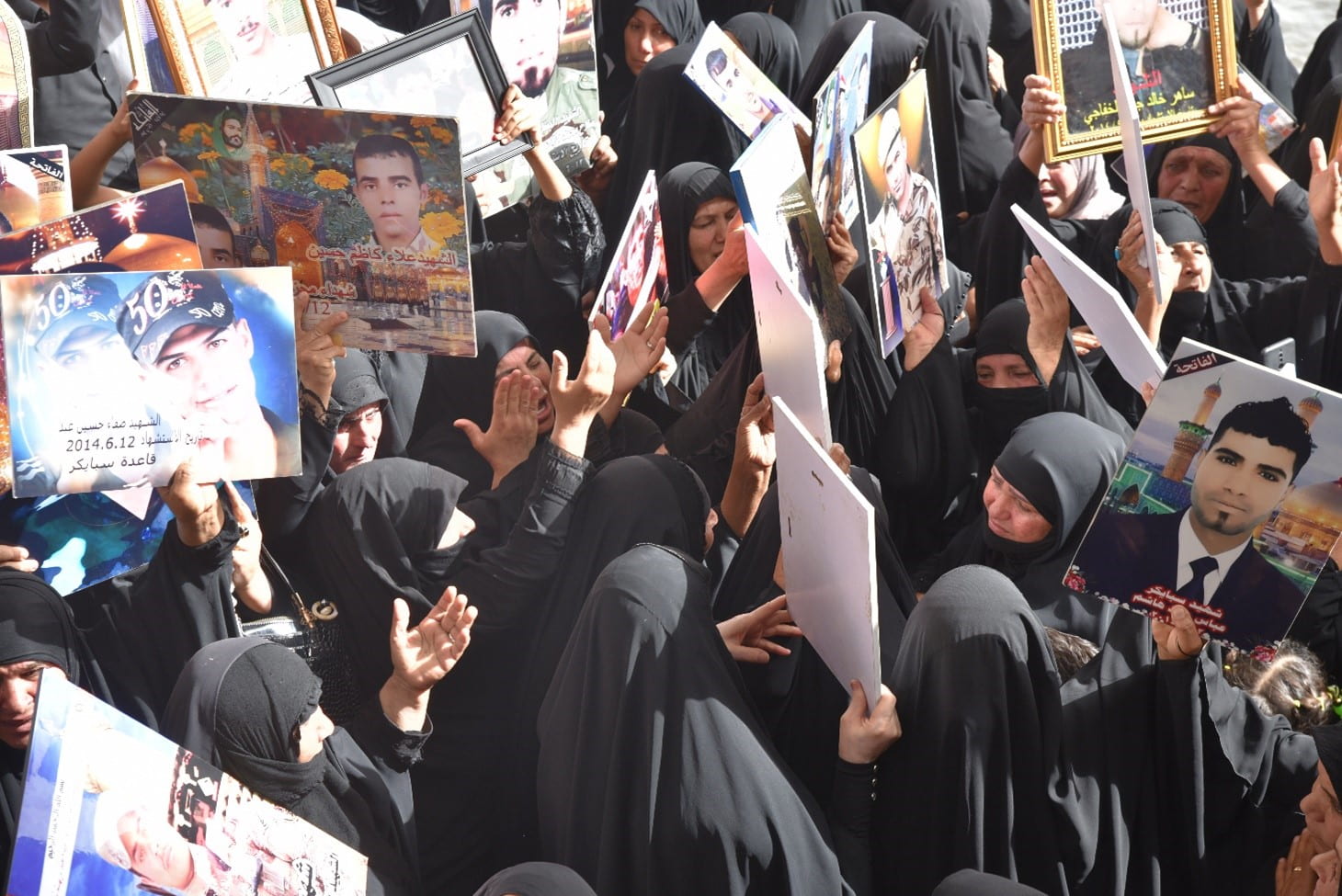
In June 2014, DAESH rounded up some 2000 student air cadets who had tried to escape the disorder and collapse in Iraq’s security command chain. After Mosul fell to DAESH, Tikrit and its environs, including Camp Speicher became under the control of local tribes who proclaimed allegiance to the armed group. Student air cadets, most of whom were between the ages of 18 and 24 years fled hurriedly on foot in civilian clothes. They were told by local tribes that they would be offered a route to safety. Sunni air cadet trainees were freed and the Shia among them were quickly rounded up by Tikrit’s tribes and marched to trucks that would then take them to Saddam Hussein’s former palace compound, overlooking the Tigris river.  

They were divided into groups and distributed between Tikrit’s main tribes, with each participating tribe now free to enact the most grotesque forms of torture on those in their possession. After those ordeals, some of which lasted for two or three days, most were shot and then dumped in shallow trenches in and around the palace compound. On another key location, prisoners were executed at the edges of the river Tigris in the palace compound. The presidential compound was effectively transformed into a factory of torture and death.  

Former Presidential Palace Compound. At the one of the sites of the massacres. 2023.  


The Speicher Memorial in Kut, the provincial capital, is one of Iraq’s first attempts to remember those atrocities in the form of a physical, public-oriented structure. The new memorial in Kut is inspired by Freedom Monument – an iconic emblem in central Baghdad’s Tahrir Square. Designed by renowned artist Jawad Salim, Freedom Monument represents notions of justice and dignity through a collective storytelling of Iraq’s modern and ancient history. Whereas Freedom Monument represents Iraq’s self-determination, calling to the stories of its peoples and rich histories for inspiration, this new memorial depicts the suffering of victims of the Camp Speicher massacres.  

Wasit, Kut. 2023.  

The memorial weaves this event’s traumatic memories, derived from those graphic images captured in videos and photographs posted on social media by DAESH. The spiralling cone structure, not unlike that of Samarra’s famous minerat, is dotted with artistic pieces made of brass depicting scenes of the ordeals endured by the victims. The memorial depicts handcuffed and blindfolded prisoners, some kneeling on a staircase adjacent to a palace building where their bodies would then be dumped into the river.  

A site of execution, at the former Presidential Palace Compound. 2023. 

Painting by Iraqi Artist Ammar Al-Rassam of the former presidential palace adjacent to the Tigris river, Tikrit.  

This is the not the first attempt to memorialise the Speicher massacres. Since 2014, families from different parts of Iraq would visit on every 12 June the former presidential palace compound. A monument that had been erected at the palace complex displays three mothers, one standing defiant and two wailing over a mass grave containing replicas of human skulls and bones strewn on the ground. In addition to recognition and remembrance, those now annual visitations serve group mourning. In the absence of any form Iraqi or foreign psychosocial support – particularly for victim’s children, wives and mothers– the gatherings have assumed a site for catharsis, even in a situation of an absence of justice for victims and where over 700 air cadet students are still missing.  

 A ‘Speicher Camp’ memorial at the former Tikrit Presidential Compound. Tikrit, Iraq.  

Other than families’ own ad hoc efforts to print and display photos of their children, up to the present moment, this was the only memorial to the camp Speicher atrocities in the country. Printing and raising a photo of their missing or deceased loved ones has been a common way families have sought recognition for those atrocities. Significantly, and as simple as this act is, it is perhaps one of the few ways those mostly impoverished and marginalised families can ask for a semblance of justice expressed through society-oriented remembering.  

Former Presidential Palace Compound, Tikrit. June 12th 2023. 

A woman whose son was killed by Daesh collapses at the Speicher Memorial site in Kut, Wasit. June 2023. 

On a recent visit to the former presidential palace, Victims of Camp Speicher, a registered Iraqi non-governmental organisation made up of family members whose sons were killed, discovered an unidentified human skull lying in a heap of earth next to a staircase. Human remains continue to pop out of the ground on the site as a result of rain and wind. The Victims of Camp Speicher Organisation is Iraq’s only non-governmental organisation working to document what happened. It is made up of members of families of those killed by DAESH. Abu Ahmed, the director of the Baghdad office, retrieved his son’s body from one of the mass graves in the Tikrit Presidential compound.  

Photo from Sadiq Mahdi at the former presidential palace, Tikrit. 2023.  

Many identified mass graves have not been excavated and those that have been opened lie without any labelling or proper, professional or even basic demarcation, a sign of the dysfunctional nature of the management of this case. Indeed, anyone visiting the site could easily be walking over a mass grave without knowing it. The presence of unidentified human remains and absence of informational panels or professional management of mass graves is symptomatic of the wider neglect victims and their families continue to endure.  

A mass grave at the former Presidential Palace Compound. Tikrit, Iraq. 2023.  Photo: Sadiq Mahdi. 


The absence of professional and organised documentation is indicative of forgetting of the ‘Camp Speicher’ atrocities. Similarly, US-European governments and their funding agencies and organisations in Iraq have up to recently shown little interest in the case. Their interest has focused instead on one section of Iraqi society, namely the plight of Iraq’s Yezidis. US-European funding has imposed and reinforced on Iraq a ‘hierarchy of suffering’ where some groups or sections of Iraqi society are seemingly more worthy of support than others. 

Through a UN Security Council resolution in 2017, the United Nations Investigative Team to Promote Accountability for Crimes Committed by Da’esh/ISIL (UNITAD) was established. A year later, a director  was installed. UNITAD’s mandate is seemingly meant to serve the people of Iraq, namely through ‘collecting, preserving and storing evidence’ on the crimes of DAESH. In a recent discussion at the UN, the Iraqi Government has underlined its unwillingness to extend UNITAD’s mandate, with a closure date of September 2024.

A central reason cited by Iraq’s representative at the United Nations for this decision has been that UNITAD has shared information and data with European governments but not with the Government of Iraq, instigating questions about violations of Iraq’s sovereignty, ethics pertaining to how victim-related and also Government-obtained information is used and who it is shared with and more broadly issues of accountability.  

The year 2024 will mark ten years since those atrocities were enacted on the people of Iraq. It will be a time of reflection and hopefully an opportunity to better explore how memorialisation can assist its people in recovering or at least coming to terms with a traumatic recent past.

Delegation from the Iraqi Ministry of Culture, Tourism and Antiquities visits the United Kingdom

By Mehiyar Kathem, on 30 March 2023

Between 12 and 18 February 2023, the Nahrein Network organised a set of events and activities for a delegation representing the Iraqi Ministry of Culture, Tourism and Antiquities. The delegation was led by Dr Ahmed Fakak al Badrani, a historian of Iraq’s modern politics, who assumed the position of Minister of Culture, Tourism and Antiquities and Dr Laith Majeed Hussein, Deputy Minister and Director of the State Board of Antiquities and Heritage (SBAH), Iraq’s national heritage institution.

First on the list of cultural and educational meetings was Newcastle University. The delegation was warmly received by the university’s management, including its president and vice-chancellor Professor Chris Day.

Dr Fakak al Badrani and Dr Laith Hussein spoke about their work and challenges in Iraq and opportunities for collaboration. Dr Qusay al Ahmedy, chancellor of the University of Mosul and Dr Rawa Qasha, director of scholarships and external relations at the university were also in attendance. On behalf of the University of Mosul, Dr Rawa Qasha (a PhD graduate of Newcastle University) gave a superb presentation on the progress being made at the University of Mosul, where she also spoke about opportunities for building research partnerships.

The group visited the Great North Museum: Hancock and its temporary exhibition on Gertrude Bell, curated by Dr Mark Jackson. Soon after, the delegation visited and spoke to the researchers and archivists who completed the digitisation of her collections.

The delegation got the opportunity to see some of Gertrude Bell’s belongings, such as her diaries, photographs and translations of Arabic text.

Later that day, Dr Laith Hussein delivered a lecture at the Hershel Building at Newcastle University titled ‘State Board of Antiquities and Heritage Iraq: achievements and challenges’, where he spoke about current work being implemented to rehabilitate cultural sites and Iraq’s cultural emergencies and challenges in safeguarding its rich body of cultural heritage.

The next day, after our morning train ride to London we visited the Iraqi Embassy in London and met with Ambassador to the United Kingdom His Excellency Dr Mohammed al Sadr. Along with the delegation, Professor Eleanor Robson, Director of the Nahrein Network and Head of the Department of History at University College London, discussed ways of strengthening cultural and educational partnerships.

Next on our itinerary was a visit to the University of Oxford, where we visited three cultural institutions, the Ashmolean Museum, the School of Archaeology and the Pitt Rivers Museum. Hosted by Dr Bill Finlayson, director of EAMENA and the School of Archaeology, we discussed ways of strengthening institutional relationships with the SBAH. The delegation also visited several of the specialised labs at the university.

A short walk away, we visited the Pitt Rivers Museum, one of the world’s most distinguished anthropology-oriented museums. Dr Bill Finlayson kindly facilitated access to one of their Iraq collections, the archive of British explorer and writer, Sir Wilfred Patrick Thesiger. As a historian of modern Iraq, and formerly at the University of Mosul, Dr Ahmed Fakak al Badrani was particularly fond of the photographs of the country that captured a specific period and way of life in Iraq.

We then set off to meet with Professor Paul Collins, former curator at the Ashmolean Museum. Professor Collins had spearheaded the revitalisation of one of the galleries at the museum that concern Ancient Iraq, introducing new visual technologies and visitor-friendly interaction. The collections including from Sumer, Assyria and Babylon were on display, including one of an Assyrian relief where its original colours were displayed through the use of a projector.

We also had opportunity to visit renowned Iraqi artist Diaa Al Azzawi’s temporary exhibition at the Ashmolean Museum, featuring work looking in part at the destruction of Mosul. That exhibition instigated an interest from Dr Ahmed Fakak al Badrani to visit the artist. The next day, a meeting with Diaa Al Azzawi was arranged in London, where discussions ensued about life in Iraq, a conversation that reflected the hardships, trauma and troubles Iraqis and Iraqi artists have experienced over the past twenty years.

The next day, Professor Eleanor Robson, Dr Ahmed Fakak al Badrani and Dr Laith Hussein participated at a roundtable meeting to discuss the current state of cultural heritage in Iraq, and several rounds of questions were taken from participants.

Lastly, the delegation visited the Iraqi Embassy where a British Museum media-oriented event was organised with Dr Timothy Potts, Director of the J. Paul Getty Museum and British Museum director Dr Hartwig Fischer. The event revolved around the British Museum’s current archaeological excavations at the Sumerian city of Tello/Girsu. 


A visit to Iraq: Planning for the future

By Mehiyar Kathem, on 6 December 2022

On our trip to Iraq last month, we had noticed that most of the passengers arriving at Baghdad International Airport were pilgrims intending to visit the shrine of Sufi founder Abdul Qadir al-Gailani. Knowing that the next few days would be made up of formal meetings, we decided to take the opportunity to visit on that evening the shrine in central Baghdad.

Pilgrims from Iraq, India, Pakistan, Bangladesh, UK and South Africa and other countries had come to worship and contribute to the spirit of a shared and global Sufi community. As a central meeting point for Sufi Muslims, the Shrine of Abdul Qadir al-Gailani fused devotion and religious practice – commonly with poetry, song and chanting – with a fervour of celebration and on the main courtyard, one could experience the uniqueness of that cultural and social mergence.

The shrine of Abdul Qadir al-Gailani

Professor Eleanor and I also met with the new Minister of Culture, Tourism and Antiquities, Dr Ahmed Fakak al-Badrani. Dr al-Badrani had previously been a lecturer at the University of Mosul, specialised in the political history of Iraq. The meeting was attended by Dr Laith Hussein, Deputy Minister and Director of the State Board of Antiquities and Heritage (SBAH) and Dr Saad Iskander, an advisor at the Ministry. We discussed the Nahrein Network’s plans in the country and ways to support one of its key institutions, namely SBAH.

Professor Eleanor Robson and Minister of Culture, Tourism and Antiquities, Dr Ahmed Fakak al-Badrani. Ministry of Culture, Tourism and Antiquities, Baghdad.

Professor Eleanor Robson and Minister of Culture, Tourism and Antiquities, Dr Ahmed Fakak al-Badrani and Dr Laith Hussein (Director of SBAH in Iraq) and Dr Saad Iskander (Advisor at the Ministry of Culture, Tourism and Antiquities). Ministry of Culture, Tourism and Antiquities, Baghdad.

A meeting was also organised with the Ministry of Higher Education and Scientific Research, led by Director General of Scholarships Dr Hazeem Taher and his colleagues. We spoke about the Nahrein Network’s current activities and efforts to support Iraqi universities and academics and ways to strengthen our work together. We also had the opportunity to meet with Dr Fatimah who is leading the ministry’s language centre and who would later be participating in the Nahrein Network’s AcademIQ workshops in Baghdad, which are part of our work to support Iraqi capacity for improved research in the country.

Meeting at the Ministry of Higher Education and Scientific Research, Baghdad.

As part of this trip to Baghdad, I went on to meet with Deputy Minister of Culture, Tourism and Antiquities, Dr Naufel Abu Ragheef, where we discussed the work of the Nahrein Network. I also took the opportunity to visit some departments within the Ministry’s building, focusing on its modern art collections.

Dr Mehiyar Kathem of the Nahrein Network with Dr Naufel Abu Ragheef, at the Ministry of Culture, Tourism and Antiquities in Baghdad.

A day later, I also met with the current and future director of Diyala’s State Board of Antiquities and Heritage, Mr Ahmed Abduljabbar and Dr Ali Tameemi. Both had been recipients of a previous Nahrein Network grant to document and safeguard Diyala’s rich cultural heritage.

Dr Mehiyar Kathem with SBAH representatives, Ahmed Abduljabbar and Dr Ali Tameemi.

On a return visit to SBAH, I bumped into the Director of Al-Anbar SBAH’s provincial office, Mr Ammar. We spoke about his plans for revitalising the cultural heritage of Iraq’s largest province. Mr Ammar, whose office is based in Ramadi in Al-Anbar, spoke about the need to strengthen the capacity of their cadre to conserve and protect the province’s heritage, which has long been neglected.

Professor Eleanor Robson’s trip to the Kurdistan Region of Iraq (KRI) was equally successful. It was organised by Dr Rozhen Kamal Mohammed-Amin, a Co-Director of the Nahrein Network working in Sulaimani and who is now affiliated with the Kurdistan Institution for Strategic Studies and Scientific Research (KISSR).

Eleanor, Rozhen and members of her team were welcomed by the provincial governor of Sulaimani, Dr Haval Abubaker, who stated his support for initiatives in the field of cultural heritage and the uses of new technologies.

Professor Eleanor Robson and Dr Rozhen Mohammed-Amin meet the Governor of Sulaimani, Dr Haval Abubaker.

In Erbil, an agreement between the Nahrein Network and Kak Kaify Mustafa Ali, director of the KRI’s General Directorate of Antiquities and Heritage was signed, paving the way for increased partnership.

Professor Eleanor Robson and Kak Kaify Mustafa Ali show the newly signed agreement between the Nahrein Network and the KRI’s Directorate of Antiquities and Heritage.

A visit to Erbil Citadel, a UNESCO World Heritage Site, was also organised. Eleanor, Rozhen, and her deputy Tabin met with Lanah Haddad, Regional Director for the American NGO, the Academic Research Institute in Iraq (TARII). She introduced them to Salar Al-Agha, manager of the citadel’s interpretation centre, and spoke about creative ways to build visitor-learning at the site. The next day they were also introduced to Dr Georges Mouammar, the new director of the Institute Francaise du Proche-Orient (IFPO) in Erbil.

Traditional handicrafts for sale at the foot of Erbil citadel.

In Erbil, Eleanor and Rozhen also met with Dr Yasmin Abdulkareem Mohammed Ali, Dean of the College of Archaeology at the University of Mosul to discuss shared interests in digital cultural heritage.

Dr Yasmin and Dr Rozhen discuss the uses of digital cultural heritage.

Decolonising the Excavation Licence in Iraq

By Zainab, on 8 December 2021

Written by Dr Jaafar Jotheri

The heritage law in Iraq was written in 1936 and then rewritten in 2002, but in these two versions, the Iraqi heritage authority was incapable of issuing a heritage law that can serve the nation’s needs. In 1936 Iraq was still a young independent state with little experience managing its heritage sector; fast forward to 2002, with Iraq under international sanctions, heritage was not foremost among the state’s priorities. After that, Iraq endured the civil war and the ISIS invasion. In the last few years, the Iraqi academics and the heritage authority have held several meetings to reform and explore a new version of the excavation licence.

As a result of these meetings, several proposals were suggested to the excavation licence such as:

  1. Selecting sites for excavation based on Iraqi opinion and considerations: Iraqi academics and heritage authorities should maintain a list of the sites that excavations are allowed in. This list should be prepared by Iraqis based on their priorities such as critical condition of the site or knowledge. Currently, Iraqis have little contribution in selecting sites for survey or excavation.
  2. Involving the local Iraqi experts in excavations: Iraqi academics and members of heritage authority should be fully involved in all the steps and in each phase of the excavation process. At present, there is limited or no involvement of Iraqis in excavation work. Some investigators from the heritage authority might take part  but they are likely to be inexperienced and  are not experts.
  3. Training Iraqi staff and students: Students from Iraqi universities and members of the Iraqi heritage authority should receive proper training in each excavation phase. Currently, there is no stipulation in place to train Iraqis.
  4. Using advanced techniques in surveying and excavation: Excavation teams should conduct some environmental, geoarchaeological, bioarchaeological and geophysical work on site and train Iraqis in the process. Outdated excavations methods should not be applied anymore; for example, some teams are using cheaper, outdated methods and ignoring new technologies.
  5. Utilise social media for projects: To increase the engagement of the local people with the projects, the excavation teams should make use of social media (Facebook, Twitter, Instagram, YouTube, website etc) to share news, events, progress – basically anything related to the project or the team.
  6. Conservation after excavations: After each phase of excavation, sites should be preserved, and conservation should be applied for the structures that have been dug and subjected to weathering and erosion. As it stands, there are no obligations on the excavation team to preserve the sites. It is not unusual for buildings and artefacts to be left abandoned and/or subjected to destruction.
  7. Hosting conferences and exhibitions in Iraq: After or during each excavation phase, the team should host conferences and workshops, and publicise their work, findings, and results. Presently, most excavation teams keep the results confidential.
  8. Publishing results in Arabic in Iraqi journals: At the present, teams are publishing results in international journals which Iraqis have limited access to and leaving Iraqis with few or no idea about the sites. Instead, some results of each phase of excavations or the new findings, artefacts and objects should be published in Arabic in the local Iraqi journals.
  9. Developing Iraqi museums: The excavation team should also contribute to helping Iraqi museums to have the required space and capacity to restore the artefacts properly and present them to the public. The situation currently is unfortunate as Iraqi museums are facing a lack of space to store the artefacts and discovering more artefacts are exasperating the problem of storage – and possibly subjecting them to damage or destruction.
  10. Cooperation with other excavation teams: To better understand the whole picture and narrative, the excavation teams that working in the same region, province, or occupation periods should have a way of cooperation and their plans should be integrated. Now, each team works separately without any coordination.

Jaafar Jotheri holds a PhD Geoarchaeology from Durham University. He has over 15 years of experience in conducting archaeological excavations and surveys about the landscape of ancient Iraq and the ancient paths that rivers and canals that followed in the past. He has published more than 15 articles in some of the world’s most prestigious journals.

He is currently an Assistant Professor and Vice-Dean in the Faculty of Archeology, University of Al-Qadissiyah, Iraq where he teaches and supervises both undergraduate and postgraduate students.

He has been involved in many international archaeological and heritage projects carried out in Iraq, with partners including Manchester University, Durham University,  Sapienza University of Rome, and Tokushima University. He has been awarded research funding from international organizations such as the British Institute for the Study of Iraq (London), the Academic Research Institute in Iraq (USA), and the British Academy, as well as the Nahrein Network.

Ethics In International Cultural Heritage Interventions. What We Can Learn from Humanitarian Principles

By Mehiyar Kathem, on 1 December 2021

Written by René Teijgeler and Mehiyar Kathem. 

Since the devastation wrought on cultural heritage in Syria, Iraq and many other countries, international donors have ploughed hundreds of millions on cultural heritage related projects in crisis affected contexts throughout the Middle East, Asia and Africa. As an outcome, cultural heritage is fast becoming appreciated by governments and funding agencies as an integral component of international assistance programmes.

Yet, in light of its growing importance, international responses to cultural heritage in situations of violent conflict and instability have not seen a commensurate discussion about ethics and principles of interventions. Considering the emerging field of heritage related international assistance and the projects that it offers support to, established humanitarian and development principles need to be considered and integrated into the work of donors, state agencies, cultural operators, contractors and a growing array of cultural heritage actors.

Whether in the form of disaster, long-term conservation or emergency activities, support to cultural heritage can assist societies to recover. In the UK for example, the Department for Digital, Culture, Media and Sport allocated over £30m to the British Council’s Cultural Protection Fund to support cultural heritage in Yemen, Libya, Iraq, amongst other countries. The British Museum alone received £3.2 million for what it said to be post-ISIS emergency support in Iraq, focusing on excavations and training. Since 2017, UNESCO in Iraq has secured over $100m for the ‘Revive the Spirit of Mosul’ initiative, with the European Union and the US similarly offering large amounts for cultural heritage. In Iraq alone, over $500m in recent years has been or is in the process of being spent based on cultural heritage, with the US, the United Arab Emirates, the European Union and its Member States leading in funding projects.

Cultural heritage programmes are also being funded through the private sector. The newly established private donor organisation for cultural emergencies and conservation, ALIPH, which is supported by France, China, Saudi Arabia, Kuwait, the UAE, and other countries, has similarly spent tens of millions on Iraq and Afghanistan, as well as other countries affected by conflict and instability. Cultural operators that are involved in direct implementation such as the World Monuments Fund and the US-government institution, the Smithsonian, have also secured similar amounts for cultural projects from private funders.

While there have been no detailed studies of these interventions and their size and impact, particularly on beneficiaries and communities, a common factor amongst donors and operators however is that none of this work has been guided by a code of conduct and charter of principles. Some institutions do of course have a code of ethics but these are not as relevant or applicable when projects are implemented outside their home countries.

Rather than viewing cultural heritage as a separate field of activity to peacebuilding and humanitarianism, donors and international operators need to urgently focus on learning about the full impact of their interventions on societies that they work in and hold their work to the highest degree of accountability, not least by the minimum standards of their home countries. This is particularly relevant in a situation of degraded civil societies and weak state institutions whose capacity and power for engaging in the design and implementation of foreign funded projects are highly circumscribed.

Considering the significance of cultural heritage as an indispensable element in people’s lives, identities and histories, donors and cultural operators need to review how their interventions affect the countries and societies in which they work. For example, generalised trauma is a key characteristic of conflict affected societies, meaning that interventions in the field of cultural heritage need to be particularly cognizant about the way projects are designed, who they work with and how activities unfold once they are funded. These issues are far from being translated into actionable practices, frameworks and approaches let alone seriously discussed.

As such, interventions in the cultural heritage of other countries need to be openly discussed and issues pertaining to it elevated to the highest echelons of policy thinking, planning and practice.

We don’t need to reinvent the wheel here. A good start would be to integrate and where possible adopt existing humanitarian principles to heritage related work. By learning from the Sphere Handbook’s Humanitarian Charter, for example as well as ethical principles more generally, we could apply much of what we have learnt over the past few decades to the field of cultural heritage assistance.

At the heart of what could be a new cultural heritage relevant ethics is the established humanitarian principle of ‘Do No Harm’. Assistance and other forms of interventions in the field of cultural heritage should not exacerbate conflict or social tensions and put partners and communities in harm’s way, either when projects are implemented or after they have been completed. In this context, interventions should be sensitive to conflict dynamics and their legacies, which continue well after countries have been labelled ‘post-conflict’ by foreign funding agencies.

Four core principles taken from the world of humanitarianism could make a good starting point in these discussions.


Humanity 

One of the key humanitarian principles of interventions is humanity. To address human suffering, to help those in need, is a moral obligation. The principle of humanity is frequently taken for granted, however. The Responsibility to Protect (R2P), a political commitment to end the worst forms of violence and persecution, goes a step further and was accepted by the UN in 2005 and has been used as a pretext for armed international interventions. It was expanded to the protection of World Heritage later and today the UN and UNESCO are meant to apply this moral code to cultural heritage.

‘To do good’ or ‘to do something’ is in many cases thought of as enough, especially with charity and volunteer organisations. To organize and support heritage colleagues and address cultural collapse in a crisis, however, needs a professional approach. How aid and projects are designed and for whom are key questions in this regard. Participatory approaches are required to be integrated and made a point of discussion. After all: ‘Whatever you do for me without me, you do against me’(Gandhi).


Neutrality 

Neutrality is about offering assistance without taking sides. Violent conflict ruptures society and creates divisions. Many people withdraw from society or escape, leading to cycles of long-term damage. Dynamics of conflict should be considered by heritage related assistance and cultural operators. They are often not even spoken about or integrated into programmes.

Whilst there might be a need to support groups, especially the weak and vulnerable and those that have been deliberately targeted or affected by conflict, it is also important to note that fractures in society are an outcome of war itself and at times discriminatory state policies. Social analyses or assessments of interventions are missing and there is a fear that large amounts of foreign funding could exacerbate and reproduce existing problems.

A common responsibility to all affected by conflict, rather than those donor agencies deemed to be closer to their interests, should be of paramount importance. Pertinently, it is a duty on all donors and cultural operators to ask why they are selecting one section of society over another. Projects are an opportunity for self-reflection on such things as intentionality, which shapes the design and delivery of programmes.


Impartiality 

Impartiality – to provide aid and deliver projects without discrimination – is a difficult obligation. It is, however, central to the development of cultural heritage ethical principles. In the light of other guiding principles that identify drivers and connectors in a violent conflict, impartiality has its limitations. It requires interventions to be cognizant of not only the context in question, but importantly donors and implementing parties’ own positionality and power.

Arguably, no one is impartial, and we all have views about how society should be governed. The main question here, however, is mostly one about power and the type of relationships forged in projects. These factors have generally been ignored, or altogether dismissed in cultural heritage work, with the focus of discussions about other people’s contexts rather than those of the donor country’s interests and politics.

As a corollary, all forms of heritage – tangible or otherwise – need to be respected and treated equally in emergency and recovery programmes as they are all significant to society. Cultural heritage is a resource for everyone.  Interventions in the field of cultural heritage have shown however that projects are generally focused on what is primarily of direct relevance to donor interests. This has remained unchanged, even in situations of emergency and collapse. In Iraq and Syria, for example, cultural heritage interventions both now and in the past have preferred to focus on pre-Islamic tangible heritage and have as such mostly ignored Islamic heritage and other fields such as modern architecture and other important parts of the identities of people. Interventions that focus on one part of history over others – not least in a country as diverse as Iraq – are more likely to be viewed in those countries as oriented to foreign interests than local priorities.

Archaeology in Iraq, for example, is still underpinned by colonial-era practices. Indeed US-European archaeologists and related agencies have not changed  their approaches which are oriented primarily to knowledge extraction. Everything else that is championed today, such as issues of sustainability, conservation, community, and education, are peripheral or merely used to look relevant. Indeed, the scale of the challenges are huge for archaeology, especially when many archaeologists think that their interventions exist in fields that are separate to issues concerning conflict, development, politics and society.

Interventions have increasingly become politicized over the last decades. Some large international projects have little if any sense of impartiality as they are designed to support particular sections of society, creating in their wake deep fissures and inequalities. For example, USAID has spent over $373 million for Christian groups in Iraq alone, favouring groups that suited its own political agenda. In what is an ethnically and religiously mixed society, the repercussions of these huge programmes targeting conflict affected communities over others have yet to be fully understood. Favouring one group over another is, in fact, the very opposite of neutrality and does little for social cohesion and for building long-term peace.


Independence 

Although cultural heritage assistance is mostly derived from government or private donors, there should be always an adherence to principles of independence. Whilst this is problematic given that donors themselves have their own agendas in relation to cultural heritage, principles pertaining to independence should influence, as much as possible, how projects are designed and implemented.

A code of conduct that champions independence would ensure that both donors and grantees also factor their role in other people’s cultures and countries. Significantly, the principle of independence, long cherished in humanitarian agencies such as the Red Cross, could offer an important entry point into building good, trust-based relations in cultural recovery and support to communities.

Notwithstanding the fact that international development departments reflect foreign policy of the donor country, independence could constitute not only ideal constructs but working practices that shape programmes and the relationship they have to other countries. It could be central to the success of programmes as they rapidly move from conventional state-to-state cultural diplomacy to more assertive and interventionary heritage programmes that are implemented in-country, especially in contexts where state institutions are themselves weak and society is undergoing multiple, concurrent crises.

Donors and other cultural heritage actors need to appreciate that cultural heritage is also a sovereignty issue. New cultural heritage assistance programmes should not normalise unfettered interventions that violate the sovereignty of other countries. Cultural heritage should not be a new tool in reshaping other people’s countries such as fostering neo-liberal capitalism and liberal democracy. It is all too often the case however that cultural heritage has been exploited as a trojan horse – often under the banner of emergency assistance – to shape society in ways conducive to political interests.


Towards a Code of Conduct for Cultural Heritage 

There are other principles, taken from international development, that should similarly be integral to the preparation of a code of conduct in cultural heritage projects. These are also listed in the Sphere Handbook (2018) and include respect of local cultures and customs, building local capacity, the need to involve beneficiaries in project management, work to reduce future vulnerabilities, meeting basic needs, ensure accountability to both donors and recipients of aid, and finally recognise disaster victims as dignified human beings, not hopeless objects. Other key principles that should be appreciated are about the use of data and knowledge from other countries’ cultural heritage and our collective responsibility regarding looting of cultural artefacts. These are just a handful and there are many others that need to be considered.

To most funding and implementation agencies in the field of heritage these principles are not new. Nevertheless, acceptance does not mean they are part of implementation, monitoring and evaluation. Unfortunately, these additional principles are frequently rendered marginal to international assistance programmes in this field.

As cultural heritage is an integral part of the lives of people, interventions should be scrutinised and held to the highest levels of accountability. Worryingly, neither accountability nor ethical principles characterize what has become a boom period of huge windfalls for cultural organisations, which are mostly contracted to undertake work in other countries. Similarly, huge overhead expenses have been secured for home country implementing institutions, providing little if any incentive for changing practices and the status quo.

Taken together, a code of conduct would also assist in ensuring transparency and openness. Huge government and private funding have translated into competition for funding rather than co-operation. Combined with a situation of weak outputs and the need to support long-term cultural sustainability, participation, partnerships and the priorities of crisis affected countries, the sector is characterised by dysfunctionalism and a rush to extract resources in the name of helping others. This became especially clear during the Corona pandemic.

New funding in the past few years has been designed for emergencies but in fact most cultural organisations that donors are working with have carried on as normal and their programmes have little changed practices regarding addressing cultural crises. By centering ethics at the heart of cultural heritage, projects are more likely to be sensitive to the crises that they claim to be addressing.

This is just the start of what will be a long journey. Leading by example should be a priority and necessitate a review of cultural heritage interventions, the role of donors and implementing organisations. It is now time to open the discussion about ethics and humanitarian-based principles regarding the work being done in countries affected by conflict and other disasters.


René Teijgeler

René is an independent conservation and heritage expert, based in Holland. As a conservator he worked at the National Library of the Netherlands and designed risk management plans for different heritage institutions home and abroad, and has worked in Syria, Iraq and Afghanistan, amongst other countries. His website is http://www.cultureindevelopment.nl/About_Culture_in_Development/Rene_Teijgeler


Mehiyar Kathem

Mehiyar is Deputy Director of the University College London’s Nahrein Network


Changed practices in Iraq’s heritage related academic networks

By Mehiyar Kathem, on 30 June 2021

Written by Dr Mehiyar Kathem 

It is not always easy to notice changing practices within the field one works in. Indeed, one must have relative distance – to notice and observe how things evolve over time – but also an in-depth knowledge of the field. By the end of the year, it would have been four years since the Nahrein Network started its work and one can now discern several transformations in Iraq during this period. This piece is written with a view to highlighting how the Nahrein Network, through its work in Iraq, has contributed to strengthening capacity amongst Iraqi academics and the universities it works with, focusing in particular on its heritage related activities.

Iraq, and in particular, Iraq’s academics – the Nahrein Network’s main partner in the country – are thirsty for international engagement, particularly with UK-based universities. As an essential component of civil society – and wider society for that matter – Iraq’s universities and academics are increasingly becoming engaged in Iraq’s intellectual, educational and cultural recovery. Observing those changing practices is not an easy task, particularly when much of Iraq continues to be framed as a crisis prone country. Understanding those changes however and exploring how things have evolved over the past few years is essential if we are to collectively work towards strengthening Iraq’s academic and heritage institutions. 

We all know that the challenges in Iraq are immense. Perhaps in every single field Iraq finds itself reeling from decades of conflict, instability and ineffective working practices. The lack of institutional reforms, resource scarcity, brain-drain, isolation and weak incentive-structures for improving the quantity and quality of research in the country continue to debilitate Iraq and its intellectual and academic fields. What I am interested in however are incremental changes and improved practices, which I explore below.

With an understanding of those aforementioned challenges, and in a situation where Iraq’s heritage has faced and continues to endure major crises as a result of the Islamic State and the lingering impact of conflict, the Nahrein Network was designed to support Iraq at a time when it was just coming out of war. 

In 2017, Nahrein Network director, Professor Eleanor Robson, initiated the project to directly enable and support Iraqis themselves to lead and contribute to the country’s post-conflict cultural and heritage recovery. Nearly four years since then, it continues to be one of the few initiatives providing support to Iraq in this field and the largest focusing on heritage related research and support to academics in this specialisation. 

Incremental changes – often not picked up or analysed –  have for the Nahrein Network been clearly visible, with tangible benefits noticeable in the field of heritage and academia. The bulk of those benefits that have accrued from the support offered by the Nahrein Network have been within Iraqi-led projects and research teams from Iraqi universities. The Nahrein Network’s small projects in particular – led by Iraqi academics themselves – are testimony to those changing practices in the field of Iraq’s higher education and more broadly in the field of heritage. Importantly, project leaders have used the opportunity to work on heritage-related projects to engage with society in ways that didn’t exist before. Funding for academics to work in the field of heritage have at least since the early 1990s been scarce and most financial support since 2003 for research in the field of heritage has come from outside Iraq. 

Academic research in Iraq has largely been dominated by conventional approaches that have for decades remained unchanged. Understanding the limitations of those common research methodologies – which mostly rely on desk-based research and its monotonous reproduction – project leaders supported by the Nahrein Network have instead adopted new approaches that engage with wider society, using more people-oriented methods such as interviews and ethnography. Indeed, interview-based research – adopted by many project leaders – has offered researchers fresh and new data about society. The use of such methods is a relatively new thing in Iraq, with most researchers in Iraq’s universities suffering from poor training and an absence of knowledge about the type of diverse and context appropriate methodologies they could potentially utilise in their work. 

Sanctions of the 1990s and conflict from 2003 have isolated Iraqi academics, producing a vicious cycle of poor academic attainment and little innovation and creativity in writing and research. Indeed, something as relatively basic as the adoption of new research methodologies to better understand such things as Iraqi society and cultural heritage – is a major development in a field that continues to suffer from weak academic standards and poor research production. For example, interviews with target audiences, including communities, is something that is neglected in Iraq’s higher education system. It is one of the reasons why academics in Iraq have produced little research about Iraqi society itself. They often rely on literature and research from the 1950s and 1960s, or commonly the adoption of abstract concepts and ideas taken from faraway places. In a context of the field of heritage, which is essentially about people, such antiquated research methods are devastating over the medium to long term, particularly when efforts are geared to strengthening the heritage and archaeology sectors in Iraq and learning about how they could be more responsive to people’s needs. 

With an understanding of those limitations, the Nahrein Network’s projects in the country, which focus on research with an impact on society, have encouraged researchers to produce new data and information by focusing on people, communities and heritage. In particular, the Nahrein Network’s small – grants have been effective in supporting Iraqi academics and improving academic standards. Such projects are led and managed by Iraqi academics themselves and their projects are the ones that are defined and prepared by researchers living and working in the country. They have a high degree of local ownership, which is essential for realising good results and outputs. 

At times, non-Iraqi facilitators or trainers have been invited by Iraqi teams, offering such things as training in data-collection, methodologies and field research. Funding for research in Iraq, particularly for social sciences and humanities, is highly circumscribed, though resource-scarcity characterises most of Iraq’s higher education. In this context, small-grants can go a long way, and for this reason the Nahrein Network’s projects are mostly made up of small projects. There is much to learn here – too long for this blog – about why small projects are generally more effective than larger ones in Iraq. 

The exercise of devising and managing a small project is itself a learning process that most Iraqi academics are not accustomed to. In this context, the Nahrein Network has provided an important stream of support – financial but also other forms of assistance – to strengthen the capacity of Iraqi research and in the process for researchers to learn essential career but also project related skills. Those funded projects, which are related to heritage in its various dimensions, are about people and have compelled researchers to leave the comfort of their universities to better understand the social and cultural environments that they are seeking to research and shed light on. 

Several projects stand out in this regard. A project led by Dr Zainab Alwaeli, a researcher from Al Mustansiriyah University, and composed of researchers from Iraq’s diverse backgrounds as well as cultural and religious group representatives, is focused on Baghdad’s cultural pluralism. After a period of research training – which itself has been an important aspect of researchers’ own skills development – team members are exploring how heritage practices, particularly within and between Baghdad’s cultural groups, have evolved over the past few years. For example, interviews were conducted with Iraq’s Mandaean representatives to better explore the life-situations of that community. Similarly to other non-majority cultural and religious groups, Iraq’s Mandaean population has dwindled in number in the face of Iraq’s post-2003 state collapse. Exploring those dynamics as they evolve is critically important during this period of change.  

One of the things that the research team has realised is that the voices and perspectives of those communities haven’t been properly researched and written about. One of the goals of this research project is to understand their positionality within a society undergoing change and how the past few years have affected how they view themselves and wider society. Instead of framing community members from non-majority groups as victims, the research team has been exploring their cultural and religious practices and engagement in society. 

Members of Baghdad’s Mandaean community by the banks of the Tigris. Baghdad, Iraq. June 2021.


A member of Baghdad’s Mandaean community performing an ablution by the banks of the Tigris, Baghdad, Iraq. June 2021.

Another major development that the Nahrein Network has encouraged and supported is the preparation of multidisciplinary research teams. Architects working with historians as well as with archaeologists, for example, isn’t a common phenomenon in Iraq and the Nahrein Network has encouraged multi-disciplinary teams to group together to research the particular subjects that they are concerned with. This has meant that researchers within each team – in most cases from different universities – are engaged within the confines of their projects to work together to produce and share knowledge. Support for team-based research in the field of heritage is not common in Iraq, and there are clear benefits particularly in terms of strengthening interdisciplinary skills and knowledge transfer between academics and universities. 

Another notable project sheds light on the dearth of up-to-date research about some parts of Iraq. A collaborative research project led by Al-Qadisiyah University looking at Southern Iraq’s Bedouin communities is the first such study since the 1960s to better understand the life-situations and intangible heritage of nomadic groups. Those nomadic groups, who traverse the desert and alluvial plain situated west of the Euphrates in Najaf, DhiQar and Muthanna provinces, have produced new data about neglected segments of Iraqi society. Research and findings to date have highlighted issues that could possibly also be used for policy and new support oriented national and international programmes.

With a view to developing a new university module, focusing on the intangible heritage of Bedouin communities, over sixty interviews were conducted with those hard to access groups. Women as well as men were interviewed by Iraqi researchers trained in ethnographic research techniques. Indeed, interviewees said this was the first such effort that asked about them, highlighting issues of neglect and deprivation. Whilst the project is still being implemented, an interesting aspect of this research has highlighted how those communities and individuals have been able to negotiate such things as urbanity and climate change – which affects the grazing of their livestock, and the ways they have coped with change at a time when Iraq itself is undergoing rapid political and social transformation. In the face of change, Iraq’s Bedouin communities are also dwindling in number, which is affecting their way of life. In this situation, the project could be seen as a strategic intervention at a time when Iraq’s Beduoin communities and their practices and traditions may altogether disappear from Iraq. 

The new and innovative research produced by the project will become integrated into Iraq’s heritage curriculums, forming a key part of higher-education learning materials. These new developments are significant in Iraq, especially as the field of heritage in Iraq has been mostly dominated by conventional notions of archaeological research and practices that have largely remained unchanged for over fifty years, if not longer. Current plans by Nahrein Network Co-Director Dr Jaafar Jotheri, Vice-Dean of the College of Archaeology in Al-Qadisiyah University, to develop a new masters degree in heritage – the first in Iraq – is a direct outcome of this learning experience and the urgencies of ensuring that heritage is oriented to people and their needs.

Taken together, the Nahrein Network’s activities in Iraq are having a positive impact on the country’s heritage sector and academic fields. Change is incremental, at times slow and difficult, but increasingly visible in Iraq. The good news that the Nahrein Network will continue to work and partner with Iraqi colleagues for the next ten years means that those resources and efforts invested in the country thus far can be built on, strengthened and rolled out across the country. 


 A member of a nomadic group in DhiQar, Iraq. June 2021.