X Close

Institute of Education Student Blog

Home

A blog on life at IOE and education affairs written for students by students.

Menu

Decolonising geography: How studying at IOE supported my PhD journey

By IOE Blog Editor, on 19 August 2025

A photo of Charlotte holding a microphone and giving a speech. She has long blonde hair and is wearing a grey blazer.

Image permission: Charlotte Milner.

19 August 2025

By Charlotte Milner, Social Justice and Education MA and Geography PGCE alumna


My journey in the field of education all started at the UCL Institute of Education (IOE) six years ago, where I studied for my PGCE in Secondary Geography. Engaging in intellectual discussions around curriculum and pedagogy, the philosophies of education, and the social constructions of knowledge, and then putting these ideas into practice in the classroom was a unique and exciting experience – I knew I wanted to take it further. I returned to complete my MA in Social Justice and Education part-time while teaching. Throughout this, I developed my specialism in decolonising geography, which I have engaged with in numerous ways.

But what does ‘decolonising’ geography mean? Recognising that there are different definitions and approaches to decolonial work, decolonising geographical knowledge and pedagogy varies from increasing and improving representation within case studies in diverse classroom contexts, to introducing children to varying worldviews when learning about geographical contexts, and much more. Through studying at IOE from my beginnings as a trainee teacher to MA graduate, my work in this area has continued to evolve and develop, and I am now looking at how geography can support children to imagine alternative futures through learning about coloniality and systemic racism and, crucially, resistance to these structures. I am embarking on a new adventure to study for a PhD in Educational Studies at the University of British Columbia (UBC), Canada, to explore this further.

Studying at IOE was crucial to developing my praxis and, ultimately, securing my place at UBC. Through completing the Wider Education Studies assignment for my PGCE, I had the academic freedom to explore any issue pertaining to ‘inclusion’ in geography. This is where I chose to explore the whiteness of geography and its impacts on global majority learners in London. I conducted interviews with global majority teachers to gain insight into their experiences of geography, and developed a set of classroom interventions for teachers to tackle the whiteness of geography. Developing my specialism, and embedding this in my practice as a teacher from the start, has opened doors to many opportunities. (more…)

On career trajectories and practice-based research in arts education: Art Education, Culture and Practice MA

By IOE Blog Editor, on 5 August 2025

5 August 2025


The Art Education, Culture and Practice MA examines the relationship between art practice, culture and pedagogy and enables students to develop innovative approaches to educational research across sites for education, such as art colleges, schools, galleries and alternative or DIY spaces for art education.

Three alumni of the programme reflect on the MA’s impact on their career trajectories.

Discover the archive of our alumni’s research and practice.


Reflecting on Britishness and colonial legacies

By Melise Djemal, Art Education, Culture and Practice MA alumna and Education Manager at The UK Crafts Council

Melise Djemal working in the Art and Design Studio.

Melise Djemal in the Art and Design Studio.

After many years working as a primary school teacher in various London schools, I wanted to critically explore the intersection of art, education, and culture, and the important ways they inform one another.

Portraits of Melise's dissertation exhibition on the wall.

Sediments, Melise Djemal, 2023.

The MA Art Education, Culture and Practice was perfect for this. It gave me the theoretical framework and practical tools to reflect on and challenge traditional models of schooling I had experienced. Studying the MA part-time also allowed me to embed what I was learning in real time, and I particularly appreciated how each module informed and deepened my understanding of research.

Now What, Melise Djemel. A page of The Cypriot Labyrinth overlaid on a child's photo.

Now What, Melise Djemal, 2023.

My dissertation research was pivotal in both shaping my academic development and my career direction. I used a practice-based research methodology to explore how schools shape identity, promote particular ideas of Britishness, and reflect ongoing colonial legacies. Through subsequent studio practice using printmaking and collage, incorporating family photographs and personal documents, I presented a range of personal and cultural references that have shaped my identity as a multicultural child raised in England, analysing the intersecting and sometimes conflicting narratives of British identity.

This research made me increasingly curious of the ways in which making, education, and cultural institutions can embed anti-racist and anti-elitist practices to challenge dominant legacies. This curiosity, and the desire to make meaningful change in education and the arts, led me to my new role as the Education Manager at the Crafts Council.

Lost everything but hope, Melise Djemal. A series of passport stamps overlaid on a child's photo.

Lost everything but hope, Melise Djemal, 2023.

At the Crafts Council, I lead on ‘Craft School’, a nationwide challenge for learners from EYFS, primary, and secondary schools. The programme supports educators to embed craft and making into the curriculum with confidence and promotes possible career paths for everyone in the arts. For every iteration of Craft School, I work alongside ‘Maker Champions’ to develop a brief that enables learners to respond through hands-on exploration, using our learner-centred pedagogy, ‘Make First’. I support the development and delivery of the programme by producing practical toolkits for educators, delivering CPD sessions, and chairing forums that bring educators together to share insights, their practices and shape the future of craft education.

Key concepts and experiences from my time on the MA continue to shape my thinking and practice. The course also connected me with a wider network of artists, educators, and cultural practitioners, relationships that have informed both my professional path and personal practice. Without the critical research and practical exploration, I developed on the MA, I wouldn’t have had the tools or confidence to lead national programmes like Craft School.

The MA has been instrumental in shaping my evolving journey as an educator and cultural worker, helping me stay grounded in critical reflection and collaborative practice. (more…)

My journey to becoming a feminist: From observations to understanding

By IOE Blog Editor, on 15 July 2025

A picture of Wendy Wen in a puffer jacket in front of a green field and overcast sky.

Permission from Wendy Wen.

15 July 2025

by Yi (Wendy) Wen, Higher Education Studies MA and Education Studies BA* alumna

*From the 2024/2025 academic year onwards, this degree has been renamed the Education, Society and Culture BA

From the beginning: Feminism and gender equality

As a Chinese international student, I began my academic journey, majoring in BA Education Studies at University College London (UCL). Before entering the UK environment, I never thought about feminism or gender – which seemed nearly apart from my life. I thought, ‘Feminism is a terrible thing, and everyone considers diversity and inclusion. Can paying too much attention to women and labelling us as a marginalised group really make society equal?’

In China, knowledge about feminism and gender is primarily acquired through social media and the internet, reflecting the digital age and the fourth wave of digital feminism. On Chinese social media, feminists from varying ideologies are usually stigmatised and called ‘fists’ or ‘fist-ism’. In Mandarin, the pronunciation of feminism and fist is the same –‘quán’. Ironically, we all knew it first served as an essential symbol in communist ideologies, and China is still under this type of ideology.

When I was young, I started to explore knowledge of gender and feminism, which can be considered sensitive content that ruins students in the Chinese academic environment. That is the reason why I, and other Chinese people, learn about feminism online. During my undergraduate study, I collaborated with three other Chinese feminists to write a blog designed for all Chinese students to understand the current situation toward female students.

After creating this blog, we four established a feminist WeChat group community called Chestnut. A chestnut is encased in a spiky, thorny burr. This outer shell symbolises the resilience and protective strength that is often necessary when navigating challenging conversations around gender and feminism, especially in contexts where these topics are deemed ‘sensitive.’ It represents our community as a safe and brave space, offering protection and solidarity, allowing us to explore and express ourselves without fear.

(more…)

Our homes, our voices: Community action for better housing

By IOE Blog Editor, on 6 August 2024

Students and community leaders across London primary schools and UCL campaigning at housing action. Credits: Rui Zhang.

Students and community leaders across London primary schools and UCL campaigning for housing action. Credits: Rui Zhang.

6 August 2024

By Sophie Ho, Education Studies BA*

*From the 2024/2025 academic year onwards, this degree has been renamed the Education, Society and Culture BA.


Hermit crabs, 39 UCL students, a professor, eight London schools, and a national community organising group—what connects them all? A shared commitment to community action for change. As one of the fortunate students on the Educating and Organising for Social Justice module, I had the incredible opportunity to embark on a transformative journey that fundamentally reshaped my understanding of education, social justice, and the power of collective action.

What makes the Educating and Organising for Social Justice module so unique is how seamlessly it integrates different components across two terms. Over the first ten weeks, we engaged in fascinating lectures and interactive seminars, delving into the theories and history of educating for change and community organising. This foundation laid the groundwork for the second part of the module–the community organising placement in collaboration with Citizens UK. In teams of five, we brainstormed, designed, and ran a series of workshops in specific schools, culminating in a final action. This hands-on experience allowed me to witness firsthand how theory can bridge into practice, highlighting the importance of educating oneself before educating others.

This year, the module focused on the pressing issue of the housing crisis, aligning with the London mayoral election. This is a part of Citizens UK’s national Housing and Homelessness campaign, which calls on the UK Government to make change on three key demands:

  1. End child homelessness.
  2. Unlock the potential for more affordable housing across the UK.
  3. Publish a national home upgrade strategy to make existing homes safe, healthy and energy-sufficient. [1]

Too many Londoners live in mouldy, damp, and overcrowded homes despite rising rent prices. With at least 168,000 children in the UK living in temporary accommodation, and 1.3 million households in England on waitlists for social housing [2], it is clear that housing instability is a significant issue currently facing millions of people up and down the country. The magnitude of the housing crisis became clear as we learned about the dire conditions faced by many students we worked with, including mold, dampness, overcrowding, and the alarming number of children in temporary accommodation.

(more…)

A deep dive into academia: Reflections from an undergraduate research assistant

By IOE Blog Editor, on 20 March 2024

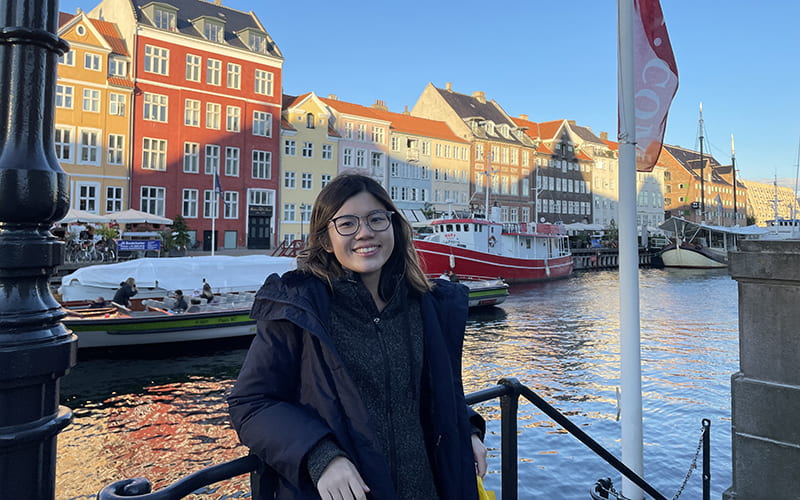
Alex Wong in front of the river, with a background row of houses. Credit: Alex Wong.

Credit: Alex Wong.

20 March 2024

By Alex Wong, Social Sciences BSc

Looking back, completing my undergraduate journey at University College London (UCL) was a most unique and fulfilling experience despite, or perhaps in addition to, being one of the lucky few to start tertiary education during the pandemic. Of the many memorable experiences I have had, one definitely stuck with me. During the summer before my final year at UCL, I had the wonderful opportunity to deep dive into academia beyond my programme diet by interning as a Research Assistant (RA) under Dr Katie Gaddini.

Dr Gaddini taught one of my core course modules during my second undergraduate year. Throughout the term, dissecting what good research is and being exposed to the multitudes of methods that are used in qualitative research increasingly motivated me to explore how the research process would look like ‘on the ground’ – the complexities behind brainstorming, data collection, analysis and write-up that did not make it onto the pages. 

Additionally, the political sociology classes I took further inspired me to explore some of Dr Gaddini’s publications on the intersections between religion and politics.

So, with a little courage, I reached out to her to share my interests in her research area as well as a rough idea: if I could take part in one of her current research activities. This marked the beginning of an exciting six-week journey.

Dr Gaddini very generously suggested that I could help with her ongoing research project as an RA. In our initial meeting, I learnt about the role I would play in her project, ‘The Politics of Religion.’ It was a steep yet highly rewarding learning curve, as I turned my attention to focus on how religion, specifically Evangelical Christianity, played a role in influencing people’s political beliefs in the United States. The experience was unforgettable, knowing that my contribution would work towards creating a more in-depth and nuanced understanding of the co-constitutive relationship between religion and politics globally. Being able to see in real time how the findings concur or challenge what I have previously discussed in my political sociology classes was an added bonus, further deepening my knowledge in the field during my internship.

(more…)

‘Psyched’ about education research

By IOE Blog Editor, on 21 December 2023

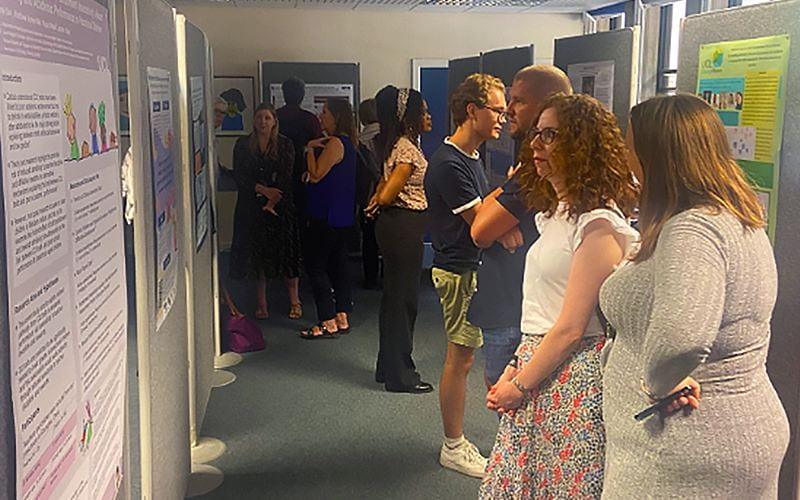
People walking around and looking at research posters during the conference. Image permission: Miriam McBreen.

Image permission: Miriam McBreen.

21 December 2023

By Zahra Siddiqui, Psychology and Human Development MPhil/PhD

This year, our Department of Psychology and Human Development (PHD – yes, the department, not the title!) organised the Psyched in Education conference to showcase all our ongoing work and research. This celebratory event featured presentations from every level of our development, from Master’s students through to professors. It was a great day to spend time with the department, celebrating the remarkable research we’ve been conducting, and fostering a supportive environment for discussing our work together. I’ll be going through some of my personal highlights from the day – and all the new things I learnt from the department!

The day was divided into four topics: mental health and wellbeing; schools and education; literacy and numeracy; and disability. I’ll be giving an overview of some of my favourite pieces of work from each of the four sessions. (more…)

Black student experiences in London, 1950s to 1970s – would you like to be interviewed?

By IOE Blog Editor, on 11 October 2023

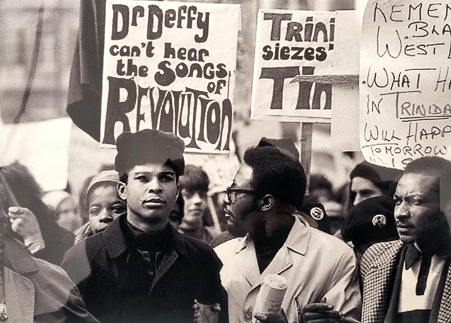
A group protesting in a rally organised by the West Indian Student Centre, May 1970. Courtesy of Black Cultural Archives, ref no: PHOTOS/173, photographer unknown.

A group protesting in a rally organised by the West Indian Student Centre, May 1970. Courtesy of Black Cultural Archives, ref no: PHOTOS/173, photographer unknown.

11 October 2023

By Uduma Ogenyi, PhD student at SOAS/IOE.

When considering what it means to build solidarities, particularly in the context of discussions around ‘decolonising’ universities today, there is much to learn from lessons of the past. My research is funded by a Bloomsbury Studentship and explores the day-to-day experiences of Black students on university campuses from 1956-1981, with a focus on SOAS, UCL and IOE (then a separate college of the University of London). In this period students in London were active in a range of anti-imperialist and anti-racist struggles, including the Anti-Apartheid Movement and the fight against the National Front. At the same time, however, Black students faced isolation, loneliness, racism, and discrimination on campus.

Why do Black students’ day-to-day experiences of discrimination so rarely inform our writing of student histories? And what can these experiences tell us about the struggles students face today, especially in the context of institutional co-option of radical demands? (more…)

‘What are the Social Sciences?’: Exploring something new from an interdisciplinary perspective

By IOE Blog Editor, on 29 June 2023

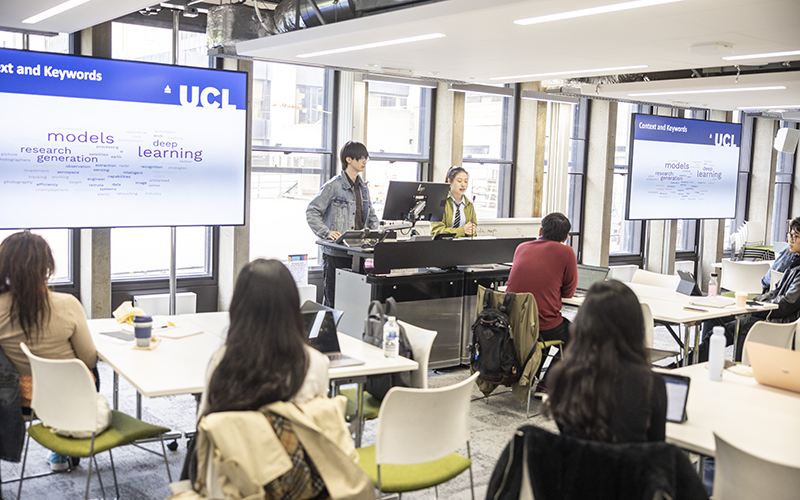
Students listening to a presentation inside a classroom. Image credit: Mat Wright for UCL IOE.

Image credit: Mat Wright for UCL IOE.

29 June 2023

By Ziqi Huang, Social Sciences BSc (class of 2023)

The Social Sciences BSc programme appeared as something similar to Sociology three years ago, when I was applying for my undergraduate study. It was a while after I began my study at IOE when it occurred to me that this title often seems strange to others. As I was discussing my future plans with a senior student one day, she commented in surprise, ‘You study Social Sciences? What programme is that?’ 

I tried to explain that it was close to Sociology. ‘But it is not Sociology, right? It sounds like your modules include a lot more than Sociology, and it’s a bit… confusing.’ 

She was not wrong. As Social Sciences BSc students, we had the opportunity to choose from a variety of modules that wouldn’t appear in a Sociology programme. I learned Psychology, Social Psychology, Anthropology, game theories, and even a bit of Criminology. It would be difficult for a Social Sciences student to summarise what they have learned over the years in one word. Surely, some see it as a disadvantage, as it feels like the programme has no clear focus and is therefore, ‘confusing’. 

At the time, I felt more or less disturbed by this idea – that my programme was too broad and not focused enough. The turning point emerged this year, as I started to work on my undergraduate dissertation. (more…)

Make the most out of UCL: My EPSURF fellowship experience

By IOE Blog Editor, on 15 May 2023

15 May 2023

By Jianuo Vivian Yang and Yuvin Lawela Kim, Education Studies BA*

*From the 2024/2025 academic year onwards, the Education Studies BA has been renamed the Education, Society and Culture BA.

The Education, Practice and Society Undergraduate Research Fellowship (EPSURF) is a research opportunity for undergraduate students in the Department of Education, Practice and Society at IOE, UCL’s Faculty of Education and Society. It gives students the chance to collaborate with a member of academic staff on an ongoing research project that interests them. (more…)

Becoming a researcher at undergraduate level: You can do this!

By IOE Digital, on 8 June 2020

UCL Changemakers

UCL ChangeMakers workshop

8 June 2020

By Omar Hallab, Social Sciences BSc

As someone who has been able to harness the power of conducting research at undergraduate level both inside the classroom through opportunities within my department and later outside university in the professional sphere, I am here to share with you the benefits I have gained.

1. Building confidence

As a BSc Social Sciences student, I have been rigorously trained in both quantitative and qualitative methodology.  Whatever UCL degree you are undertaking, you are likely to get exposed to research methodology in your field, especially through our Connected Curriculum ‘which aims to ensure that all UCL students are able to learn through participating in research and enquiry at all levels of their programme of study.’

The first time I witnessed real-life impacts of research at university was through a UCL ChangeMakers project – a Social Sciences Consultancy lead by Dr Katie Quy.  ChangeMakers funds departmental projects allowing ‘students and staff to work together in partnership to bring about improvements to the student learning experience at UCL.’ Our project consisted of collecting data from students to improve both their learning experience and student-staff relations. We designed a survey for students on our programme in order to gain insights into four key domains: demographics, module development, careers and administration. We then followed up by conducting focus groups. As a team, we analysed the data and synthesised findings in a report which we presented to our department at the end of the project. The department was very pleased with our work, and we have already starting witnessing fundamental changes in our educational experiences. For instance, the department has already developed new politics modules, and the Careers Service now specifically targets jobs for our degree.

The project felt very special since it was conducted by students, for students. I have been able to draw on and develop the methodology skills I acquired and I also got the chance to improve my writing and oral communication skills. Being part of this team exposed me to teamwork and constructive feedback and has allowed me to grow in confidence.

2. Career opportunities

My advice to current students is to definitely think about undertaking work experience during your studies. UCL has a plethora of resources to support you in sourcing meaningful, relevant internships that can help you work towards your future career. A lot of these opportunities are research-based, so do engage with UCL Careers!

In my second year I started seeking summer internships in the field of social research through which I could build on the skills I had been developing. I attended UCL Careers’ training sessions, which provide invaluable support on building your CV, writing your Cover Letter, finding internships and even editing your LinkedIn page. I decided to apply for an internship at Ipsos Mori and eventually received the position.

At Ipsos Mori, I worked as a Public Affairs/Market Research Intern in the Social Research Institute, with a focus on delivering large-scale evaluation projects for clients including the Home Office, Ministry of Housing, Communities and Local Government, Department of Transport and the European Investment Bank. I gained exposure to diverse projects, each expanding on my capabilities as a researcher. I had the opportunity to work on topics I was passionate about – from roads reform and community cohesion, to investment finance and trade policy post-Brexit. I was encouraged to design my own timetable, and think rationally about how to distribute my time across the different projects. This internship was fundamental in shaping my professional character. I learned to be flexible, work well under time pressure, pay attention to detail and remain organised. I was able to undertake training sessions that directly fed into the skills needed to complete the evaluation projects. One of my favourite aspects of the internship was the intellectual and critical skills it required me to draw on. I was asked to think about ‘the story behind the data’, and engage with ‘the ‘bigger picture’. I believe this approach has now streamed into other aspects in my life, whether it is in completing data collection for my dissertation or reading an article in The Economist. I also gained a sense of the kind of jobs I should be aiming for in the future.

3. Considering further study

Undertaking research experience at university can be a great way to build on your knowledge, and navigate your position in the world of academia. My advice is to go ahead and email your favourite professors whose research you are passionate about to ask about future opportunities – many staff are keen on and encourage student-staff collaborations.

Many departments and research centres here at UCL are on the look-out for current students to help on research projects that are relevant to the topics they study. During the summer of 2019, I volunteered as a part-time Research Assistant with the Department of Social Science. Led by Dr Rachel Rosen and Dr Veena Meetoo, the opportunity consisted of a mixed-method evaluation of a local authority (LA) project for unaccompanied asylum-seeking children (UASC). We critically evaluated the literature on community cohesion and integration in the context of UASC in the UK, and worked on developing a theoretical framework through which we could analyse the data collected – answering the question ‘What values do the concepts of “integration” and “community cohesion” bring in relation to UASC’s wellbeing.’

As someone who is passionate about the topic of migration, this was a great opportunity to understand the mechanisms through which knowledge is generated in the field and learn directly from leading scholars. Intellectually, it challenged me to build a theoretical framework, an opportunity that made me strongly reflect about whether I want to study a master’s related to politics and migration.

Finally…

My final piece of reflection is this: Research can be an inward-looking task. Through research, you will find yourself reflecting on your passions, your contributions to the world and what kind of jobs you would like to do in the future. You will discover a lot about yourself through the process, and hopefully, you will be grateful for the person you have become through your work.