X Close

Institute of Education Student Blog

Home

A blog on life at IOE and education affairs written for students by students.

Menu

Decolonising geography: How studying at IOE supported my PhD journey

By IOE Blog Editor, on 19 August 2025

A photo of Charlotte holding a microphone and giving a speech. She has long blonde hair and is wearing a grey blazer.

Image permission: Charlotte Milner.

19 August 2025

By Charlotte Milner, Social Justice and Education MA and Geography PGCE alumna


My journey in the field of education all started at the UCL Institute of Education (IOE) six years ago, where I studied for my PGCE in Secondary Geography. Engaging in intellectual discussions around curriculum and pedagogy, the philosophies of education, and the social constructions of knowledge, and then putting these ideas into practice in the classroom was a unique and exciting experience – I knew I wanted to take it further. I returned to complete my MA in Social Justice and Education part-time while teaching. Throughout this, I developed my specialism in decolonising geography, which I have engaged with in numerous ways.

But what does ‘decolonising’ geography mean? Recognising that there are different definitions and approaches to decolonial work, decolonising geographical knowledge and pedagogy varies from increasing and improving representation within case studies in diverse classroom contexts, to introducing children to varying worldviews when learning about geographical contexts, and much more. Through studying at IOE from my beginnings as a trainee teacher to MA graduate, my work in this area has continued to evolve and develop, and I am now looking at how geography can support children to imagine alternative futures through learning about coloniality and systemic racism and, crucially, resistance to these structures. I am embarking on a new adventure to study for a PhD in Educational Studies at the University of British Columbia (UBC), Canada, to explore this further.

Studying at IOE was crucial to developing my praxis and, ultimately, securing my place at UBC. Through completing the Wider Education Studies assignment for my PGCE, I had the academic freedom to explore any issue pertaining to ‘inclusion’ in geography. This is where I chose to explore the whiteness of geography and its impacts on global majority learners in London. I conducted interviews with global majority teachers to gain insight into their experiences of geography, and developed a set of classroom interventions for teachers to tackle the whiteness of geography. Developing my specialism, and embedding this in my practice as a teacher from the start, has opened doors to many opportunities. (more…)

On career trajectories and practice-based research in arts education: Art Education, Culture and Practice MA

By IOE Blog Editor, on 5 August 2025

5 August 2025


The Art Education, Culture and Practice MA examines the relationship between art practice, culture and pedagogy and enables students to develop innovative approaches to educational research across sites for education, such as art colleges, schools, galleries and alternative or DIY spaces for art education.

Three alumni of the programme reflect on the MA’s impact on their career trajectories.

Discover the archive of our alumni’s research and practice.


Reflecting on Britishness and colonial legacies

By Melise Djemal, Art Education, Culture and Practice MA alumna and Education Manager at The UK Crafts Council

Melise Djemal working in the Art and Design Studio.

Melise Djemal in the Art and Design Studio.

After many years working as a primary school teacher in various London schools, I wanted to critically explore the intersection of art, education, and culture, and the important ways they inform one another.

Portraits of Melise's dissertation exhibition on the wall.

Sediments, Melise Djemal, 2023.

The MA Art Education, Culture and Practice was perfect for this. It gave me the theoretical framework and practical tools to reflect on and challenge traditional models of schooling I had experienced. Studying the MA part-time also allowed me to embed what I was learning in real time, and I particularly appreciated how each module informed and deepened my understanding of research.

Now What, Melise Djemel. A page of The Cypriot Labyrinth overlaid on a child's photo.

Now What, Melise Djemal, 2023.

My dissertation research was pivotal in both shaping my academic development and my career direction. I used a practice-based research methodology to explore how schools shape identity, promote particular ideas of Britishness, and reflect ongoing colonial legacies. Through subsequent studio practice using printmaking and collage, incorporating family photographs and personal documents, I presented a range of personal and cultural references that have shaped my identity as a multicultural child raised in England, analysing the intersecting and sometimes conflicting narratives of British identity.

This research made me increasingly curious of the ways in which making, education, and cultural institutions can embed anti-racist and anti-elitist practices to challenge dominant legacies. This curiosity, and the desire to make meaningful change in education and the arts, led me to my new role as the Education Manager at the Crafts Council.

Lost everything but hope, Melise Djemal. A series of passport stamps overlaid on a child's photo.

Lost everything but hope, Melise Djemal, 2023.

At the Crafts Council, I lead on ‘Craft School’, a nationwide challenge for learners from EYFS, primary, and secondary schools. The programme supports educators to embed craft and making into the curriculum with confidence and promotes possible career paths for everyone in the arts. For every iteration of Craft School, I work alongside ‘Maker Champions’ to develop a brief that enables learners to respond through hands-on exploration, using our learner-centred pedagogy, ‘Make First’. I support the development and delivery of the programme by producing practical toolkits for educators, delivering CPD sessions, and chairing forums that bring educators together to share insights, their practices and shape the future of craft education.

Key concepts and experiences from my time on the MA continue to shape my thinking and practice. The course also connected me with a wider network of artists, educators, and cultural practitioners, relationships that have informed both my professional path and personal practice. Without the critical research and practical exploration, I developed on the MA, I wouldn’t have had the tools or confidence to lead national programmes like Craft School.

The MA has been instrumental in shaping my evolving journey as an educator and cultural worker, helping me stay grounded in critical reflection and collaborative practice. (more…)

My journey to becoming a feminist: From observations to understanding

By IOE Blog Editor, on 15 July 2025

A picture of Wendy Wen in a puffer jacket in front of a green field and overcast sky.

Permission from Wendy Wen.

15 July 2025

by Yi (Wendy) Wen, Higher Education Studies MA and Education Studies BA* alumna

*From the 2024/2025 academic year onwards, this degree has been renamed the Education, Society and Culture BA

From the beginning: Feminism and gender equality

As a Chinese international student, I began my academic journey, majoring in BA Education Studies at University College London (UCL). Before entering the UK environment, I never thought about feminism or gender – which seemed nearly apart from my life. I thought, ‘Feminism is a terrible thing, and everyone considers diversity and inclusion. Can paying too much attention to women and labelling us as a marginalised group really make society equal?’

In China, knowledge about feminism and gender is primarily acquired through social media and the internet, reflecting the digital age and the fourth wave of digital feminism. On Chinese social media, feminists from varying ideologies are usually stigmatised and called ‘fists’ or ‘fist-ism’. In Mandarin, the pronunciation of feminism and fist is the same –‘quán’. Ironically, we all knew it first served as an essential symbol in communist ideologies, and China is still under this type of ideology.

When I was young, I started to explore knowledge of gender and feminism, which can be considered sensitive content that ruins students in the Chinese academic environment. That is the reason why I, and other Chinese people, learn about feminism online. During my undergraduate study, I collaborated with three other Chinese feminists to write a blog designed for all Chinese students to understand the current situation toward female students.

After creating this blog, we four established a feminist WeChat group community called Chestnut. A chestnut is encased in a spiky, thorny burr. This outer shell symbolises the resilience and protective strength that is often necessary when navigating challenging conversations around gender and feminism, especially in contexts where these topics are deemed ‘sensitive.’ It represents our community as a safe and brave space, offering protection and solidarity, allowing us to explore and express ourselves without fear.

(more…)

From one spoon to many: How community spaces restore what capitalism takes

By IOE Blog Editor, on 17 June 2025

17 June 2025

By Gayathri Kumar Rajeev Mullath, Education, Gender and International Development MA

On 5 March 2025, Master’s students on the module Feminist Approaches to Knowledge and Pedagogy and Gender, Sexuality and Education were joined by undergraduate students on the module Gender, Sexualities and Feminisms in Everyday Lives for a visit to The Feminist Library in Peckham, South London.

Dr Hanna Retallack and Dr Sara Bragg were joined by a group of students to visit the collection of feminist materials and literature, and for a ‘zine making’ workshop.


I recently came across the Spoon Theory, which is often used to explain the experience of living with chronic illnesses or conditions. The theory uses “spoons” as a metaphor for units of energy. It’s a helpful way to visualise and communicate the limited capacity disabled or chronically ill people have for handling daily tasks, and it highlights the importance of prioritising and conserving energy.

It was on a one-spoon day that The Feminist Library trip had been scheduled. Contrary to my expectations, I had woken up with no energy or tolerance for inconveniences. I decided to not go alone but to meet the team at IOE, grab a sandwich, and travel with them so that I wouldn’t have to worry about navigating alone and could rely on the safety of being in a group.

Text says What your activities are worth in spoons. One spoon - Get out of bed / Take medication. Two spoons - Make breakfast / Shower or wash hair. Three spoons - Drive locally / Meet a friend at home. Four spoons - See your hospital consultant. Go to school or college. Five spoons - Go out for a meal with friends. Clean the house.

The Spoon Theory. Credit: Burning Nights CRPS.

I’ve come to realise that there’s something about community that a city like London often lacks. The kind of community where someone notices when you’re crouching or frowning and pops around to check on you, where someone understands when you just need a bit of rest, and where someone gives you a gentle nudge to do the right thing on a tough day. This “someone” isn’t always the same person, it could be anyone within a network of care. But this is something that spaces built on independence and individuality as liberation often miss out on. The West is rooted in ideals of individualism and independence, framing them as freedom, which stands in stark contrast to the values of interconnectedness found in many communities across the globe. Capitalism, in particular, thrives on this hyper-independence, using it to fuel consumerism, sell products, and often prey on people’s insecurities. (more…)

Our homes, our voices: Community action for better housing

By IOE Blog Editor, on 6 August 2024

Students and community leaders across London primary schools and UCL campaigning at housing action. Credits: Rui Zhang.

Students and community leaders across London primary schools and UCL campaigning for housing action. Credits: Rui Zhang.

6 August 2024

By Sophie Ho, Education Studies BA*

*From the 2024/2025 academic year onwards, this degree has been renamed the Education, Society and Culture BA.


Hermit crabs, 39 UCL students, a professor, eight London schools, and a national community organising group—what connects them all? A shared commitment to community action for change. As one of the fortunate students on the Educating and Organising for Social Justice module, I had the incredible opportunity to embark on a transformative journey that fundamentally reshaped my understanding of education, social justice, and the power of collective action.

What makes the Educating and Organising for Social Justice module so unique is how seamlessly it integrates different components across two terms. Over the first ten weeks, we engaged in fascinating lectures and interactive seminars, delving into the theories and history of educating for change and community organising. This foundation laid the groundwork for the second part of the module–the community organising placement in collaboration with Citizens UK. In teams of five, we brainstormed, designed, and ran a series of workshops in specific schools, culminating in a final action. This hands-on experience allowed me to witness firsthand how theory can bridge into practice, highlighting the importance of educating oneself before educating others.

This year, the module focused on the pressing issue of the housing crisis, aligning with the London mayoral election. This is a part of Citizens UK’s national Housing and Homelessness campaign, which calls on the UK Government to make change on three key demands:

  1. End child homelessness.
  2. Unlock the potential for more affordable housing across the UK.
  3. Publish a national home upgrade strategy to make existing homes safe, healthy and energy-sufficient. [1]

Too many Londoners live in mouldy, damp, and overcrowded homes despite rising rent prices. With at least 168,000 children in the UK living in temporary accommodation, and 1.3 million households in England on waitlists for social housing [2], it is clear that housing instability is a significant issue currently facing millions of people up and down the country. The magnitude of the housing crisis became clear as we learned about the dire conditions faced by many students we worked with, including mold, dampness, overcrowding, and the alarming number of children in temporary accommodation.

(more…)

Intercultural studies’ role in the quest for a place to belong

By IOE Blog Editor, on 6 July 2023

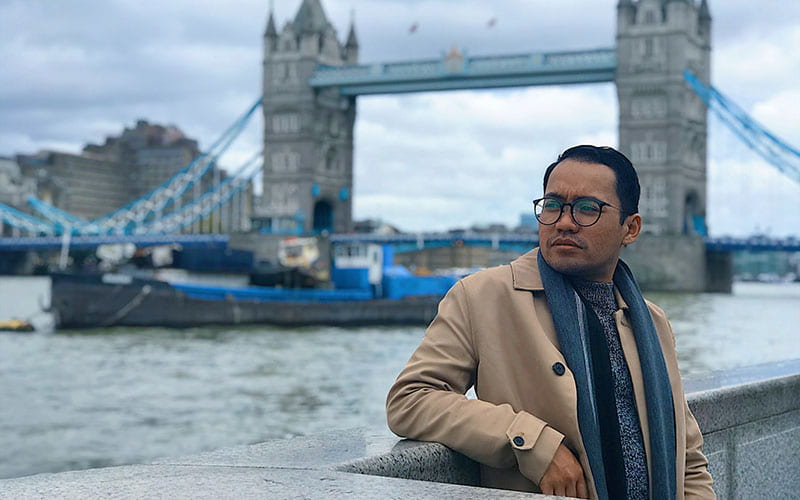
A photo of Aziz in front of Tower Bridge. Image permission: Aziz bin Arsyad.

A photo of Aziz. Image permission: Aziz Bin Arsyad.

6 July 2023

By Abdul Aziz Bin Arsyad (MPhil/PhD candidate)

When Professor Jeff Bezemer (Head of IOE’s Department of Culture, Communication and Media) delivered his welcome speech at an event marking the revival of the International Centre of Intercultural Studies (ICIS), he posed a straightforward yet significant question: “why do we still need a research centre that looks into intercultural studies?”

To respond to the question with a single answer would be reductive. But during the event on 8 March 2023, distinguished and experienced speakers from various fields of intercultural studies shared their insights. From a translation and dubbing project with Netflix to redefining intercultural competence for neurodiverse individuals, and poetry writing with refugees, a common thread ran through each presentation: a quest for a place to belong.

Intercultural studies and belonging

In his presentation, Professor Adam Komisarof asked the audience to think about the place of belonging in an intercultural world. For him, belonging is ‘personal involvement in a system or environment so that persons feel themselves to be an integral part of that system or environment’. Yet the question remains: how do intercultural studies help people find a place to belong?

One way to achieve it, as was evident in the inspiring work presented by intercultural studies scholars during the event, was the unyielding pursuit to redefine our places of belonging and the ongoing process of reimagining the role of culture in society, education and communication. This includes reconceptualising the notion of culture, language and learning, rethinking communication beyond human-human interaction and understanding the place of languages in fostering one’s sense of identity and belonging. (more…)

My route to IOE

By IOE Digital, on 27 January 2022

Pupils wearing blue uniforms and safety glasses in a Science class

Pupils at UCL Academy. Credit: Matt Clayton for UCL.

27 January 2022

By Kyle Meyers, Education (Science) MA

I was brought up in an environment of highly motivated educators in the form of my grandmother and both my parents. My mother has been a co-ordinator of the Pre–Primary section of a prominent school in south-central Mumbai and my deceased father, apart from being a radio-analyst by profession, was the proprietor of Meyers Teaching Institute, where he himself passionately taught along with a band of teachers. Since 2011, the demise of my father, I had to shoulder the mantle of running Meyers Teaching Institute, along with my mother when I was 15 years of age.

(more…)

Combining full-time studying with part-time working: if I could do it, so can you!

By Joana Maia, on 2 October 2019

2 October 2019

By Joana Maia

Does working while studying seem impossible to you? Would you like to combine your full-time studies with some part-time working, but you find that too scary? This blog was written for you, then! I will share with you my experience as a full-time MA student and part-time worker, and provide some tips which may be useful for those who are students and wish to start working.

Person working sat at a table with a notebook and a cup of tea

(more…)