
X Close

Institute of Education Student Blog

Home

A blog on life at IOE and education affairs written for students by students.

Menu

Decolonising geography: How studying at IOE supported my PhD journey

By IOE Blog Editor, on 19 August 2025

A photo of Charlotte holding a microphone and giving a speech. She has long blonde hair and is wearing a grey blazer.

Image permission: Charlotte Milner.

19 August 2025

By Charlotte Milner, Social Justice and Education MA and Geography PGCE alumna


My journey in the field of education all started at the UCL Institute of Education (IOE) six years ago, where I studied for my PGCE in Secondary Geography. Engaging in intellectual discussions around curriculum and pedagogy, the philosophies of education, and the social constructions of knowledge, and then putting these ideas into practice in the classroom was a unique and exciting experience – I knew I wanted to take it further. I returned to complete my MA in Social Justice and Education part-time while teaching. Throughout this, I developed my specialism in decolonising geography, which I have engaged with in numerous ways.

But what does ‘decolonising’ geography mean? Recognising that there are different definitions and approaches to decolonial work, decolonising geographical knowledge and pedagogy varies from increasing and improving representation within case studies in diverse classroom contexts, to introducing children to varying worldviews when learning about geographical contexts, and much more. Through studying at IOE from my beginnings as a trainee teacher to MA graduate, my work in this area has continued to evolve and develop, and I am now looking at how geography can support children to imagine alternative futures through learning about coloniality and systemic racism and, crucially, resistance to these structures. I am embarking on a new adventure to study for a PhD in Educational Studies at the University of British Columbia (UBC), Canada, to explore this further.

Studying at IOE was crucial to developing my praxis and, ultimately, securing my place at UBC. Through completing the Wider Education Studies assignment for my PGCE, I had the academic freedom to explore any issue pertaining to ‘inclusion’ in geography. This is where I chose to explore the whiteness of geography and its impacts on global majority learners in London. I conducted interviews with global majority teachers to gain insight into their experiences of geography, and developed a set of classroom interventions for teachers to tackle the whiteness of geography. Developing my specialism, and embedding this in my practice as a teacher from the start, has opened doors to many opportunities. (more…)
Black student experiences in London, 1950s to 1970s – would you like to be interviewed?

By IOE Blog Editor, on 11 October 2023

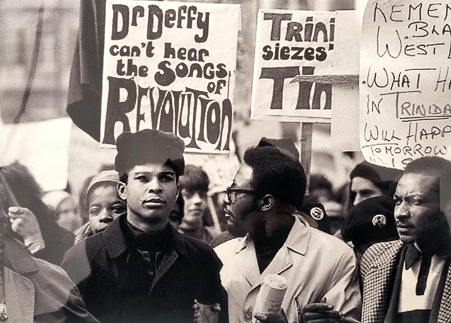
A group protesting in a rally organised by the West Indian Student Centre, May 1970. Courtesy of Black Cultural Archives, ref no: PHOTOS/173, photographer unknown.

A group protesting in a rally organised by the West Indian Student Centre, May 1970. Courtesy of Black Cultural Archives, ref no: PHOTOS/173, photographer unknown.

11 October 2023

By Uduma Ogenyi, PhD student at SOAS/IOE.

When considering what it means to build solidarities, particularly in the context of discussions around ‘decolonising’ universities today, there is much to learn from lessons of the past. My research is funded by a Bloomsbury Studentship and explores the day-to-day experiences of Black students on university campuses from 1956-1981, with a focus on SOAS, UCL and IOE (then a separate college of the University of London). In this period students in London were active in a range of anti-imperialist and anti-racist struggles, including the Anti-Apartheid Movement and the fight against the National Front. At the same time, however, Black students faced isolation, loneliness, racism, and discrimination on campus.

Why do Black students’ day-to-day experiences of discrimination so rarely inform our writing of student histories? And what can these experiences tell us about the struggles students face today, especially in the context of institutional co-option of radical demands? (more…)

‘African Apocalypse’: Unveiling the trail of colonial violence and its enduring legacy

By IOE Digital, on 22 December 2022

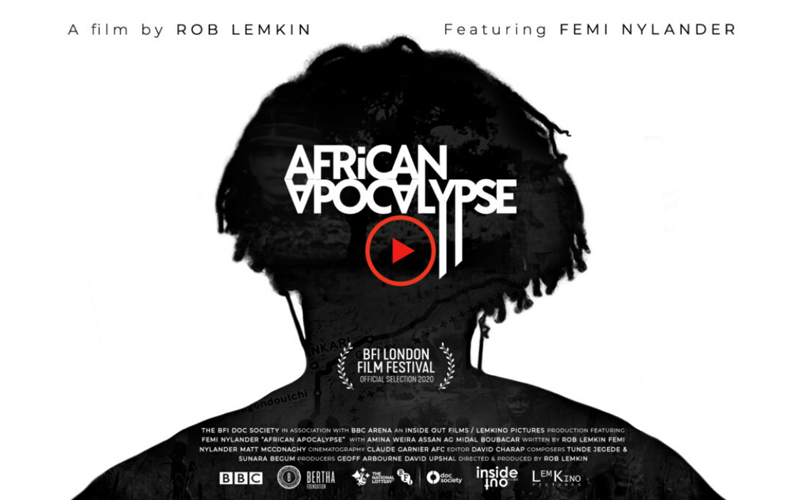
African Apocalypse

Film screening and debate at University College London, 15 December 2022

22 December 2022

By Sabina Barone, Social Science MPhil/PhD

‘This film is about ghosts. Ghosts of the past that even while they slumbered have continued to influence the present’ wrote Rob Lemkin, the director of the docu-drama ‘African Apocalypse’ screened at UCL on December 15th 2022. The ghosts are those of the victims of the 1899 French mission in what is now Niger, the uncountable men, women, and children brutally assassinated, whose obliteration broke the continuity with the ancestors and whose pain still troubles their descendants. But those ghosts are also the spectres of the perpetrators’ evil conscience, the ruthless inhumanity at the core of the so-called civilising mission of colonialism.

(more…)