X Close

Faculty of Brain Sciences Sustainability Blog

Home

Menu

Archive for the 'Uncategorized' Category

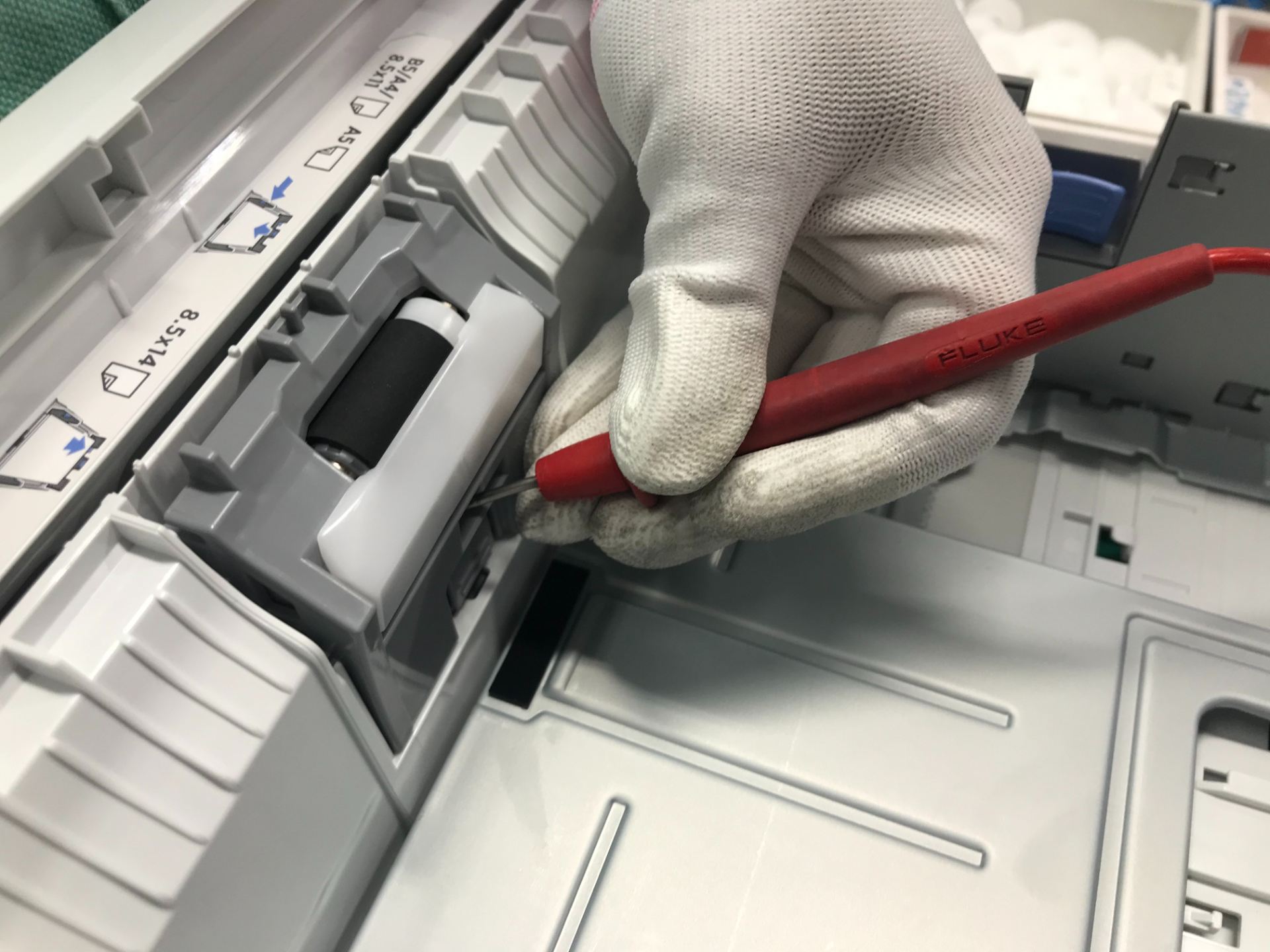
Reducing the energy of our printers

By qtnvphi, on 9 May 2023

Dave Hetherington, Divisional IT Manager within Psychology and Language Sciences (PALS), reflects on the ‘STOP PRESS’ initiative, designed to proactively address the wasted energy that our printers consume.

printer

We had a large number of older laser printers dotted around the division, which even when fully off would consume 0.6W per hour.

Over the course of a year, that would be £1.78 of wasted energy: remember, this is the device being fully off, but plugged into the mains with the switch on.

Now when you have approx. 70 odd similar devices, that begins to add up, 70 x £1.78 = £125.09 a year, for nothing.

As we all know, people don’t just leave their printers switched off, sometimes they switch them on, but even in ‘sleep’ mode, they would consume 8.5W an hour, still not printing anything yet, but our costs increase to £25.32 per year per device.

So for 70 devices, just in sleep mode, we are now looking at a bill in the region of £1772.15 per year, and we haven’t even printed anything yet!

Now as an example of how much these costs could rise, when the printer is sitting ‘Ready’ its energy consumption jumps to 14.5W per hour; again, we haven’t printed anything, but just by being ready to print, our energy consumption has nearly doubled.

If the devices never slept, that would be potentially £3.5k per year, still nothing printed, while most devices default to sleep after 30 minutes, we are looking at a potential bill of between £1,700 & £3,500 without printing a single sheet.

But what about if we actually used the printer?

Now while the actual energy usage varies depending on the content being printed, the example device* I’m using here has a maximum consumption of 780W whilst printing, and of course the relevant exponential costs that come with that.

So how did we address this?

Well initially this endeavour didn’t have a name, but as various office moves would take place, we would ask people if they really needed a printer in their office, it turns out that a lot of people didn’t really like having them in their office and also didn’t mind having to leave their office to get to a communal device, so we were able to encourage the removal of 18 devices for recycling in this phase.

Then during one of the Green Team meetings at the start of the pandemic, the STOP PRESS name was coined, and thanks to PALS’ culture of sustainability a lot of people just volunteered to give up the printers they had in their offices. The pandemic actually helped people to see that they didn’t need to print as much and this phase of the project resulted in 28 further devices being offered up for recycling over 18 months.

We raised awareness in various meetings: the IT Committee, PALS Staff meeting and of course PALS Green Team meetings. We added a page to the PALS Sustainability website to highlight the initiative and PALS Digital Signage & newsletters have a slide on this too.

We are now in a new phase, this one specifically targeted printers that are older, no longer supported by the manufacturer and those located in areas that still had excess devices in relation to the amount of computers/staff in that space, this phase should reduce our printer estate by a further 16 devices (7 agreed so far).

So what are you waiting for?

Encourage your departments to do the same!

If we can do it, anyone can.


*The device I’m using for this example is an HP LaserJet P3015.

The cost per day was worked out using the sust-it energy calculator site.

Photo by Phi Phạm on Pexels

How can we reduce the environmental impact of our research?

By qtnvphi, on 3 April 2023

As most people are aware, energy prices have been and could be still increasing. This is putting a direct financial pressure on any energy intensive operation, and scientific research can require a lot of energy.

At UCL, science facilities are responsible for about half of our energy consumption, and up to half of our overall carbon emissions. Within the Faculty of Brain Sciences (FBS), which conducts world-class research, these pressures are even greater.

So what can be done to mitigate our energy consumption, and reduce the environmental impact of our research, particularly without losing any of the benefits of our work?

In the Faculty, we see that there has been sector-leading efforts to address our sustainability. FBS has a senior committee tasked with addressing our sustainability. Members of this committee crucially include both academics and operations managers, ensuring all aspects of our work are considered.

This committee helped ensure that 100% of our laboratories participate within UCL’s LEAF programme, which aims to provide a standard in sustainable operations for labs like ours. Achieving this target meant engaging the entire Faculty, and has led to some significant wins, like improved sample tracking of departing staff to avoid build-up.

We also have used this committee to engage our academics on their ultra-low freezer temperatures, as changing the temperature from -80C to -70C will save 30% of the energy of the average UK home.

Looking ahead, the Faculty has been leading a programme of freezer replacements. To ensure that this programme will be as beneficial as possible to the planet, the embodied carbon of manufacturing and disposing the freezers was considered alongside energy efficiency.

This ensured that energy savings won’t come at the cost of manufacturing impacts. We targeted labs also which could replace two freezers with one, so that both energy and space requirements would be significantly decreased.

And looking even further ahead, we are participating in innovative research assessing the full carbon emissions of biobanking methods. This research will look into the full carbon emissions of our cold storage methods within the Dementia Research Institute, and assess how the move into a new facility can be as sustainable as possible. Look out for the research to be published later this year.

We face many increasing challenges, not least of which is that of our environmental sustainability. We hope to continue to contribute to addressing UCL’s sustainability goals, but also continue to drive leading research.

A perfect example of when those two efforts combine can be seen in the output of our very own Professor Sanjay Sisodiya. Professor Sisodiya studies how climate change can directly impact human health, and in particular how increased pollution levels can trigger variations in neurophysiological patterns and increases in epileptic seizures.

Such research is vital for both better understanding as well as highlighting why the actions we take as a Faculty are so important. We hope to lead – both in reducing our emissions while improving our knowledge surrounding the impacts and how to mitigate them. If you’re in FBS and interested in joining our committee, please contact John Draper (j.draper@ucl.ac.uk), or visit our web pages to learn more about how you can contribute to our shared initiatives.

Preparing future psychologists for the impact of the climate crisis

By qtnvphi, on 5 February 2023

Last week the Division of Psychology and Language Sciences (PALS) welcomed Bill McKibben, internationally acclaimed environmentalist and climate activist, to discuss the psychology of destroying a planet.

climate change

Bill is currently at Middlebury College in Vermont, USA. Among other books, he wrote The End of Nature (1989), considered the first general audience book on global warming. He also regularly writes for magazines such as the New Yorker and Rolling Stone, is a fellow of the American Academy of Arts and Sciences and has honorary degrees from 20 colleges and universities.

Bill has been awarded the Gandhi Peace Prize and Right Livelihood Award. He also helped found 350.org, the first global grassroots climate campaign. Watch a recording of his talk. 

A UCL module is equipping students with the knowledge and skills they will need in their future careers to engage with the threat posed by the climate crisis. Dr Fred Dick (PALS), who co-leads the module, said: “The sole underlying driver of climate change is human behaviour, which can be very hard to change. It’s vital for psychologists and behavioural scientists to understand the basic mechanisms of global heating so they can identify which behavioural interventions will be the most effective in reducing carbon emissions.”

PALS student Tobias Nash discusses his documentary on solving environmental issues

By qtnvphi, on 10 November 2022

Psychology student Tobias Nash from the Division of Psychology and Language Sciences (PALS) talks to Greg Cooper about his upcoming documentary set in the Andes Mountain Range (working title: Denizen, release date: early 2023).

The documentary focuses on what we can learn from the Andean cultures to live more in harmony with our environment. It will explain why our brain biases us towards non-environmental actions and how we can bias ourselves towards more environmental actions. Tobias is currently in his first year of BSc Psychology at UCL. He is also a student sustainability representative in the award winning PALS Green Impact Team.

Why did you want to make this documentary?

Most documentaries seem to focus on the problems, with only a small segment at the end offering a solution. We may leave feeling inspired for the next week, but the trouble is this often doesn’t precipitate into action as we don’t know how to prioritise issues and have not been told how to put the proposed solutions into practice. With countless issues and all of them being described as high-threat, we become overwhelmed with all the things we “must do” to survive.

I want to change this.

I am making a documentary all about solutions with the aim that you will watch it and better understand how you make decisions and how you can bias that process to act more environmentally.

Whilst studying psychology, I started to see that psychology could both explain global issues and offer solutions to them. Ultimately, environmental issues are caused by human action. Our actions are shaped by our thinking. So, if we can use the tools of psychology to transform our thinking, we can change our actions and help solve environmental issues.

How would you describe the common biases towards non-environmental action that we hold?

In this documentary I also want to mitigate the eco-anxiety that all of these lamenting calls to action vying for our attention induce. We are not terrible people (“bad consumers” as the narrative goes), our brains have neurologically adapted to bias us towards non-environmental actions. Fortunately, we can use these adaptations to our advantage and bias ourselves towards more environmental actions.

We are biased towards whatever the convenient option is. This is a neural adaptation that helps us to conserve resources (time, energy, money) which helps us to fulfill our most fundamental desire to survive and thrive. Our linear economy is structured so that non-environmental products such as single-use plastics and fossil fuels are often the most convenient options.

However by understanding our hierarchy of needs and engineering our decision making process by modifying our choices, we can bias ourselves towards currently less convenient, but more environmental options.

What kind of psychological tools are available to us? How will you be highlighting these tools in your documentary?

The desire to conserve resources is one of the fundamental ‘deficiency needs’ within Maslow’s Hierarchy of Needs. This means that although we may feel passionate about acting environmentally, this ‘self actualisation’ need comes way after fulfilling our need to conserve resources. Therefore, we can bias our choices by making certain options more or less resource-demanding, that is: more or less convenient.

For example, if plastic bags were not offered but hidden and bought at £1 per bag, they would be inconvenient to use and not resource efficient. Subsequently their usage would plummet. At the same time, those taxes could be funnelled into subsidising reusable material bags and offering recycling for worn bags. As this more environmental option is now also more convenient, we would both bias ourselves towards it and contribute to turning our linear economy circular.

Understanding how we make decisions and what our biases are empowers us to engineer our decision making processes and bias ourselves towards environmental actions. As we are neurally adapted to choose the path of least resistance, if you want to change behaviour, you need to play with friction. If you want to stop an action, put obstacles in the way of you performing the action and if you want to encourage an action, remove any barriers. For example, if you want to get into the habit of cycling to work, add barriers to driving (e.g lock your car keys in a safe) and remove barriers to cycling (e.g clothes ready and bike by the door).

Aside from these tools from behavioural psychology, the documentary will highlight the need to eliminate the concept of waste and change our mindset from linear economy to circular economy.

Waste is products that we don’t want anymore. They don’t disappear when ‘throw them away’, we simply move them out of sight where they trap valuable resources in a useless state. Instead, we can break down undesired products into their component raw materials to replenish our finite stores of natural resources.

Professors, researchers and influential figures in sustainable industry will be featured explaining these key concepts and psychological tools, showing us how we can bias ourselves (personally and corporately) towards more environmental actions.

Where can we see your documentary?

It is likely that the documentary will initially be released on YouTube. But discussions with distribution companies are in progress. The goal is to share this knowledge with as many people as possible so that many people can use it to live more environmental lives.

Could you tell us about the #MyNextStep campaign?

We are all on a journey of living more in harmony with our environment. This is a constant process where we need to take step after step to become more environmental than we were before. The #mynextstep campaign, which will be launched on UCL PALS Instagram, is about creating a culture of moving forward and living more in harmony with our environment day by day and step by step. Your commitment to becoming more environmental will create change.

Where can we hear more from you?

I will be posting content and updates on my Instagram @tobiasnashofficial.

Find out more about what Toby and the PALS Green Impact Team are doing

Ear Institute technicians’ contribution to sustainability

By qtnvphi, on 4 November 2022

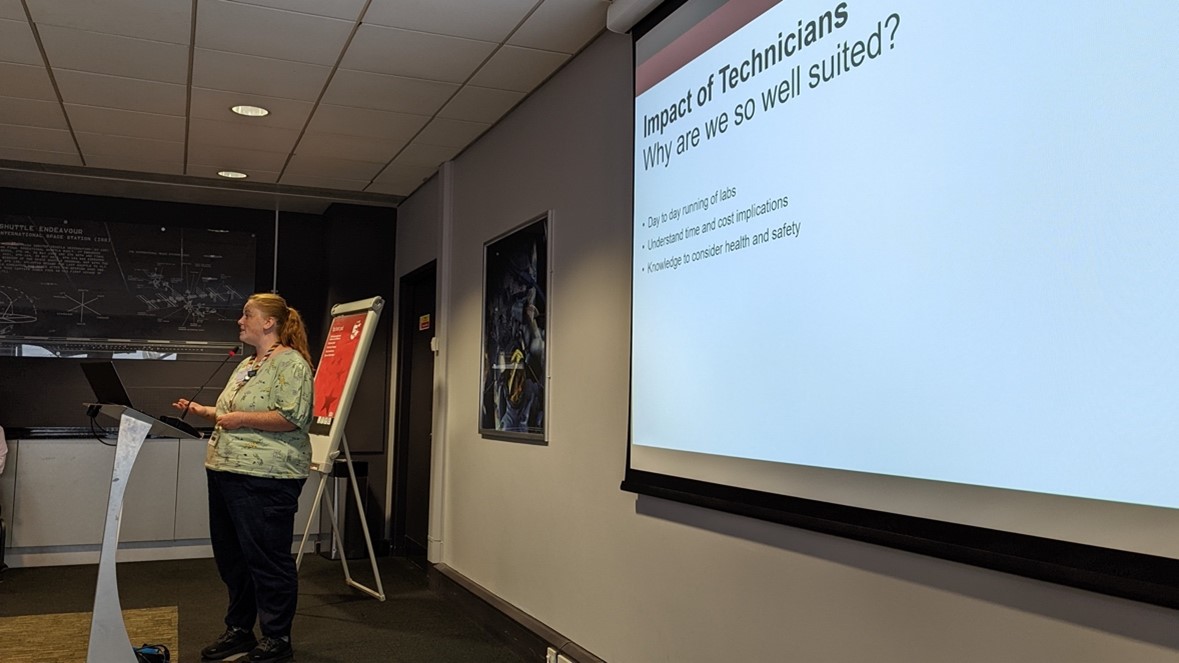
Ear Institute technicians

Caitlin Broadbent from the Ear Institute reflects on the contribution of technicians to sustainability.

The Royal Society of Chemistry organised a National Technicians’ conference in September themed around sustainability. Not only was this conference aimed at environmental sustainability but also sustainability of the technical workforce, ensuring that knowledge and skills were passed on. It was run as a hybrid conference, with in person delegates and others joining online.

Matthew Bennet, from University of East Anglia and seconded to help UCL with LEAF, approached me to speak about the sustainability efforts at the Ear Institute and I was more than grateful to oblige.

I wanted to convey the breadth of contributions from our technicians to sustainability in our department. Senior Technician Graham Nevill worked with Research Associate Steve Terry to produce our wonderful roof garden. Research Technician Scott Tytheridge is my Co-Lead for LEAF and helped us achieve Silver last academic year. Jake Cable and Modesta Blunskyte-Hendley, previous and current Research Technicians, came up with the idea and did the work needed for us to move to reusable fly vials. I also spoke about stepping outside of my comfort zone and learning more about audiology and sustainable education so I could support Martha Grech, one of our teaching team, with embedding sustainability in the curriculum.

We also heard from Martin Farley about LEAF and changes to criteria, and from Lee Hibbett of Nottingham University about their efforts in lab sustainability, which gave the audience many new ideas. I hope I encouraged even just one technician to think about the impact they could have by making sustainable changes in their labs.

Leading sustainable change

I have been so fortunate to have wonderful support from my department and my line managers in leading in sustainability. I moved to the Ear Institute on a secondment from the School of Pharmacy, where Alison Dolling was leading the LEAF movement in the teaching labs. I really wanted the Ear Institute to do the same, and so in my position as cell and molecular biology technician I started making some changes to consumables we bought and how we separated waste, to achieve Bronze. Then I set up a formal sustainability committee that now meets once a month, and we’re part of the Faculty Sustainability Committee led by John Draper from the Division of Psychology and Language Sciences.

Supporting others

We have a thriving Drosophila lab with incredible research technicians. A discussion with Jake Cable about fly vial waste led to a cost/waste analysis, and with the PI’s support – Prof. Joerg Albert, they moved to reusable fly vials. With the work of Modesta Blunskyte-Hendley and Ole Sudland, they went from disposing of ~1400 vials per month to reusing them.

Modesta kindly calculated the costs, labour and water for me. The fly lab go through approximately 15 trays of 100 vials per month, each tray taking 1 hour to remove the food, initial soap wash in the sink to remove food and placing in trays for dishwashing. Then an additional 5 hours to move the vials in/out of the dishwasher/autoclave which another Research Technician, Judy Bagi, also assists with, and into the trays for refill. Thus, extra labour is ~20 hours per month of a technician’s time. Cost wise, single use vials are £33.67 per tray (100 vials) whereas the reusable vials from Fly stuff cost the equivalent of £20.60 per 100 vials. Finally, we found the water consumption increased on our end, we used approximately 1800L extra per month with the initial rinsing, not including the dishwasher.

Given the extra labour and water usage, the team have moved to a mixed situation where we have some reusable vials, but still use some single use vials where needed.

Influencing for change

Coming from a more chemistry-based School of Pharmacy lab, I was used to seeing glass pipettes used in wet labs, so found that the waste from our single use serological pipettes was excessive, particularly in the molecular biology wet lab. I applied for £1963.69 from UCL’s Sustainability fund to buy a dishwasher part and some initial glass pipettes to allow us to move away from single use plastics in the wet lab. I put together a document on how to use them, where to put them for cleaning, where they would be stored and thought that would be enough to get people to make the move to reusable glass. I was wrong! I spoke to some of the lab users that were using the most plastic pipettes and came up with ways to make it easier for them, including having their own supply in their drawer, me collecting the pipettes and taking them to wash and slowly use increased.

Looking at the impact, it does appear that we have moved back to using more single use plastic pipettes, so the work continues and never stops in understanding the barriers to people making the change. I now include this in lab inductions and hope that the new lab users coming through can help us shift the culture towards reusable.

Learning new things

Finally, I wanted to show the other ways we, as technicians, can support other changes, outside our normal environment. We teach BSc and MSc Audiology at the Ear Institute, and through a pledge from the Faculty, I wanted to help embed sustainability in our curriculum. Through working with Martha Grech, one of our clinical teaching team who was leading on sustainability in teaching, we discussed how we can include sustainability in our new BSc programme from the start, and hopefully move to include more sustainability in our MSc programme going forward.

It has proven difficult finding ways to relate Audiology teaching to sustainability, particularly in some of the foundation science modules, but by using the UN Sustainable Development Goals we have found opportunities including ‘SDG3: Good Health and Wellbeing’ – our students will be healthcare practitioners so will be working to ensure their patients have good health, ‘SDG 10: Reducing inequalities’ – our students will be working with the Deaf community and those who are hard of hearing, so are the forefront of ensuring these patients have access to technologies that can improve their hearing if they wish.

Through ‘SDG4: Quality education’, we can ensure that our future audiologists are working to advocate for their patients in their healthcare choices. Ensuring I had enough knowledge to support Martha with this was difficult and meant stepping outside my comfort zone, but it has been incredibly interesting to learn more about what we teach our students and how that can help patients in the future.

Impact of technicians

Overall, I think technicians are incredibly well suited to making sustainable changes. We are involved in the day to day running of labs and logistics. We make procurement choices and can ensure the products we buy are not just greenwashed. We know the health and safety required to make changes e.g. where biological safety is concerned, and we can assess the impact on labour and costs. Technicians can have a big impact in the labs and further afield, after all ‘Technicians make it happen’.

View the conference sustainability slides (PDF document)

Green impact in the Institute of Ophthalmology

By qtnvphi, on 5 October 2022

Green impact

The Institute of Ophthalmology (IoO) has again achieved gold for Green Impact and LEAF and additionally received an award from the ECL Small grants Scheme. The team led by Jill Cowing have worked hard to improve the local environment, reduce waste and minimise the Institute’s carbon footprint but still has a long way to go. Jill reflects on recent green initiatives at the IoO.

Some things we have focused on in 2022 are to revive the IoO garden and set up a cycle club.

The IoO had a small area of land around some lecture cabins which had been neglected for many years. Around five years ago some members of staff got together decided to create a garden where we could sit outside to have lunch and even the odd meeting.

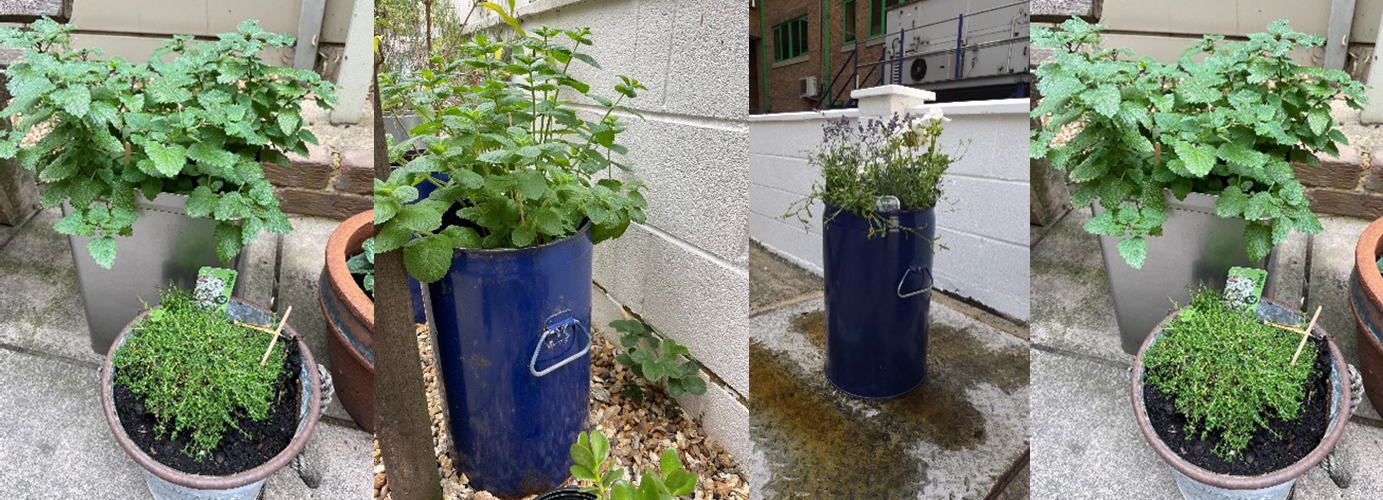
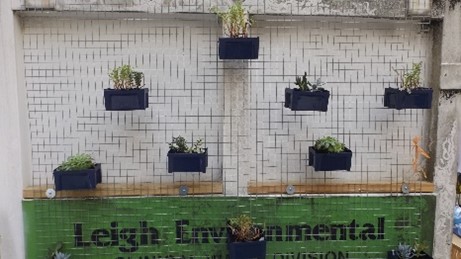
We used old items from labs and repurposed them as planters. One of these was a racking system in which we planted lots of herbs. All was going well until COVID struck and IoO closed down for all but essential work. As a result of this many of the plants in the garden were no longer cared for and died. We have now replaced many of the plants and with a generous award from the ECL Small grants Scheme, and purchased lots of new herbs. In particular, we have several varieties of mint including spearmint, apple mint, chocolate mint and garden mint. Some of the other herbs we bought were borage, thyme, sage, parsley, camomile and chives.

The idea of the herb garden is to provide fresh herbs for anyone wanting to take a little home to put in their cooking but they also attract insects and smell wonderful when you brush past them, particularly the lavender. We now have a small team who are once again looking after the garden and watering regularly so hopefully this time everything will continue to grow and flourish once again.

plants at IoO

Queen Square Institute of Neurology celebrates success at UCL Sustainability awards 2022

By qtnvphi, on 7 September 2022

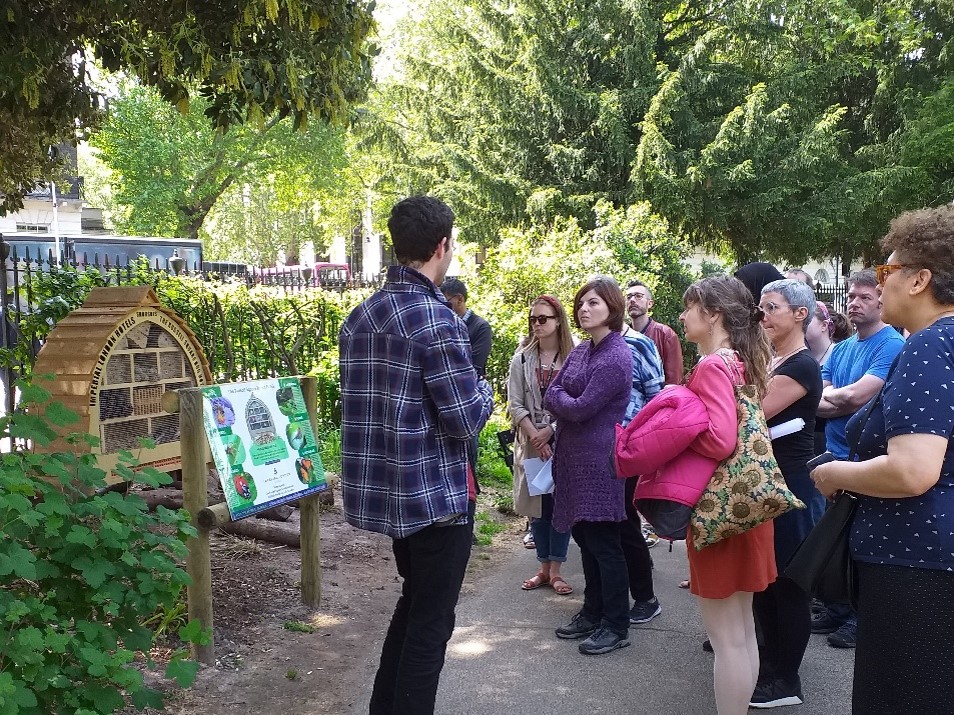
Bird walk

Green Impact and LEAF

The awards were made in recognition of the innovative best practice across the Institute, examples of which can be found on our Sustainability pages and builds upon our success at previous awards. The UCL sustainability team congratulated those who had taken an Institute wide approach to Lab submissions, including ION, for which they thanked Steffy Czieso (ION Labs Operations Manager) for co-ordinating.

Steffy Czieso, ION Lead for Laboratory Efficiency Assessment Framework (LEAF):

“Lab based research is incredibly resource intensive and the use of plastics and energy consuming equipment is unavoidable. The Queen Square Institute of Neurology is a world-leading centre for neurological research within UCL and I think it is our duty to find and implement ways to make our research as sustainable as possible. Working as a team, creating awareness amongst the research community and applying best practice can make a huge difference and therefore I am very enthusiastic to work with IoN lab staff, UCL sustainability teams and Estates to build a greener lab environment.”

Sarah Lawson, ION Lead for Green Impact (Office Sustainability):

“I have worked on Green Impact with an increasing number of ION departments over recent years, and am delighted to see how Sustainability has become increasingly embedded in ION culture. However, the pressure to act is also increasing, and I invite all ION staff and students to act together to take up UCL’s challenge: “we can change what’s possible tomorrow, by making a change today.”

Sustainability Research Award

Professor Sanjay Sisodiya (Deputy Director for Sustainability and Climate Change, UCL Queen Square Institute of Neurology) was presented with the Sustainability Research award for co-ordinating investigations of the impact of climate change on people with neurological conditions. To address these issues, Professor Sisodiya established a consortium of neurologists, scientists, epilepsy nurses, representatives from industry and charities supporting people with epilepsy, called Epilepsy Climate Change.

Recycle the present, save the future! ION Green Day July 2022

ION celebrated our success at the awards at several ION Green events in July, including a Lab Repair Workshop and a “Meet your ION Green and Lab Champions” demonstrating ION sustainability activities​, Lab freebies, Sashiko embroidery, book swap, and Toast beer tasting. We invited people to make pledges, and list goals and challenges they have for their department/team, and what sustainable lab initiative or improvement they would like to see at ION. We also showcased our Sustainability activities at the ION Summer drinks.

UCL’s Centre for Behaviour Change relaunches the Environment & Behaviour Hub

By qtnvphi, on 1 August 2022

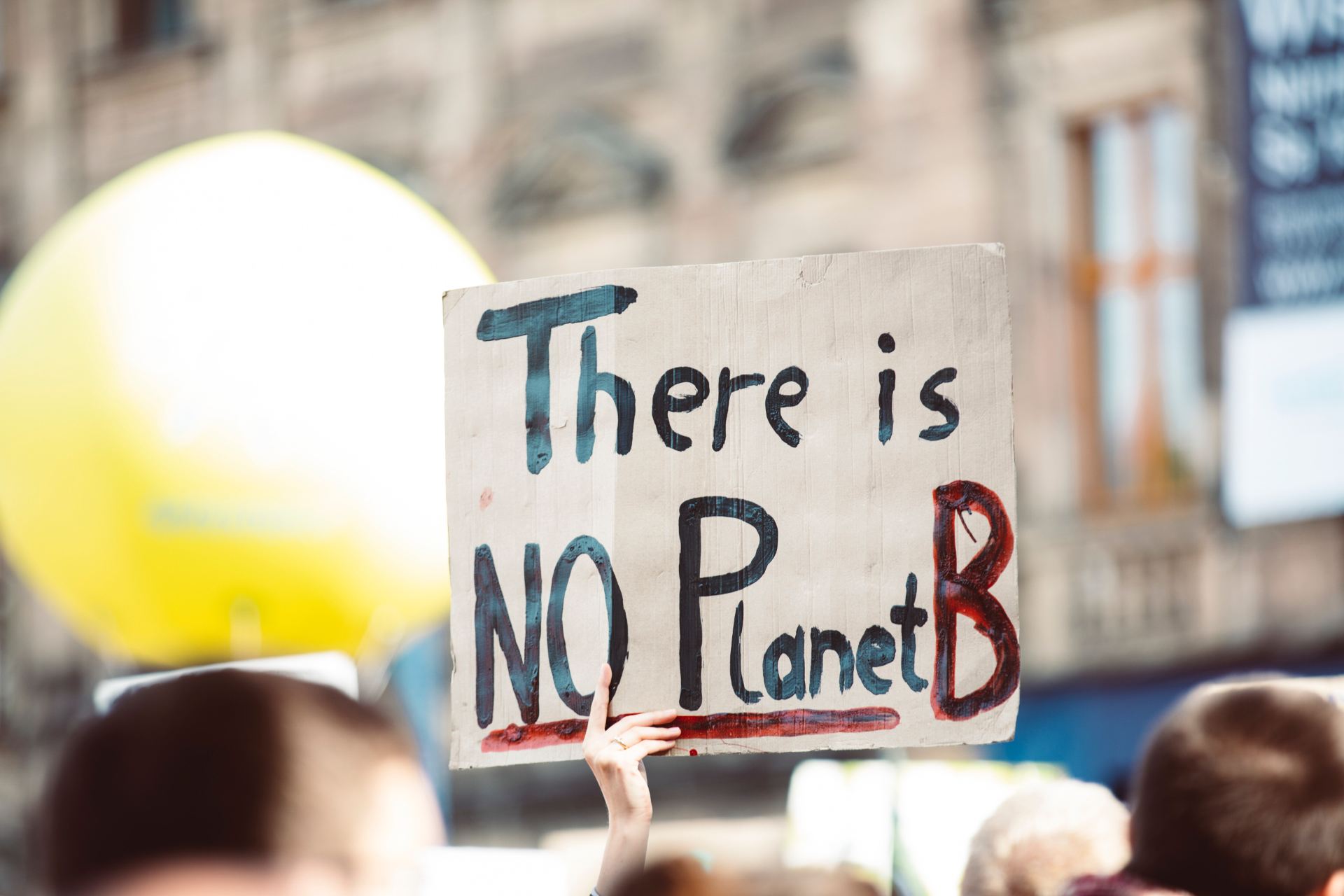
There is no planet b

Last month UCL’s Centre for Behaviour Change relaunched the Environment and Behaviour Hub. Maria Lunetto highlights the aims of the hub and network, and invites interested groups and individuals at UCL to get involved.

What is the Environment & Behaviour Hub?

We are a member-led network for anyone with expertise or interest in understanding and changing behaviours that affect the environment. Our objective is to bring people together to connect and exchange skills, ideas, and resources.

Today we have more than 450 members from academia, the public and private sector. We share a monthly newsletter in which we spotlight a person, organisation, or project related to environmental issues and behaviour change and post job opportunities, events, and news. We also run a LinkedIn group, which allows members to ask questions, promote their work, and discuss ideas. In the past we have also led webinars and interviewed experts in sustainable behaviour change about how they use behavioural science in their roles.

Why Environment and Behaviour?

In order to successfully tackle sustainability challenges large scale behaviour change is needed. This includes individual consumer action, such as recycling, reducing meat consumption, and buying less products. More broadly though, it also includes behaviours that are not related to consumption, but that address the political landscape. For example, protesting, voting, and taking part in citizen assemblies are also behaviours that can help to address environmental challenges. However, behaviour change is not only required on the individual level but extends to the organisational and governmental level. In fact, the UK Climate Change Committee has estimated that 62% of emission reductions to meet the national net-zero target will rely on behavioural changes. The other 38% will come from low-carbon technologies and fuels. In reality, these also represent changes to human activity given that technologies and fuels are things used by people—in other words, 100% of reductions necessitate that people behave differently.

Using behavioural science to address climate change is a relatively new approach. It aims to explore why people behave in a certain way, and what hinders them to exert a different, potentially more environmentally friendly behaviour. Based on these insights, behavioural scientists/designers/architects (there are many names out there) design interventions that are specific to the context and the people that interact with them. For example, governments may want to prompt citizens to use less energy. In a context where people are relatively wealthy, strategies around highlighting the estimated lifetime running costs of appliances may not be effective. Changing default options to more energy saving settings or benchmarking one’s own consumption against that or peers (e.g., messaging ‘Your energy consumption is higher/lower than that of most of your neighbours.’), however, could achieve impact at scale.

Understanding and tackling behavioural sustainability challenges can be very complex. They often include a multitude of people with diverging interests and understandings of the problem and the desired outcome is not always clear. Given this complexity, we wanted to crate a platform where people interested in the field, regardless of whether they work in academia, the public or the private sector, have a chance to exchange experiences and resources or find partners for collaboration.

If this sounds like something you would be interested in feel invited to join our LinkedIn group or subscribe to the monthly newsletter. If this is not enough for you and would like to get involved in running the Environment & Behaviour Hub, feel free to send an e-mail to maria.lunetto.19@ucl.ac.uk.

Photo by Markus Spiske on Pexels

Sustainably balancing the wellbeing of people and our planet

By qtnvphi, on 30 June 2022

ucl quad

Bella Vivat and Annie Jeffery, co-leads of the Green Team in the Division of Psychiatry are running an online workshop on 6 July, exploring sustainability, including wellbeing, in the context of current environmental and mental health crises.

Our workshop is entitled: “Sustainably balancing the wellbeing of people and our planet: Learning from lockdowns and the intersecting climate, environmental, and mental health crises”. It is a contribution to the upcoming online international conference: DSA2022: Just sustainable futures in an urbanising and mobile world, 6-8 July 2022.

We designed our workshop to encourage and facilitate small group discussions with international delegates around the issues that particularly concern and interest us regarding sustainability, on which we are leads in our Division. These issues also overlap and interact with our research interests, Annie in mental health, Bella in spiritual wellbeing at the end-of life.

We have two colleagues from beyond UCL who will be joining us as facilitators of the small group discussions. Asmita Pasnaik is a newly qualified architect from Mumbai, who is interested in making urban space more responsive to human needs. Xandra Miguel Lorenzo is Spanish, and works in the field of domestic violence, with a special interest in how outdoor spaces can benefit women who are experiencing domestic violence, particularly during pandemic lockdowns.

DSA2022 conference organisers have thought carefully about online conferences and the issues they raise for delegate fatigue and disconnection. The organisers encourage contributors to share materials in advance, to enable delegates to reflect ahead of the conference, so that conference sessions can prioritise discussion rather than information sharing. We have collected key resources to share with delegates ahead of the workshop, for use as a springboard for further development in the small groups in our breakout rooms. We all hope the mutual exchanges in our workshop will benefit our learning as well as that of delegates, and we hope to gain rich material for further reflection and to share with our Divisional colleagues.

DSA2022 is the most recent of the annual conferences run by the UCL-based Development Studies Association. Registration is still open, and both delegates and non-delegates can sign up to attend the pre-conference webinars: DSA2022/Pre-conference webinars and conference plenaries.

Developing the UCL Ear Institute roof garden

By qtnvphi, on 9 June 2022

UCL ear institute roof garden

A team in the UCL Ear Institute were highly commended in last year’s UCL Sustainability Awards for their sustainable roof top garden. Graham Nevill, who co-led the initiative, reflects on the creation of the garden as a place for relaxation and recreation.

The Ear Institute was created in 2004 using part of the site of the now closed Royal National Throat Nose and Ear hospital on Gray’s Inn Road.

On the third floor is an open roof terrace which after the purchase of tables and chairs is often used by staff for lunch breaks and occasional work-related gatherings. It is an open area of concrete tiling that presents a hard uninviting aspect especially as the area, although surrounded by a low perimeter wall, is often exposed to full sun and can be quite windy at times.

The department is making moves to address sustainability by various initiatives but what we felt was needed was a definite greening of the roof space, not only to give staff a more welcoming area but to encourage, albeit in a small way, an increase in insect biodiversity by creation of a roof garden designed to encourage local fauna.

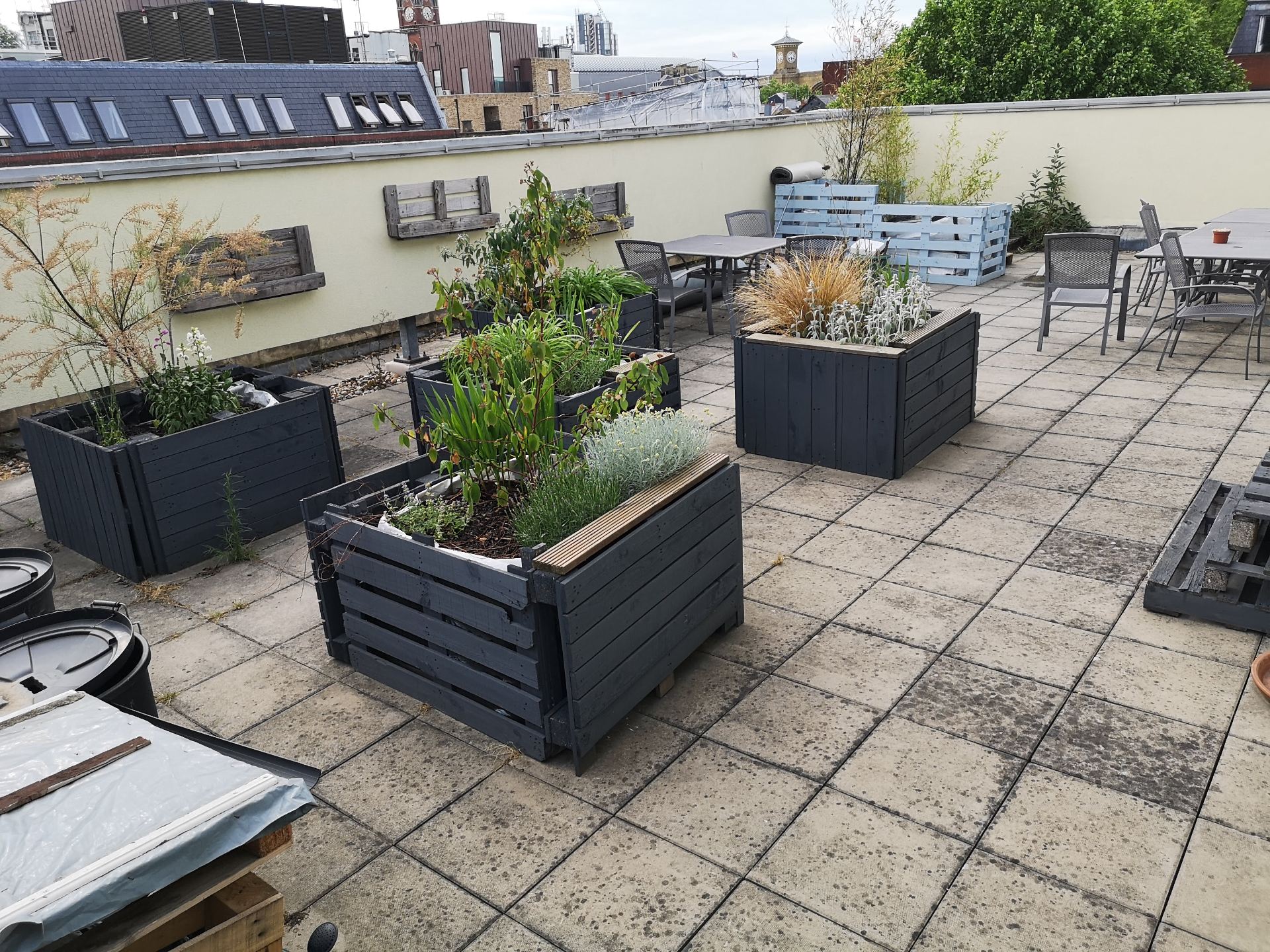
It was not considered in keeping with sustainable principles if we just went ahead and bought from a supplier all the necessary timber which would also be quite expensive. We designed a garden consisting of five, one metre square raised bed planters made from discarded wood pallets which were found within easy walking distance from the Ear Institute.

Four pallets would be used for each bed by standing them on end and securing the resulting square by drilling together with batons. These were then painted in a weather resistant wood paint and the inner surface wrapped with black weed proof membrane and inside was placed a durable, thousand litre builder’s hippo bag.

It was a bit of a struggle to find a supplier for bagged soil who would deliver to the area as many would bulk deliver, but only onto the pavement. Eventually soil was sourced that proved to be excellent, a heavy mixture of rotted manure and compost that would hold moisture far better than normal garden compost. We thought it would be excessive both in weight and cost to fill each hippo bag fully and so, since most plants will only need the top third of the bag to root, we decided to fill the bottom two thirds with inert material followed by rotting wood to facilitate slow nutrient release, then topped with a square of turf to stop the soil falling through.

We created a planting scheme that used plants able to resist the drying conditions, examples were either bought from Camden garden centre of from donations from staff members gardens. When plants had been added to the beds, a layer of wood chip was added to mulch the surface to reduce water loss.

We always recognised that watering would be an issue as there is no tap on the roof, the only source being the lab below and a number of trips up and down stairs to do the watering. To provide an immediate source we constructed a rain water collection point consisting of a large flat collection surface running via some discarded guttering into a normal black plastic covered dustbin. The water does tend to be used up quite quickly in hot weather so we are still having to occasionally bring water up from downstairs.

While the roof has now been made a more pleasant place for relaxing there was still the problem of a lack of shade in the heat of the day. Creating a large amount of shade was never going to be possible mainly due to the windy nature of the roof damaging any structure and parasols were considered unsuitable as they could blow off the roof.

A limited solution was the creation of a shaded corner using the height of bamboo plants planted into a similar arrangement as the main beds. A central focus was a small solar powered water fountain set into pallets around which was placed pallet seating with a carpet covering and cushions fashioned out of foam packaging. We felt this would fit into the college aspiration of creating a relaxing wellness space for people to gather around. So far the work has been well received and a spacious but sterile area transformed into a welcoming and relaxing space that hopefully, does at least a little to encourage wildlife into the local area.

Wild Bloomsbury

UCL is working in partnership to create a ‘Wild Bloomsbury’: improving biodiversity, supporting wellbeing, building climate resilience and reducing air pollution for our local community. With our goal of creating 10,000m2 of extra biodiverse space by 2024, we have the opportunity to demonstrate the benefits of nature based solutions, while forming strong community partnerships and making a better Bloomsbury for everyone. Find out how you can get involved