Close
Close


Join us: Centre Assistant
By Ellie Forward, on 17 February 2017
UCL Faculty of Laws at is one of the world’s leading law schools, with a world-class academic reputation for both research and teaching excellence. Our research not only enhances the quality of our teaching and research supervision, but contributes to solutions for global challenges while shaping policy and the practice of law.
The Faculty of Laws has a talented group of environmental and energy lawyers with a wide range of scholarly interests. They have built up an impressive reputation for academic and policy oriented research, and developed an exciting suite of world-class courses for delivery to a diverse body of talented and committed undergraduate and postgraduate students.
The Centre Assistant will report to and work in collaboration with the Director of Centre for law and the environment. The successful candidate will be responsible for supporting the teaching and research activities of the Centre for Law and the Environment.
Brexit and Environmental Law
By Richard B Macrory, on 16 February 2017
The House of Lords European Union Committee published its report “Brexit: environment and climate change” on February 14. The wide-ranging report gives a valuable overview of policy and legal challenges that will emerge over the next few years. It notes:
“Policy stability will be crit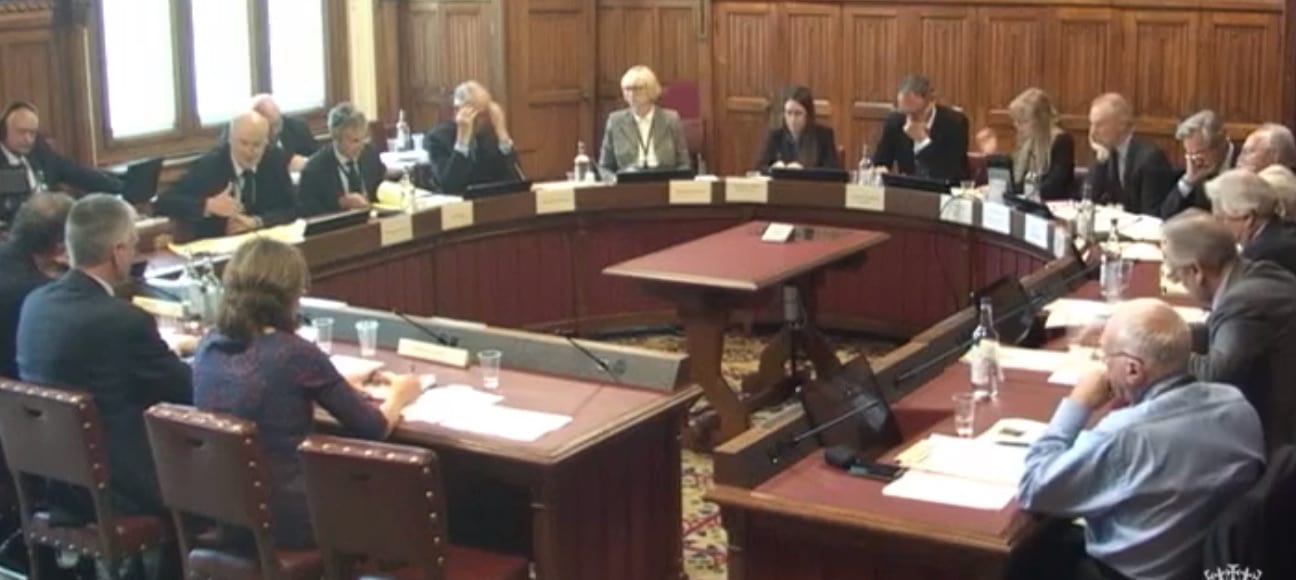 ical during the process of, and in the immediate aftermath of, withdrawing from the EU to avoid the emergence of legislative gaps and avoidable uncertainties in the sphere of environmental protection. Once the UK has withdrawn from the EU, environment legislation and policy will be more vulnerable to short term and less predictable changes at a domestic level”.
Professor Maria Lee, director of the Centre, and Professor Richard Macrory gave oral evidence to the Committee at the end of last year and their views feature prominently in the report.
Brexit-Environment-Climate-Change-Written-Oral-Evidence-Volume 2
Environmental Crime
By Richard B Macrory, on 9 February 2017
Ray Purdy (H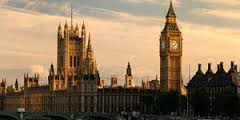 on Sen. Research Fellow) and Professor Richard Macrory took part in a Parliamentary Breakfast briefing on 31 January discussing environmental crime. Ray Purdy spoke about the increasing potential of satellite technology to detect environmental crime, while Richard Macrory argued for the need of the full range of criminal and administrative sanctions needed to tackle the issue. The event was coordinated by the Parliamentary Office of Science and Technology (POST) and was attended by MPs and other experts. Details including a summary of the discussion can be found at https://www.parliament.uk/mps-lords-and-offices/offices/bicameral/post/post-events/environmental-crime/
UK Environmental Law Association and BREXIT
By Richard B Macrory, on 13 January 2017
BREXIT represen ts a major challenge for the future of UK Environmental Law. Professor Richard Macrory has been appointed co-chair of the UK Environmental Law Association’s Brexit Task Force – its immediate task is examining how EU environmental law has been integrated into the national system, and the extent to which the “Great Repeal Bill” (expected in May) is able, in the interests of legal stability, to achieve its objectives of rolling over EU law until the opportunity is taken for review and reform.
UCL lunch hour lectures
By Maria Lee, on 11 January 2017
Centre members Professor Joanne Scott and Professor Maria Lee are both giving a UCL lunch hour lecture this term, watch in person or online, http://events.ucl.ac.uk/calendar/tab:lunch_hour_lectures/
 Tuesday 31 January, Joanne Scott, ‘The Global Reach of EU Law’
Tuesday 28 February, Maria Lee, ‘Knowledge and law: exploring landscape in the context of wind energy’
1.15-2pm, Darwin Lecture Theatre
Carbon Capture and Storage – IEA Meeting
By Richard B Macrory, on 7 December 2016
Experts from round the world attended the annual meeting of the CSS Regulatory Network held in Paris at the end of November. The meeting, the eighth in the series organized by the International Energy Agency, provided a forum for comparing regulatory and policy developments in carbon capture and storage. Mainly for financial reasons, CCS has largely stalled in Europe, but this year’s meeting was marked by a strong presence from China, Indonesia, and Japan.
Professor Macrory chaired one of the international sessions sessions and was respondent on the session exploring liability issues. Another core participant was Ian Havercroft, formerly coordinator of the UCL Carbon Capture Legal Programme, and now based at the Global Carbon Capture Storage Institute in Australia where he is Global Lead – Legal and Regulatory.
Further details : https://www.iea.org/workshops/8th-ccs-regulatory-network-meeting.html
Italian Environmental sanctions conference
By Richard B Macrory, on 6 December 2016
Professor Macrory was a key note speaker at a conference on November 28th held in Milan on environmental enforcement and sanctions. The conference,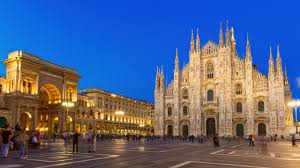 Environmental Law Regulation: Dealing Complexity by Complexity was organized by University Bocconi. Edward Ruggeri, a former UCL LLM student, and now working as a practitioner in Milan, was one of the respondents.
Brexit and Environmental Law
By Richard B Macrory, on 27 October 2016
On 26 October Professor Maria Lee, director of the Centre, and Professor Macrory were invited to give evidence to the House of Laws EU Sub-committee on Energy and the Environment. together with Professor Andrew Jordan of the University of East Anglia. The sub-committee is holding a short inquiry exploring the future of environment and climate change policy following the vote to leave the European Union. The session explored a broad range of issues including the Great Repeal Bill, the possible implications on UK environmental law depending on different models of exit, enforcement issues, and the future role of international environmental law within the UK. A video of the session can be found at http://parliamentlive.tv/Event/Index/9bf1e256-4143-4ec6-b8f9-05fadf1f54e1
All the written evidence and transcripts of the oral evidence is now published : Brexit-Environment-Climate-Change-Written-Oral-Evidence-Volume 2
Professor Macrory was asked to provide a supplementary note on the challenges of ensuring a ‘roll-over’ of EU environmental legislation once EU laws no longer has independent legal force in the UK : House of Lords Macrory supplementary note 2
UCL Centre for Law and the Environment, Briefing 2015-16
By Tatjana I N Wingender, on 20 October 2016
UCL’s Centre for Law and Environment was established to provide a focal point for the Faculty’s outstanding expertise and academic strength in the field of the environment and the law. The main goals of the Centre are to advance research and teaching and explore the role of law in meeting contemporary environmental and energy challenges. Have a look at what we’ve been doing over the past year and download our Briefing document.
UCL Energy and Development Group
By Ben M Milligan, on 14 September 2016
 In 2015, a number of UCL academics working on energy access challenges in the global South began meeting informally to discuss common research interests. Now a team of about 16 from the UCL Energy Institute, Civil, Environmental and Geomatic Engineering (CEGE), Institute for Sustainable Resources (ISR), Science, Technology, Engineering and Public Policy (STEaPP), Development Planning Unit (DPU), Electronic and Electrical Engineering, Centre for Law and Environment, and other departments are meeting regularly as the “UCL Energy and Development Group”. The group is working together to build both a community of practice and to access research funds. The team is already working on a research paper, has established a wide view of the relevant capability and capacity across UCL, and has served as a hub which has enabled several responses to large consultancy opportunities with valuable research and impact outcomes. The coordinator for the group is Dr Long-Seng To, Research Fellow at STEaPP (second from the left in the photo). Please contact her or Centre for Law and Environment member Ben Milligan to learn more or to join.