X Close

Events

Home

UCL events news and reviews

Menu

Archive for November, 2013

Eclectic designs on show at UCL Slade Print Fair

By news editor, on 29 November 2013

pencil-iconWritten by Jordan Rowe, Editorial Worker for UCL Media Relations

The warehouse-style double gated lift that greets you upon arrival at the Slade Research Centre on Woburn Square is the first indication that things are done a little differently here, after all this is the renowned UCL Slade School of Fine Art. As you draw back the gates when reaching the fifth floor, you’re met with an array of donated works for sale decorating the bright white walls. This is the Slade Print Fair.
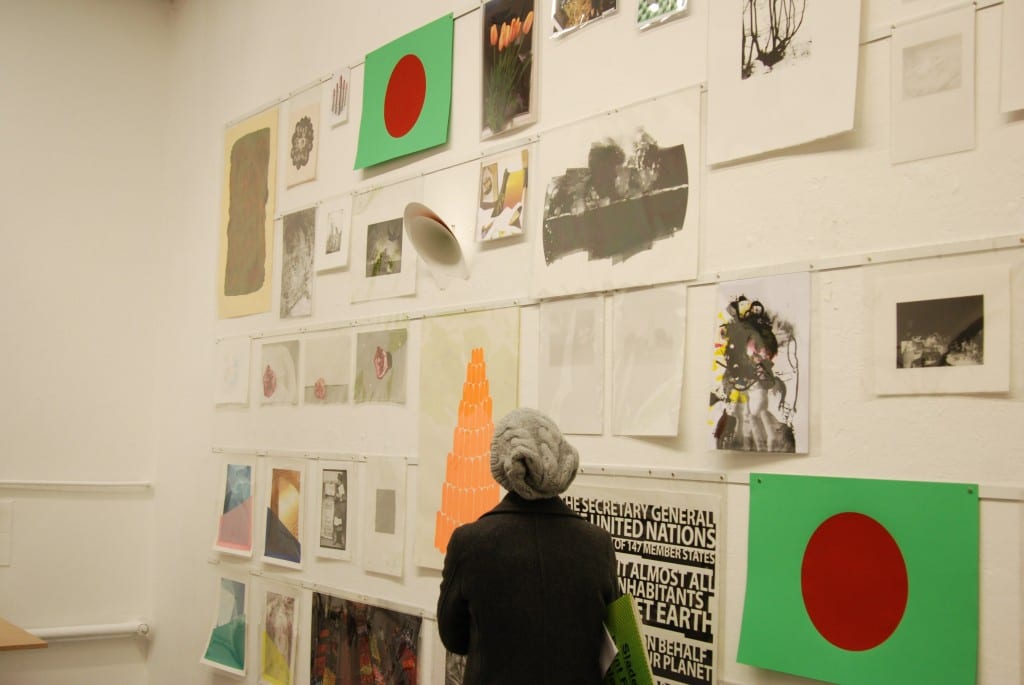
Artwork on exhibition at the Slade Print Fair

It’s the school’s first ever event of this kind – and hopefully not last – with all proceeds helping raise funds for future graduate scholarships. On display is work from alumni, students, staff and invited artists along with a full programme of print-related events and live demonstrations taking place until Saturday 30th November.

Over 170 of the works being showcased are available to purchase there and then, in addition to 32 pieces from established artists being auctioned online here. Moving around the floor, there’s definitely an emphasis on contemporary art, but a few period pieces have been mixed in, revisiting the lengthy history of the UCL Slade.

(more…)

Whatcha guvnor: inside the mind of a London cabbie

By Clare S Ryan, on 28 November 2013

London’s black taxis – or cabs – are as iconic as Big Ben, red buses and the London Eye, so it was no surprise to arrive to a packed audience at Dr Hugo Spiers’s (UCL Cognitive, Perceptual & Brain Sciences) Lunch Hour Lecture on 21 November.

The lecture was a whistle stop tour of the brains of a London cabbie, famously studied by UCL neuroscientists for more than 15 years.

London cabbies – what’s the big deal?
The Great Exhibition of 1851 gave birth to the London cabbie as we know it: the deficiency of the taxi service at the time became widely publicised and, in response, the first test for London’s taxi drivers was devised, called the London Knowledge.

Today, drivers who can complete ‘the Knowledge’ are able to perform amazing feats of memory multiple times a day. To pass the test, they must memorise more than 25,000 streets and one thousand sites of interest so that they can mentally map the route from any point in London to any other.

Learning the knowledge takes three years (similar to a UCL undergraduate degree) and the exam is rarely passed first time.

As a result of this gruelling training, the brains of cabbies are of particular interest to neuroscientists, as they can be used to study lots of interesting questions, such as does special memory change the shape of cabbies’ brains? How does the brain navigate space? And, fundamentally, how does memory work?

(more…)

UCLoo Festival kickstarts the eco-sanitation discussion

By news editor, on 25 November 2013

pencil-icon

Written by Kate Oliver, Faculty Communications Manager for UCL Engineering

It’s a cold November afternoon and UCL’s President & Provost is standing in the Main Quad, waiting for the newest loo on campus to be free. He’s not the only one; a queue of students, staff and miscellaneous toilet fans snakes past the Portico, hinting at the fact that a further 2.6 million people are still waiting for their toilets.

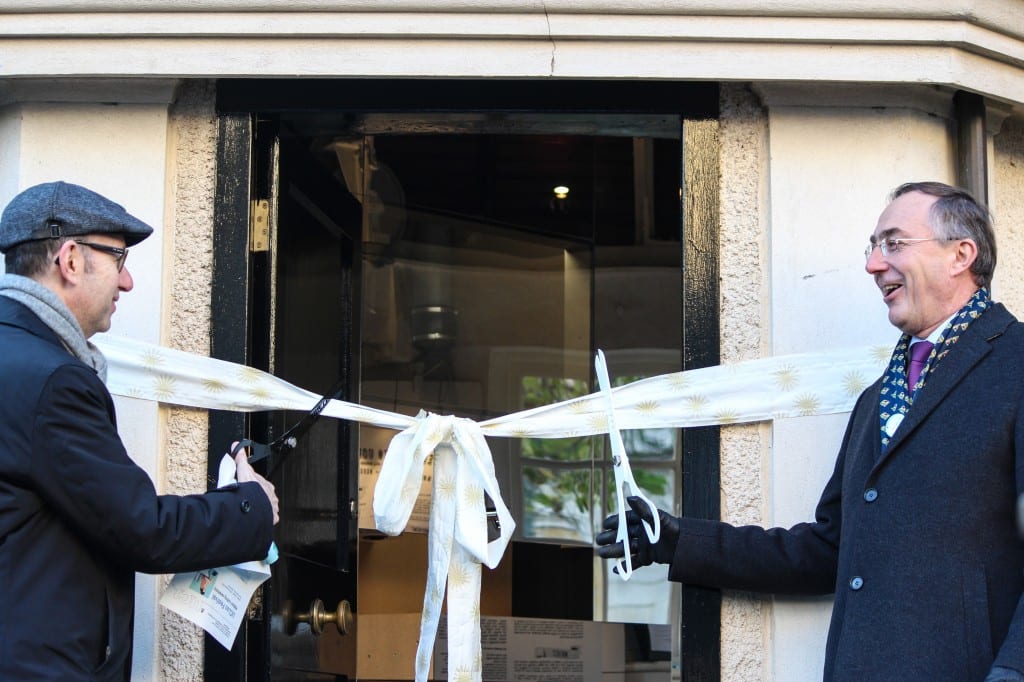
UCL President & Provost Professor Michael Arthur opens the UCLoo festival

The sudden enthusiasm for sanitation is not a campus crisis: the loo in question is a special environmental composting model, installed in the Quad as the centrepiece of UCLoo Festival. Kicking off on the first UN-recognised World Toilet Day (19 Nov, of course) these two weeks of activities, events and exhibitions invite London to UCL, hoping to start a discussion about the future of water-based sanitation in urban environments, as well as raising awareness of sanitation issues worldwide.

(more…)

Risk and resilience in Japan after the Fukushima disaster

By Oli Usher, on 22 November 2013

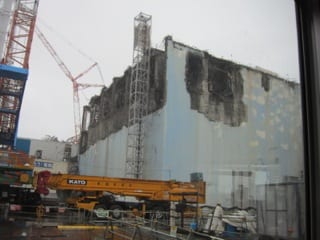
Fukushima Daiichi reactor 2. Credit: TEPCO

Fukushima Daiichi reactor 2. Credit: TEPCO

There is no amount of concrete that could have kept people safe from the 2011 Japanese tsunami – and in any case, the height of the wave could never have been predicted. But learning the right lessons from past disasters, along with a helping hand from technology, could help keep us safer in the future.

That was the message delivered by Prof Peter Sammonds (UCL Institute of Risk & Disaster Reduction) in Tuesday’s Lunch Hour Lecture.

Japan is, in many ways, an ideal place to learn from in the field of natural disasters. A prosperous, well-governed and highly educated nation, it also has a long history of dealing with natural hazards, particularly earthquakes and tsunamis. The successes and failures of disaster management in Japan over the past century offer a rich vein of data for researchers like him to mine.

The key lesson, he argued, is to understand the complexity of disasters and how one calamitous event can cascade in fundamentally unpredictable ways.

(more…)