
X Close
Menu

The Innovation in Democracy Programme and its lessons for deliberative democracy 

By Rowan Hall, on 26 August 2020

The Innovation in Democracy Programme (IiDP) was created in 2019 to support local authorities in using deliberative democracy – through citizens’ assemblies and associated methods – to shape decision-making and policy creation. Here, five of the key figures involved in creating and operating the IiDP outline the methods, challenges and outcomes of a programme that had to adapt and adjust to both an early general election and the COVID-19 crisis. 

What is the Innovation in Democracy Programme?

The Innovation in Democracy Programme (IiDP) – established by the Department for Digital, Culture, Media and Sport (DCMS) and the Ministry of Housing, Communities and Local Government (MHCLG) – was an innovative experiment which challenged us to support local authorities to tackle a complex, local issue in a different way; we tested using a deliberative democracy process within a local government environment to change the way communities are involved in sharing and shaping decision-making. We think it’s fair to say it worked, but with lots of learning for all involved.

The programme’s aims were to:

  • increase the opportunities for local people to have a greater say over decisions that affect their communities and their everyday lives;
  • encourage new relationships and build trust between citizens and local authorities;
  • strengthen local civil society by encouraging participation in local institutions.

Involve, Democratic Society, mySociety and the RSA worked from March 2019 to March 2020 with three local authorities – Dudley Metropolitan Borough Council; Greater Cambridge Partnership; and Test Valley Borough Council – to involve residents in decision-making. We did this through piloting citizens’ assemblies. We were asked to support the local authorities in the following ways:

  • design, facilitate and report on their citizens’ assembly;
  • develop a digital strategy to extend the reach, transparency, and accountability of the process; and,
  • collect and share the local authority’s learning within and beyond their authority.

This video gives a unique insight into the citizens’ assembly process from the perspective of three participants from each of the areas. (more…)
Ending of the hybrid House of Commons breached fundamental democratic principles

By Rowan Hall, on 8 June 2020

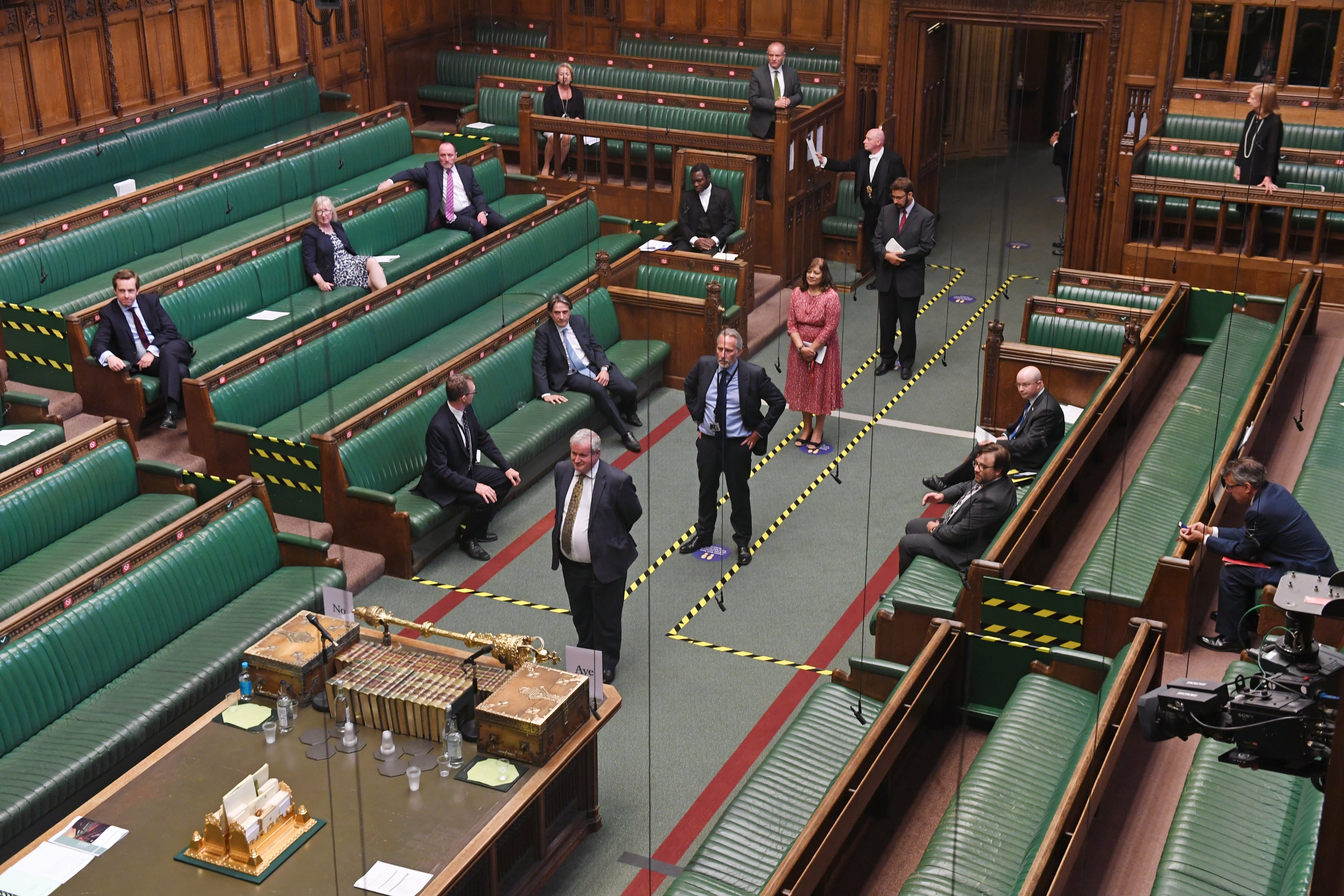
Last week Leader of the House of Commons Jacob Rees-Mogg demanded the end of ‘hybrid’ arrangements allowing MPs to participate and vote remotely during the COVID-19 crisis. In this open letter, a group of senior democracy specialists point out this breached the fundamental democratic principle of equality in decision-making, because the MPs most benefiting from remote participation (e.g. due to ‘shielding’) were excluded from the vote. They urge the Leader of the House to reinstate procedures allowing all MPs to participate fully in all Commons business.

IMG_20200608_051657

MPs queue to vote on Tuesday. Parliamentary copyright images are reproduced with the permission of parliament.

Dear Mr Rees-Mogg

We write to express our very grave concerns about the way in which the ‘hybrid’ House of Commons was suspended. As specialists in the principles and practice of democracy it is clear to us that these actions breached fundamental democratic principles.

The ‘hybrid’ arrangements, allowing for a mix of virtual and in-person participation in parliamentary proceedings were brought about by necessity, to enable the House of Commons to continue to fulfil its essential functions of scrutiny and representation during the coronavirus crisis. Parliamentary accountability is crucial at any time, but more crucial than ever when ministers have taken unprecedented emergency powers, and the broadest possible public consent for health measures, and restrictions on citizens’ usual freedoms, is needed.

At the initial stages of the crisis there were troubling suggestions that parliament might close down completely for up to five months (as reported in The Times on 5 March). Thankfully, attention soon moved on from this drastic (and fundamentally anti-democratic) suggestion, to exploring how parliament could keep working through the crisis.

Parliamentary staff have worked tirelessly to devise innovative technological solutions to allow MPs to contribute virtually, and online select committee meetings began during the Easter recess. The Speaker, and the House of Commons Commission, offered admirable leadership, with essential additional input from the Procedure Committee. At the early stages there was a clear commitment to working on a cross-party basis to ensure that the Commons could continue to function in a way which maintained essential representation and accountability, while protecting public health. The motions on 21 and 22 April to enable members to participate and vote remotely were warmly supported by opposition parties and unanimously agreed. This consultative, cross-party approach was exactly what was needed when bringing about such far-reaching changes to the functioning of our democratic process. It showed inclusivity and maximised the chances of maintaining public trust and support.

The attempt to dismantle the hybrid arrangements has, unfortunately, followed the reverse approach. Through a lack of consultation and cross-party decision-making it has sown unnecessary division. Furthermore, it has breached the fundamental democratic and parliamentary principle of equality in decision-making, excluding many MPs from the choice about how to run their own institution. It has done so to the detriment of some of those who are most vulnerable in this crisis. (more…)