 Close
Close


What’s in the box?
By Mark Carnall, on 31 January 2011
The Grant Museum of Zoology is currently relocating premises and during the removal, packing, storage, return and unpacking of our specimens there are always a couple of new discoveries made. Boxes which have sat at the back of cupboards or on top of shelves. Sometimes, boxes are cryptically labeled or disappointingly completely empty. For a curator, these boxes can be a wonderful surprise or in some cases a curatorial nightmare. Here are two such boxes.
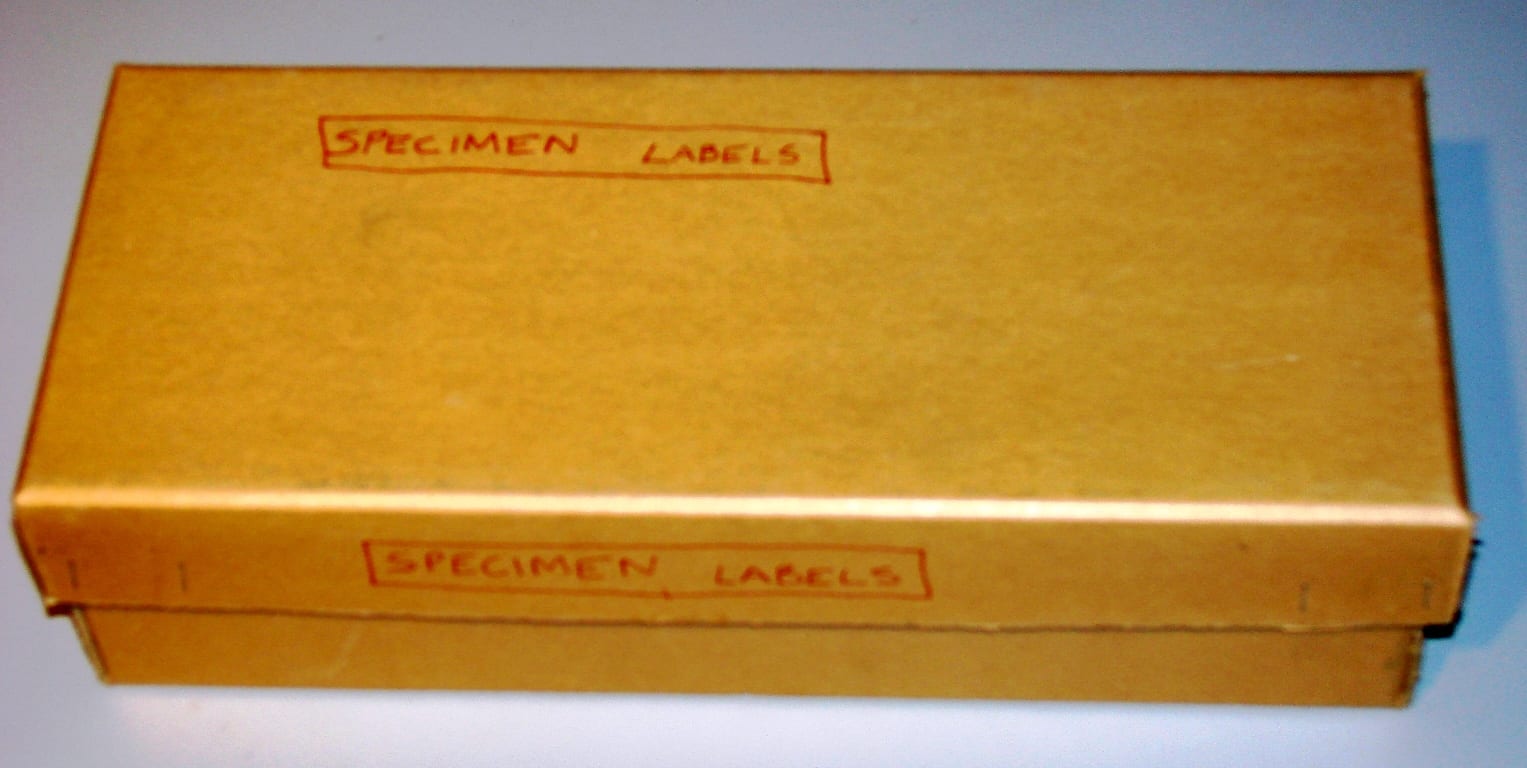
‘Specimen Labels’
This box labeled ‘specimen labels’ is simultaneously very exciting and at the same time heart-sinkingly stressful. All of these labels that were purposefully removed? Accidentally detached? Found under a desk? could hold important information for some of our specimens that hasn’t otherwise been preserved. Or they could just be labels that have been updated. Some of them, unfortunately we’ll never be able to find the specimens for with 100% certainty anyway. Ugh, labels, labels, labels.

‘Disarticulated fish skeletons’
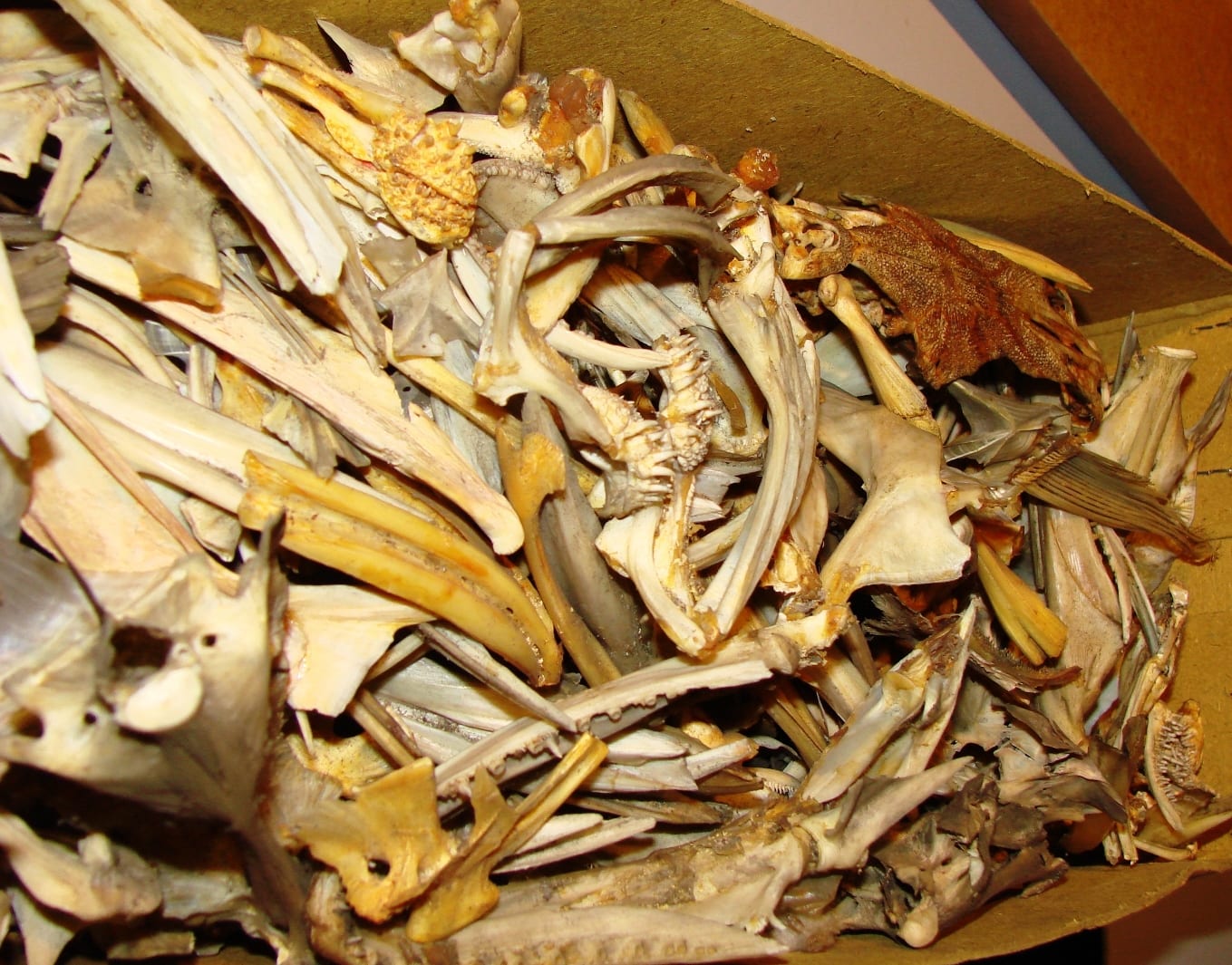
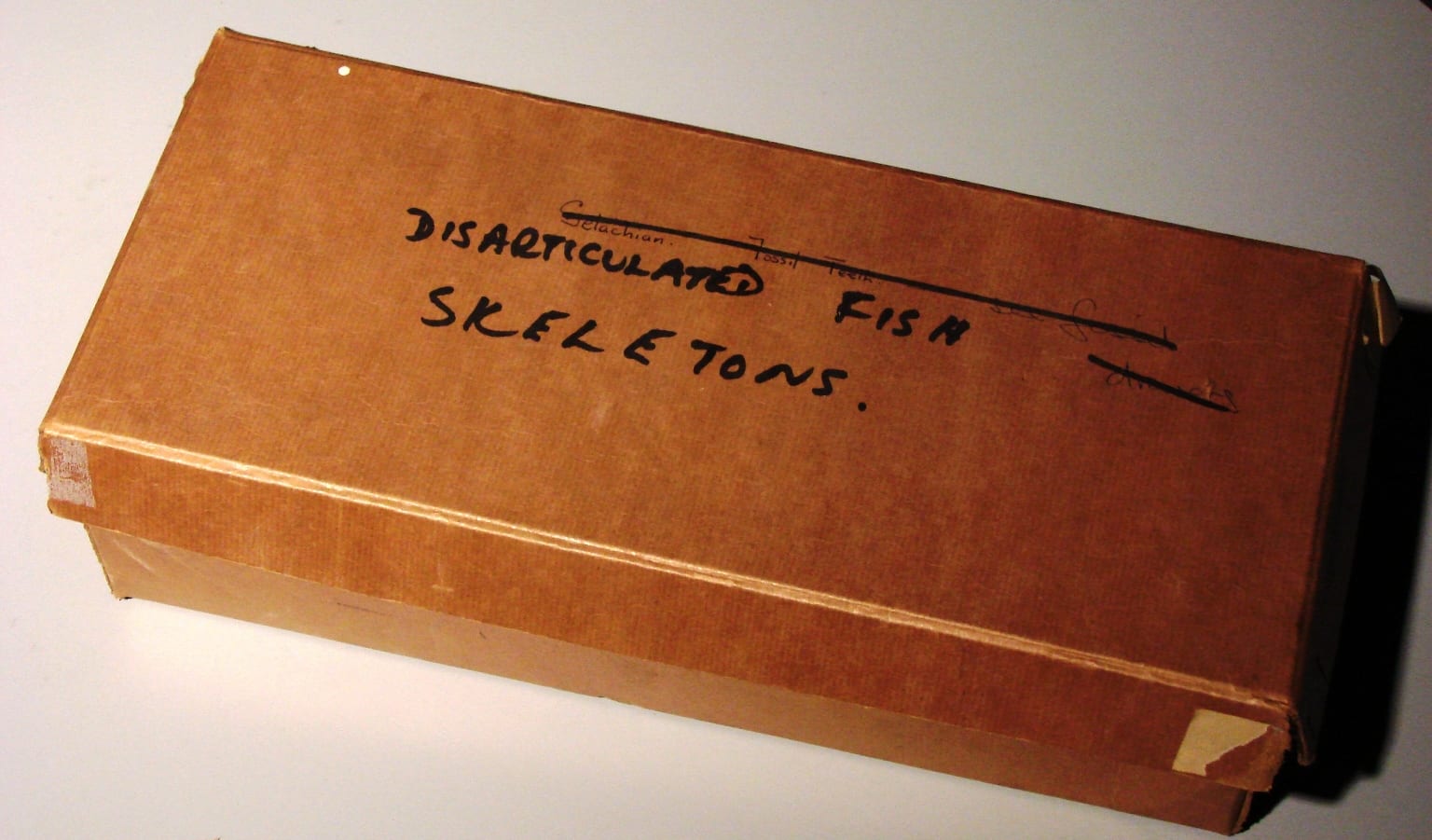 This box, sadly, is exactly what is says on the lid. Hundreds of disarticulated skeletons jammed into a box. Potentially there are some new and exciting species of interesting fish! More likely is that this box is just crammed full of cod and sturgeon skeletons. There is a fine tradition of curators accessioning the remains of their lunch as the Manchester Hermit illustrated. Who knows which luminaries may have dined on some of these? Although this box has disarticulated fish skeletons written on it, it also has ‘volunteer project’ and ‘disposal’ written all over it.
4 Responses to “What’s in the box?”
- 1
-
2
UCL Museums & Collections Blog » Blog Archive » Labels, labels, labels wrote on 7 February 2011:

[…] where does one go from the heady heights of boxes in museum collections? Well of course, it’s labels. I have a big pile of labels now made even […]
-
3
UCL Museums & Collections Blog » Blog Archive » Half a dodo? wrote on 22 February 2011:
[…] discovered when the collection was being packed up in our old home. Some of the new discoveries were rather disappointing but one exciting discovery was a box of dodo bones, and Maev has written a great piece about it in […]
-
4
Celebrating the mundane | NatSCA wrote on 30 October 2013:
[…] However, there are large portions of natural history collections which could never contribute to those agendas. All the ‘Raggy Doll‘ specimens without data for example. All those specimens that require four text books of explanation. Most fossil specimens can be used to reconstruct the past with only limited impact on what’s happening in the present. There are rooms and rooms full of bad taxidermy and taxidermy dioramas that for reasons of taste, health and safety and changing scientific ideas never see the light of day. Even something as simple as an animal not having a common name (to put on a label) can keep a specimen off display There are large chunks of the animal world which simply aren’t being actively studied (for now). Lastly there are all the models, casts and those dreaded boxes. […]
[…] up in a box of mixed bone is an interesting question. In the museum world there are plenty of these boxes of ‘stuff’ that need to be sorted out and the material dealt with appropriately. Some of the objects from such boxes should no doubt be […]