A A A

The Human Right to Health

By guest blogger, on 3 April 2012

The latest book in the Amnesty International Global Ethics Series, published by Norton is The Human Right to Health, written by Professor Jonathan Wolff (UCL Philosophy).

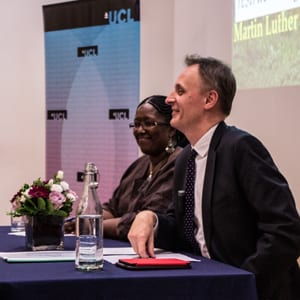
On Tuesday 27 March, Amnesty International hosted a panel discussion to launch this new publication. The panel consisted of Jonathan Wolff, Mike Rowson (UCL Centre for International Health and Development) and Widney Brown (Amnesty International), and was chaired by Steve Crawshaw (Amnesty International).

Panel Discussion
Professor Wolff began by admitting that because of his philosophical roots he was a relatively recent convert to the concept of the human right to health. Despite this, his book defends the concept against multiple criticisms.

The first criticism to be discussed relates to the phrasing of “the right to the highest attainable standard of health” (United Nations).

Three routes of criticism seem to emanate from this statement, firstly, how is attainability measured – globally, nationally or regionally could give very different standards. Secondly, this seems an unreal expectation and thirdly, if this right exists – who is accountable for providing it.

A further point raised was the fact that health itself did not need to be a human right – it could be considered simply a culmination of other human rights.

(more…)

“Lives are on the line”: TB research can’t survive without the Global Fund

By guest blogger, on 2 April 2012

TB research has changed over the past 10 years. Growing collaborations have led to huge advancements in testing and treatment for a disease that kills every 20 seconds.

But this progress is threatened by reduced financing of health programmes by the Global Fund, which accounts for two-thirds of global TB funding, leaving money only for ‘essentials’.

“Lives are on the line,” said Simon Logan, a policy advisor from the All Party Parliamentary Group on Global Tuberculosis, who is now urging the public to engage in dialogue about the potential impact that Global Fund restrictions will have on the disease.

The challenge of TB
World TB Day, held on 24 March, marks 130 years since Robert Koch discovered the bacteria responsible for the disease. The ‘UCL ‘Local and global’ TB conference last week coincided with a TB supplement in the Journal of Infectious Diseases – this year, the focus is paediatric TB. There are major challenges to tackling the disease and many are particular to children. These include under-reporting of cases, diagnostic difficulties and the need for better quality drugs.

(more…)

A widening European health divide…it’s enough to drive you to drink

By guest blogger, on 28 February 2012

Far from ‘closing the gap’ in life expectancy, health inequalities in Europe have deepened further. Drawing upon his forthcoming review of health inequalities in Europe, Michael Marmotargued that social inequalities, with their impact on life expectancy, should be at the top of the public agenda and we should place fairness at the heart of decision-making for health.

Integral to Marmot’s work is the graded relationship between social deprivation and a multitude of health outcomes. He reports that male life expectancy in the Russian Federation is 20 years less than in Iceland, but also highlights “huge differences within countries” and that “the gradient is increasing”.

Alcohol use: a cause or consequence of inequality?
What is driving the social gradient in health? Panel member Christopher Gerry stressed that “Alcohol matters”, and quoting Richard Peto said: “More than half of all deaths of people of working age in Russia are caused by alcohol.” But importantly, Gerry identified alcohol as just the proximate cause: “What makes people drink in the way that they do is the real question.”

Marmot was quick to distinguish between immediate causes and the underlying psychosocial mechanisms that drive unhealthy behaviours. In the case of Russia: “Some people are utterly convinced that alcohol plays a role, the main role” in health inequalities. But he disagreed, while acknowledging its role in violent deaths.

(more…)

Child Maltreatment: a six-country comparison of trends

By guest blogger, on 26 January 2012

Shivani Singh, PhD student at the UCL Centre for International Health & Development, reports on the UCL Global Health Symposium ‘Child Maltreatment: A six-country comparison of trends’, held on 18 January.

The seminar marked the beginning of a new year of fascinating lectures hosted by the UCL Institute for Global Health.

The session was well attended and featured the work of Professor Ruth Gilbert of the UCL Institute of Child Health. Joining her as panellists were June Thoburn, Emeritus Professor from the University of East Anglia, and Richard Bartholomew, who is the joint Head of the Government Social Research service and Chief Research Officer, Children, Young People and Families Directorate, Department for Education.

The focus of Professor Gilbert’s research is to understand child maltreatment across the industrialised nations of Canada, the USA, England, Sweden, New Zealand and Australia.

(more…)