The Indian Seal of Sir Francis Sykes – A Tale of Two Families
By Sir John Sykes
Please note that this case study was first published on blogs.ucl.ac.uk/eicah in February 2013. The case study was last checked by the project team on 19 August 2014. For citation advice, visit ‘Using the website’.
 |
 |
In this case study, project associate Sir John Sykes situates the Indian seal of his ancestor, Sir Francis Sykes, first baronet (1730-1804) within the context of both East India Company and family history in England and on the subcontinent. The story of the Sykes seal is both transnational and inter-generational.
You can read this case study as a whole (including full references to primary and secondary sources) by downloading the PDF version. Or you can read the online version below, either sequentially – by clicking on the image of each section to access the text – or selectively – by clicking on the image of the section that is of most interest to you.
 |
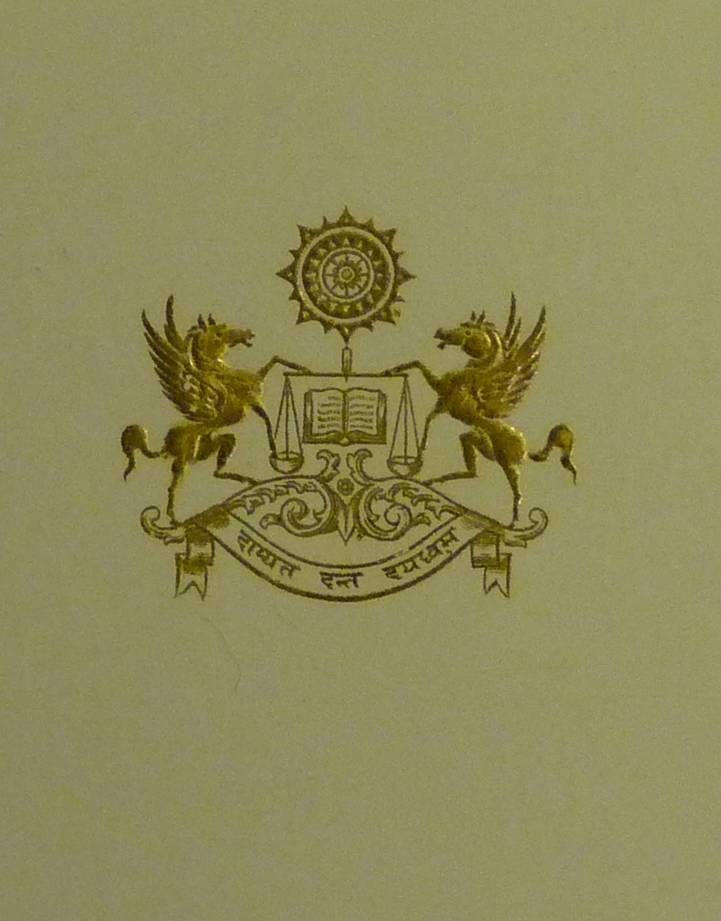
The Sykes SealThis section describes the Sykes seal as a material object and translates its inscription. It explains how and why such seals were used by Company officials and Indian banians (men of business) in the eighteenth century. |
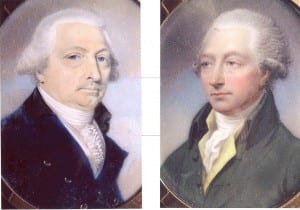 |
The OwnerThis section introduces one of the case study’s two central protagonists, Sir Francis Sykes. A close associate of first Robert Clive and then Warren Hastings, Sykes combined his political and administrative duties with extensive private trade in Bengal at Cossimbazar. Wealth accumulated in India in the 1750s allowed Sykes to purchase an estate in Yorkshire; his service and private trade as Resident at Murshidabad in the 1760s substantially augmented this fortune. |
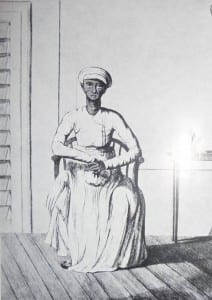 |
The BanianSykes’s ability to combine administrative duties with private trade hinged upon his business partnership with the Indian banian Krishna Kanta Nandy (known as Cantoo Baboo, c. 1720-1794). A successful silk merchant who had previously served as banian to Warren Hastings, Cantoo Baboo was instrumental in promoting Sykes’s trading activities both during his tenure as a Company official and after his return to England. They remained correspondents for decades. |
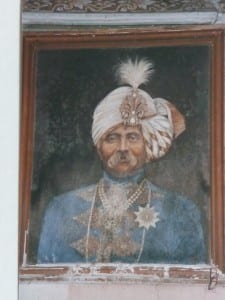 |
The Cossimbazar RajThis section of the case study traces the fortunes of Cantoo Baboo’s business and family in Cossimbazar from the era of Sir Francis Sykes into the twentieth century. Building on the wealth accumulated in the Company era, descendants of the family emerged as leading zemindars, proponents of industrialisation and philanthropists in the later nineteenth and twentieth centuries. By the twentieth century, the Cossimbazar estate had evolved into a thriving industrial and commercial business, not least through the intervention of the entrepreneur and historian Maharajkumar Somendra Chandra Nandy (Dr S.C. Nandy, b. 1928). |
 |
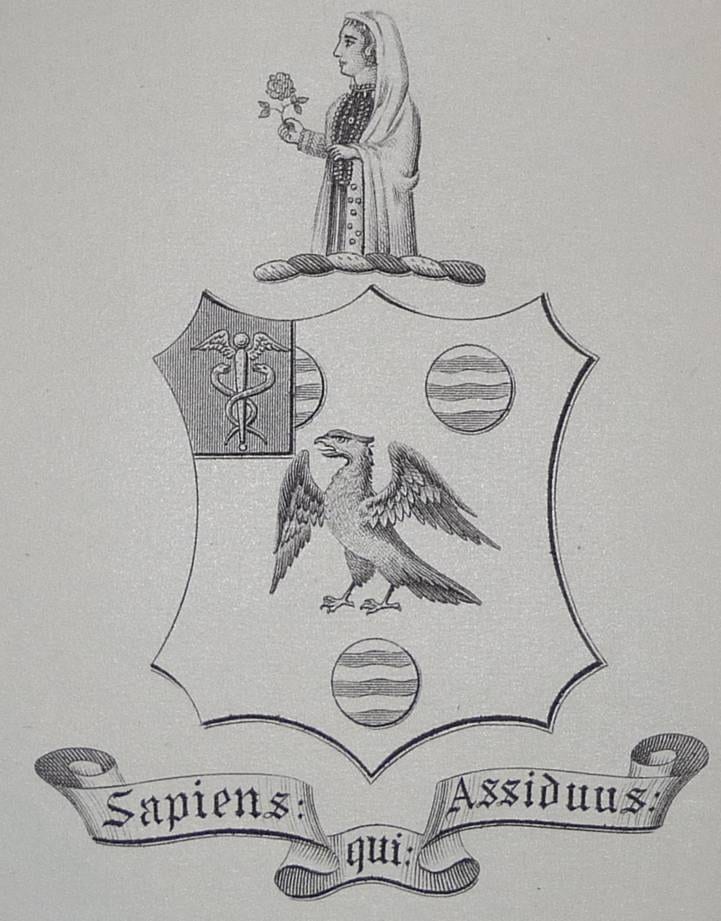
The Sykes FamilySir Francis Sykes returned to England with an Indian fortune rumoured to be second only to that of Robert Clive. His purchase of Basildon Park, Berkshire and the Gillingham estate in Dorset, as well as his election as an MP, rested on this fortune. Successive generations, however, saw this wealth dissipate, and Basildon Park was sold by the family in 1838. Links with India continued in the twentieth century: the 9th baronet worked as a tea-planter in Darjeeling prior to World War II. |
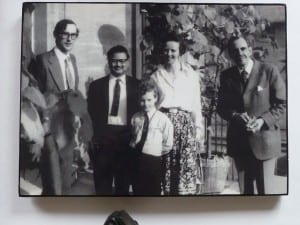 |
The ReunionAfter an interval of over two centuries, the families of Cantoo Baboo and Sir Francis Sykes met again. The Sykes seal of 1765, kept in the possession of Cantoo Baboo’s descendants for generations, was presented to the 9th Baronet by Dr Nandy in 1993, a fitting token of the two families’ intertwined histories, which continue to the present day. |
| |
The Seal as WitnessMaterial objects such as the Sykes seal speak at multiple levels to the cross-cultural encounters engendered by East India Company trade and politics. By situating objects such as the Sykes seal in their extended historical contexts, we can begin to write connected histories of the full spectrum of Company families. |
To download the entire case study in PDF format, click here.
Comments
On 9 July 2013, Alec Roberts left the following comment:
Good Morning
My mother Patricia Roberts has asked me to investigate whether there could be a link between her family and that of The Sykes family. Her maiden name is Sykes and she is the only daughter of Hugh Sykes from Manchester. His father was called Albert Cecil Sykes and he married Leah Sanderson around 1888/9.
My mother was told when she was very young that she was relate to a man who survived the The Black Hole of Calcutta. Although there is little about the survivors I think a man called Sykes was one of the survivors.
Any further information would be much appreciated
Yours
Alec Roberts
On 11 July 2013, Sir John Sykes left the following reply:
Dear Mr Roberts,
The short answer to your main suggestion is that so far as I know there was no one named Sykes who was incarcerated in the Black Hole of Calcutta. The mistake has been made before, probably because Francis Sykes was briefly imprisoned when Suraj-ud-Daulah captured the English Factory at Cossimbazar from where he escaped.
As for a relationship with your mother’s family, I have checked the extensive family tree in my possession and have found only one possibility, namely that she may be descended from Arthur Sykes born at Manchester on 16 May 1869 and mentioned as being in business in Manchester in the 1890s. His siblings included Albert Elmy Sykes (born 1863, died 1864),Frederick Moritz Sykes (born 1865), Hugh Ainsworth Sykes (born 1867 at Manchester, farmer who emigrated to Montreal in 1900), Cecil Robert Sykes (born 1871,died 1875)and two sisters. It seems very possible that two of the siblings’ names were “re-used” for your mother’s grandfather. Unfortunately the tree does not list the descendants of this branch of the family. However I can say that they go back ten generations to Robert Sykes of Flockton, West Yorks – his brother was William Sykes (died 1578)from whom six generations later Francis Sykes was descended so the cousinship is very distant indeed!
I am afraid the tree is extremely large and unwieldy so I am not able to let you have a copy but I hope this is of interest. John Sykes
On 29 July 2013, Patrick Sykes left the following comment:
Hello, The records show that a relative of mine – Samuel Sykes – was born in Ackworth, Yorkshire, in 1715. I believe that Francis Sykes had Ackworth Park and Hall at about that time – so I wonder if there was a known link between the two.
On 29 July 2013, Sir John Sykes left the following reply:
Dear Mr Sykes
Sadly I can find no reference on the various family trees I have to your Samuel Sykes. The name Samuel first appears some two generations later. In fact no Sykes’s of Ackworth of that period at all. They must have branched off from the Sandal Magna/Thornhill Sykes’s at an earlier stage. However Thornhill and Ackworth are quite close and I am sure the two families would have been related.
Francis Sykes did not buy Ackworth Park until 1763.
John Sykes
On 3 August 2013, Patrick Sykes left the following reply:
Sir John,
Thank you for the reply relating to Sykes of Ackworth.
Acknowledgements
The text, research and images for this case study were primarily authored and supplied by Sir John Sykes.